Windows XP

WDST technical operation center
technical operation center

It is time to plan and upgrade those machines running Windows XP. After April 8, 2014, Microsoft will no longer be updating the software and/or patching security holes. Many in the IT industry believe that after that date, hackers will attempt to break the popular operating system which has been in use for twelve years.

Approximately one-third of all Windows operating systems in use today are XP.  Microsoft has already warned users that potential hackers could use security patches and updates for Windows 7/8 systems to scout for vulnerabilities in XP.  I know several radio clients have automation systems and office networks that run primarily Windows XP.  Microsoft may be overstating the risks of remaining on XP, then again, they may not be. This situation has been described in several trade magazines as “A ticking time bomb,” or equally dire:  “Microsoft urges customers up upgrade or face ruin.”

In radio station infrastructure, very few systems are as vital as the audio storage and automation system.  Without a functioning automation system, most stations would be dead in the water.  If an automation system were to hack and be ruined completely, I do not think there are enough people left on most stations’ payrolls to run an operation manually, even for a short period of time.   I, for one, do not want my phone to start ringing on April 9th with a bunch of panicky managers talking about how unacceptable the situation is.

Failed High Voltage Contactor

This contactor was used to replace the Furnas contactor installed as original equipment when the transmitter was manufactured in 1986.  Furnas is no longer in business, thus the ABB A145-30 was substituted. It was purchased directly from Broadcast Electronics for an FM35A transmitter:

ABB A145-30 contactor

It was installed about 18 months ago and has been in nearly continuous use since.  The broken white plastic housing surrounds the contactor coil and is responsible for pushing and holding down the contact fingers.

ABB A145-30 contactor coil cover

Looks like the coil is running too hot and damaging the plastic. This resulted in a failure of the contactor to make and no high voltage to the transmitter PA.  Obviously a problem.  I spoke to BE about this and they did not have a good answer.  Actually, what they said was “That contactor is rated for 220 amps,” which is true enough. The only thing that I can think of is the coil is rated for 208 volts and the transmitter is connected to a 240-volt delta service.

A new contactor was ordered and installed yesterday.

I will investigate the coil voltages further, but for now, the 27-year-old transmitter remains on the air.

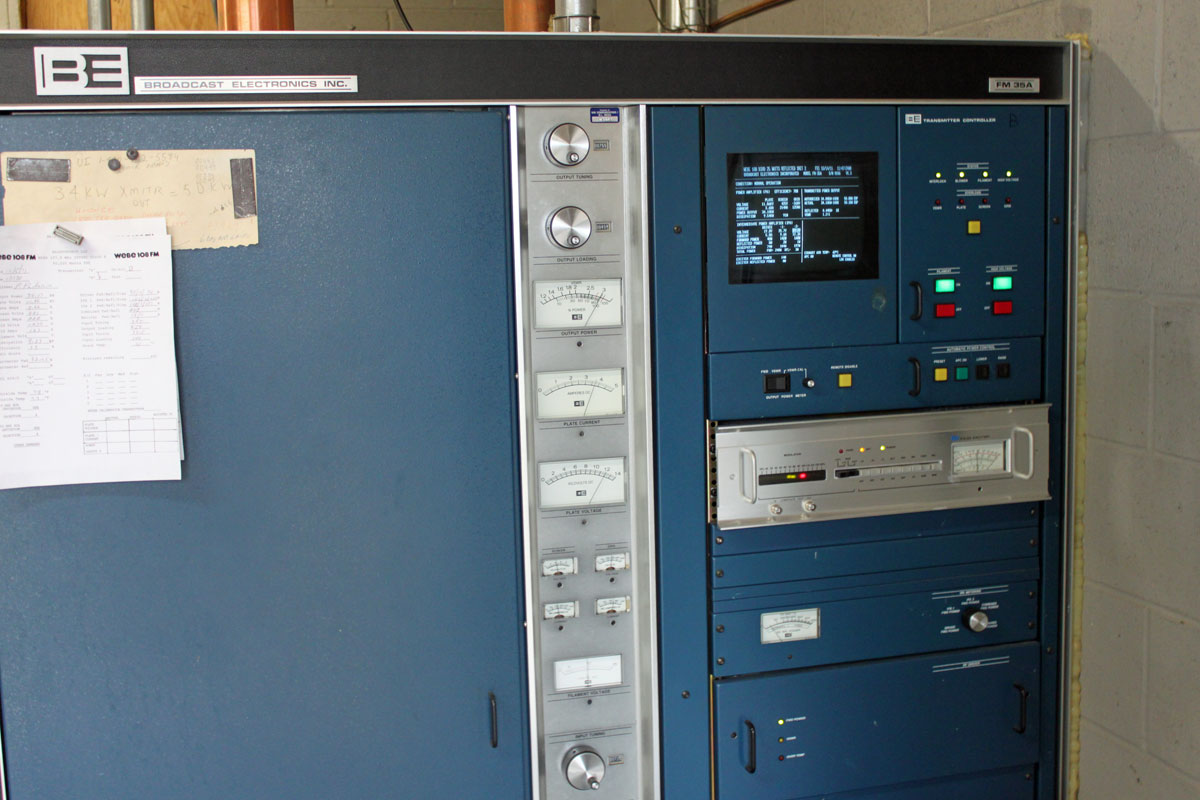
Broadcast Electronics FM35A

New Broadcast Engineer

The new engineer
The new engineer (banana for scale)

Update and bump: The many great comments about the SBE certifications got me thinking about what a Broadcast Engineer actually does. I remember typing something about it quite some time ago, thus, I dredged up this old post originally from August 8, 2009 out of the archive.

Enjoy:

The other day, the NTR (Non-Traditional Revenue) person came to me and said “Great news!  We hired a new web guy, he knows all about engineering too!”

Really?

So I spoke to the new Web Master/Broadcast Engineer for a bit.  As it turns out, he knows how to do things like reboot the XDS satellite receiver, and reboot an Audiovault server, he has been to a transmitter site a few times to take meter readings.  I suppose these days, that is what counts as being a broadcast engineer.  Someone with this level of experience could get by for a bit until something really bad happened.

Sadly, I think (my former employer) upper management and ownership believe that this guy could do my (old) job.  To them, I am an employee number, with a salary and benefits package worth X.  If they can replace me with someone that makes <X, that would represent savings.  Plug that guy into this spot, everything will go on as it did before.

I don’t think they understand exactly what a Broadcast Engineer does.  On any given day, I may:

  • Program an automated computer
  • Change the battery on a backup generator
  • Change the battery bank in an 18 KVA UPS
  • Clean a transmitter
  • Aim a satellite dish
  • Troubleshoot a DS-1 Circuit
  • Troubleshoot a T-1 MUX
  • Repair a microwave transmitter or receiver
  • Take a set of monitor points
  • Repair a tower light flasher circuit
  • Install a console (analog, digital, IP routing, TDM routing)
  • Repair a CD player
  • Troubleshoot a transmitter RF module
  • PM a generator
  • Work with a tower crew to place an antenna on a tower
  • Install an RF connector on 3-inch transmission line
  • Wire an air conditioning unit at a transmitter site
  • Repair lightning-damaged ATU
  • Troubleshoot an AC unit
  • Aim an STL antenna
  • Repair an RPU transmitter
  • Design a computer network
  • Troubleshoot and repair an FM transmitter
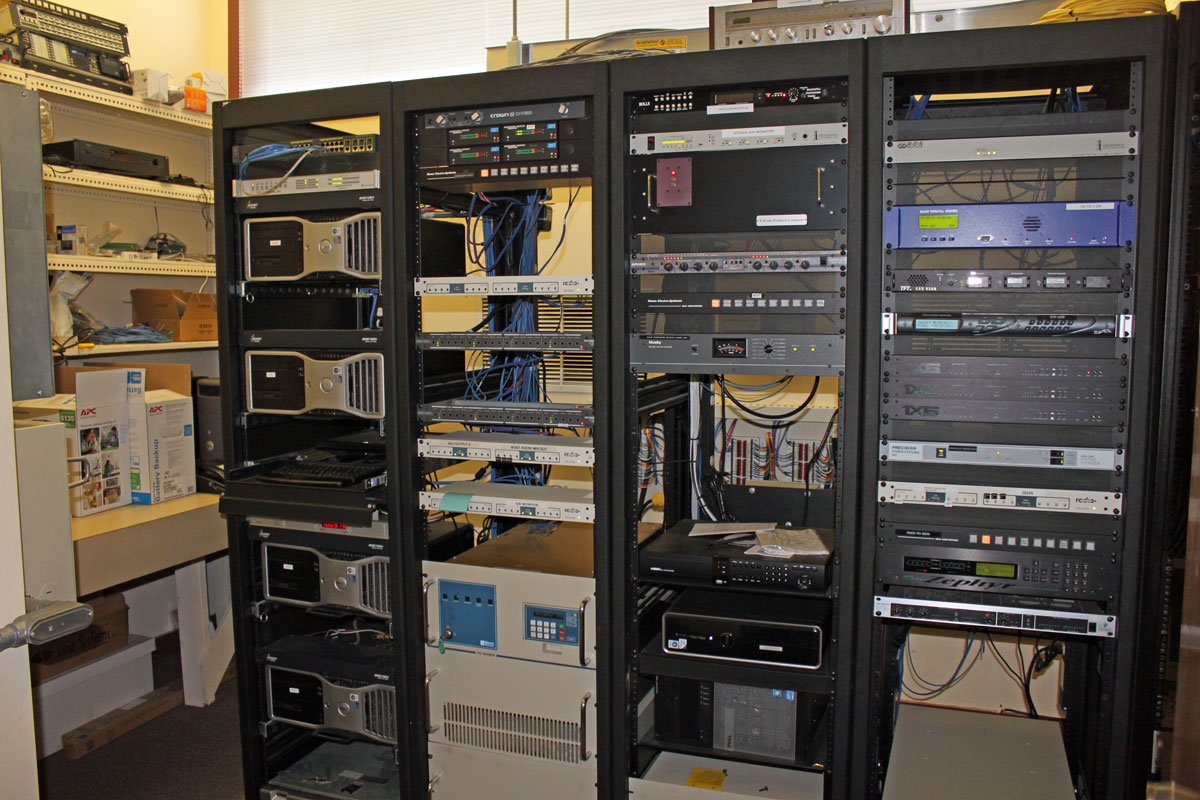
  • Wire a new rack room
  • Coordinate a complex format change
  • Install a translator
  • Program and wire a new satellite receiver
  • Wire a transmitter remote control
  • Hike to a transmitter site after a natural disaster
  • Troubleshoot an audio hum
  • Pass an FCC inspection
  • Install and program an EAS unit
  • Wire a new studio
  • Design a tower light monitor circuit
  • Fix a studio phone system
  • Install an audio router
  • Match an AM transmitter to a new tower
  • Wire an ethernet patch panel
  • Program a wireless access point
  • Install an IP router
  • Manage a new tower project
  • Install a new transmitter
  • Re-install an old transmitter
  • Make NRSC measurements on an AM transmitter
  • Repair a corrupt OS
  • Replace a hard drive
  • Reboot a server
  • Fix a reel-to-reel machine
  • Install a computer program
  • Clean a console
  • Pass an inspection by the fire marshal

To name a few.  In other words, there are a lot of complex systems at a multi-station radio facility.  Some of this can be learned at various schools and colleges.  A lot of it is experience.  There is no substitute for an experienced veteran broadcaster who has seen almost everything and can think on his or her feet.

I have had this discussion with the market manager, and he gets it.  I know that he understands and knows more about the ins and outs of all of our studio and transmitter sites.  Things like, where is the water shutoff, the handle is broken off of the toilet on the second floor.  Of course, I know it is downstairs in the furnace room next to the fire sprinkler system.

I know where the skeletons are buried.  I have the inside numbers for the utility companies and the phone company.  I know the code enforcement officer for most of the municipalities where we own buildings and property.

Yet, the only thing they see is X.

SBE Certification

SBE-banner

I am toying around with the idea of reinstating my SBE certifications. At one time, I was certified as a Senior Radio Engineer.  That certification lapsed several years ago for a variety of reasons.  First and foremost was my desire to find another career outside of radio.  At the time, I was working for a giant flaming asshole who prided himself in causing his subordinates health problems; things like strokes and heart attacks.  The sign over his desk read “The floggings will continue until morale improves.” I was also busy at home with a new, very young child and an old, broken-down house.  There was not enough time to come up with enough professional points to re-certify or study for a test.  So, it went by the wayside.

Lately, however, I am beginning to see some advantages of having an SBE certification:

  • It comes in handy as a skills benchmark for potential clients and others
  • It lends some amount of credibility among fellow broadcast engineers
  • There is a support network for job searches

Thus, when I went to the SBE website and found the Jubilee Project, I was intrigued.  The SBE is offering to reinstate those former members with lapsed certifications until April 2014 provided the applicant can supply enough recertification points.  I am also contemplating taking the Certified Broadcast Networking Engineer test for much the same reasons listed above.  I will let you know how it goes.

Incidentally, my ability to deal with giant flaming assholes as increased in the intervening years.  What doesn’t kill you makes you stronger.