A little blast from the past. This was found in a transmitter manual at one of the sites we take care of:
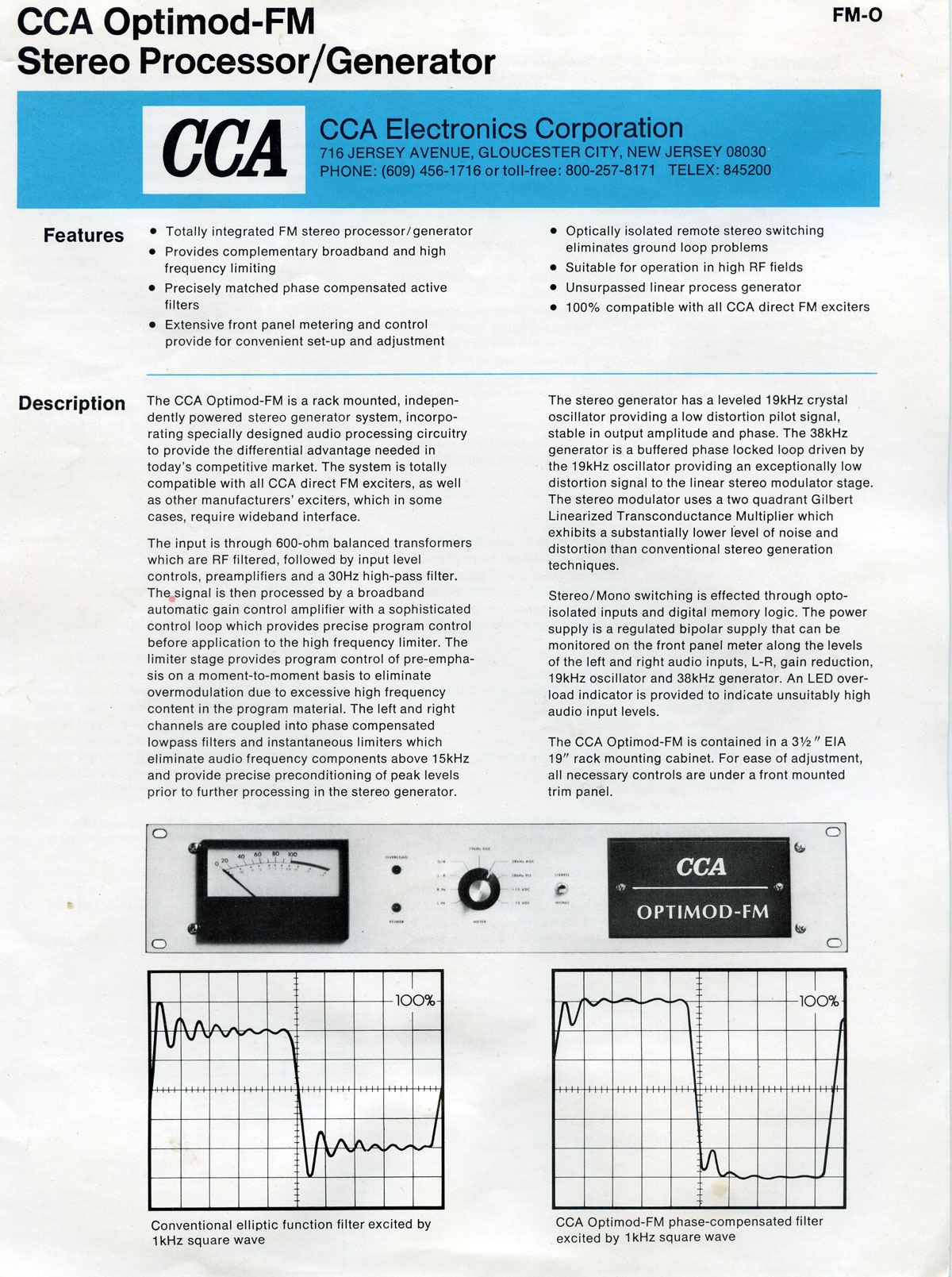
CCA Optomod 8000
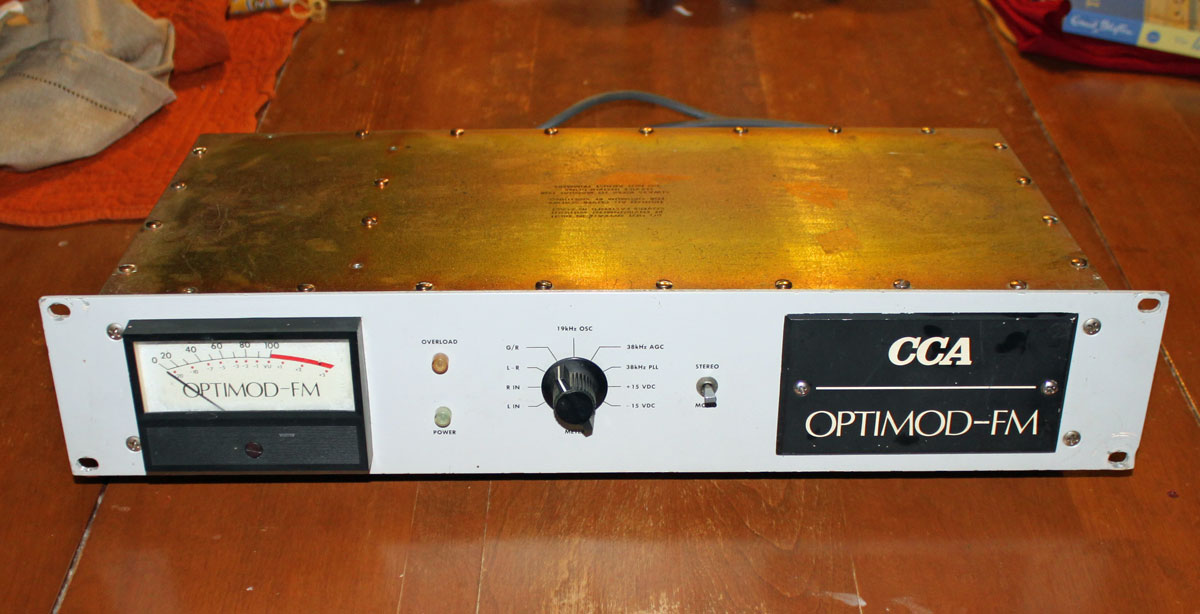
I thought I would scan it and make it available here. As luck would have it, there is also a corresponding piece of equipment to go along with it. I had never seen a “CCA Optomod” (.pdf) before I was working at one of the radio stations in Trenton, Florida. This unit was rescued from under a pile of garbage out in the lawn shed. It was full of mud wasp nests and mouse droppings. Needless to say, it required a bit of TLC to return it to operation. I replaced the electrolytics, cleaned it up, and ran some audio through it. It is probably as good as the day it left the factory. Bob Orban made some really good stuff in his day.
CCA Optomod 8000
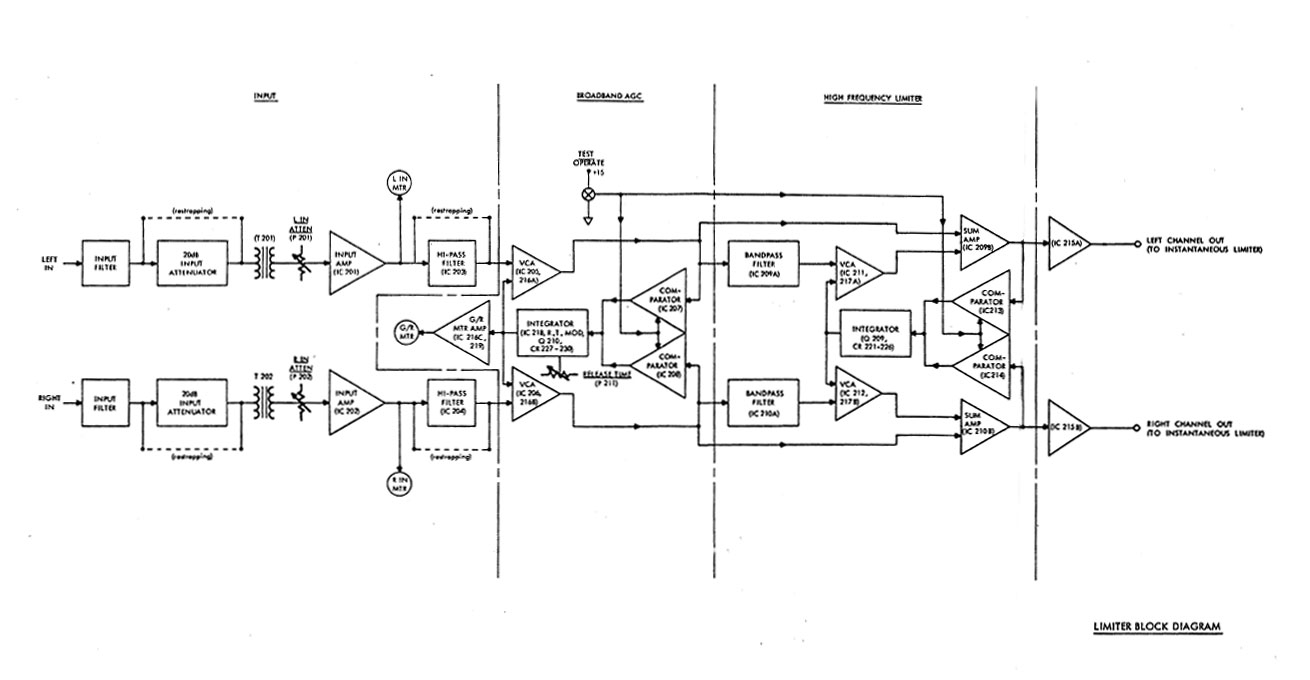
The original Optomod 8000 was an evolutionary design that made FM radio processing what it is today. The idea of combining broadband limiter, AGC and stereo generator in one box was a radical departure from the norm. The audio limiter functioned as a 15 KHz low pass filter and broadband AGC.
Orban Optomod 8000 audio limiter block diagram
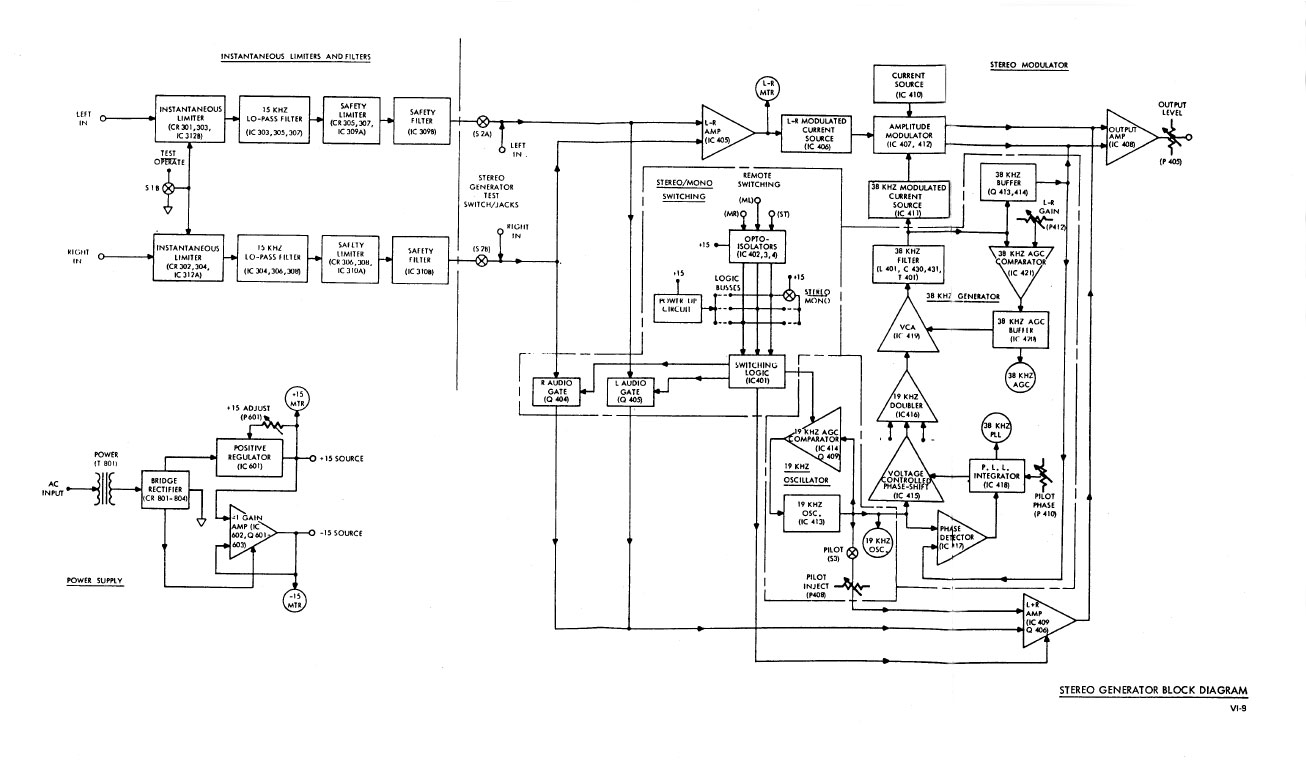
The stereo generator used very modest amounts of composite clipping to reduce overshoot and transients. Many people disparage composite clippers. If done correctly, it is transparent to the listener and increases perceived loudness by stripping off modulation product that is non-productive.
Orban Optomod 8000 Stereo Generator block diagram
Some thirty five or so years later, there are still many of these units in service in various stations around the world.
As more and more broadcast facilities are moving toward IP data for all types of data transfer including digitized audio, video, telephony, documents, email, applications, and programs. Managing an IP network is becoming more and more important. In most broadcast facilities, Ethernet-based IP networks have been the normal operating infrastructure for email, printing, file sharing, common programs, file storage, and other office functions for many years. Either directly or indirectly, most broadcast engineers have some degree of experience with networking.
With many more IP-based audio consoles, routing systems, STL’s and other equipment coming online, understanding IP networking is becoming a critical skill set. Eventually, all distribution of content will transition to IP-based systems and the current network of terrestrial broadcast transmitters will be switched off.
The difference between an ordinary office network and an AoIP (Audio over IP) or VoIP network is transfer consistency. In an office network, data transfer is generally bursty; somebody moves a file or requests an HTTP page, etc. Data is transferred quickly from point A to point B, then the network goes back to its mostly quiescent state. In the AoIP environment, the data transfer is steady state and the data volume is high. That is to say, once a session is started, it is expected to say active 24/7 for the foreseeable future. In this situation, any small error or design flaw, which may not be noticed on an office network can cause great problems on an AoIP network. The absolute worst kind of problem is intermittent failure.
Monitoring and analyzing data flow on a network can be a critical part of troubleshooting and network system administration. Data flow analysis can discover and pinpoint problems such as:
Design flaws, infrastructure bottlenecks and data choke points
Worms, viruses, and other malware
Abusive or unauthorized use
Quality of Service (QoS) issues
Cisco defines flow as the following:
A unidirectional stream of packets between a given source and destination—both defined by a network-layer IP address and transport-layer source and destination port numbers. Specifically, a flow is identified as the combination of the following seven key fields:
Source IP address
Destination IP address
Source port number
Destination port number
Layer 3 protocol type
ToS byte
Input logical interface
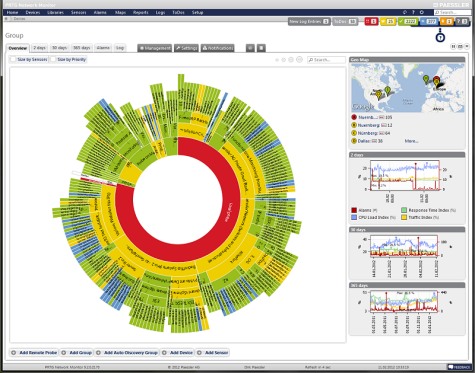
Packet sniffers such as Wire Shark can do this, but there are far better and easier ways to look at data flow. Network monitoring tools such as Paessler PRTG can give great insight as to what is going on with a network. PRTG uses SNMP (Simple Network Management Protocol) on a host machine to run the server core and at least one other host to be used as a sensor. There are instructions on how to run it as a virtual machine on a windows server, which would be the proper way to implement the server, in my opinion.
For small to medium installations, the freeware version may be all that is needed. For larger networks and major market installations, one of the lower-cost paid versions may be required.
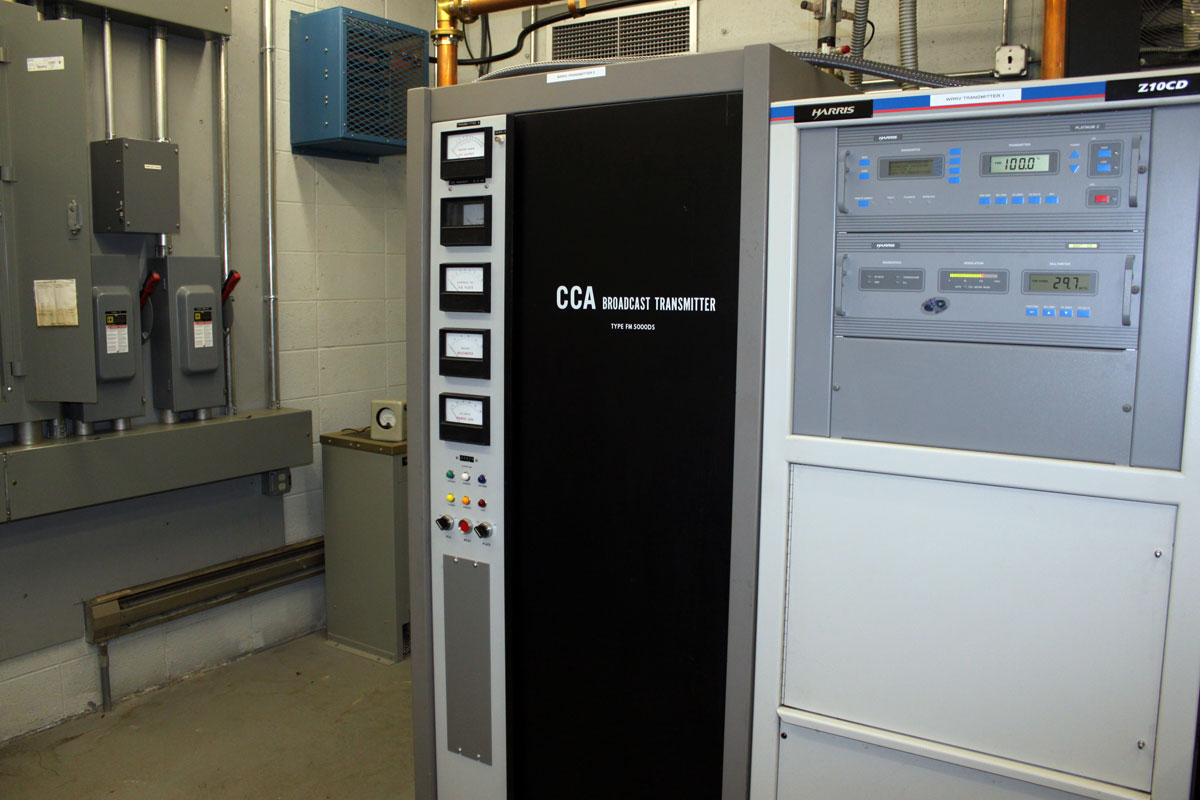
We or rather, I have been working on installing this CCA transmitter as a backup unit at one of our sites. It was installed as a backup at another site but was mothballed about ten years ago. Now, we need to get it running again and re-tune it. Seems like a fairly uncomplicated job.
CCA FM-5000DS transmitter, circa 1971
Except, every time I start it, another one of these 1000 pf bypass/feed-through capacitors fails. They are located at various points around the PA enclosure and route AC voltages into and out of that enclosure. The bypass function is needed to keep stray RF off of the control circuits. Normally, they have been failing with a medium resistance fault (40-70 ohms) to the case. That causes the control circuit breaker to trip.
This time, however, it was on the primary for the filament transformer on the IPA tube. Just a wee little pop, followed by some ozone smell and sans power output. I have, thus far replaced four of these and there are seven originals still in the transmitter.
Feedthru capacitors
It is time to replace them all, otherwise, this rig will fail when we need it the most. The replacement part is a Mouser 800-24437X5S0102MLF, 1000 pf 500 v made by Tusonix Electronics.
This was filmed in 2006. In 2010, Radio Sweden ceased broadcasting on medium and shortwave, thus I believe these sites have Horby (HF) have been dismantled. Medium wave installation Solvesborg is visible starting at 15:30. Two tower directional array 180-degree towers with 600 KW carrier power. Quite impressive.