May 2012
M T W T F S S
« Apr    
 123456
78910111213
14151617181920
21222324252627
28293031  

Archives

Categories

The Devil is in the details

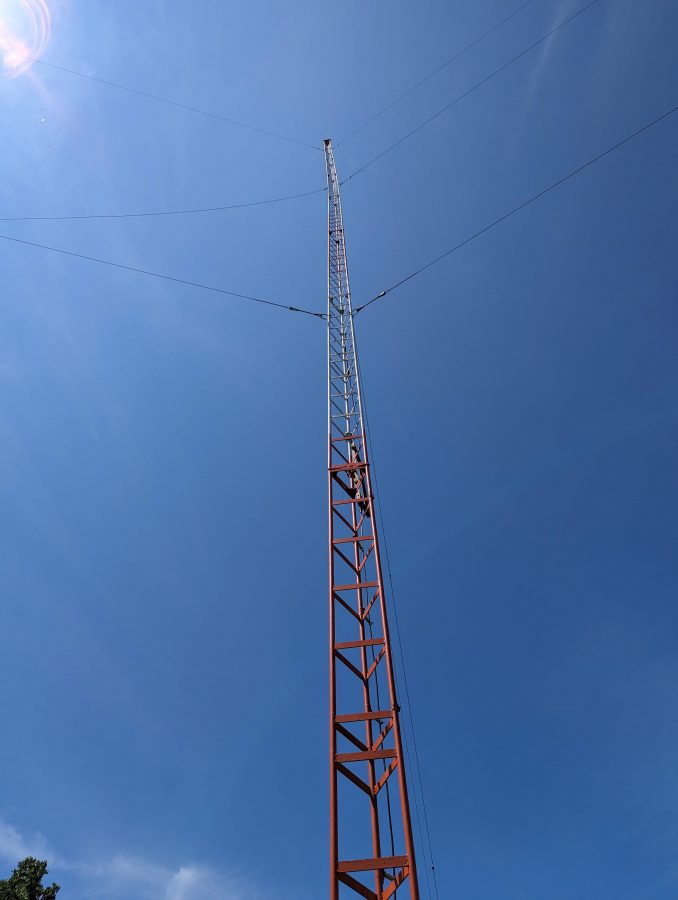
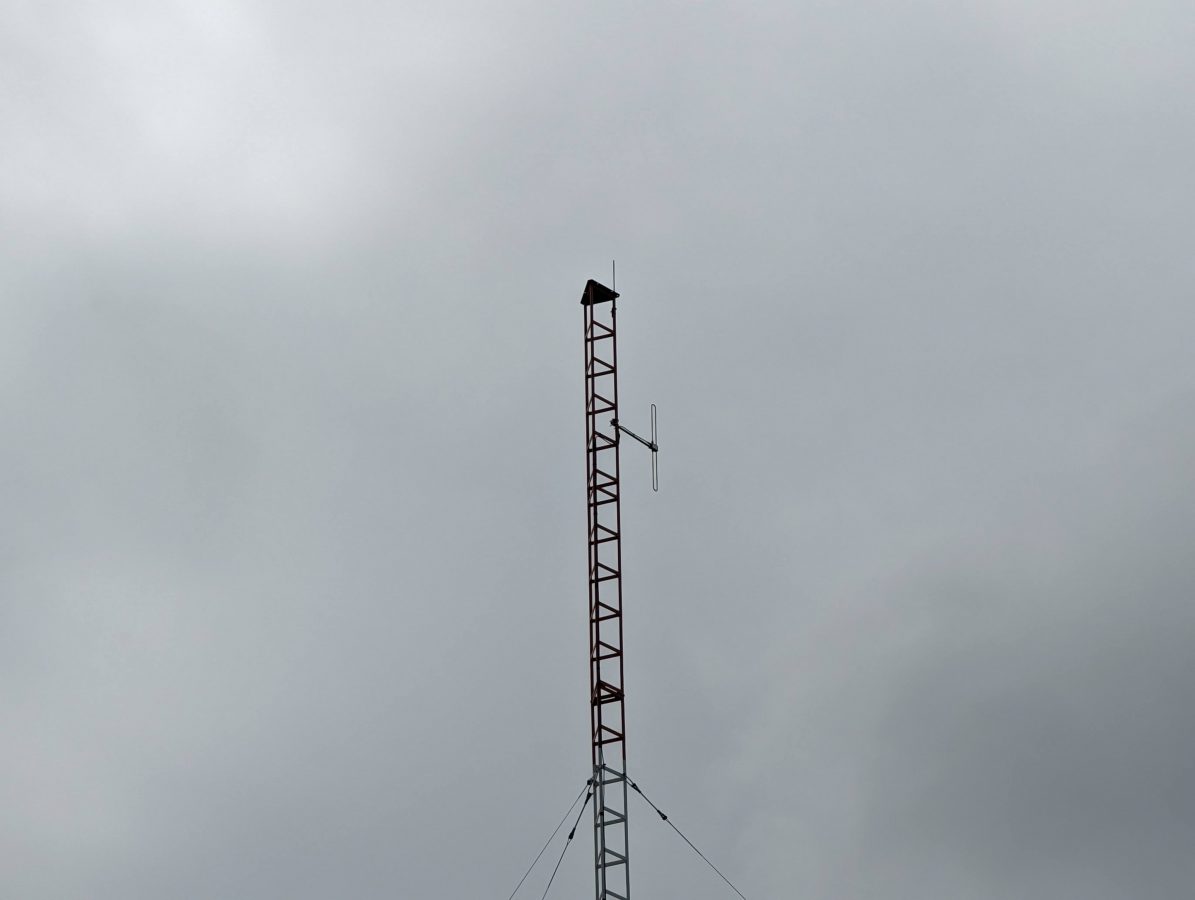
Sometimes it is the seemly small insignificant detail that will take a station off the air. To expound on that a bit, I have my own story which happened yesterday.  The back story is this:  About three years ago, some unauthorized tower climbers climbed the WICC south tower all the way to the top.  The station remained on the air at full power while this was going on.  Once at the top of the three hundred foot tower, the climber, we can call him “Crack Head,” manged to loosen, then remove the beacon and throw it to the ground.  Mind you, this guy had no safely climbing equipment whatsoever and he had to stand on the top plate, which is all of 20″ x 20″ square, of which the beacon takes up 16 inches.  A two inch purchase between himself and eternity demonstrates that God does indeed smile on fools and drunks.

WICC south tower with long island sound in background

WICC South tower with Long Island sound in background

Fortunately, his friend on the ground had a video camera and filmed the entire episode.  Even better, they then posted it on Youtube.   The police took interest in this video and it’s owners because the damage to the radio station was significant, and with the tower being about a mile away from the end of the Stratford Airport runway 17, presented a real hazard to air navigation.  Needless to say, the video was used by the prosecution and both crack heads are now in prison, God having limits after all.

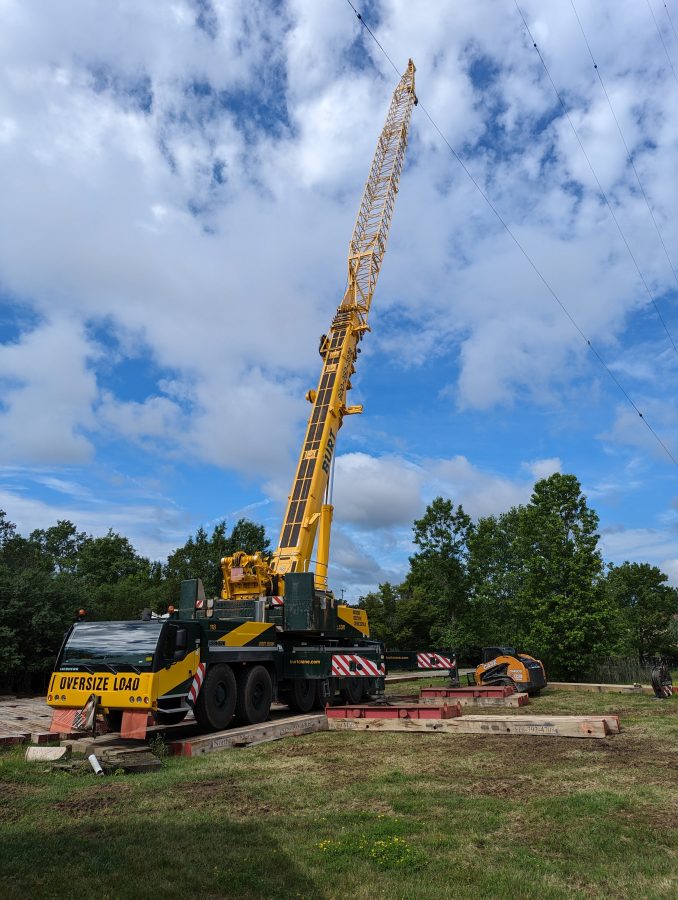
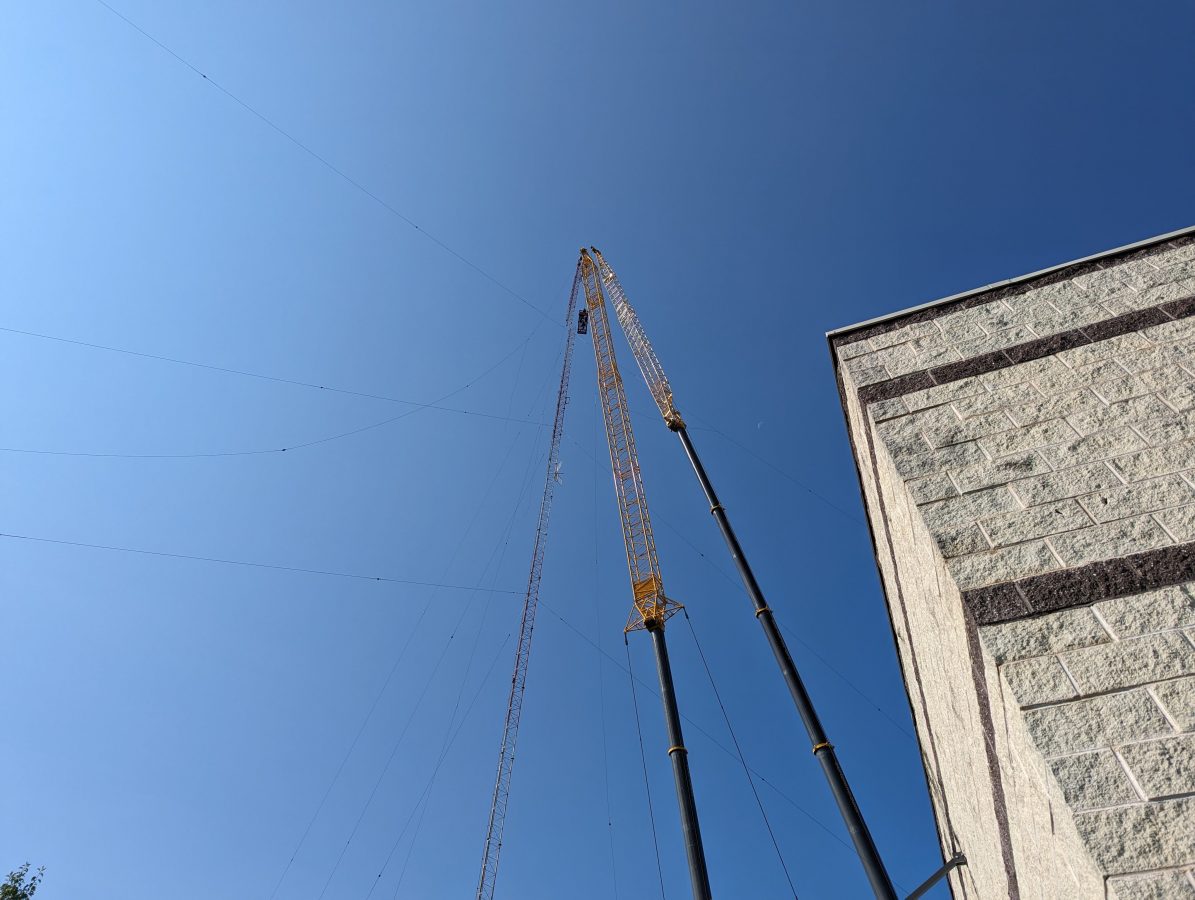
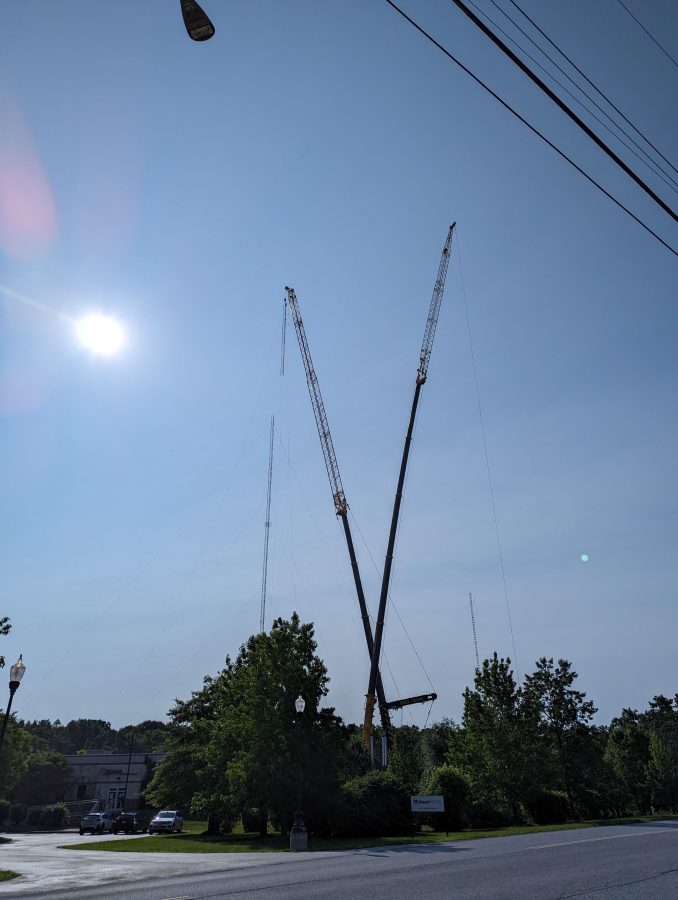
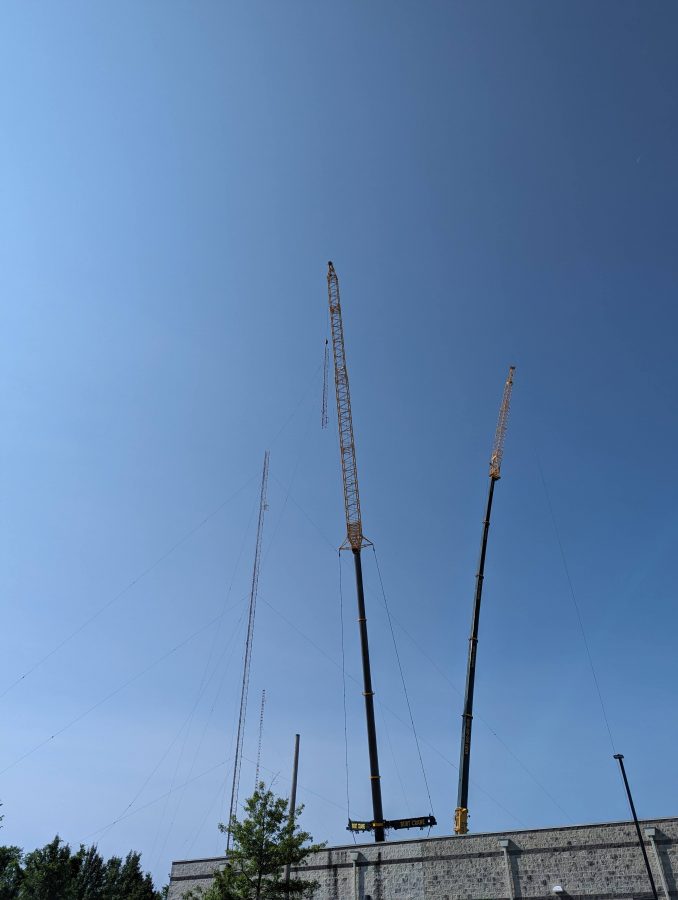
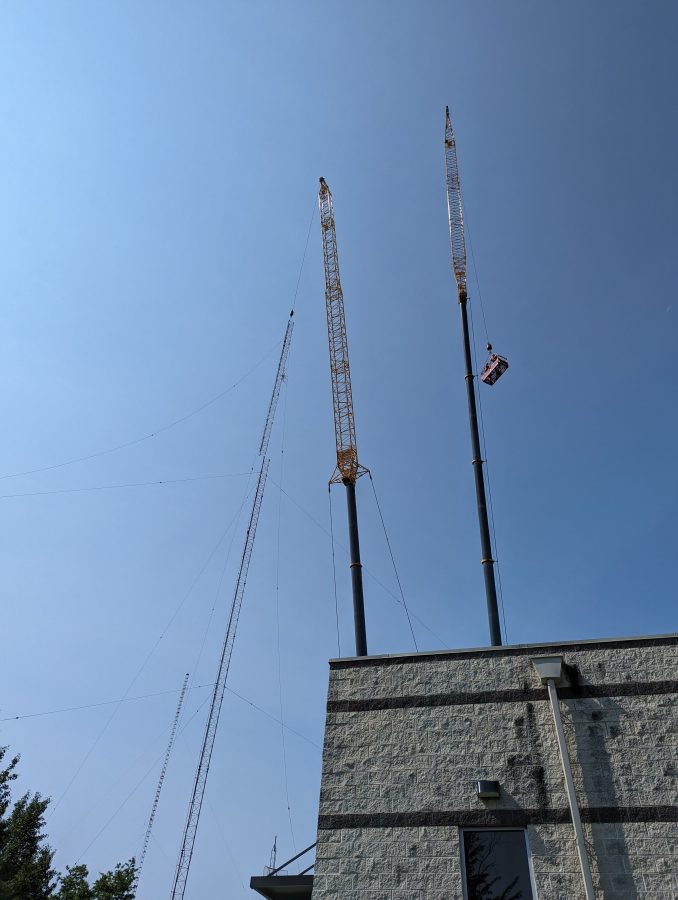
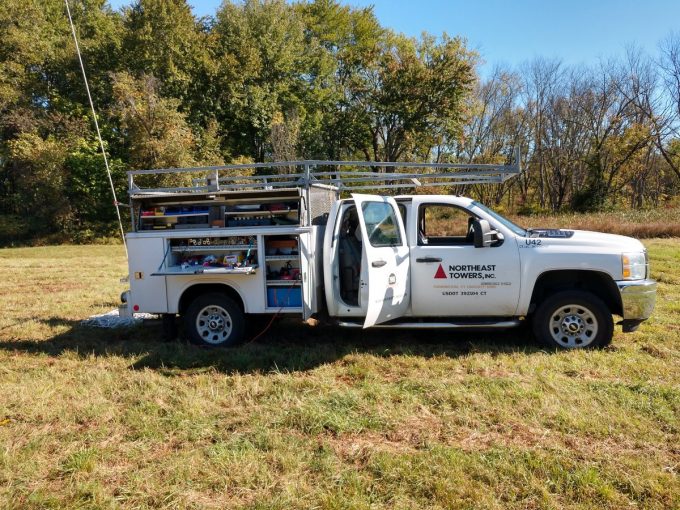
A spare beacon was hoisted to the top of the tower an placed in service.  This beacon was quite old and leaky and continually failed, burning out the tower light flasher.  Thus, it was time to replace it.  We took advantage of the outstanding weather and the crew from Northeast Towers made quick work of it.  Removing and lower the old beacon to the ground, then hoisting the new beacon up and installing it.  I goobered it by not taking pictures of the beacon fixtures flying up and down the tower.  I took the station off the air for about five minutes to check the condition of the wiring going up the tower, making sure there were no shorts up the tower or back toward the transmitter building.  While I was doing this, I overheard the two way radio conversation between the tower climber and the ground crew on wiring.  It seems the old beacon had only two wires, hot and neutral.  The new beacon had three wires, hot, neutral and ground.  Tie the neutral and ground wires together, instructed the tower boss.

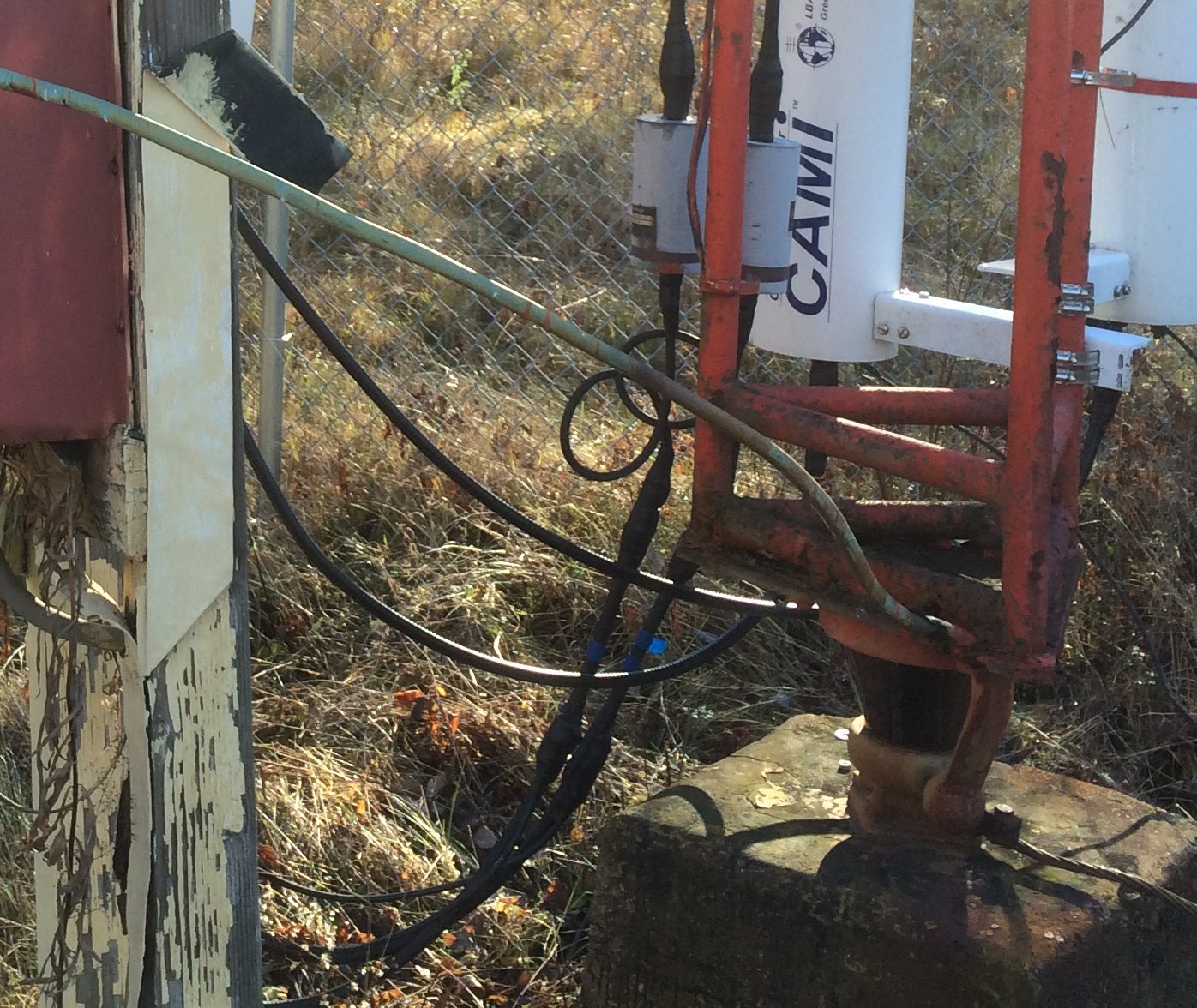
Nothing more was though of that, it sounded okay to me.  Unfortunately, the tower had other ideas.  About an hour after we secured from the job and drove away, the station went off the air.  It seems the neutral wire was not referenced to the tower previously.  Because now the neutral wire was tied to the top of the tower, the RF found a path to ground via the tower lighting choke at the base of the tower.  It started arcing to it’s access door causing the transmitter to go off around 4 PM.  Equally unfortunate was the fact that the construction gate was closed and I had to get a boat ride with the harbor master, which took about an hour to arrange.  The entire situation was further complicated by darkness, which comes predictably around 6:30 PM this time of year.

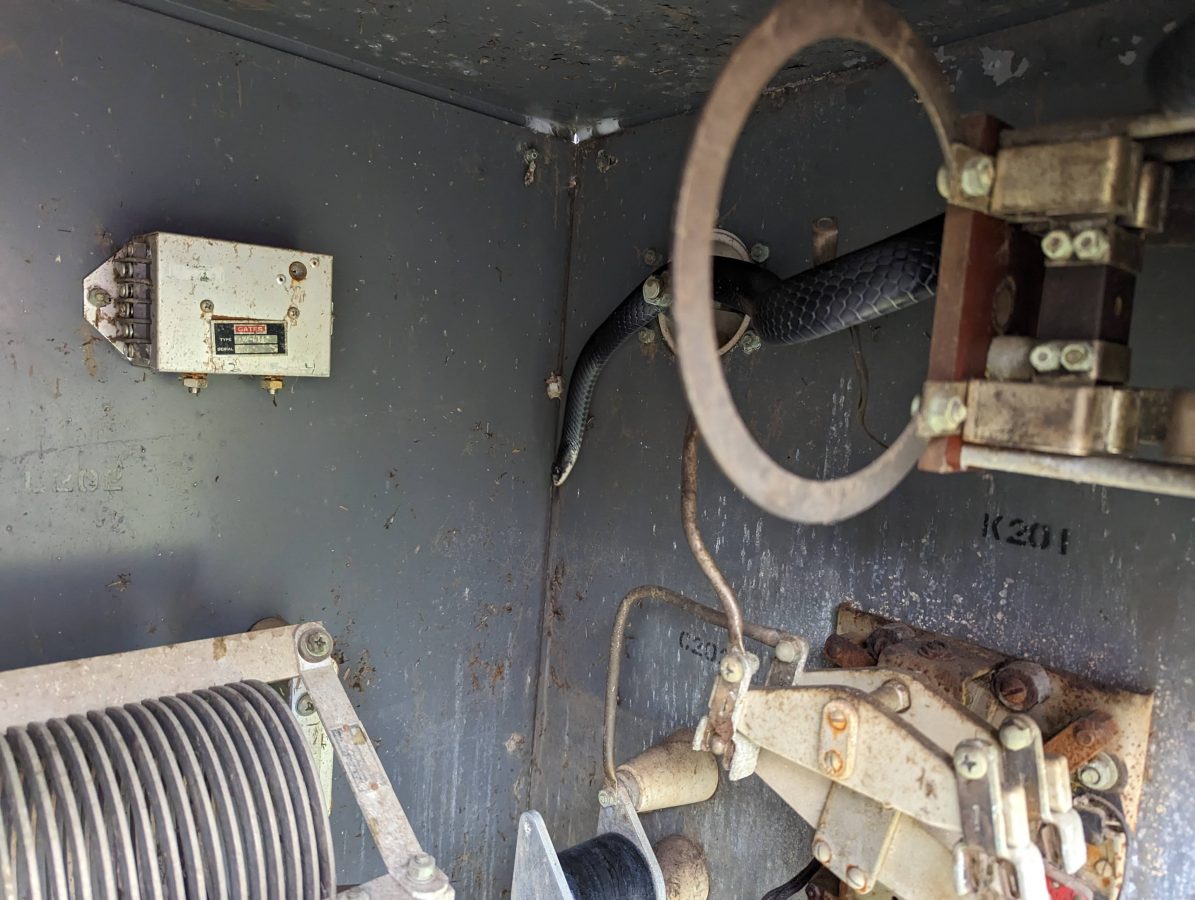
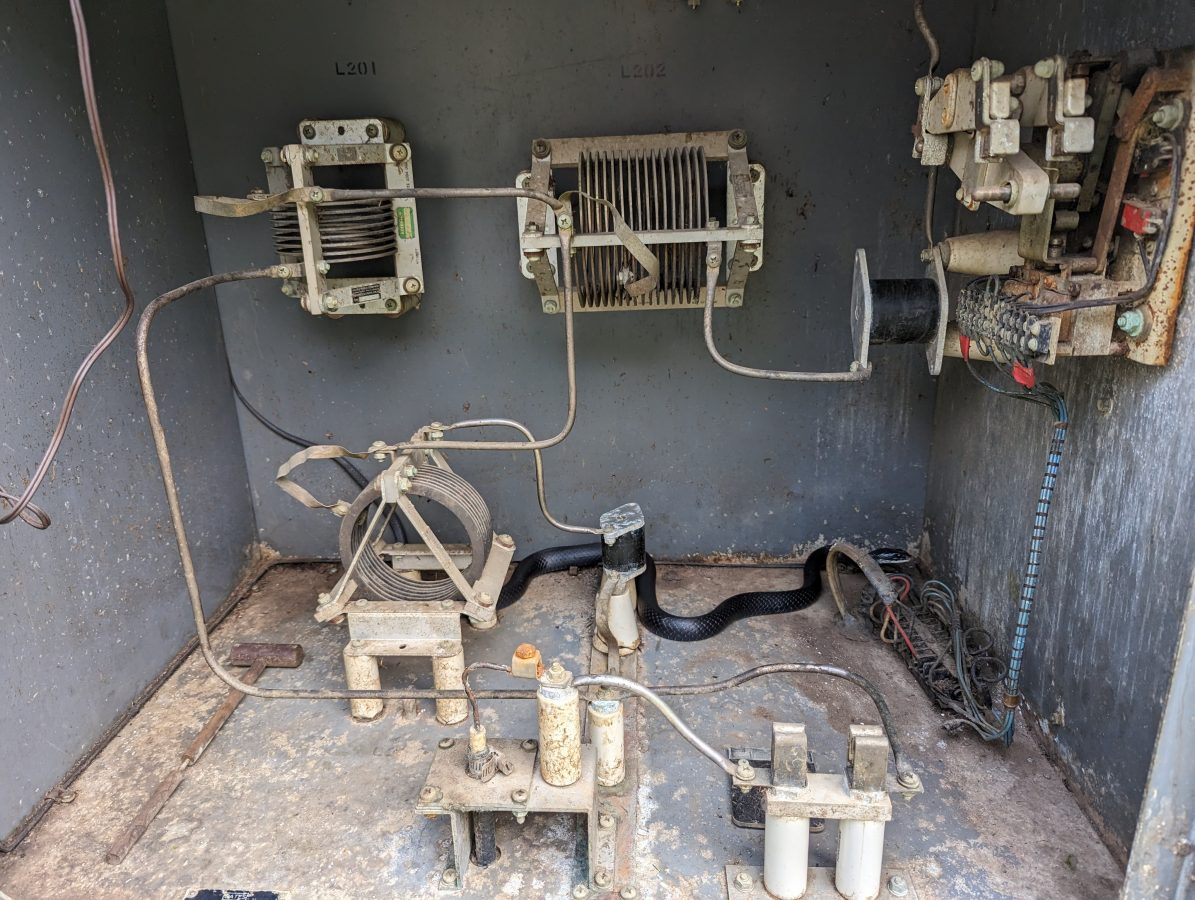
When I arrived back out at the base of the tower, I took the metal access door off of the tower light choke cabinet.  I could see the fresh track marks all across the bottom of the door. With the door off, I turned the transmitter on.  Worked just fine.    I tried cleaning it off with a Scotch Bright, but to no avail, the transmitter would not run at any power level with the door in place.

Finally, the harbor master becoming impatient and darkness quickly falling, I taped a garbage bag over the tower light choke box with the door off and turned the transmitter back on.  The tower crew will have to come back and remove the ground wire on the beacon.

The first rule of trouble shooting: Check the last thing that was worked on first.

Update:  And look, here is the original story in Radio World: Tough times a Pleasure Beach.

The folded Unipole antenna

In the 1990′s, the folded unipole antenna was touted by many to be the savior of AM radio.  There were many claims that a folded unipole antenna did not need a complicated ground system, a simple ground rod at the base of the tower would work fine.  That turned out to be not exactly the case.   Kintronic did a study (.pdf) that basically dispelled that notion, along with several others.   The folded unipole antenna performed within a few percentage points of a series fed tower under the same testing conditions.

three wire folded unipole on a guyed tower

three wire folded unipole on a guyed tower

Folded unipoles do have the advantage of a grounded tower.  Grounded towers have a distinct advantage in lightning prone areas, such as central Florida.  I can attest through my own experience, a series fed tower is much more likely to induce lightning damage to a transmitter or ATU.  Folded unipole tower systems can also be used to co-locate other antennas, such as STL, cellular, PCS, etc.  Making some extra rental money on an AM tower is not a bad way to go.

I began fooling around with MANNA-GAL, which is a NEC-2 based program.  It is a free ham radio program, so it is a little clunky to use and it took a while to figure out, but once I did, it is fun.  I modeled a unipole antenna for medium wave use and the results are pretty interesting.  First of all, I drew out X-Y part of the system on graph paper because the program requires all wires (elements) be entered in a coordinate based format.  The Z axis is the tower, since there is only one of those, that was easy.  I played around with series vs. unipole systems and the results were fairly close to what they are supposed to be.  One of the nice things about MANNA-GAL is it allows the user to change the ground conditions.  To add a unipole to the tower, I put 3 wires spaced between one to two meters away from the primary Z axis wire, connected them to the top of the tower and changed the drive point to the skirt wires.

The interesting part is when I added an above ground counterpoise instead of a buried radial ground system.  I think Ron Nott, of Nott, ltd. did much of this work too.  What I found was that with between 5 – 10 above ground radials of 90 degrees or greater, the efficiencies are within about 10 percent of theoretical for a 120 buried radial system.  Again, the ground conductivity plays a big roll in this, poor ground conductivity will reduce efficiencies equally for both systems.

As the tower height approaches 110 degrees or so, depending on the spacing from the tower of the skirt wires, the bandwidth really starts to open up.  At 110 degrees the base impedance is about 120 ohms with about 80 ohms inductive reactance.   Both the impedance and reactance slope slightly upward with frequency but are linear +/- 50 KHz of carrier.  This slight asymmetrical sideband distribution can be easily canceled out in the ATU with a few degrees of negative phase shift through the T network.

Again, all of this is theoretical, but I have found that NEC is usually within +/- 10% of real world values.  It is difficult to get a handle on ground conductivity unless measurements are taken.  Even from season to season, that can change.

The above ground counterpoise requires a partial proof, according to FCC 73.186.  If this were a directional station, this would be required anyway.  For a non-directional station, it is pretty easy, for six radials, it would probably take about one to two days of driving around with a FIM 41.  The other consideration is public exposure to RFR from the radials.  This can easily be measured with a NARDA meter.  More radials will spread the induced currents out more, for for higher powered stations, 10 above ground radials might be required.

There are several radio stations in the country which are successfully using above ground counterpoises.  It seems to be a good system and requires much less material and labor to install than the traditional ground system.

Therefore, if I were designing a new AM station, I’d use a grounded tower between 105 and 110 degrees with a unipole and 6 above ground radials 90 degrees or greater.

The surreal trip to the WICC transmitter site

What could be so bad about going to an AM transmitter site on an peninsula off of the Long Island Sound.  Sounds pretty nice, right?  It began just so, driving through the town of Stratford Beach parking lot to the construction gate, the towers were visible off in the distance.  A nice crushed gravel road across the barrier island, I have certainly been to worse places.

WICC towers pleasure beach island

WICC towers Pleasure Beach Island, CT

And then, things begin to look a little bit different.  It is really hard to put into words, seems like some other country.

Pleasure Beach Bungalows

The beginning of the Pleasure Beach Bungalow Colony

It turns out this is not quite the nice trip after all.

Pleasure beach lawless zone

Pleasure Beach Lawless Zone

I’ve been to several so called “developing areas” like Port Au Prince, Hatti for example.  Nothing ever looked this bad.

Pleasure Beach ocean side bungalow

Pleasure Beach Ocean Side Bungalow

I can imagine some family coming here every summer to spend time at the beach.

Burned out bungalows

Burned out bungalows

What anarchy looks like.

Pleasure beach burned out cottage

Pleasure Beach burned out cottage

The back story is this:  From the 1920′s up until 1996, Pleasure Beach was a nice seasonal oceanside bungalow colony, complete with an amusement park.  These cottages (but not the land they were on) were owned by people from the surrounding cities and towns and the entire area appeared to be quite nice in it’s day.  Then, in 1996, the wooden bridge that connected Pleasure Beach to Bridgeport burned.  There are several theories; crack heads, radical environmentalist, etc.  The city of Bridgeport did not rebuild the bridge, which meant the only access was by walking from the Town of Stratford beach parking lot, at trek of at least a mile or longer.  In 2007, the town of Stratford decided not to renew these land leases and the building owners were forced to remove any remaining items they wanted by barge.  Soon thereafter vandals began walking down the peninsula from Stratford.  Slowly, most of the bungalows were broken into and several were burned.  This is mostly the work of “kids,” who, because they are under the age of 18, get a slap on the wrist and returned to their parents.  Oh, those wacky kids, what will they do next?

Truth be told, they should be the ones out here cleaning this up, for free.

Finally, this year, the city began tearing down and cleaning up the remaining buildings, trying to put the former bungalow colony “back to nature.”

WICC transmitter building

WICC transmitter building

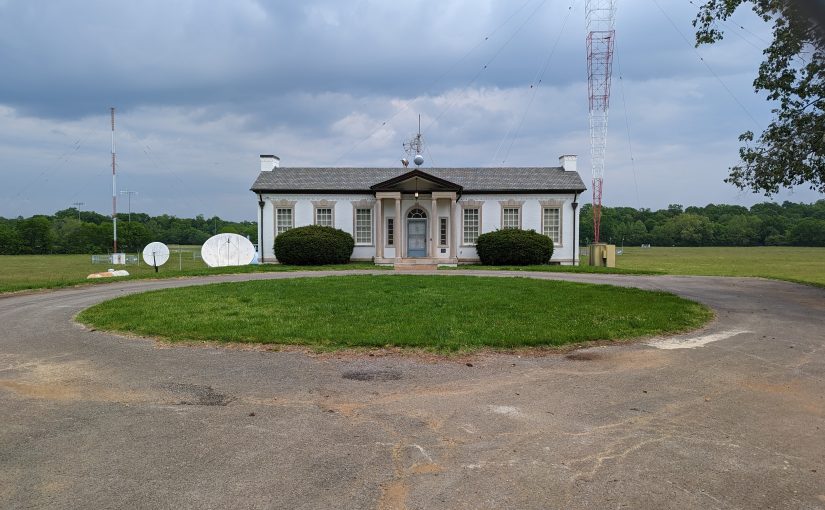
The transmitter site for WICC moved here in 1932.  This building contained a night time operating studio, kitchen, bathroom, and bedroom.  I can imagine hanging out here some summer night, spinning tunes and having a good time.  The former amusement part is just out of the picture to the left.  At the amusement park, there was a carousel, a big snack bar, a dance hall and an area for portable rides like Ferris Wheals and such.

Now the building is full of disused gear, old carts, transmitter and tower parts, the water has been shut off and I’d not want to be out here at night under any circumstances.

WICC south tower

WICC north tower

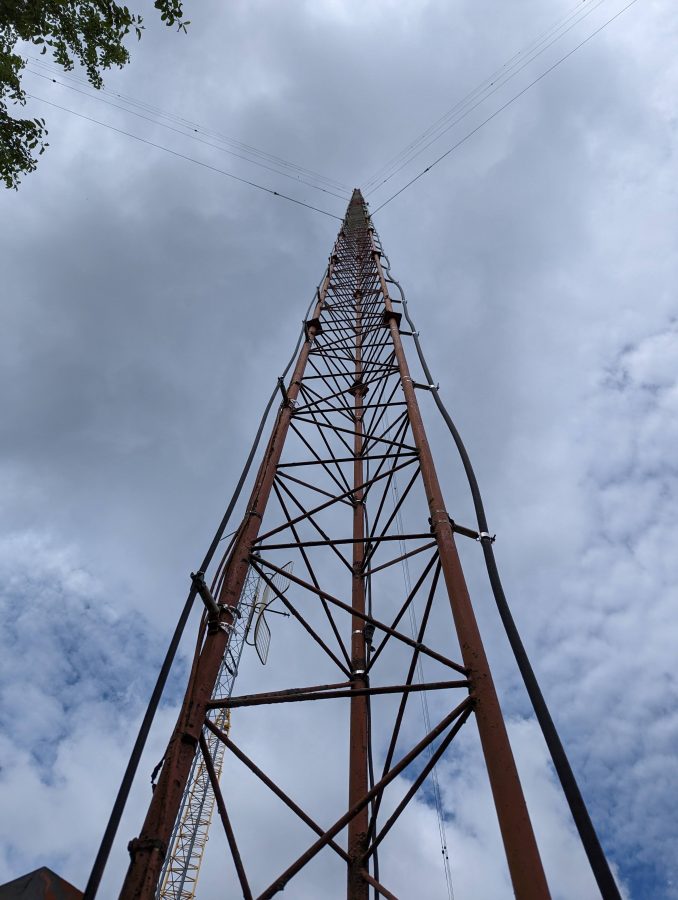
The antenna array consists of two 300 foot Milliken towers, originally from WNAC.  Many people mistakenly think these are Blaw-Knox towers.  Milliken preceded Blaw-Knox by several years.  They built and designed towers around the world for radio and electric transmission.  In the late 1930′s they were bought out by Blaw-Knox, which kept the design.  I love these tapered self supporters, they have survived several major Hurricanes since 1932.  The south tower is about 150 yards from the Long Island Sound.  Salt air seems to do them no harm, either.

WICC Milliken tower, south looking up

WICC Milliken south Tower, looking up

The station operates at 1 KW day, 500 watts night, DA2.  The towers are 60 degrees tall, space 149 degrees.  That is a little short, however, they are surrounded by salt water, so the signal goes like gangbusters.  Because they are short, the impedances are low, about 10 ohms for night time and 30 ohms for daytime.  Since the towers  are so wide, the impedances are flat far beyond 50 KHz either side of the carrier, which makes it a nice broad banded antenna system.  The 1932 phasors and ATUs were redone in 1972.  All of the common point impedance measurements are still posted on the wall.

WICC Harris SX-1A, Phasor and Harris BC1H

WICC Harris SX-1A, Phasor and Harris HC1H

The main transmitter is a 1990 Harris model SX-1A.  It seems to be reliable enough, my experience with the SX-1 is it has an overly complicated control system.  The back up is a Harris BC1H, a sort of hybrid solid state tube unit, which is also reliable.

Frequency voltage meter

WICC frequency and voltage meter

This high tech test and measurement center is attached to the incoming electrical service.  Over the years, there has been some quality control issues with the incoming electrical service, mostly due to Osprey’s building nests on the cross arms.  During rain storms, these nests catch on fire and kill the power to the site.  The power company is in the process of redoing the electrical service to the building.

This is a video of the former amusement part and cottages shot two years ago, when the cottages were more or less intact. It is a bunch of stills set to Pink Floyd music:

Looks like they all just got up and left.

Tower Safety Equipment

The tower climbing video that has gone near viral pointed out a few things.  Climbing towers is dangerous business, best left to those who are trained for it and have the insurance.

It is true that tower climbing contractors have the responsibility to protect their own workers while working on a clients tower.  That does not completely absolve the tower owner from liability.  The it is incumbent on the tower owner to provide a safe structure to climb.  This can mean the mechanical integrity of the tower, reduction of transmitter power while workers are in high RF energy fields, and providing the proper permanently attached safety equipment on the tower itself;  Climbing ladders, ladder safety cages, rungs, elevators, and fall arresting gear.

In that tower video post, I mentioned something called a safety climb.  That is a cable, usually 3/8 inch stainless steel aircraft cable, attached, about eight inches from the climbing surface like this:

Western Electric 200 foot tower with retro fitted safety climb[

Western Electric 200 foot tower with retro fitted safety climb

The tower itself was built in 1959 and did not have this equipment when new.  This was a retro fit kit, installed in 2003, I believe.

The tower climber wears a harness with a special karabiner attached to the front and waist level.  When climbing this ladder, the karabiner slides up the cable.  If he were to fall, the karabiner has an auto locking or braking mechanism that would stop his fall.

Tower safety climb

Tower safety climb, attached to climbing ladder

Many tower climbers, especially those that have been in the business for a while, do not like these things.  When climbing, especially if one has long legs, the tendency is to bump your knees on the bottom of the next ladder rung.  This is because the belt holds the climber’s waist in making it difficult to get the rear end out, away from the ladder the way most people like to climb.  The alternative is to climb with the knees spread apart, like a frog, which is hard on the hamstrings and quite literally, a pain in the ass.  However, if a tower is so equipped, it must be used.

I have, wherever possible, retro fitted towers with these devices.  Of course, all new towers come equipped with them. In some situations, it is not possible to retro fit towers with safety climbs, either because there is no attachment point at the top of the tower that meets the OHSA spec, there is not a climbing ladder, or it would affect the tower tuning, as in an AM tower or near a TV or FM antenna.

Hundreds of gallons of ink have been spilled by Los Federals in OHSA regulations 29 CFR 1926 and 29 CFR 1910.268(g) regarding fall protection and fall protection equipment for telecommunications workers.  In this litigious world we live in, tower owners and or their on site representatives should know these rules and make sure they are followed.

Diplexed Directional AM stations

Pictures and story sent along by occasional reader John.  I worked on diplexing an AM station in 2003, it was a 5 KW and a 10 KW on a single tower.  Those power levels require using some pretty large components, however, the set up was pretty straight forward.  Each station had it’s own ATU (antenna tuning unit) which was then fed into band pass filters to isolate the other station and coupled to the tower.  The ATUs were set up as low pass and high pass filters respective to their frequency.  The whole thing had something like 45 dB isolation, which worked(s) very well.

Doing this with a directional antenna system is another problem altogether.  Add to that the tight filter networks required as the station are only 100 KHz apart.  One saving grace, the power levels are relatively low.  The higher the power gets, the more the magnetic fields build up around the coils and mutual coupling becomes an issue.

As John notes:

1560 (WGLB) owns the site and has been there for about 8 years. Originally WGLB was in Port Washington, WI with a BTA-250M running into a 2-tower array. The city of license was changed to Elm Grove, and this necessitated a move about 30 miles south to the site shown. A 6 tower combination array was needed to protect 1550 in Lake Geneva, WI, 1550 in Madison, WI, 1550 in Morris, IL, 1540 in Hartford, WI, 1570 in Appleton, WI, 1530 in Cambpellsport, WI and 1530 in Elmhurst, IL. A 4-tower in-line array is used on 1560 during daytime, and a 4-tower parallelogram with the two south towers switched in and the North two in-line towers switched out (floated) for 1560 nighttime operation.

WGLB WJTI combined directional antenna system

WGLB WJTI combined directional antenna system

Looks interesting.  Fortunately the towers are not required to be painted or lighted, that is a big maintenance headache.

WGLB WJTI antenna field

WGLB WJTI antenna field

Another thing to note; the site looks well maintained, the grass is mowed, no trees growing up by the transmitter building, the building is painted, etc.  Likely these stations are locally owned and making a modest profit, not some abandoned after thought.

Antenna Tuning Units

Antenna Tuning Units

Each tower has separate ATU’s for each station.  The ATU’s then feed what is likely a very tight band pass filter for each station, which then combines the two signal and feeds the tower.  John continues:

An arrangement was designed when 1460 approached 1560 about leasing tower space for moving 1460 (ND-D) from Racine, WI north to West Allis, WI. This design is ingenious in that the array tower usage between the two stations is reversed for day-night operation! In other words, the 4-tower in-line array is used for 1460 nighttime, and the 4-tower parallelogram array consisting of the four south towers is used for 1460 daytime operation.

WJTI Phasetek antenna phasor

WJTI Phasetek antenna phasor

The 1460 pattern is pretty tight to protect 1470 at West Bend, WI approximately 30 miles north, and nighttime also to protect 1460 in DesMoines, IA. The friendly folks at Phasetek (Quakertown, PA) did the 1460 phasor and notch traps at each tower to prevent cross-modulation (inter-modulation) of the two signals feeding the towers, and after assembly on-site tuned up like a dream!

And that is saying something.  I have dealt with phasor manufactures before, sometimes they nail it, sometimes they don’t.  Tune up can be a real challenge, which tends to put everyone on edge.

I might add that the high-tension electrical transmission towers nearby were de-tuned at 1560 years ago, and upon checking were broad enough to not require any further de-tuning at 1460! Another attribute of this design is that if something ever changes in the future, the deal can be easily be dissolved, because there is no mutual ownership of any equipment on site! It is truly one of the best “Win-Win” instances of AM station directional antenna combining I have ever seen!

It is good to see stations taking advantage of co-location these days.  It is a great way to save money on real estate and hassles with the zoning boards, who all see dollar signs when someone talks of putting up a tower.  With the amount of computing power and the lessons learned in the past 90 years or so, we are beginning to get this medium wave broadcasting thing down.

The first radio station licensed to Albany, NY

Although not the first station in the area, that honor goes to WGY. In fact, RPI licensed WHAZ in 1923, which makes it the second regional station.  Starting on 1430 Khz as WOKO in New York City in 1923, the station made a few stops along the way.  One of those was on Mt. Beacon from 1928 until 1930.  The original transmitter building is still there, although the tower was taken down in 2005 to make way for the DTV stations that moved in.    I always wondered why an FM tower on the top of a mountain had a base insulator.

WDDY towers

WDDY towers, Bethlehem, NY

In 1930, WOKO was sold and moved to Albany, NY, becoming the first station licensed to that city.  The transmitter site is located off of Kenwood Avenue in the town of Bethlehem, about 4 miles south of down town Albany.  It first signed on with 1 KW, increasing to 5 KW in 1947.   This is the original transmitter site, but the towers were redone in the mid 1970′s.  The towers themselves are 130 electrical degrees (235 feet) tall.  Like all AM stations, for years it serviced the community until it was gradually reduced to a satellite repeater, now owned by Disney.

WDDY transmitter site

WDDY transmitter site

The original transmitter building is in the back, the front was added in the 1970′s when the studios and offices colocated with the transmitter.  Prior to that, they were in downtown Albany.

Nautel XR6 Medium wave broadcast transmitter

Nautel XR6 medium wave broadcast transmitter

The Harris BC5H transmitter was replaced with a Nautel in 2006.  The Harris AM H series transmitter has a pair of transistors on the audio driver board which were unique to that transmitter and no longer manufactured.  There are no equivalent replacement part.  Once those transistors fail, the transmitter is done.

I really think that AM could make a comeback, but the following conditions need to be met:

  1. Kill AM HD radio.  Kill it dead.
  2. Cut away the dead wood.  Those stations that are not making money, have not made money and have no hope of ever turning a profit again.  Most of these are owned by large consolidator that cannot yet afford to write off the bad investment.  More and more will be spun off and given to MMTC and others.  If they can make a go of it, good.  If not, then the stations will go dark and eventually surrender their licenses.  We have one like that around here that basically turns it’s transmitter on one day a year to avoid license forfeiture.  That should stop, either they use it or loose it.
  3. FM radio will continue to be the investment bank darling, in spite of lower and lower listeners and revenue.  This will lead to more and more translators, HD radio, LPFM and other things being shoe horned into an already crowed band, creating AM like conditions on the FM band.
  4. Those that can take on the challenge of an AM station should immediately begin looking at reducing maintenance costs.  Directional antennas are money holes, if at all possible, get rid of the DA in favor of single tower closer to town.  Diplexing with another AM is a great way to save money and the costs of building a new tower.  Using a taller tower, up to 190 electrical degrees, will daytime signal and reduce the radiation angle (vertical) of the tower, thus permitting better PSSA, PSRA and or night time operation.
  5. Local programming.  Local sports, local politicians, local bands, local church services, local events, etc.  Local.

But anyway…

Where will they put a radio station this time

In the time that I have been working as a broadcast engineer, I have seen some pretty unique transmitter sites. The aforementioned power plant, with the antenna mounted on a smoke stack. The more traditional AM station, located in a swamp. Other stations both AM and FM combined into one antenna, etc.

WGDJ AM transmitter site

WGDJ AM transmitter site

This is WGDJ, 1300 KHz, Albany, NY.  It is located in what might be a swamp, if we were not experiencing marginal drought conditions this summer.  The transmitter is located along route 9J.  It is a four tower directional daytime, 10 KW and a six tower directional night time, 5 KW.  Nothing spectacular, 90 degree towers, spaced 90 degrees apart.  Since they are below 200 feet, they don’t need to be lit or painted, which is nice.

WGDJ directional antenna towers

WGDJ directional antenna towers

The building and all the towers are on 20 foot high steel stilts.  The area is right next to the Hudson River and often floods in the spring time.

Back of WGDJ transmitter building

Back of WGDJ transmitter building

The transmitter site sort of reminds me of something I once saw at coastal radio stations WCC and KPH.  They were located along salt water bays.

Phasor with Nautel XR12 transmitter

Phaors with Nautel XR12 transmitter

The station signed on the air in 1963. Initially, it was a 5 KW daytimer only.  They added night operation sometime in the seventies. Around 2006 or so, they went to 10 KW day, 5 KW night.  The phasor is gigantic for a 5 KW station, or even a 10 KW station.  I’ve seen smaller phasors on 50 KW directionals.  It has a “Quakertown, PA” name plate on it, which may be the forerunner of Phasetek.  There is a rare art form to creating a functional, yet space economical phasor.  Harris could sometimes pull it off, RCA did well, Kintronics seems to be the one of the top phasor makers today.

The main transmitter is a Nautel XR12, which as a very similar look as the V series FM transmitters.  The backup transmitter is a MW5A, which, quite frankly scares me.  The site was just recently air conditioned, which means the MW5A transmitter was sucking swamp air through it for 25 years.  I do not want to turn that thing on under any circumstances.

Nautel XR12 medium wave transmitter

Nautel XR12 medium wave transmitter

All in all, the station has a pretty good signal into the capital city of New York.  It nulls to the west, somewhat.  Being on 1300, it doesn’t carry as far as some of the other class B AM station like WROW 590 Khz, but it does alright.

After years of neglect, the station is making a bit of a come back in the Albany market.  They do a lot of local talk radio, which, when the other station is carrying almost all satellite syndicated talk, is making an impression.  Being the state capital, there is a lot of fodder.

Trouble Shooting an AM Directional Antenna

50 KW Three tower AM directional

50 KW three tower AM directional antenna

One day, for no good reason, the DA (Directional Antenna) which had previously been rock stable goes haywire.  WHAT THE!  The phase is way out, or the current ratio is jumping around, nothing makes sense!  Time to start cranking on those phasor handles!  NOT!  AM DA’s are pretty easy to work on, once you get past all the smoke and mirrors hokus pokus stuff.

The first rule of trouble shooting is cause and effect.  Every DA has a common point, which is where the input impedance and transmitter power is measured.  The common point is the sum of all the tower impedances as seen through the power divider.  Any significant changes to the DA will cause the common point current to shift, either up or down.

What does the transmitter say?  Most solid state transmitters do not like to run into loads that are significantly departed from 50Ω j0.  If the common point has changed, so has the impedance and the transmitter is likely folding back to protect it’s MOSFETS.  Tube transmitters are more tolerant, but other signs may exist like increased or decreased modulation levels.

What do the tower base currents say?  An AM DA licenses will specify base current ratios as related to the reference tower.  That is to say, take the base current of a tower and divide it by the reference tower base current.  Those should be within 2% of the licensed value

What do the monitor points say?  Every AM DA will have monitor points for each pattern.  The maximum values will be specified on the license.  In addition to that, a good station practice is to do monitor point readings several times a year and keep a log.  Anything out of the ordinary indicates a problem with the DA.

1.  Problem: Phase and or current ratios are out on one or more towers.  All else is normal.  In this case, normal operation of a DA can be confirmed by base current ratios and monitor points.  Both those values should be on the license.  If base currents and monitor points are normal, then this is most certainly a sample system problem.  Most sample systems have either a sample loop on the tower or a toroid current transformer at the base.  Working from the tower back to the antenna monitor, use a Simpson 260 VOM to check for continuity.  Use a working tower get baseline information, e.g. the sample loop is a DC short, the toroid has 4 ohms DC resistance, etc.  Be careful of working in hot ATU’s.

2.  Problem:  All current/phase rations are out of tolerance and the reflected power on the transmitter has gone up.  This would indicate that a change has occurred with one of the tower impedances.  Look for changes at the base tower, excessive vegetation, flooding, burned, shorted or open components can cause this.   Be sure to check things like sample system and tower light isolation coils.

3.  Problem:  Common point current has changed one tower current/phase ration is out of tolerance.  Many AM arrays have a tower that actually present a negative impedance to the phasor.  In this case, the power is “absorbed” from the tower and fed back to the phasor.  Check the tower base current of the out of tolerance tower.  Often times, something has occurred to take that tower out of the circuit.

4.  Problem: All or some of the readings are slightly out of tolerance.  Not enough to indicate a real issue, more like a slow drifting over time.  This can be caused by seasonal variations.  Depending on the wavelength of the tower, tower bases can be very sensitive to small changes in ground conductivity, just as increased or decreased soil moisture.

5.  Problem: 2 pattern station, on pattern works, the other does not.  This is a phasor control issue.  Most DA2 stations rely on contact closures at the tower base to ensure that the pattern switching contactors have moved into the correct position.  Often times, a contactor will be hung up or a micro switch will be bad.  Another possibility is a hung up contactor in the phasor, or a control circuit problem.

Those are general starting points.  Often times, evaluating all of the information on hand will shed some light on the issue.  AM DA’s will have the following operating indicating systems:

  • Transmitter directional coupler and overload circuits
  • Directional Antenna system monitoring system
  • Tower base current meters
  • Monitoring points
  • Phasor indicator lights

Building all of those indicators into one picture will generally point to the problem.  When trouble shooting begin at one end of the circuit and logically work your way to the other.

Sometimes some seasonal effect will cause the readings to be off.  Before any phasor handle is turned, make a note of all the readings on the dial cranks.  This way, if things get out of whack there is a restore point.  If there is a seasonal variation with the antenna array, it should be well documented by previous seasons pattern changes.  If not, it could be a slow deterioration of the ground system or ATU components.

Downgrading AM stations

One of the AM station around here that I am familiar with is considering a downgrade, which is to say reduce power and get rid of a directional antenna system in favor of a non-DA antenna.  In this particular case, it makes sense, as the station can co-locate with another AM that is closer to the COL by a good distance.  The coverage from the new site at reduced power looks to be a good fit.  If this can be arraigned, the AM station in question would loose a multi tower AM antenna system that is 50 years old and all the attendant headaches, expenses and labor that goes with it.

five tower directional AM tower array in a tidal swamp

Many AM stations that are DA-2 or even DA should consider downgrading to a lower power level and getting rid of their DA system.  Directional antenna systems on AM stations are maintenance nightmares.  Unfortunately, in the 50′s, 60′s and 70′s, it was often thought that adding power, extra towers to an AM station would give them great swaths of extra coverage.  Sometimes it worked out, sometimes it did not.  Often what happened was some area was added, but in areas that where nulls toward protected stations, signal strengths went down.  What the station ended up with was more towers, more maintenance, monitor points, a sample system, and more expense.

Taking an AM station in the other direction might actually make more sense.  Go back to one tower non-directional 1 KW or whatever power can be used in the daytime.  Time was when the FCC would only allow certain power levels; .5, 1, 5, 10 and 50 KW.  Those were what a new station had to work with.  No longer is that the case, any power level can be used so long as it meets interference contours and the city of license contour coverage requirements.

Presunrise authority is normally 500 watts and is available at 6 am, post sunset authority varies but often a PSA extends the on air time to 9 pm in the winter time.  For a local radio station, which is what all but the class A AM stations are destined to become, this will be adequate.   For a loosing station, it may be that, or turn in the license and sell the land to a developer.

Diplexing on another AM stations tower closer to town is also a good way to get out of maintaining an expensive antenna array with diminishing income.

Something to think about.

Converting electrical degrees to height in meters or feet

Here is one of those things that can often be a head scratcher for the uninitiated:

The FCC data base gives antenna height in electrical degrees when what you really want to know is how tall is that tower.  Never fear, to figure all this out, requires math.  Pretty simple math at that, too.  I prefer to do these calculations in metric, it is easier and the final product can be converted to feet, if that is desired.

First of all, radio waves travel at the speed of light, known as “c” in many scientific circles.  Therefore, a quick lookup shows the speed of light is 299,792,458 meters per second (m/s).  That is in a vacuum, in a steel tower, there is a velocity factor, most often calculated as 95%, so we have to reduce speed of light in a vacuum to the speed of RF in a steel tower.

299,792,458 m/s × .95 = 284,802,835 m/s (speed of a radio wave in a steel tower)

Frequencies for AM radio are often given in KHz, which is 1000 cycles per second.  For example, 1,370 KHz × 1000 = 1,370,000 Hz (or c/s)

Therefore:

284,802,835 m/s ÷ 1,370,000 c/s = 207 meters per cycle.  Therefore the wavelength is 207 meters.

There are 360 degrees per cycle, therefore:

207 meters ÷ 360° = 0.575 meters per degree

If the height of the tower is 90°, then 90° × 0.575 m/° = 51.57 meters.  Add to that the height of the base insulator (if there is one) and the concrete tower base and that is the total tower height.

To convert meters to feet, multiply by 3.2808399.

In the United States, that tower would be 169.78 feet tall.

Our Sponsors

Translate

Chinese (Traditional)DanishFrenchGermanItalianJapaneseRussianSpanishVietnamese

Axiom


Congress shall make no law respecting an establishment of religion, or prohibiting the free exercise thereof; or abridging the freedom of speech, or of the press; or the right of the people peaceably to assemble, and to petition the Government for a redress of grievances.
~1st amendment to the United States Constitution

Any society that would give up a little liberty to gain a little security will deserve neither and lose both.
~Benjamin Franklin

...radio was discovered, and not invented, and that these frequencies and principles were always in existence long before man was aware of them. Therefore, no one owns them. They are there as free as sunlight, which is a higher frequency form of the same energy.
~Alan Weiner

Everyone has the right to freedom of opinion and expression; this right includes the freedom to hold opinions without interference and to seek, receive and impart information and ideas through any media and regardless of frontiers
~Universal Declaration Of Human Rights, Article 19

Free counters!