
Friday Funnies: Ingredients of the Universe
Continued from Part III
Profile of a successful AM radio station, March 2013: WSBS, Great Barrington, Massachusetts
Great Barrington is either a large village or a medium-sized town with a population of approximately 7,100. There are many listenable FM and AM radio stations from Albany, NY, Pittsfield, Springfield, and Poughkeepsie, NY markets. There are also a few local stations; WBCR-LP, WMAQ (WAMC repeater), and W254AU (WFCR repeater). While the competition is not fierce, citizens have a variety of stations to choose from.
WSBS is a class D AM station on 860 KHz with 2,700 watts daytime power, 250 watts critical hours, and 3.9 watts night time power.
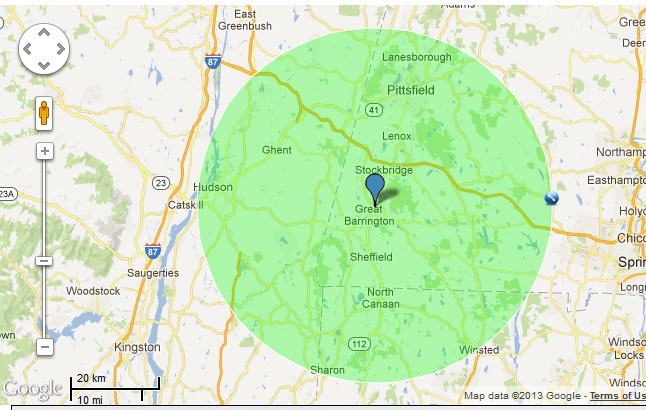
This is the approximate daytime coverage area for WSBS AM. I could not find any good coverage maps online, so I made this one myself. When I am driving, I get the station reliably to Kingston, NY, however, indoor listening may be a different matter. With 3.9 watts ERP, nighttime coverage does not include much of the city of license.
They have a translator on 94.1 MHz, W231AK. This is an example of when an FM translator on an AM station is a benefit to the community of license. W231AK has recently been moved from the top of the roof of the Fairview Hospital to the WSBS AM tower. During this move, the ERP was increased from 35 watts to 250 watts and the highly directional antenna was replaced in favor of a 2-bay half wave spaced circularly polarized Shively 6812.
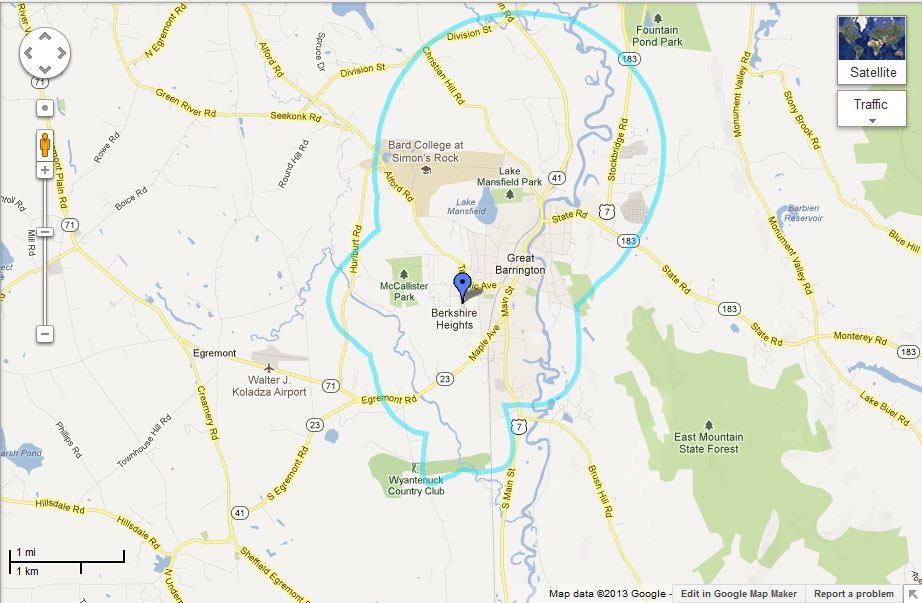
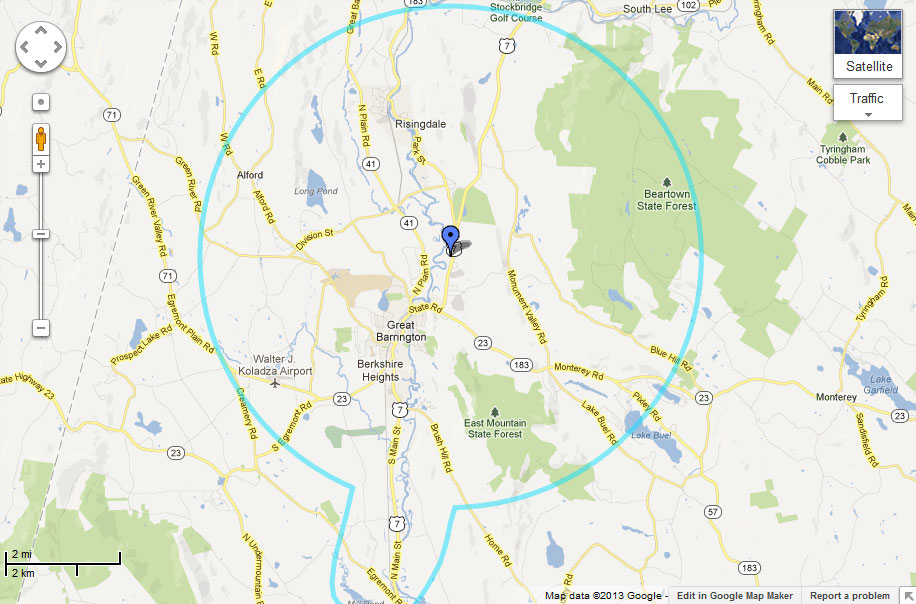
Not only did the move increase the translator’s coverage area, it also reduced operating expenses for the radio station, as they no longer have to pay rent or TELCO charges.
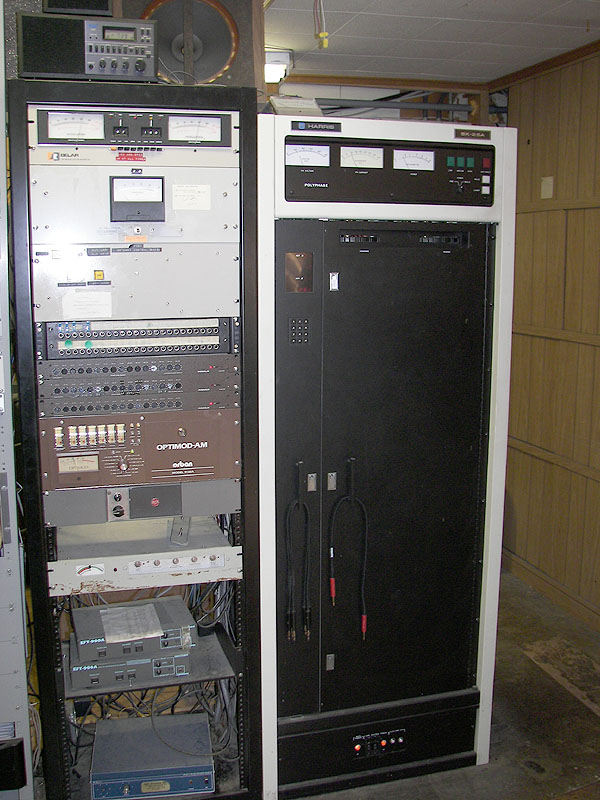
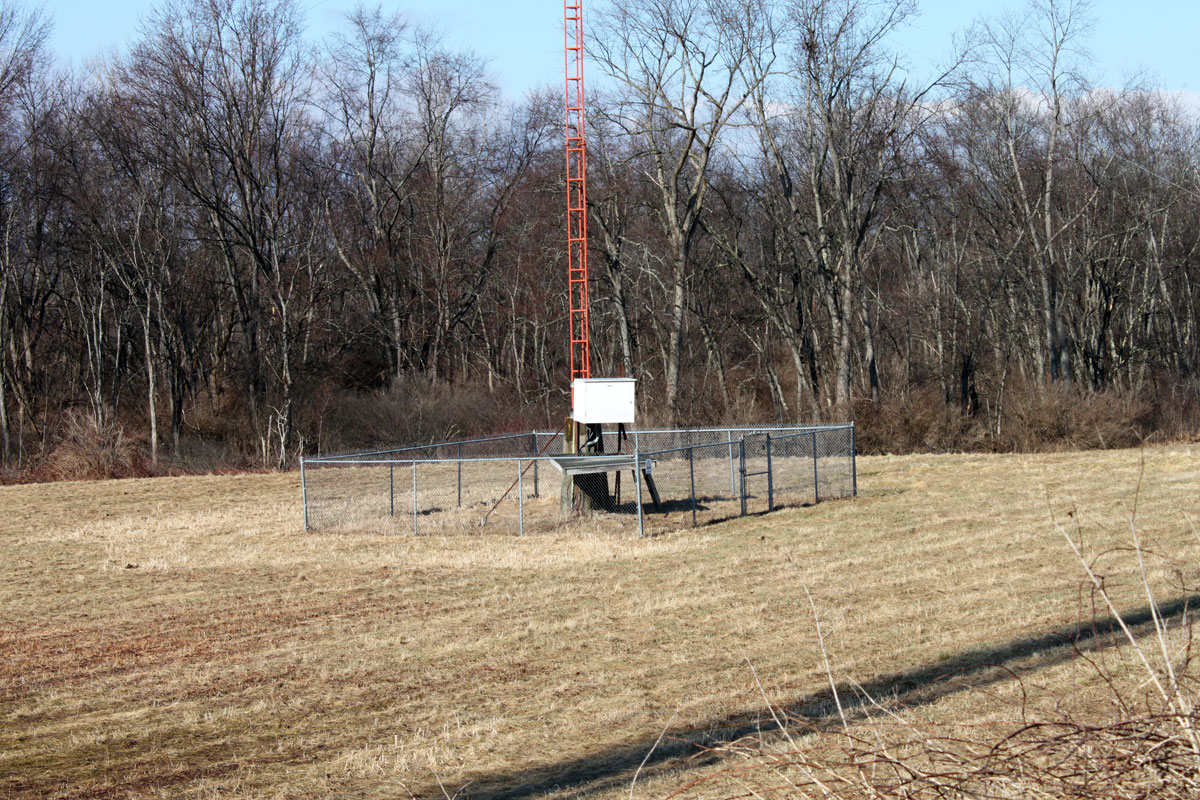
The main transmitter for the AM station is a Harris SX2.5 . It transmits from a 79-degree tower, the tower and antenna field are well-maintained.
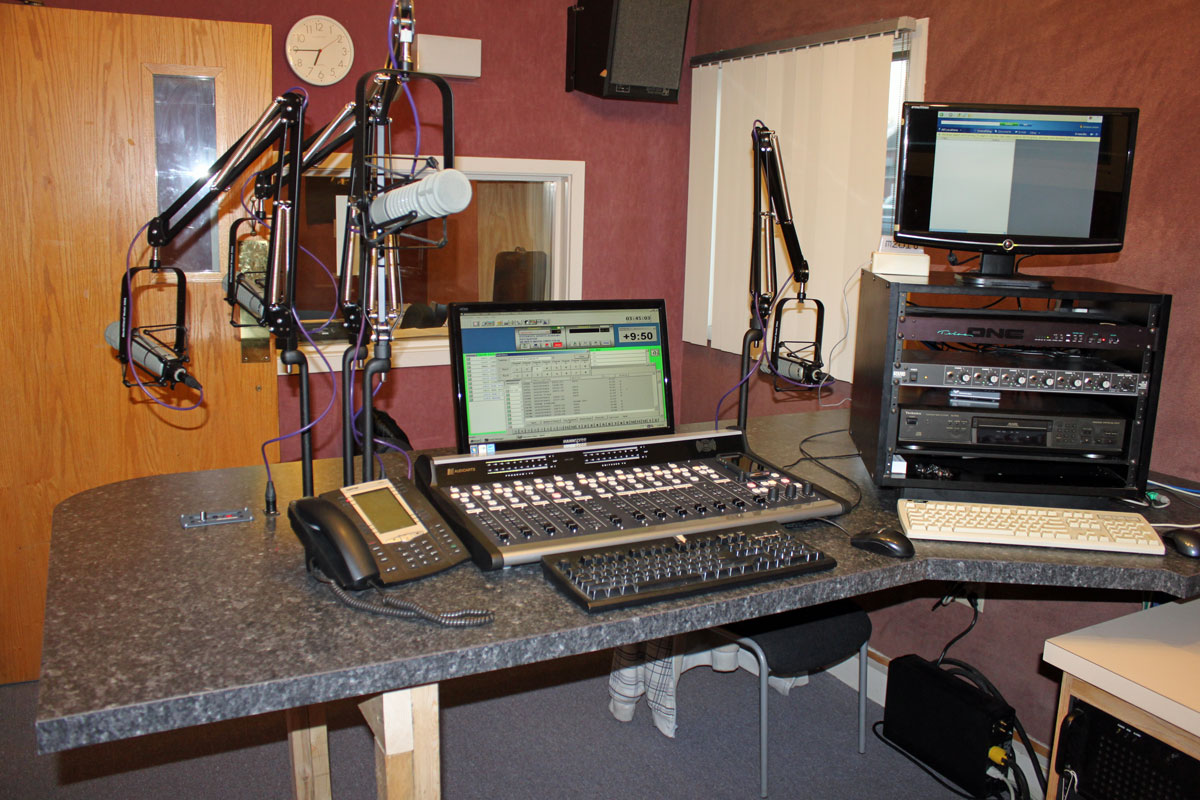
The studio has a new Audioarts Air4 console, which we just finished installing last December.
More pictures are available at NECRAT.
The station has an AC music format, which is quite popular. As the FM translator’s coverage has been quite limited until recently and there have been issues with the telephone company circuit taking the translator off the air, the majority of listeners are tuned to the AM signal. There is a live morning show and afternoon show, the rest of the day is voice tracked with music on hard drive. They have frequent contests and give aways. They also do local sports, community events, news and things like live election night coverage. In short, the station serves its community and, as demonstrated by a recent Chamber Business event at the station’s studio, the community appreciates its radio station.
There is nothing magic here; no gimmicks, IBOC, or another technical wizardry. This facility is at best, technically average, albeit well maintained. There is an older Orban Optimod processor, an older AM transmitter, and the original, electrically short tower. The station also has a working emergency generator. The only new tech is the web stream, which all radio stations should have.
The station is successful because of its programming, period. People love local radio. Making connections with listeners imparts a shared sense of community. Being on the air with a local presence during storms, even when the power is out, is a big deal. When it comes to relevance within the community and local businesses; in 2013 all radio stations need to earn that.
I do not suffer from technophobia; when digital radio was first proposed, I welcomed the idea. It was not until I began looking at the technical proposals and iBiquity’s proprietary system that I became concerned. After hearing the initial implementation of AM HD radio on WOR in NYC, I was not impressed with either it’s audio quality or the side band interference that the analog/digital hybrid AM HD system created. What is of even greater concern is the propensity for government regulatory agencies to rubber stamp technical proposals by lobbying associations without testing or even fact checking.
Digital modulation methods at medium frequencies present a unique challenge where the ratio of the signal bandwidth to available frequency spectrum becomes too great to be practical. This is exacerbated at the lower end of the band where side band symmetry is difficult to achieve at ±15 KHz required by the all digital and the analog/digital hybrid version of AM HD radio.
Clearly, AM radio needs a technical revamping. Can it be saved? Yes. Is it worth saving? Yes. Is a yet unproven proprietary digital modulation scheme the way to do it? No.
And that is all I have to say on the matter.
Continued from part II:
Can the AM broadcast service be revitalized and returned to relevancy? If so, how? The previous post demonstrated that AM radio service problems are multigenerational and multifaceted. There is no one solution that will make everything better. Pushing an all-digital solution will not solve electrical noise issues or overcrowding issues on the AM band. It will not address the paucity of the local, unique programming that is the bread and butter of successful AM operators. Because the issues that face AM operators cover many different areas of broadcasting, any proposed solution must address every aspect. Any proposal that simply addresses the poor fidelity, for example, will simply be another band-aid (no pun intended), placed on top of numerous others which have been previously ineffective.
The FCC is looking for deregulatory solutions to the AM problem. Deregulation and the FCC’s lasissez-faire attitude is exactly why the AM broadcast band is in the condition it is today. Relaxed technical standards have allowed the creeping crud to take over like Kudzu. Further deregulation will only exacerbate the problems.
In broad categories, AM radio’s problems are:
In order for any solution to be effective, this problem must be addressed first. Noise and interference are at the heart of the technical issues confronting the typical AM radio listener. These problems come from multiple sources, but the worst of which are electrical devices such as CFLs and other fluorescent lights, LED lamps, street lights, utility company wires, computers, computer monitors, TVs, power line communication, appliances, and other intentional emitters. The FCC has, within it current powers, the ability to address at least some of these noise generators. Devices like CFLs, LED lamps, computers, and others are regulated under Part 15 and 18 of the FCC rules. While there is little that can be done with fluorescent lights (they work using an internal electrical arc), other emission standards can be tightened and better, more specific warning labels can be implemented on the packaging.
Another aspect of this problem is mutual interference on the AM broadcast band. In short, too many stations are licensed to a small slice of the electromagnetic spectrum. The increasingly poor condition of many directional antenna systems ensures that there is a cacophony of interference at night. While this is a politically sticky situation, some tough love is needed to solve these problems. There are many underperforming AM stations on the air that are junkyards of last-ditch formats that have little or no hope of success. These stations are often technical disasters that pollute the spectrum with interfering signals. Compounding this issue is the transmission of IBOC at night. The current iteration of IBOC (HD radio) intentionally transmits on adjacent channels creating more problems than it solves.
Confronting any of these issues is almost certain to be a non-starter and that is a shame because real, meaningful steps can be taken here.
One scenario would be a one-time test, applied during the next license renewal cycle, that allows station owners to assess their operations. Those that do not pass the test would be able to surrender their license for a tax credit. This type of culling is not unprecedented, as the FRC did something very similar during the early days of broadcasting when the AM band became a free for all. The test should have three areas of consideration; technical operations, programming, and business profitability. Something like this would be a reasonable example of a re-licensing test:
| Technical operations | |||||||||||||||||||
| |||||||||||||||||||
| Minimum score to pass technical operations: 5 points | |||||||||||||||||||
| Programming | |||||||||||||||||||
| |||||||||||||||||||
| Minimum score to pass programming test: 5 points | |||||||||||||||||||
| Business | |||||||||||||||||||
| |||||||||||||||||||
| Minimum score to pass business test: 3.5 points | |||||||||||||||||||
| Minimum overall score for all three tests combined: 16 points |
This is a fairly low bar to get over. I generally do not advocated more government regulations and regulatory burden. However, this is one case where relaxed regulations lead to the problems currently being encountered. Perhaps a one time re-regulation would be warranted in the public interest.
There are several areas where new technology can be used to improve AM stations technical quality. There is a common misconception that AM broadcasting has low fidelity due to inferior bandwidth. Truth be told, AM broadcasting can pass 15-20 KHz audio. It is restricted to less than 10 KHz because of the aforementioned band congestion problems. Since the NAB and the FCC has made exceptions to the NRSC-1 requirement in order to transmit HD radio, perhaps other wide bandwidth uses can be considered. One possibility would be to allow transmission of 15 KHz audio during daytime hours, switching back to NRSC-1 standard after dark. This may not work on local (class C) channels but for regional and what remains of cleared channels, it may offer some improvement. Also, turning off IBOC hybrid analog/digital transmissions after dark should be examined regardless of whether an all digital solution is sought. Hybrid IBOC is a part of the night time noise problem and not a viable solution, particularly troublesome are class A skywave signals.
Also, much benefit could be derived from requiring that all AM stations sync their carriers to GPS. If all of the stations on the same channel are on exactly the same frequency, it will eliminate carrier squeals, growls and whines. This is something that can be done very easily and inexpensively, especially with newer transmitters.
Double sideband AM is wasteful, as both lower and upper sidebands contain the same information. Suppressing the lower sideband and transmitting just the carrier and upper sideband would free up quite a bid of bandwidth and reduce adjacent channel interference. Most simple diode detectors demodulate the upper sideband anyway.
A concerted effort must be made to restore all of the technically deficient antenna systems. Not only fixing out of tolerance DAs but also addressing bandwidth issues, general maintenance, ground systems, clearing away brush and undergrowth can all have noticeable positive effects on signal performance.
At the same time, better receivers are making their way into the market place. Receivers that have auto variable IF bandwidth based on signal strength could greatly improve audio quality. The auto bandwidth function could be overridden by user selected bandwidth, if desired. I know that wider IF bandwidths are in the current chipset because of IBOC and DRM, I do not know to what extent they can be adjusted, but it is something that receiver manufactures should consider.
None of these solutions are Earth shattering, nor would they require great sums of money to implement.
The current thought process is that using FM translators for AM stations is a fantastically great development. For a class D AM station with little or no night time power, an FM translator is a good way to maintain service to the community. For class C or some class B AM stations where night time interference greatly degrades the station’s service area, an FM translator is a good way to maintain service to the community. Does a 50 KW blow torch really need a 250 watt (or less) FM translator to aide with reception in its city of license? No. Yet, this is how the AM to FM translator service will be rolled out, those that already have sound technical operations will be given FM authorizations. This does nothing to actually fix AM broadcasting technical issues, it is a well meaning measure that will be incorrectly applied by the broadcasters that need it least.
All of the technology and gadgets will not solve the problem of poor programming. This is an area where the FCC should not tread, however, broadcasting associations can assist their members with local programming issues. Broadcasters need to understand that good local programming that is unique will attract listeners, worthless junk will not.
Continued in part IV
Continued from part I:
In order to get to the root problems of AM (aka Medium Wave, or Medium Frequency) broadcasting, a bit of history is required. For the sake of brevity, here is the cliff notes version:
There is not any one development that can be singled out as the smoking gun that killed the AM broadcast band, it is rather, a death from a thousand cuts. Because of heavy debt loads, technical, programming, promotional, and personnel resources are directed away from AM stations (and FM stations too). After the staff was reduced and news departments eliminated, AM stations became a dumping ground for mediocre satellite-syndicated talk programming. Eventually many also became a technical nightmare due to deferred maintenance.
There can be little doubt, AM broadcasting is a tough business to be in. In spite of all of that, however, there are several AM stations that are not merely surviving but thriving. What does it take to be a successful AM broadcaster in 2013? There seem to be several common threads, but the two most common are good technical operations and local programming.
Continued in Part III