
Water and transmitters do not mix

This incident happened a few years ago.  I thought I had lost the pictures of the disaster, but I found them this morning on my thumb drive. Hooray!  This occurred one morning just before Christmas after the area received a snow/ice/rain storm.  The gutters on the old ATT long lines building were clogged with ice and the water on the roof built up.  Unfortunately, the transmitter was installed directly below a disused exhaust stack for the former backup generators.

I received the off-air call from the morning show while I was driving to the office.  I diverted and went to the transmitter site and found water pouring into the top of the main transmitter.
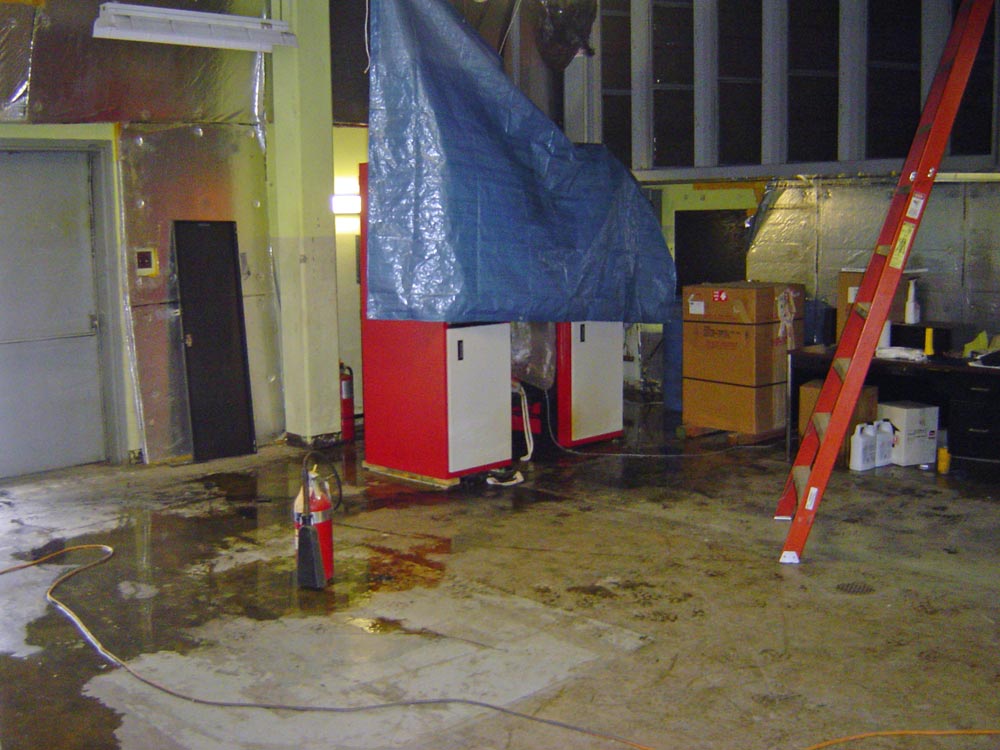
WBPM transmitter room flood

Thus, water ran down directly into the top of the QEI FMQ-3500 transmitter (transmitter was upgraded to 6 KW). Unfortunately, high voltage and dirty stack water do not mix. The combination of sooty, iron-laden water, and the B+ damaged much of the transmitter circuits beyond repair.  The main transmitter is on the right, the backup transmitter is on the left.

I inspected the backup transmitter, also a QEI FMQ-3500, and it seemed to me that no water made it into the unit.  I rigged the tarp to ensure that none did, which was a very pleasing bit of work, what with the cold, smelly, dirty diesel water dripping on my head and running down my neck and back.
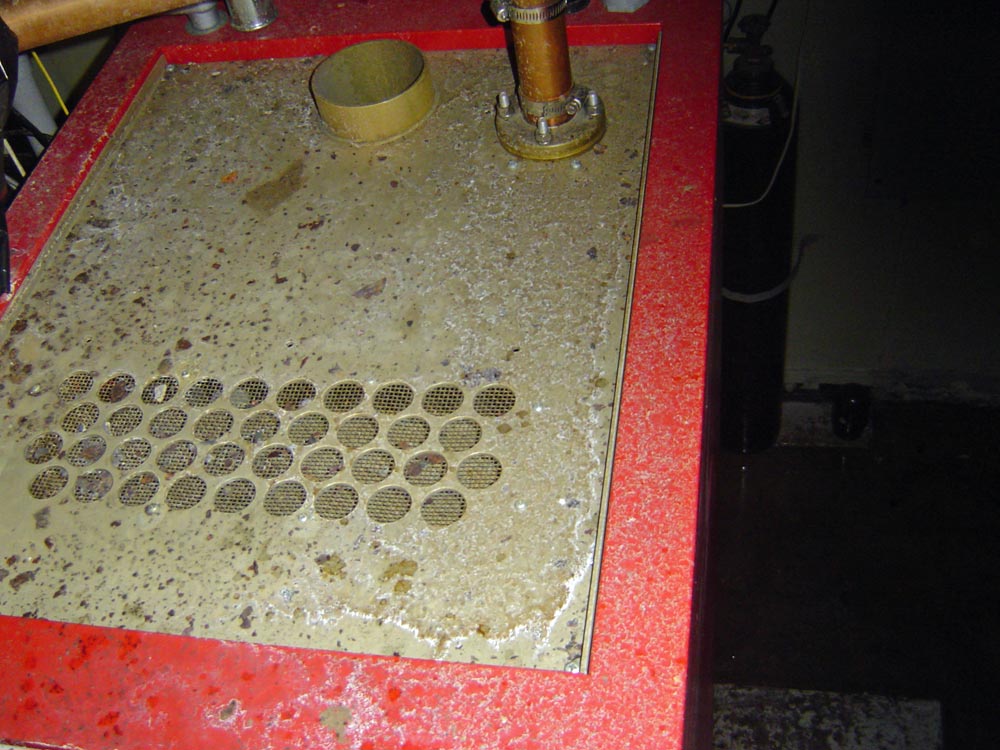
Top of WBPM QEI FMQ-3500 transmitter

The 1 5/8 coax switch was also damaged:
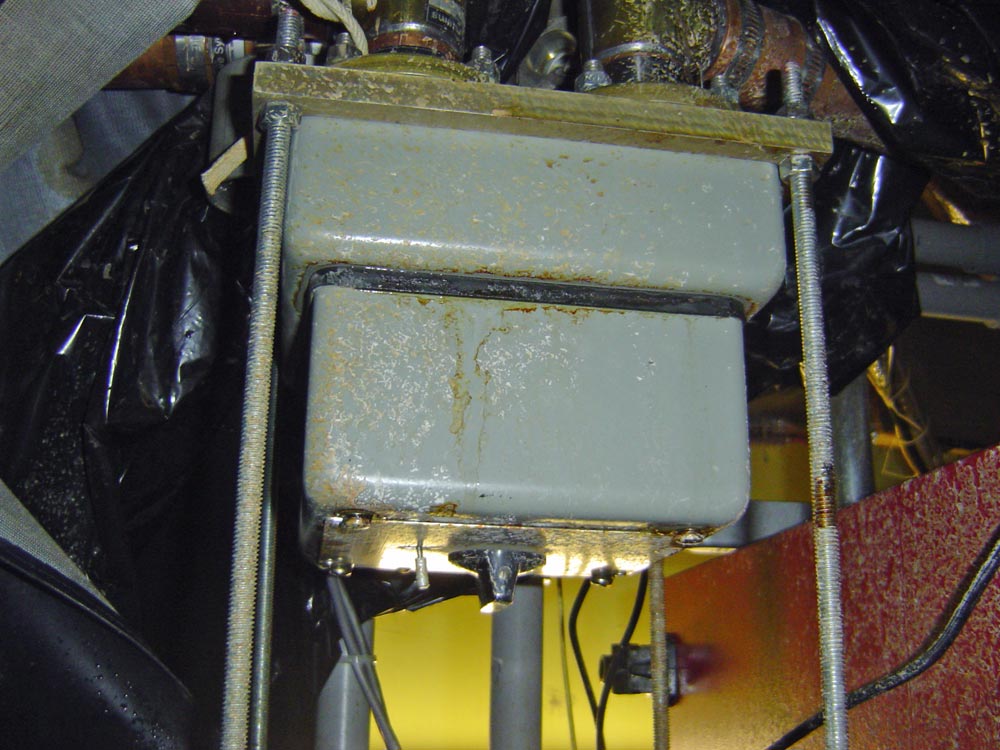
WBPM 1 5/8 coax switch

As was the remote control in the equipment rack:
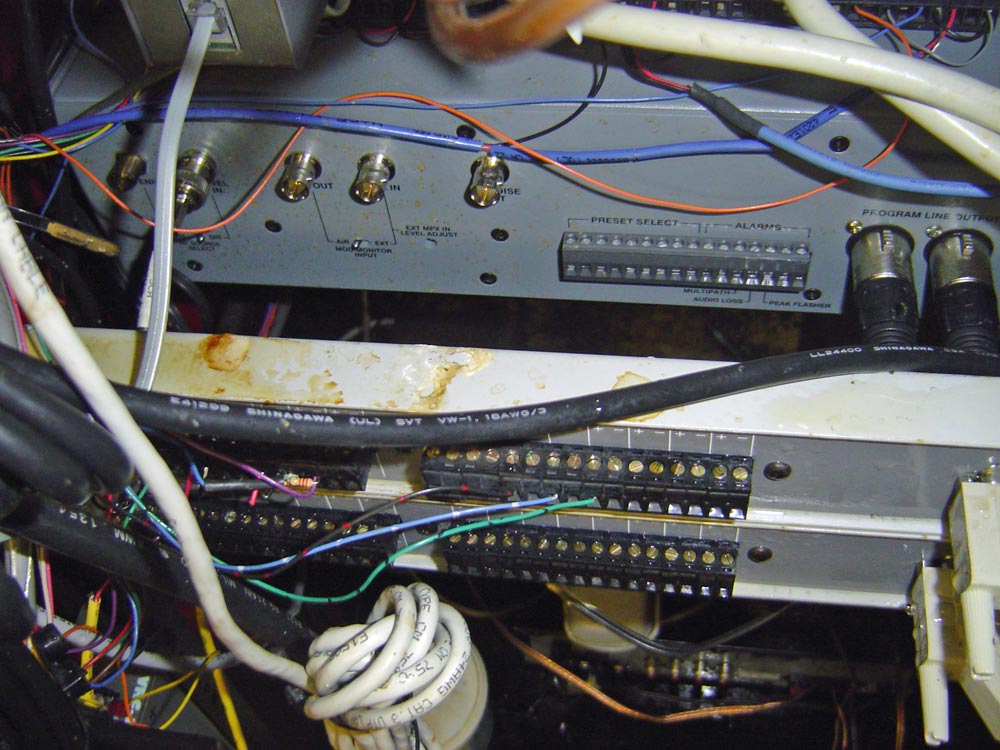
WBPM Gentner remote control

Fortunately, the backup transmitter ran, although I pressed the plate-on button with a dry wooden stick while standing on a dry, non-conducting ladder.   Even so, I still felt a little trepidation holding that stick.
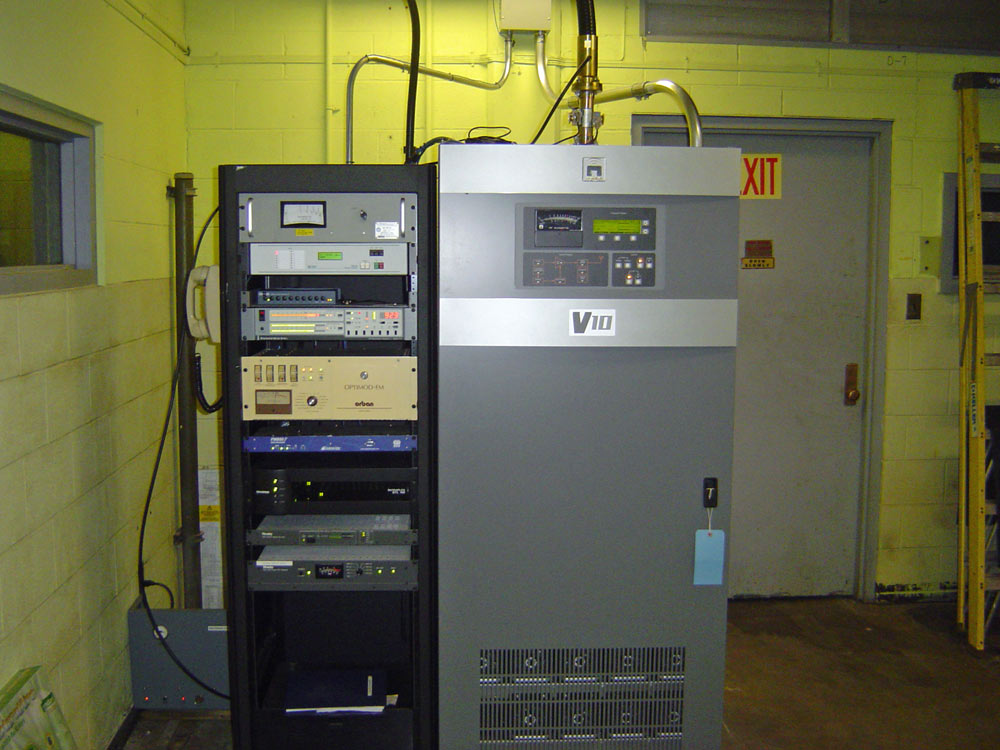
WBPM Saugerties, NY Nautel V-7.5 transmitter

It took almost a year, but finally, the insurance company for the building owner came through, and a new Nautel V-7.5 transmitter was installed.  I believe this is the last V transmitter Nautel made.  We moved the transmitter location across the room, not under the old generator stacks.  We also removed the generator stacks and patched up the roof with hydraulic cement and roofing tar.  By the way, that yellow color should look familiar to anyone who ever worked inside a Bell Telephone System building.
FM transmitter site tour, Bavaria, Germany

Short, but interesting video tour of an FM transmitter site in Germany. The analog transmitters are 10 KW Telefunken solid-state units, 5 main transmitters, and two reserve units into an antenna combiner. At approximately the 35-second mark, the video shows a Rhode & Schartz DAB transmitter. Germany uses DAB+ in band III (174-240 MHz).

It is always interesting to see how others are broadcasting.

Harris exits the broadcast industry

When they sold their Broadcast Equipment supply division to SCMS a few years ago, the handwriting was on the wall. Even so, it is a little surprising that they would exit broadcasting altogether.

The decision to divest in no way reflects the quality of the work Broadcast Communications performed in support of our customers and our company.  Harris simply determined that Broadcast Communications could provide higher value and operate more effectively under a different ownership model.

They are spinning the broadcast division off to a new owner rather than completely shutting down the operation.  In an e-mail received from Harris Morris, President of, Broadcast Communications Division, clients and customers will still receive support for existing products:

In the interim, Broadcast Communications will continue to be a part of Harris Corporation and operate business as usual. Our valued relationships, both longstanding and new, remain our top priority. The global Broadcast Communications team will continue to work diligently to ensure our commitment to our customers and partners remains steadfast, our execution to fulfill commitments is flawless, and our progress against strategic objectives remains focused.

Well, there you have it.  This affects such things as Harris transmitters (AM, FM, TV, HF) and support, Harris consoles and studio furniture (previously Pacific Recorders and Engineering or Pacific Research and Engineering, AKA PR&E), and Intraplex STL systems, among others.

What does all this say about the future of terrestrial broadcasting?

We live in interesting times.

The Broadcast Electronics FW-30 automatic exciter switcher

This is a neat piece of kit, designed to save those late-night/early morning callouts, which is the ultimate goal of all broadcast engineers, or at least it should be.  This seems like a really good idea, however, BE has discontinued the product line, and the last manual update is from 2000.

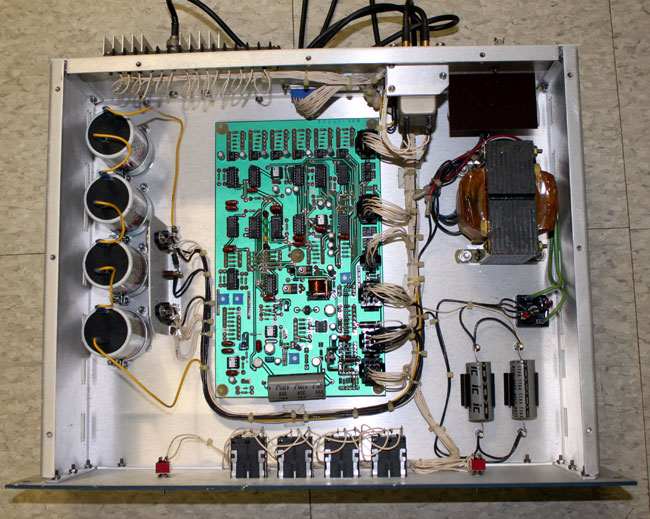
Broadcast Electronics FW-30 exciter switcher innards

A small four-port coax switch is located next to the power supply transformer.  This is controlled by the circuit board.  The circuit board senses a loss of excitation by detecting a forward power level below the threshold set on the board. The power sample comes from the exciter forward power remote metering terminals.  Thus, it can be used with any exciter(s) that have a remote forward power sample.

BE FW30 exciter switcher block diagram

The idea is to use the RF fault function output of the FX-30 (later FX-50) exciter to automatically switch from a faulted exciter to one that is working.  Finally, it can be hooked to a remote control for manual switching.  The unused exciter is muted and routed to a dummy load mounted on the back of the unit.

Broadcast Electronics FW-30 front, mid 1980's BE blue
Broadcast Electronics FW-30 front, mid 1980’s BE blue

An alternate configuration would be to route the backup exciter to the backup transmitter instead of the dummy load.  This would create the best redundancy on a limited equipment budget.  It also has a battery bank designed to hold the last state of the unit through a power outage.  As we have a good-sized UPS powering the remote control, STLs, and satellite receivers, the batteries are not needed.

On the face of it, a pretty good idea.  I have had a few exciters fail over the years, which normally means the backup transmitter is placed in service by remote.

I did download the manual, but since it is currently listed on the BE website, it’s probably not a good idea to post the schematic.  Suffice to say, it is a tad bit complicated what with all the CMOS logic and that.  It is very possible to duplicate the functions of this equipment with a simple RF forward power sample and set a failure threshold with a comparator circuit.  Hook that to a small four-port coax switch and a couple of RF mute/un-mute commands to each exciter and: Viola!  Automatic exciter switching!

Perhaps a good rainy day project.