Another Ask

This one is targeted mostly toward my European readers (however, read on).

I received the following email from Olkesandr in Ukraine, it seems the Russians stole his transmitter:

Hello!

My name is Oleksandr (last name redacted). I am chief editor of Ukrainian radio station CCR 648 AM. We are looking for an used am transmitter 25 or 50 kwt. Probably Your company has one for sale?

That is interesting. I asked for a few more details and received the following:

I am originally from Crimea. But in 2014 I had to leave my native town. I have been living in Kyiv since 2014. In 2017 our team of journalists launched informational broadcasting to the occupied Crimea from Chongar (it’s 1 km from Crimea in Kherson region). First we started broadcasting on 105.FM 5 kwt. But in 2018 our signal had been jammed by russians occupants. In 2019 we started broadcasting on 648 AM (10 kwt). In 2021 we increased the power to 25 kwt. But in February 2022 our transmitter was captured by russians. Now we are looking for an 25-50 kwt AM transmitter. We are going to install it in Kherson region (in controlled by Ukraine territory). I supposed we’ll be able to cover by our signal all Kherson region, Zaporizhzhya and Crimea.

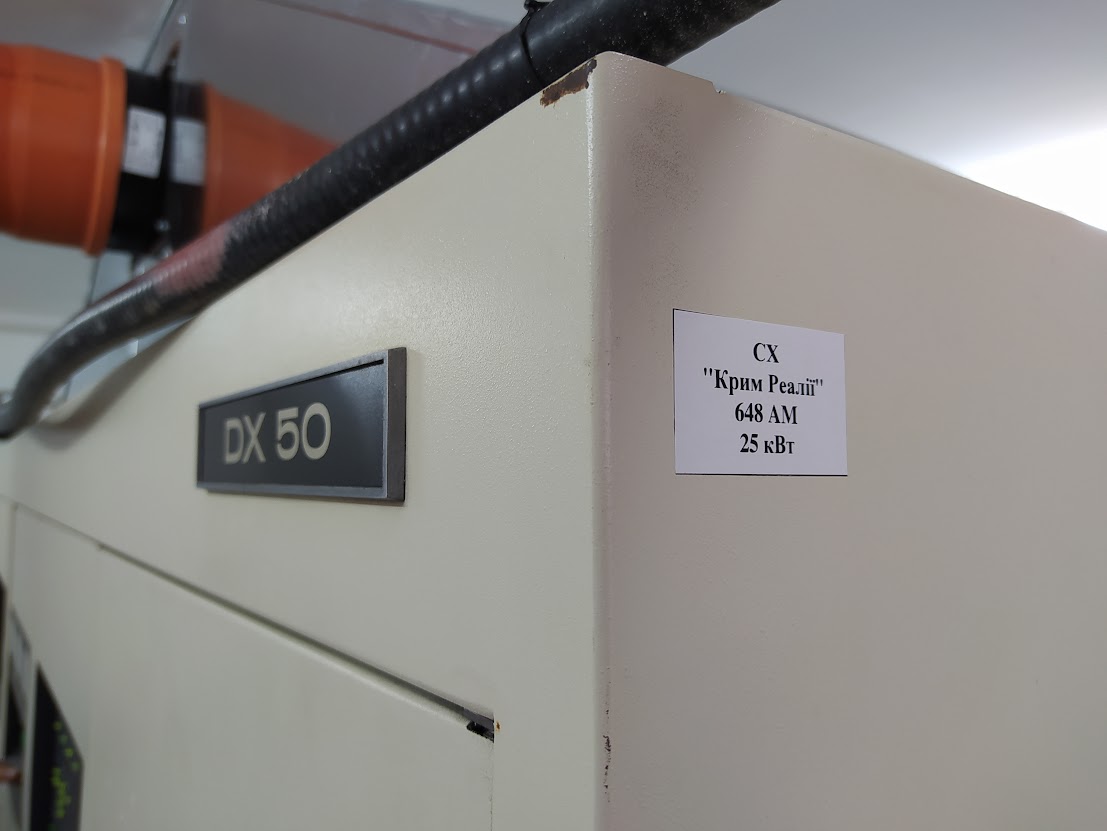
Digging around, I found two news stories about it: Apparently, the Russians removed the Transmitter. By the way, Krym (pronounced cream) is Crimea in Ukrainian and Russian.

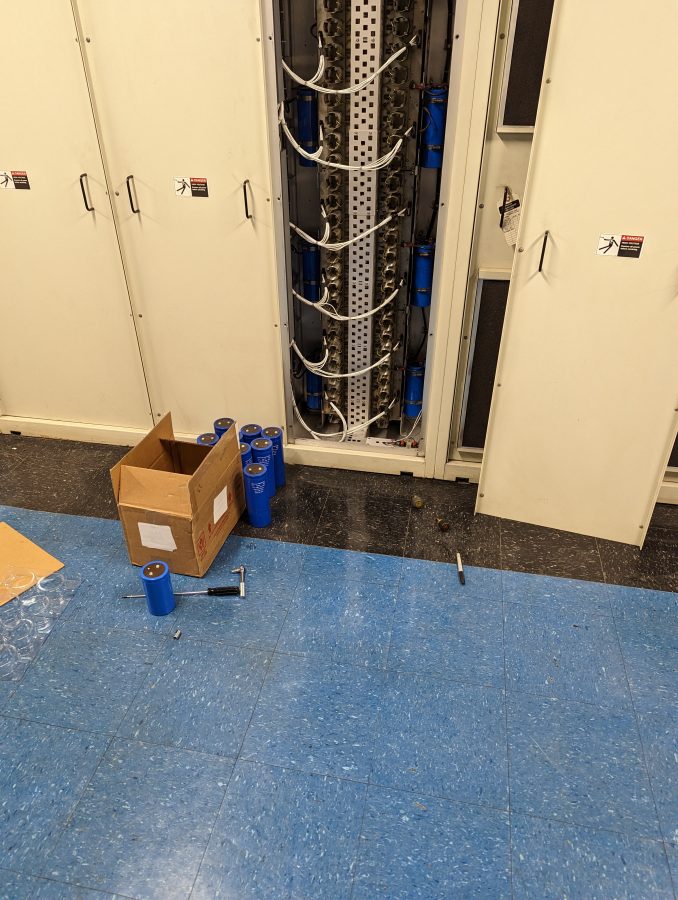
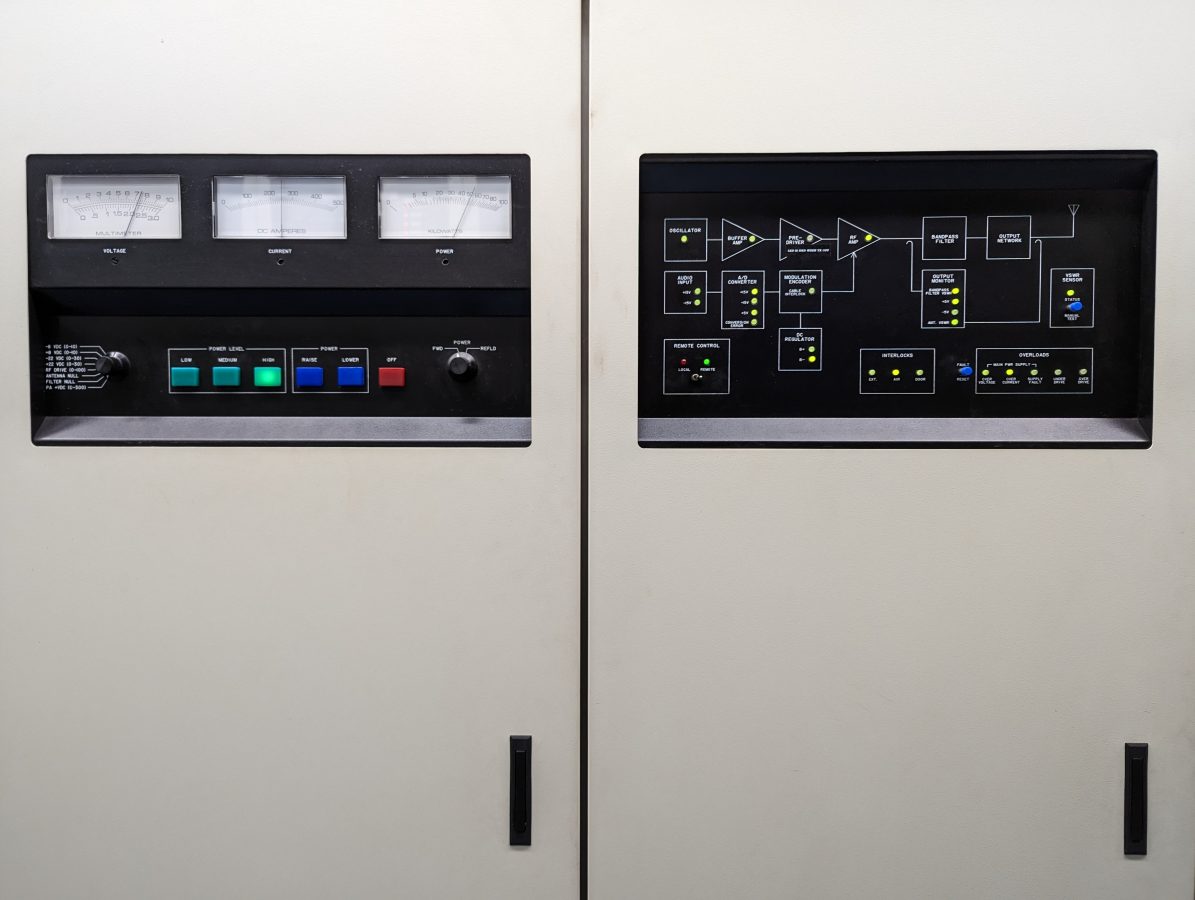
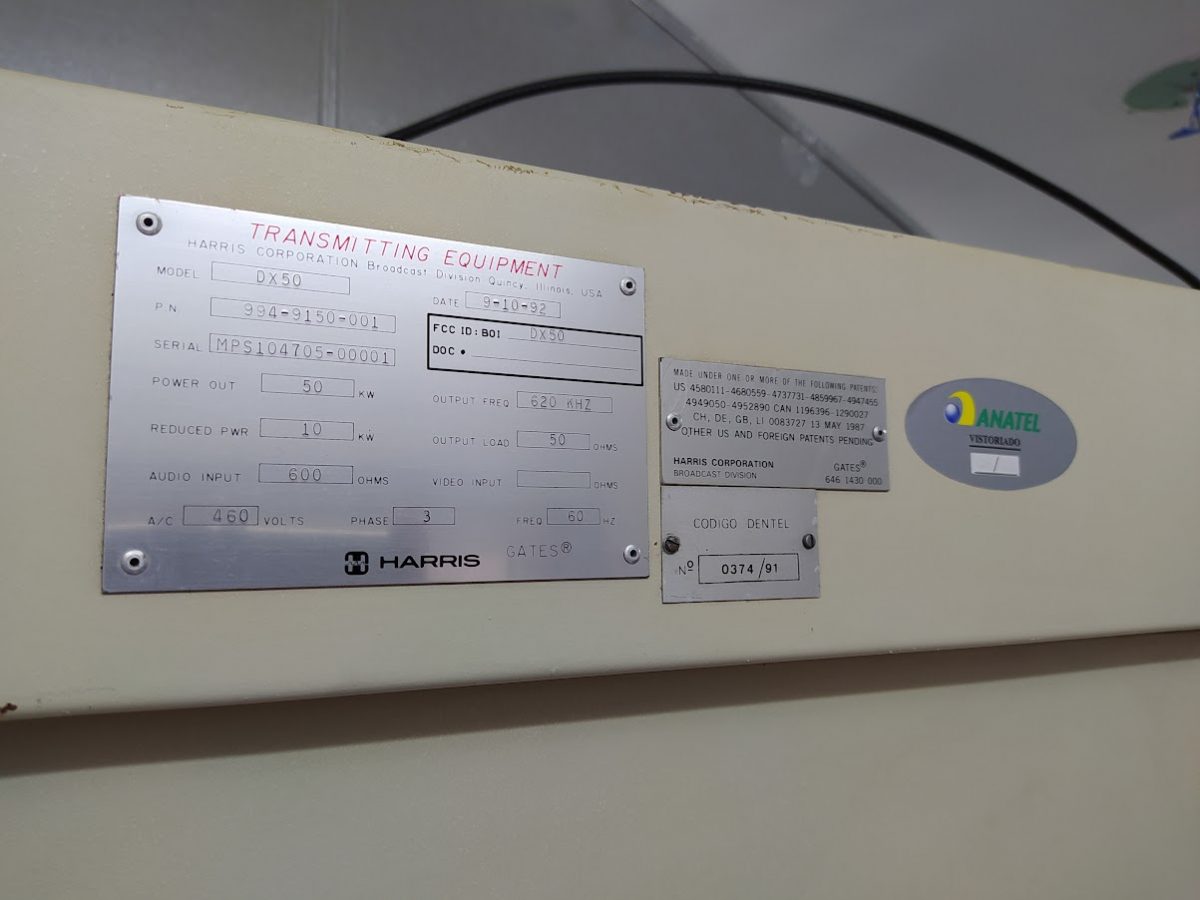
Missing Harris DX-50 transmitter, serial number MPS104705-00001

Missing Harris DX-50 transmitter

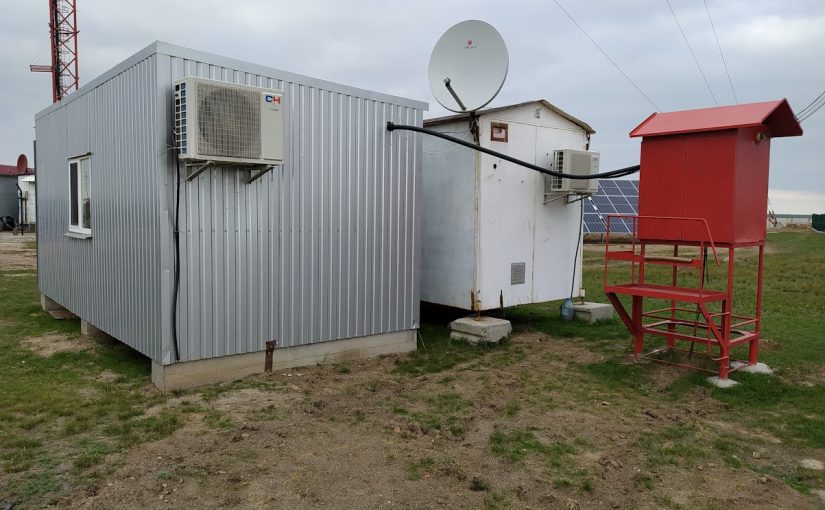
A little bit more digging around and I found some more pictures of the transmitter site: Radio Crimean Community transmitter site

Google Maps Link: Chongar

That is an interesting setup; the FM antenna is a stack of six, looks like 1/2 wave spaced six-element yagis, vertically polarised. The AM is a slant wire that goes almost to the top of the tower.

That area is still occupied by the Russians. As it is one of the two usable land transportation routes, it is likely that it will be unusable for some time after it is deoccupied.

So, here is the ask; I know that many Medium Wave transmitters have been turned off in Europe over the last several years. Is there any in that power range that is available to be moved to Ukraine? Preferably something that is still in good working order and on or close to 648 KHz. It is a long shot, but worth asking.

AM radio in Electric Vehicles

I have been reading with interest the ongoing discussion about AM radios in Electric Vehicles. Rather than rehash the what, I thought it would be nice to dig into why it is happening.

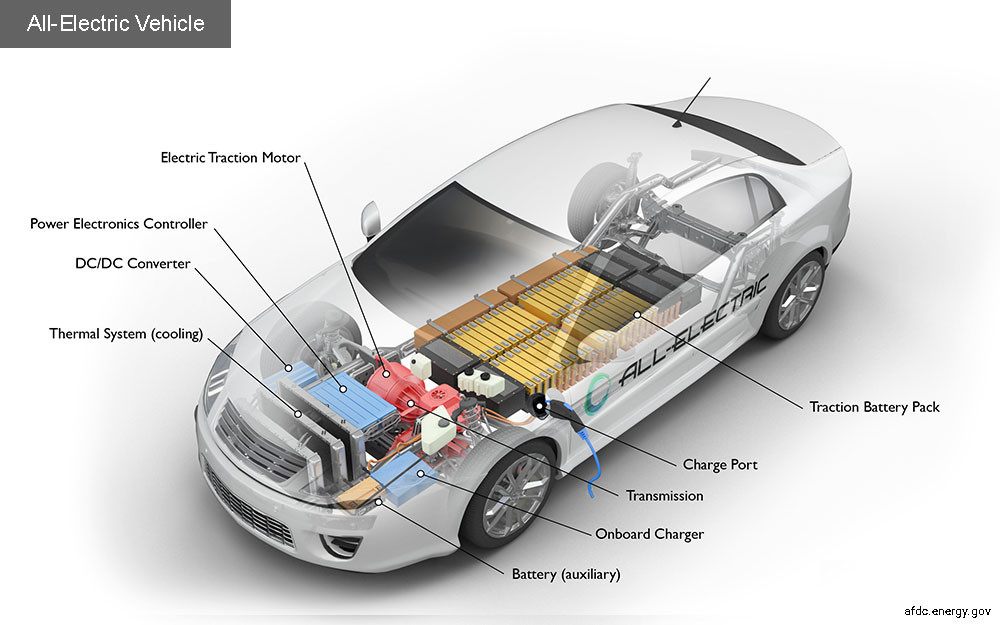
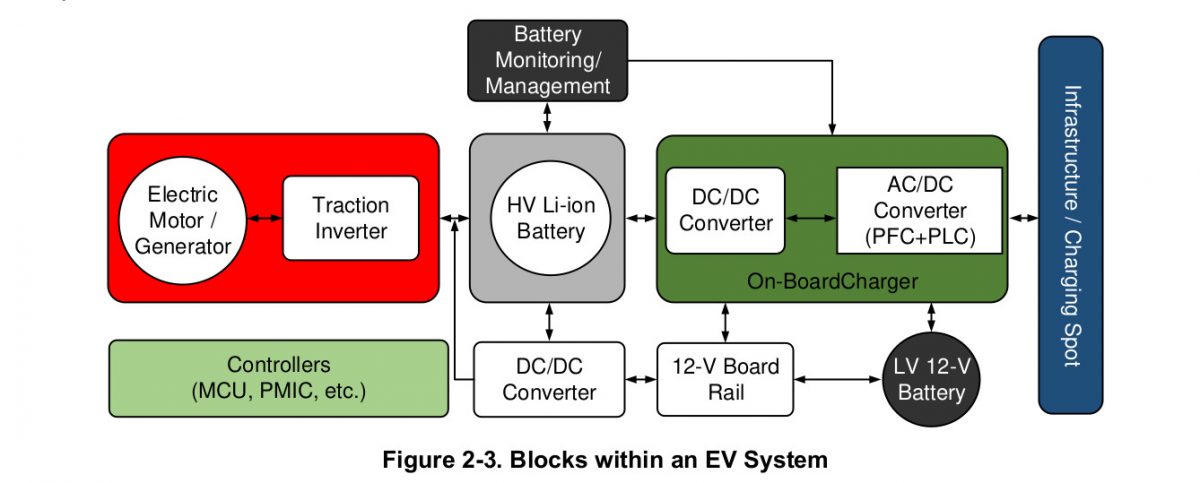
My first thought is that many of the electronics use PDM or PWM to control various stages of charging, converting, or discharging the storage system. I quick review of a typical EV basic diagram shows that there are several systems involved

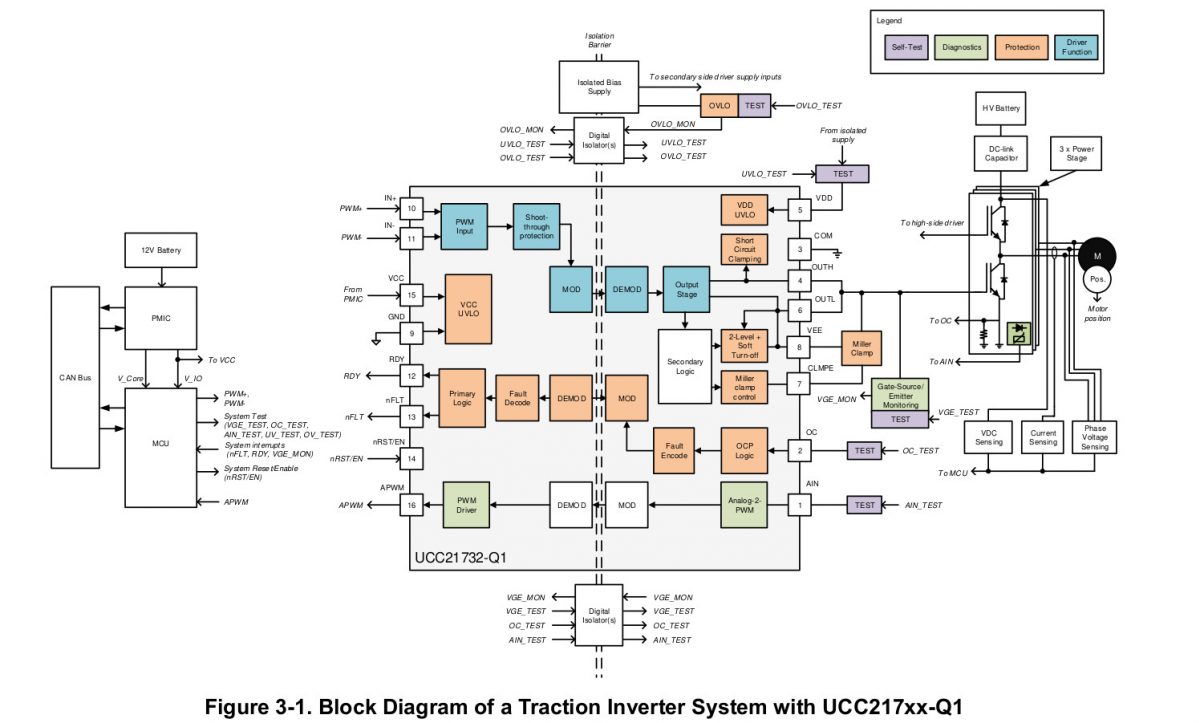
Searching through various chip makers’ data sheets on Li-ion battery chargers, DC voltage to voltage converters, regenerative braking systems, traction motor inverters, and so on shows that all of those systems use PWM. Some of those PWM frequencies are right in the AM band, while others are not. That explains why different manufacturers have different takes on AM radios in EVs.

Basic Electric Vehicle

All of those electrical components are controlled by an electronic system that handles battery charging,

This basic diagram shows several sections that rely on PWM to function. The traction inverter is very complicated, with sensors running to each motor and each wheel for traction control, etc.

I imagine the average EV driving down the road in a cloud of PWM-based electrical noise. Whether or not that creates interference with AM reception depends solely on the PWM frequency the chip manufacturer chooses. That is not all, even when sitting in the garage charging, the Li-ion battery chargers use PWM.

It seems a monumental task to attempt to mitigate the noise issue. The real question is; does the general public and more specifically, those who want to own an EV care about AM broadcasting?

There are many alternative entertainment options these days. I would say the average Tesla driver listens to iTunes.

It would be interesting to test MA-3 reception in a Tesla. That would be a real-world test to see how the HD Radio codec stands up to electrical noise. I would say the same about DRM, but you would need to find a receiver first.

Making a notch filter

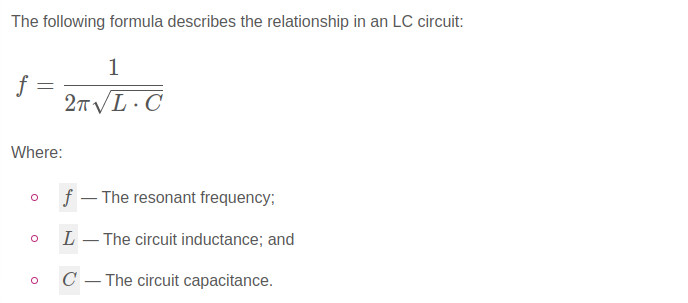
One small RF project that I am working on; a 770 KHz notch filter. I always figure if I am having this problem, then others may be having it too. This is a relatively simple idea, a resonant LC circuit (AKA a tank circuit) tuned to the carrier frequency. It should have a bandwidth of +/- 15 KHz of the design frequency. Another requirement; use the parts I have available. Finally, the environment in which this is to be used is a high-noise room; with lots of computers, LED lights, etc therefore it needs to have excellent RF shielding.

Something like this would work well for anyone that lives around an AM transmitter site and is having problems with receiver sensitivity or transmitter intermodulation.

The basic design looks like this:

Parallel LC tank circuit

Time for a trip to the local storage facility known as “The Barn.” In my backyard, there is a small agricultural structure that is used for storage of just about everything. In The Barn, I found several parts salvaged from an old Energy Onyx Pulsar AM transmitter. As such, they are more than capable of receiver operation and could likely handle a fair amount of RF power in the transmit mode.

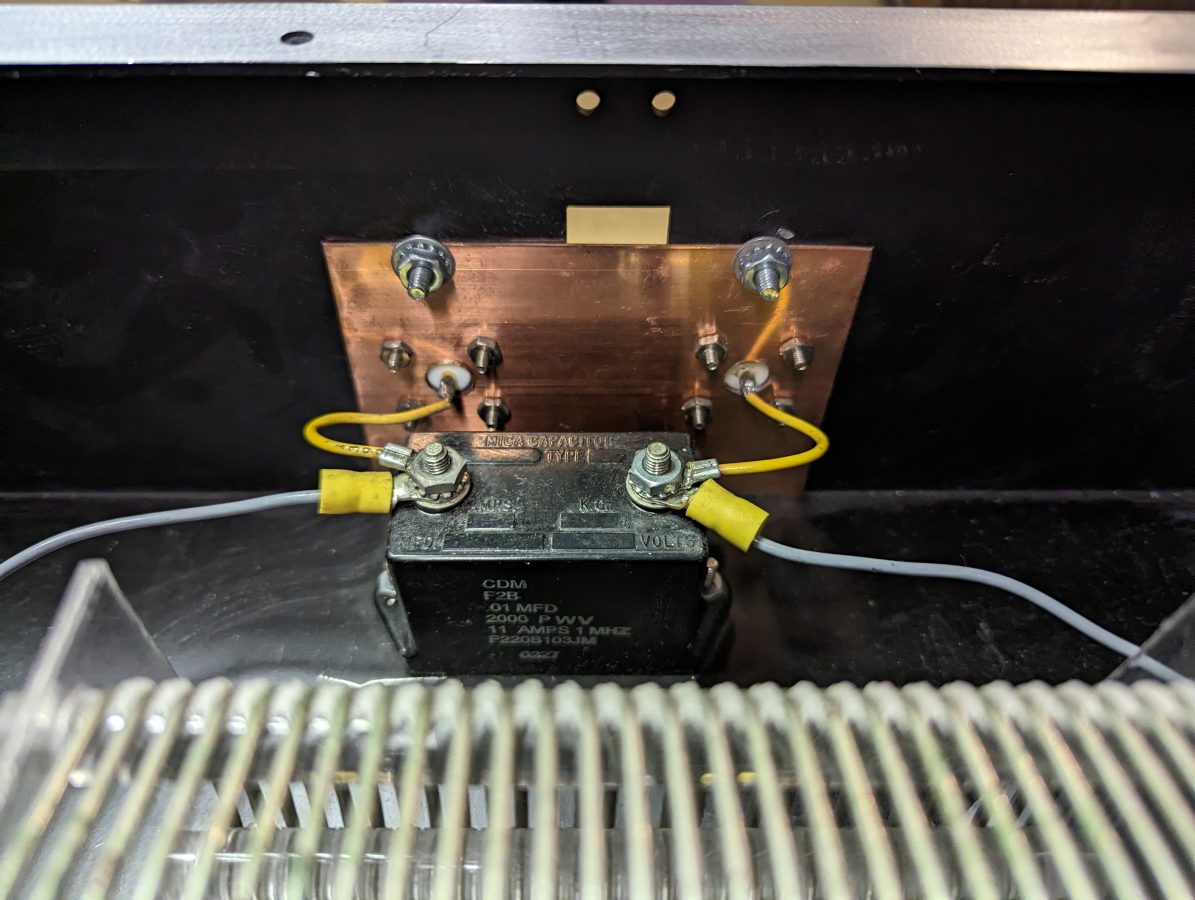
CDM F2B 0.01 uF capacitor with back of N connector inputs

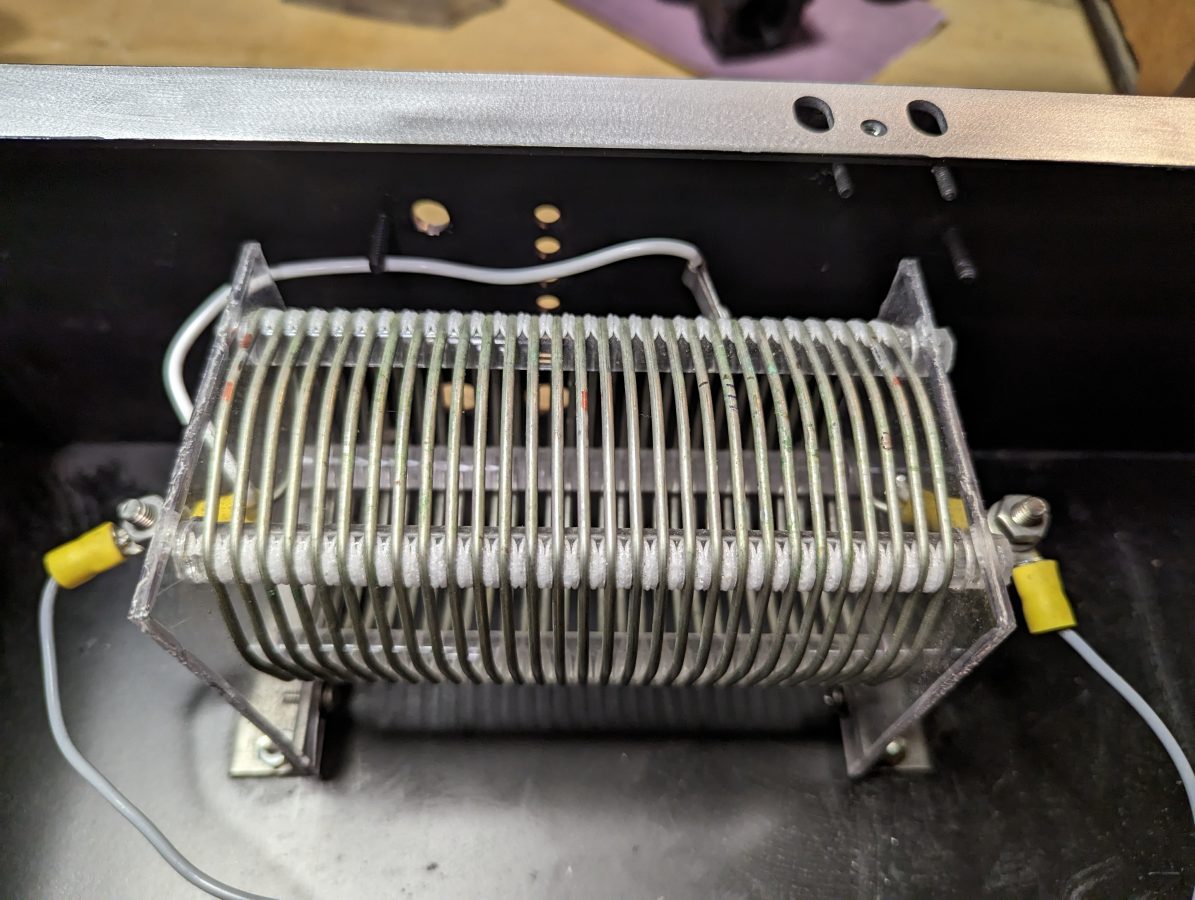
Finding a type F2B 0.01 uF capacitor, rated at 2000 volts and 11 amps, the value of the inductor was calculated. For the inductor, a 20 uH coil with taps will work great. For receive-only applications, much smaller-sized components can be chosen. Also, there are many bandstop filters with multiple poles. Those are great, but I like the simplicity of the parallel resonant LC circuit.

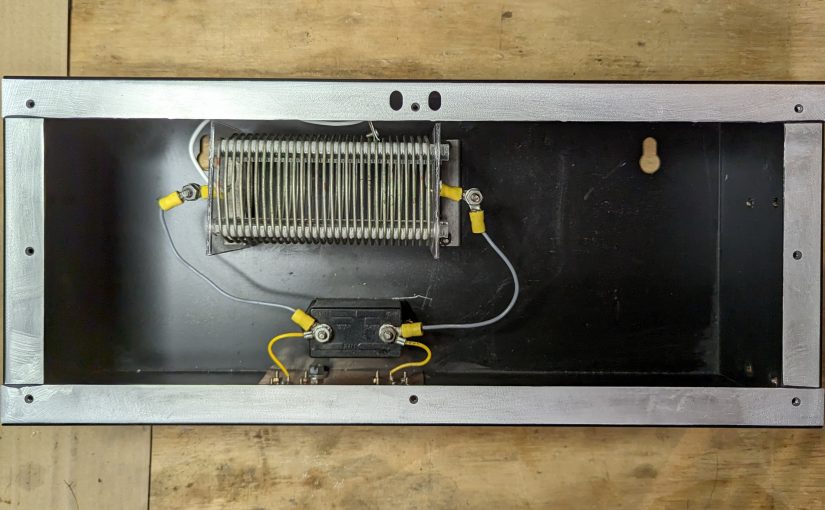
20 uH inductor salvaged from Energy Onyx transmitter

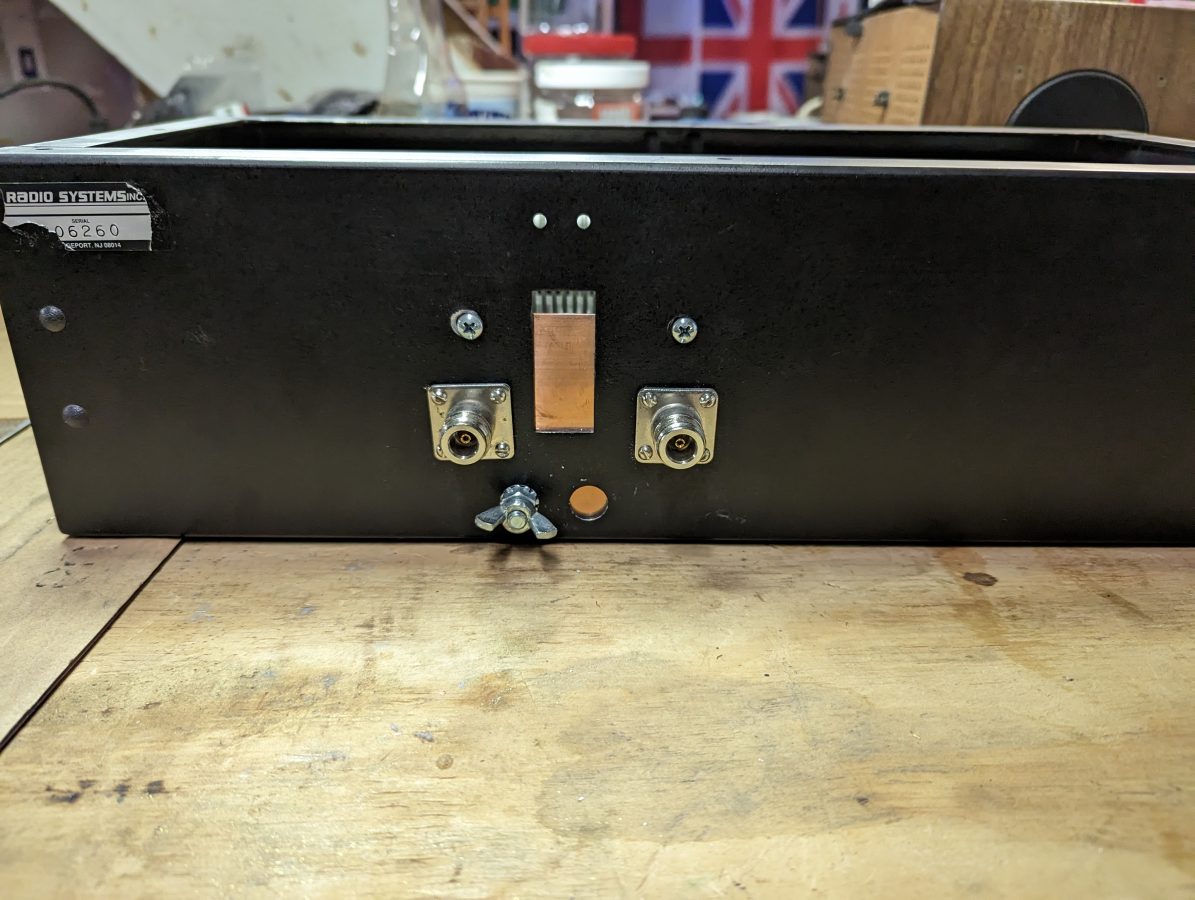
The N connectors were salvaged from I don’t know where and the enclosure used to house a power supply for a Radio Systems console.

N connectors for input and output.

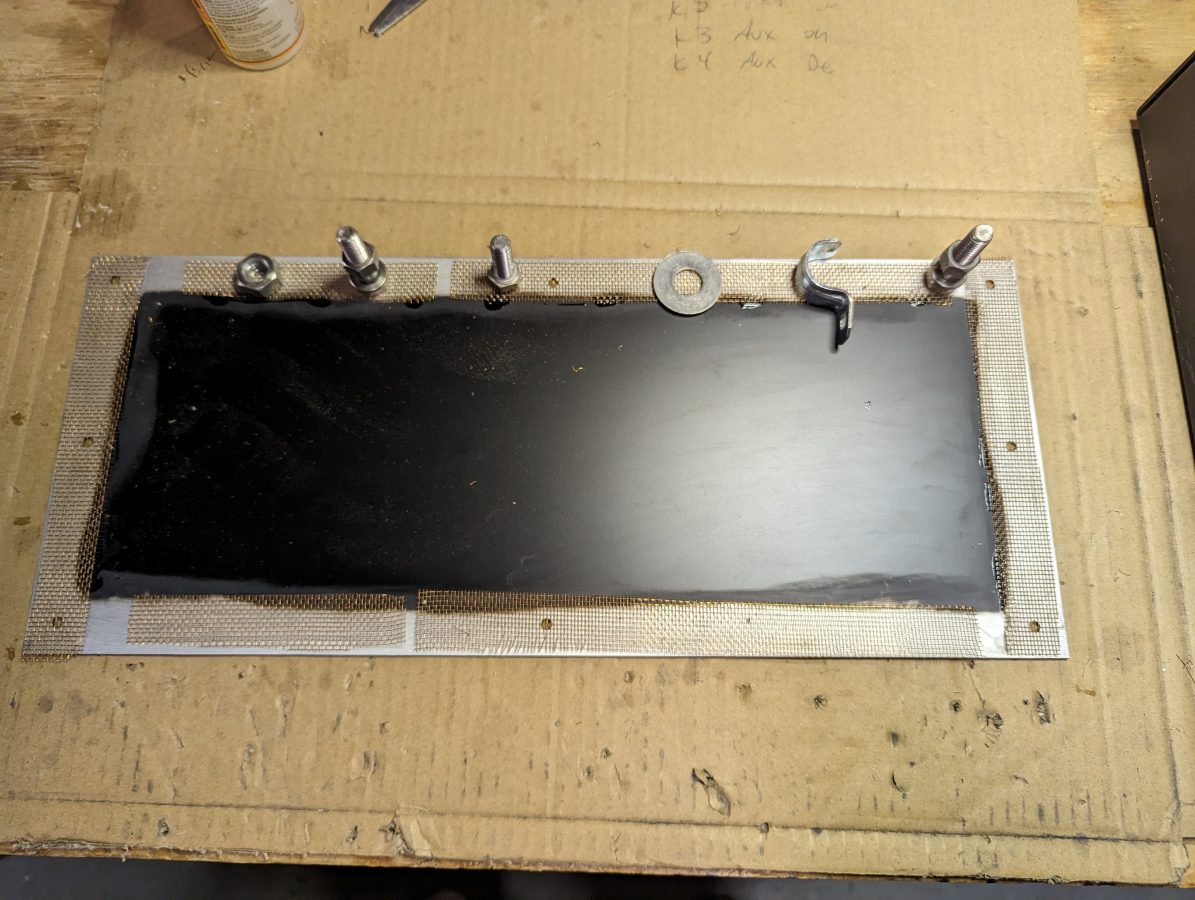
For shielding, I sanded the paint off of the enclosure where the lid is attached and tacked some brass screen down with gorilla glue. This will make a good RF contact surface. The outer of the N connectors are bonded to a piece of copper ground strap which also has a grounding lug on it.

Enclosure lid with brass screen to make contact

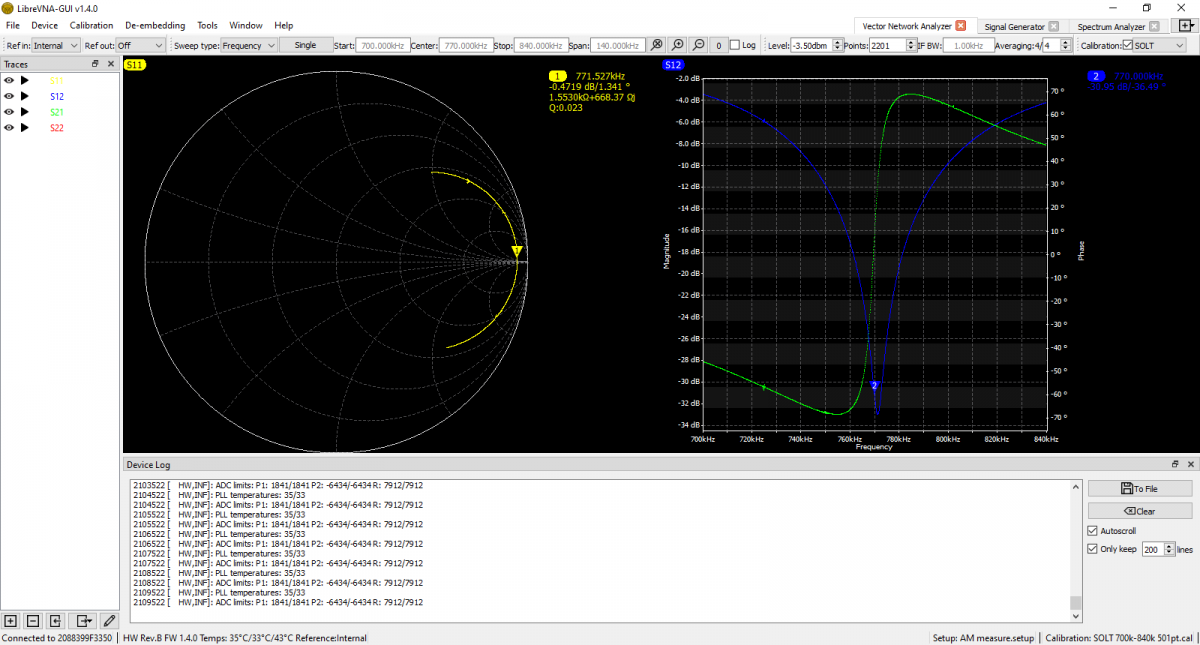
I used the Libra VNA to tune it up:

S12 shows return loss, S21 shows Phase

The scan shows it is -31 dB on the carrier frequency. It is -17 dB on 760 KHz and -20 dB on 780 KHz. This is good, because I may still want to listen to the station on the remote receiver. According to the smith chart, it is actually resonant on 771.5 KHz, but that is close enough for this application. I think the resonance went up slightly when I put the cover on after the tune-up.

There are several tank circuit calculators online. It is best to have more capacitance and less inductance to keep the Q of the circuit low and suppress the sidebands as well as the carrier.

From the not too distant past…

And when such things were important:

Important Memo

While cleaning out a closet at home, I found a 3.5-inch disk with some interesting memos. When I left WGY in the spring of 1996, I made a backup copy of all the items in my documents folder. I figure it was an intelligent thing to do since I was still working for the same company in the role of Director of Engineering.

In those days, management wanted a precise accounting of all off-the-air incidents. The studio was staffed with a board operator who monitored the air signal at all times. Anytime the carrier dropped, there would be a note in the transmitter log. Those 5 second interruptions are likely due to thunderstorms. Lightning would strike somewhere nearby inducing an EMP on the tower. The venerable MW-50B would kill the PDM for a brief period as protection from VSWR. If I were at the transmitter site, the insulators in the guy wires would start crackling anytime a storm was within 10 miles of the site.

The helium balloon incident involved one of those metallic helium party balloons which escaped and ended up tangled in the 240-ohm open wire transmission line. This caused multiple VSWR trips for both the main and backup transmitters. I remember pulling up to the site and having a bit of a chuckle. By the time I got there, the balloon had mostly been burned into oblivion by the RF and the station was back on the air.

Another interesting item is our standard reception report form letter:

WGY reception report letter; name and address redacted because of the internet

These were printed out on WGY letterhead and mailed. I sent out several of them every week. I think the furthest away was Cape Town, South Africa.