The burned contactor fingers

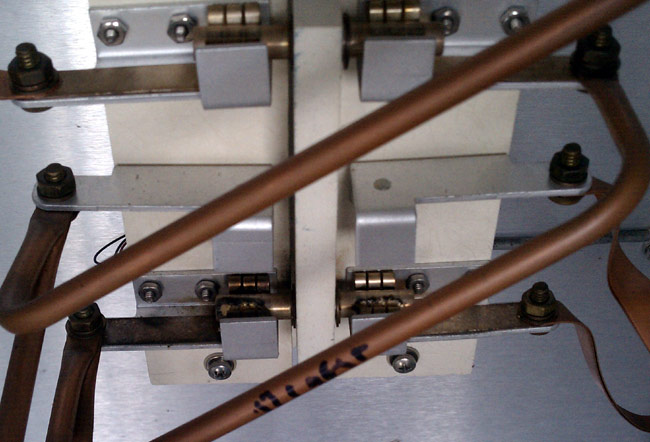
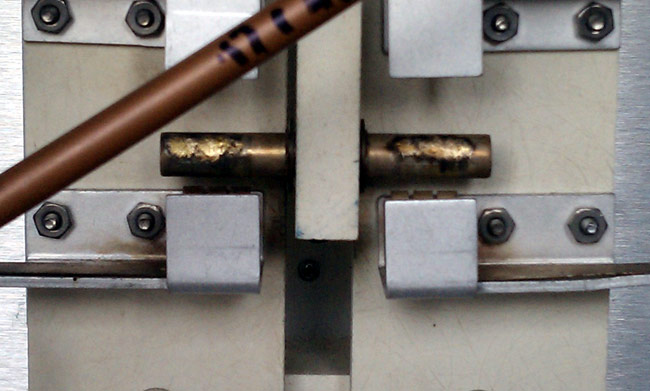
This is a set of burned contactor fingers on a Harris HS-4P 30 amp RF contactor:

Harris HS-4P RF contactor
Harris HS-4P RF contactor with burned finger stock

The back story is this:

The contactor in question is at the base of Tower #3 of the WBNR (1260 KHz, Beacon, NY) antenna array.  This is the tallest of all the towers, at 405 feet.  As such, it gets struck by lightning often.  There was at least one occasion where one of the inductors in the ATU got “sucked in” due to the huge magnetic field of a high current strike.  It is not at all surprising to me to find other component issues in this ATU.  Because of the burned contacts, I’d suspect that the station was switching modes under power, but I didn’t see that happening today.

The problem manifested itself in very high SWR after changing over from day pattern to night pattern.  This did not occur every time, in fact, it only occurred once in a great while at first.  Then, over the last couple of months, it began occurring more and more often.  Since the snow drifts are now down to a manageable six to eight inches, it was a good day to go out and do some exploring.

First of all, I put the station into nighttime mode just to confirm that there is still an issue.  The transmitter, a Broadcast Electronics AM1A showed very high SWR and carrier fold back.  Left it in night pattern, but turned it off and took a walk, not a drive, to Tower #4 which is all the way at the bottom of a hill, near the old City of Beacon landfill.  I figured that I would check that one first, then look at Tower #3 on the way back.  When I got to Tower #3, I found the issue right away.

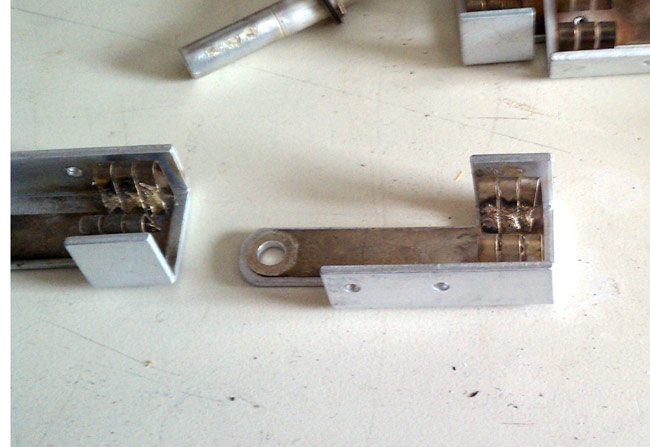
Fortunately, I was able to salvage a set of contact and contactor bar from another relay in the same ATU that was not using them.

Burned RF contactor bar

The night pattern is only 400 watts, but these are tall towers, 225 degrees, therefore current and voltage are high at the base.  In fact, the slightest change at the base of the nighttime towers will greatly upset things.

Burned RF contactor fingers
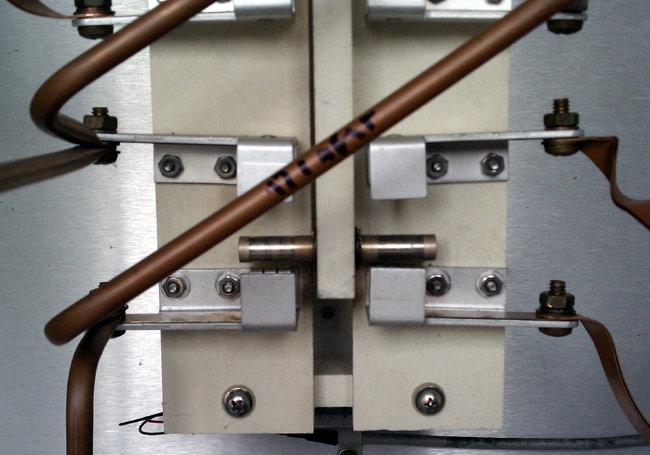
Harris HS-4P contactor repaired

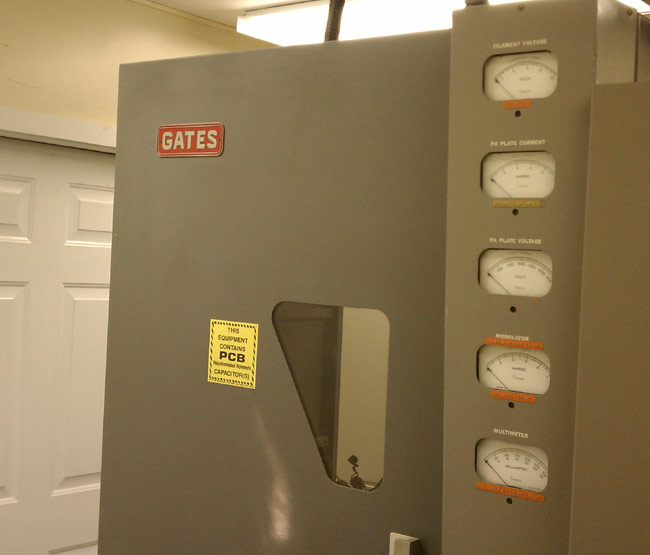
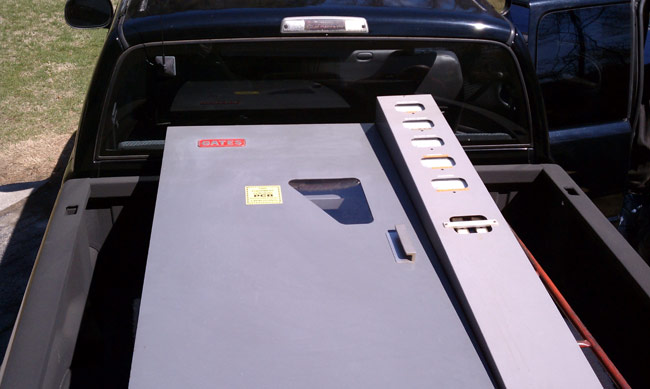
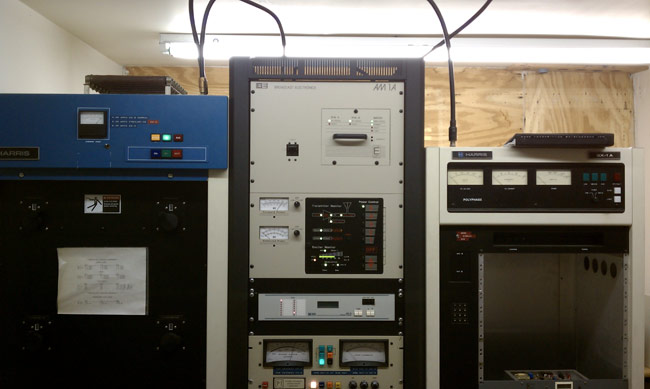
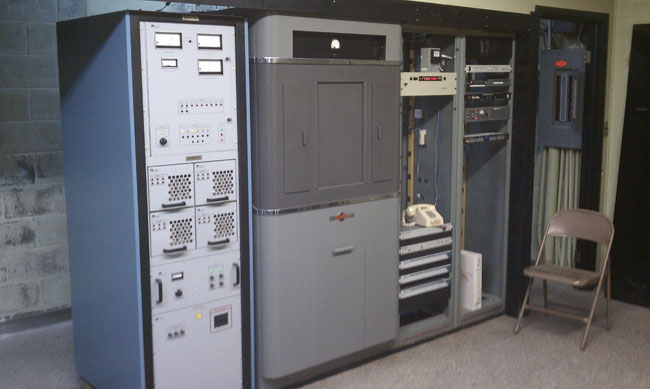
This is the repaired contactor.  I will say, the EF Johnson RF contactors are easier to work on.  Those are the ones with the big rocker bar across the top and two solenoids on either side.  All of the wiring, status switches and contacts are exposed and easy to get to.  This one, not so much.  This is the BE AM1A transmitter

Broadcast Electronics AM1A transmitter

It is not a bad unit, compact, sounds good, is reliable, etc.  In order to work on the power supply or anything in that top cabinet, the whole thing needs to be removed from the rack and taken down.  I suppose that is my only gripe about the thing.

Milwaukee’s oldest radio station

WISN 1130 AM has been on the air since 1922, although not always with those call letters.  In an interesting twist, the license was granted to the local newspaper, the Wisconsin News, and the Milwaukee School of Engineering.  Initially, both entities were programming the station, however, by about 1925, the newspaper was responsible for programming and the engineering school was responsible for technical operations.

In 1941, the station increased power from 1,000 watts to 5,000 watts and added nighttime service.  This is a series of pictures from that time period.

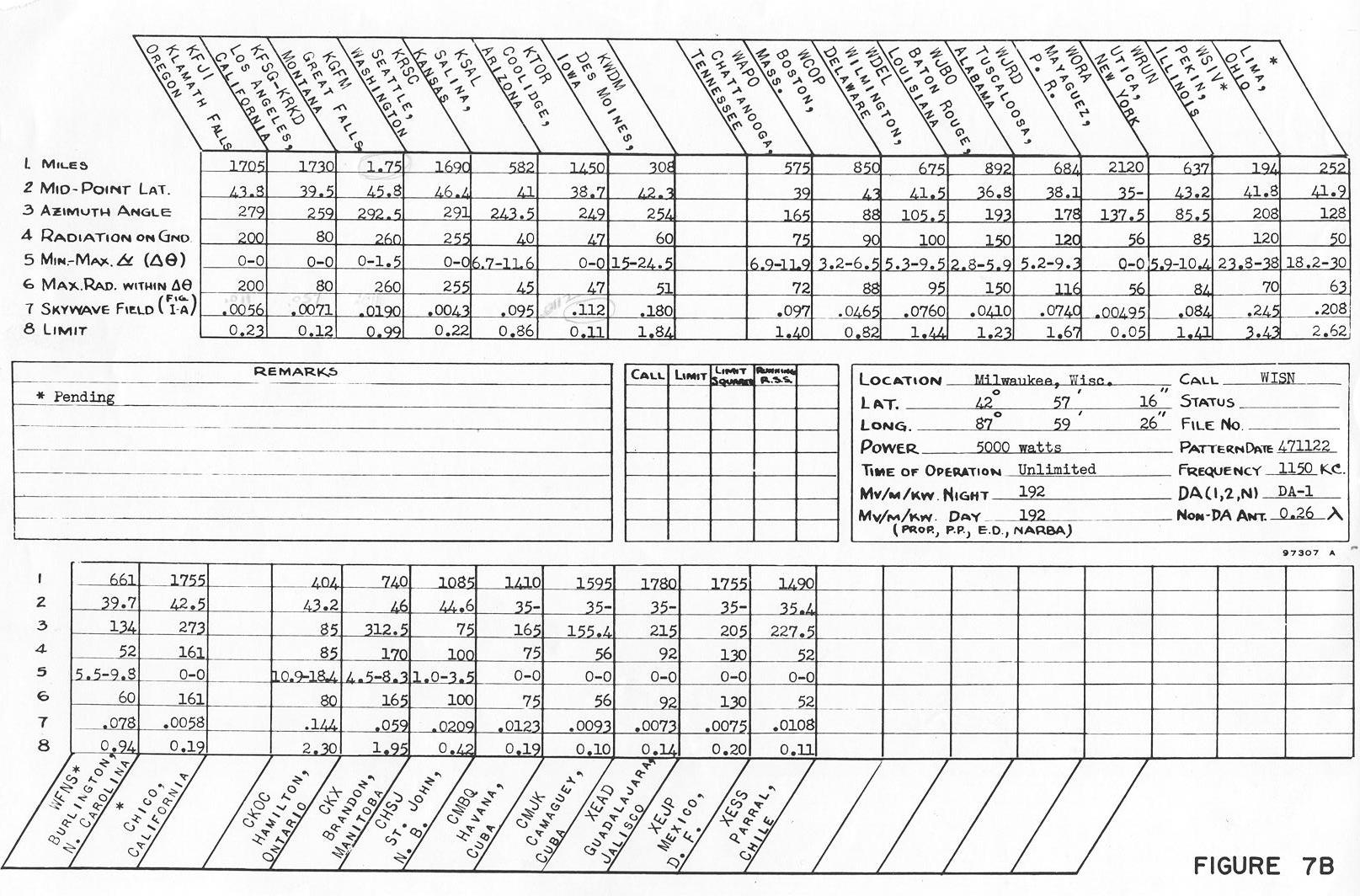
WISN night time allocation study

Back in 1941, nighttime interference was taken seriously.  The nighttime allocation study (on 1150 KHz, WISN’s former frequency) includes co-channel stations in the US, Canada, Cuba, and Mexico.

WISN night time allocation ma

The array consisted of four Blaw-Knox self-supporting towers in a rectangle.  Notice the lack of fencing, warning signs, and the like around the towers.

WISN antenna array
WISN antenna array

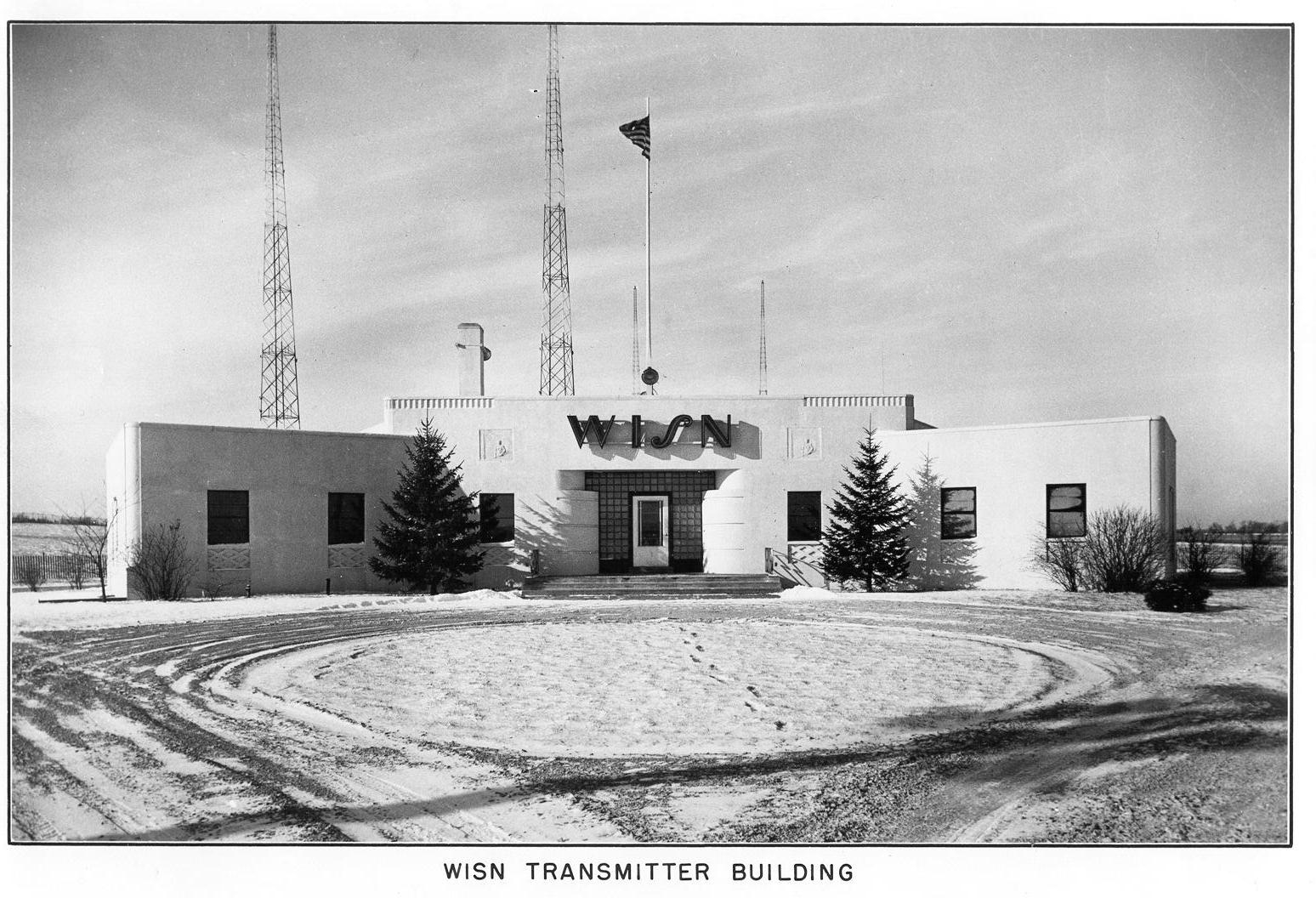
From the front of the transmitter building

WISN transmitter site, 1941

The site looks well designed, no doubt manned during operation, which at the time would likely be 6 am to midnight except under special circumstances.   Most of these old transmitter sites had full kitchens, bathrooms, and occasionally a bunk room.  The transmitter operators where required to have 1st telephone licenses from the FCC.   There is only one manned transmitter site in the US that I know about; Mount Mansfield, VT.  There, WCAX, WPTZ, WETK, and VPR have their transmitters.

WISN RCA BT-5E transmitter, 1941

The WISN RCA BT5E transmitter looks huge for that power level.  Back in the day when AM was king, these units were designed to stay on the air, no matter what.  I don’t know too much about this model transmitter, but if it is like other RCA/GE models from the same era, it has redundant everything.

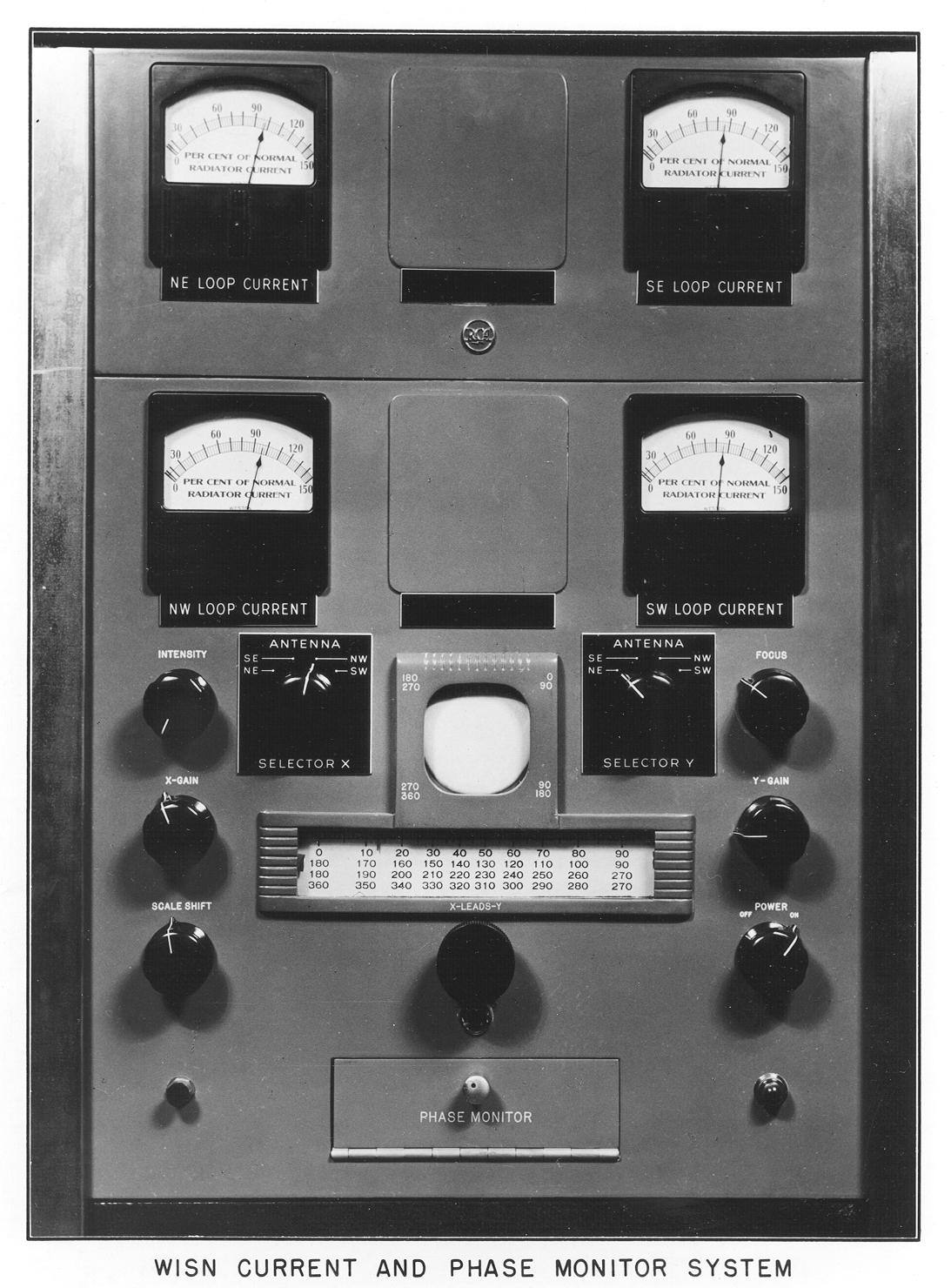
RCA AM antenna monitor

Old school antenna monitor.  I have never seen one of these in operation, however, as I understand it, the scope was used to compare the phase relationship of each tower against the reference tower.

These pictures are of the WISN 1150 array was it was in 1941.  Since then, the station has changed frequencies to 1130 KHz and increased power to 50,000 watts daytime/10,000 watts night time.  The daytime array consists of six towers and the night time array has nine towers, all of which are 90 degrees.

Special thanks to John A. for sending these pictures along.

The Nautel ND-5 transmitter

This transmitter is about 10 years old. In ten years of service, there have been no failures.  Not one transistor has gone bad.  It is connected to a three-tower directional array on 920 KHz.

WGHQ Nautel ND-5 transmitter

Sadly, this model transmitter is no longer made.  They were built like tanks, heavy gauge steel cabinets, well-designed, well-grounded circuit boards.

It is dirt simple; RF power MOSFETs on drawers, combined and tuned with the output network.  A power supply, exciter, and simple control logic and nothing else.  No serial port to plug a computer into, no ethernet ports, no digital read-outs, fancy efficiency optimizing computers, etc.  In the meantime, it does what it is supposed to do, stay on the air.

I was reading, with interest, the idea of “energy star” transmitters.  I think that good radio station engineers already take electrical efficiency into account when buying a new transmitter.   That being said, electrical efficiency is not the only measure of efficiency an engineer should be considering.  Reliability, redundancy, and repairability must also be considered.  If the station spends an inordinate amount of time on the old backup transmitter while the new, super-efficient main transmitter is off line is counterproductive.  Not to mention the time wasted troubleshooting which could be better spent on something else.

The first radio station licensed to Albany, NY

Although not the first station in the area, that honor goes to WGY. In fact, RPI licensed WHAZ in 1923, which makes it the second regional station.  Starting on 1430 Khz as WOKO in New York City in 1923, the station made a few stops along the way.  One of those was on Mt. Beacon from 1928 until 1930.  The original transmitter building is still there, although the tower was taken down in 2005 to make way for the DTV stations that moved in.    I always wondered why an FM tower on the top of a mountain had a base insulator.

WDDY towers
WDDY towers, Bethlehem, NY

In 1930, WOKO was sold and moved to Albany, NY, becoming the first station licensed to that city.  The transmitter site is located off of Kenwood Avenue in the town of Bethlehem, about 4 miles south of downtown Albany.  It first signed on with 1 KW, increasing to 5 KW in 1947.   This is the original transmitter site, but the towers were redone in the mid-1970s.  The towers themselves are 130 electrical degrees (235 feet) tall.  Like all AM stations, for years it serviced the community until it was gradually reduced to a satellite repeater, now owned by Disney.

WDDY transmitter site

The original transmitter building is in the back, the front was added in the 1970s when the studios and offices colocated with the transmitter.  Prior to that, they were in downtown Albany.

Nautel XR6 Medium wave broadcast transmitter
Nautel XR6 medium wave broadcast transmitter

The Harris BC5H transmitter was replaced with a Nautel in 2006.  The Harris AM H series transmitter has a pair of transistors on the audio driver board that were unique to that transmitter and no longer manufactured.  There are no equivalent replacement parts.  Once those transistors fail, the transmitter is done.

I really think that AM could make a comeback, but the following conditions need to be met:

  1. Kill AM HD radio.  Kill it dead.
  2. Cut away the dead wood.  Those stations that are not making money, have not made money and have no hope of ever turning a profit again.  Most of these are owned by large consolidators that cannot yet afford to write off the bad investment.  More and more will be spun off and given to MMTC and others.  If they can make a go of it, good.  If not, then the stations will go dark and eventually surrender their licenses.  We have one like that around here that basically turns its transmitter on one day a year to avoid license forfeiture.  That should stop, either they use it or lose it.
  3. FM radio will continue to be the investment bank darling, in spite of lower and lower listeners and revenue.  This will lead to more and more translators, HD radio, LPFM, and other things being shoehorned into an already crowded band, creating AM-like conditions on the FM band.
  4. Those that can take on the challenge of an AM station should immediately begin looking at reducing maintenance costs.  Directional antennas are money holes, if at all possible, get rid of the DA in favor of a single tower closer to town.  Duplexing with another AM is a great way to save money and the costs of building a new tower.  Using a taller tower, up to 190 electrical degrees, will daytime signal and reduce the radiation angle (vertical) of the tower, thus permitting better PSSA, PSRA, and or nighttime operation.
  5. Local programming.  Local sports, local politicians, local bands, local church services, local events, etc.  Local.

But anyway…