Bucket Trucks and Landing Craft

Hopefully, that title is descriptive enough:
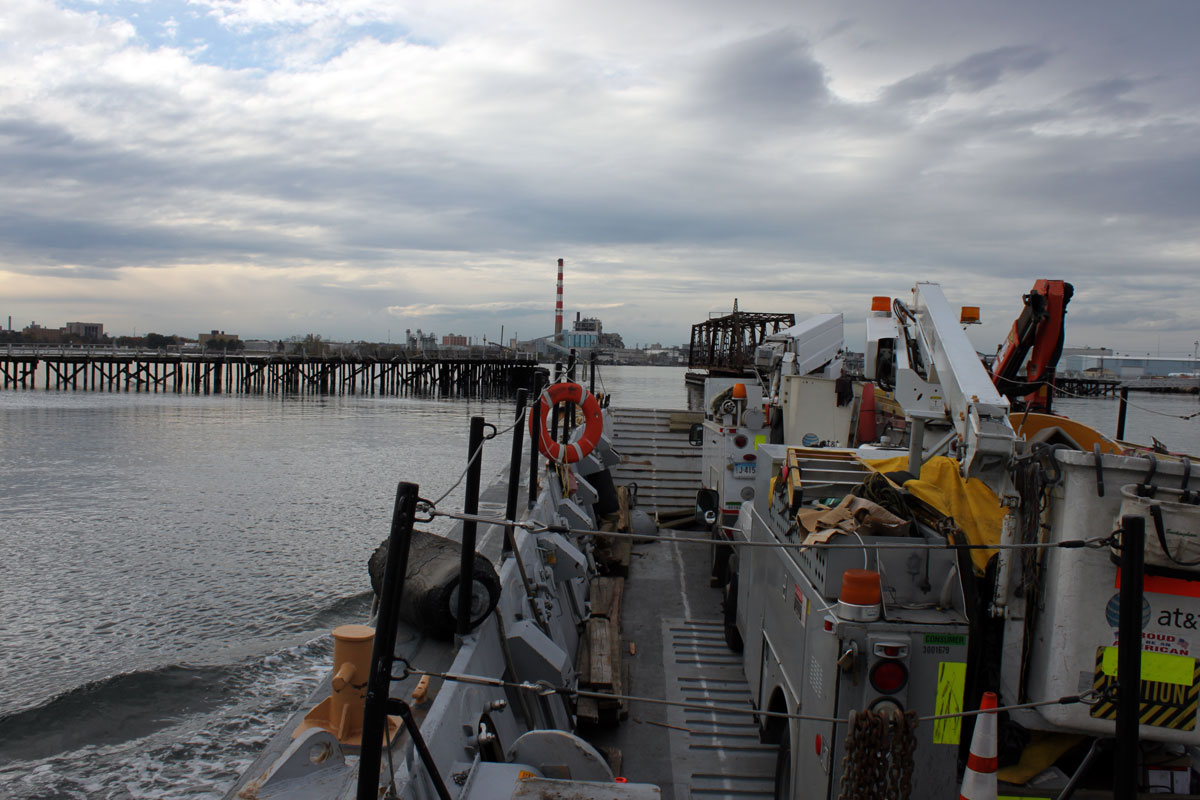
ATT bucket trucks, , mobilized via landing craft to Pleasure Beach

We loaded a couple of ATT bucket trucks on a landing craft and waged an assault on Pleasure Beach.  This is to finalize the repair work from Hurricane Sandy last year.  The other factor is the construction taking place on the Island.  The City of Bridgeport is constructing a park, which involves extensive repairs and renovations to the buildings.  Construction vehicles driving under the old lines have ripped them down several times, thus repairing the lines on the new utility poles was necessary.
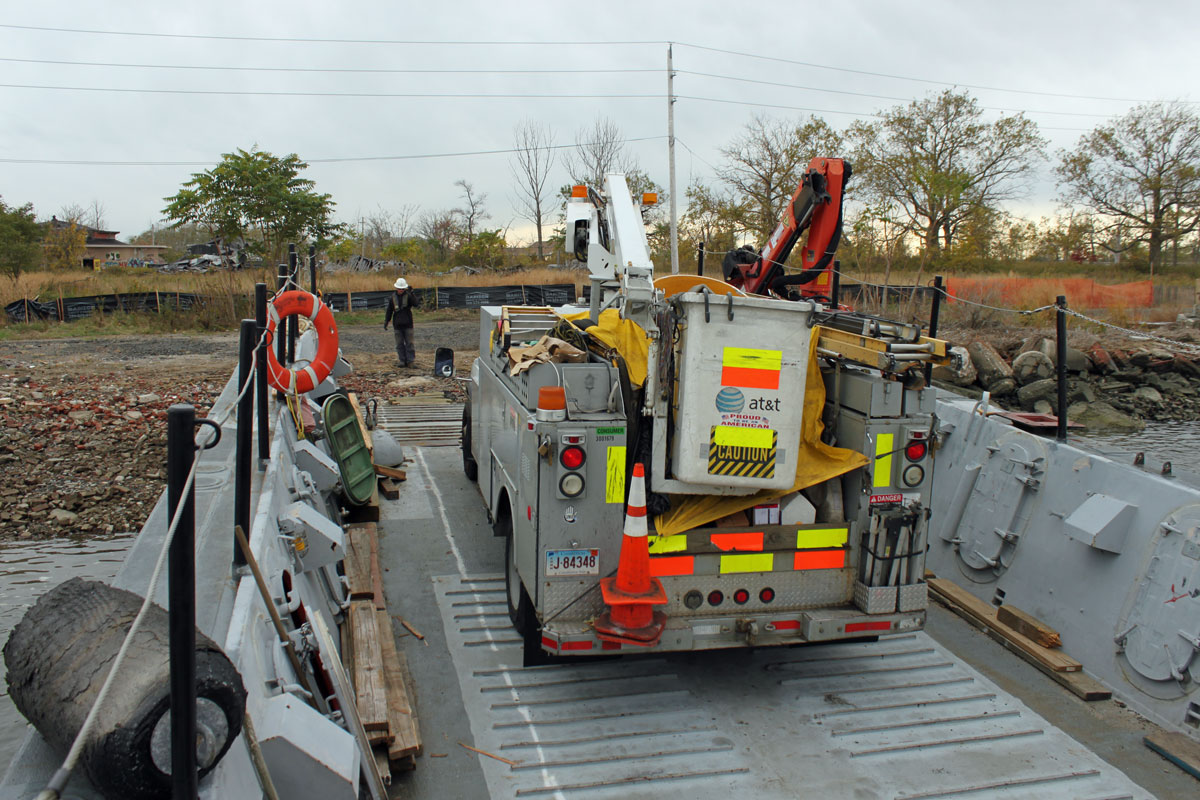
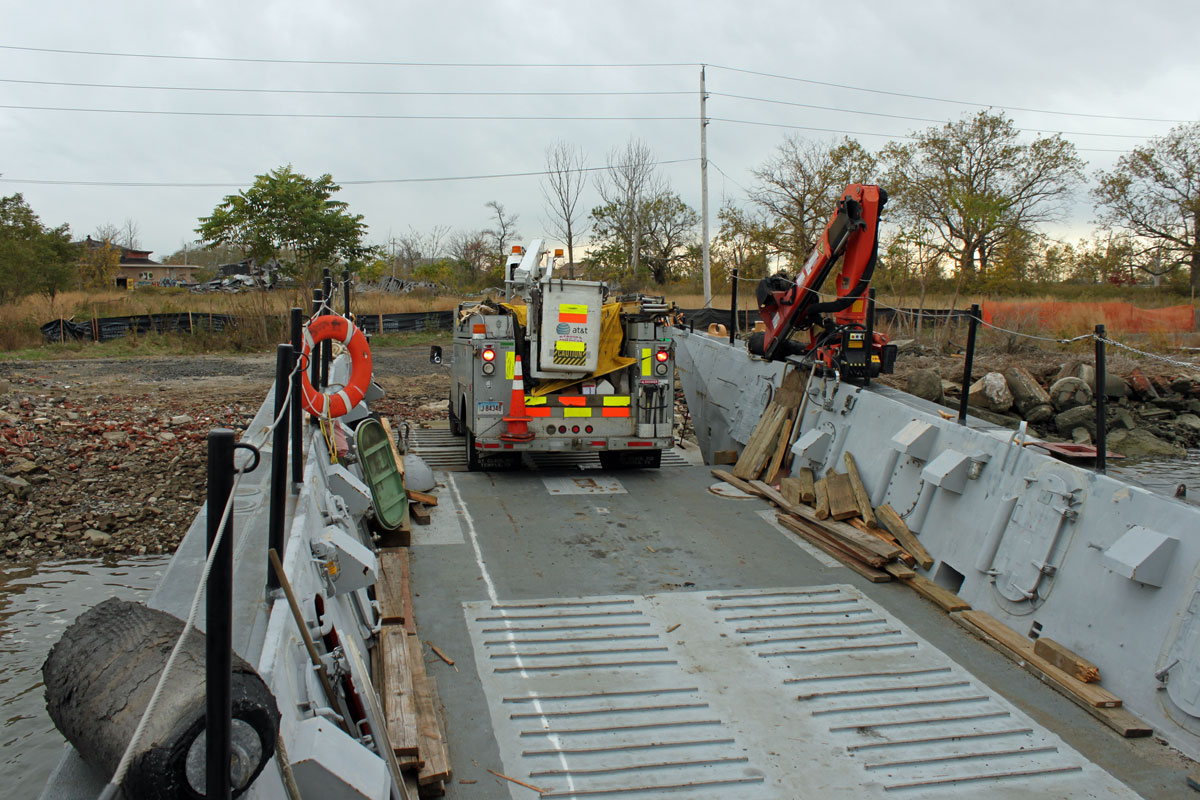
ATT truck offloading

ATT is the LEC for the Bridgeport area, something they don’t do in most other parts of the country, from what I am told.
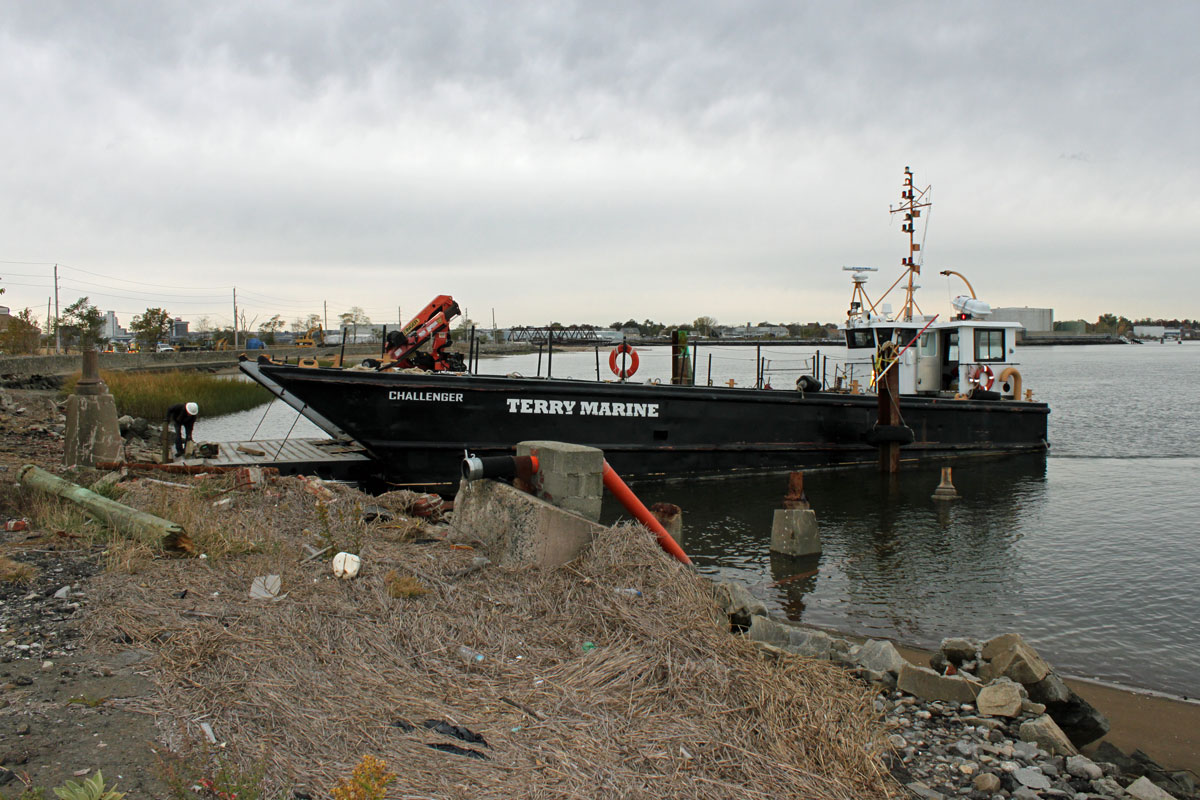
Landing Craft Challenger

It took approximately four hours to complete this work and reload the trucks back on the landing craft.  The boat itself looks like a slightly modified LCM (Landing Craft, Mechanized), which was produced from 1943 onward.  This is an LCM-8.

WICC towers
WICC towers

WICC towers almost in line, I was about one second too late with this shot. This would be “down the bore” of the daytime pattern into downtown Bridgeport.
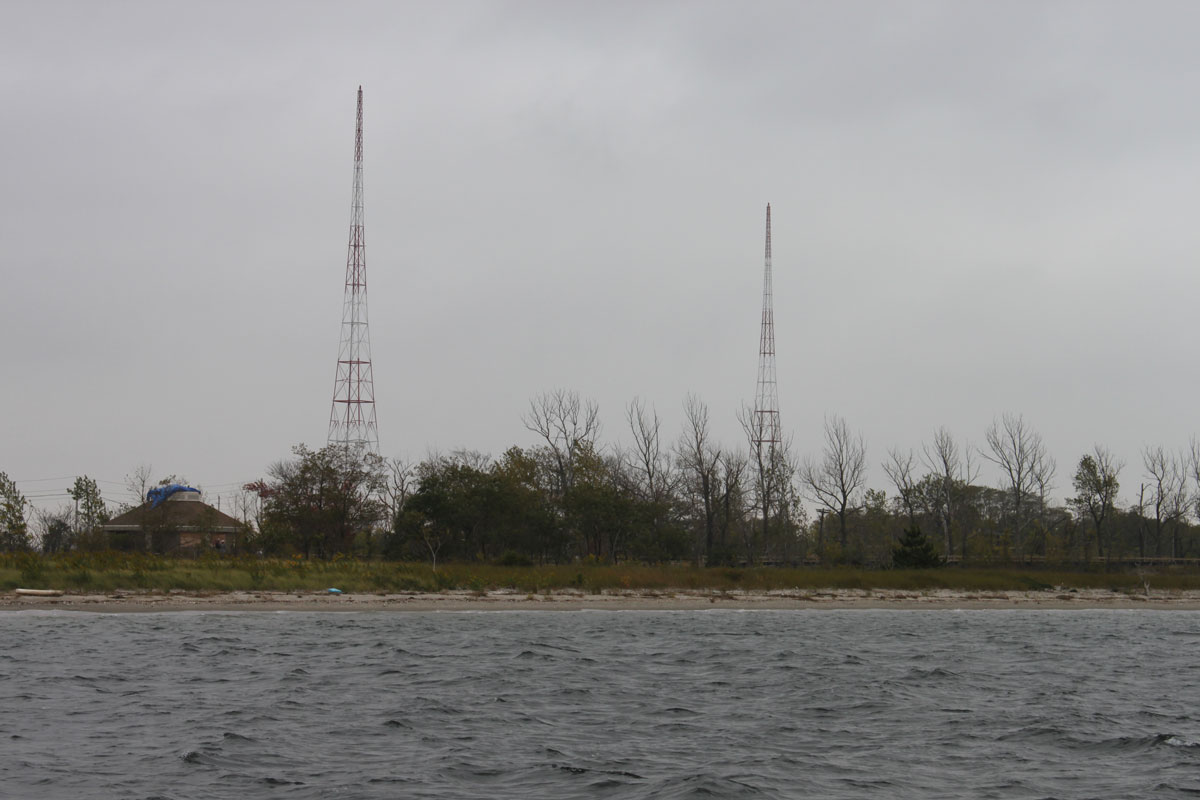
WICC towers
WICC towers

Another shot of the WICC towers. These were designed to hold up a horizontal T top wire antenna strung between the two of them.  At some point in the early thirties, somebody realized that the tower itself could be excited as a vertical radiator and the antenna configuration was changed. Up until the mid-1970s there was a horizontal wire which supported a third wire element hanging between the two towers, making it a three-tower directional array.  This was removed and it was then that the current phasor and two-tower DA-2 system was installed.

All in a day’s work.
WROW

WROW 590 KHz, Albany, NY is another one of those successful AM stations.  They have a music format, which I would characterize as a blend between nostalgia and oldies.  They do well in the Albany book and most importantly; make money.  The Wikipedia entry is a little dated, as they have had a music format for over four years now.  The low dial position helps, as I can get the station up near the Canadian border and most of the way down to Poughkeepsie during the daytime pattern operation, which is better than across-town WGY, 50,000 watts non-directional.

Here are a few pictures of the transmitter site:

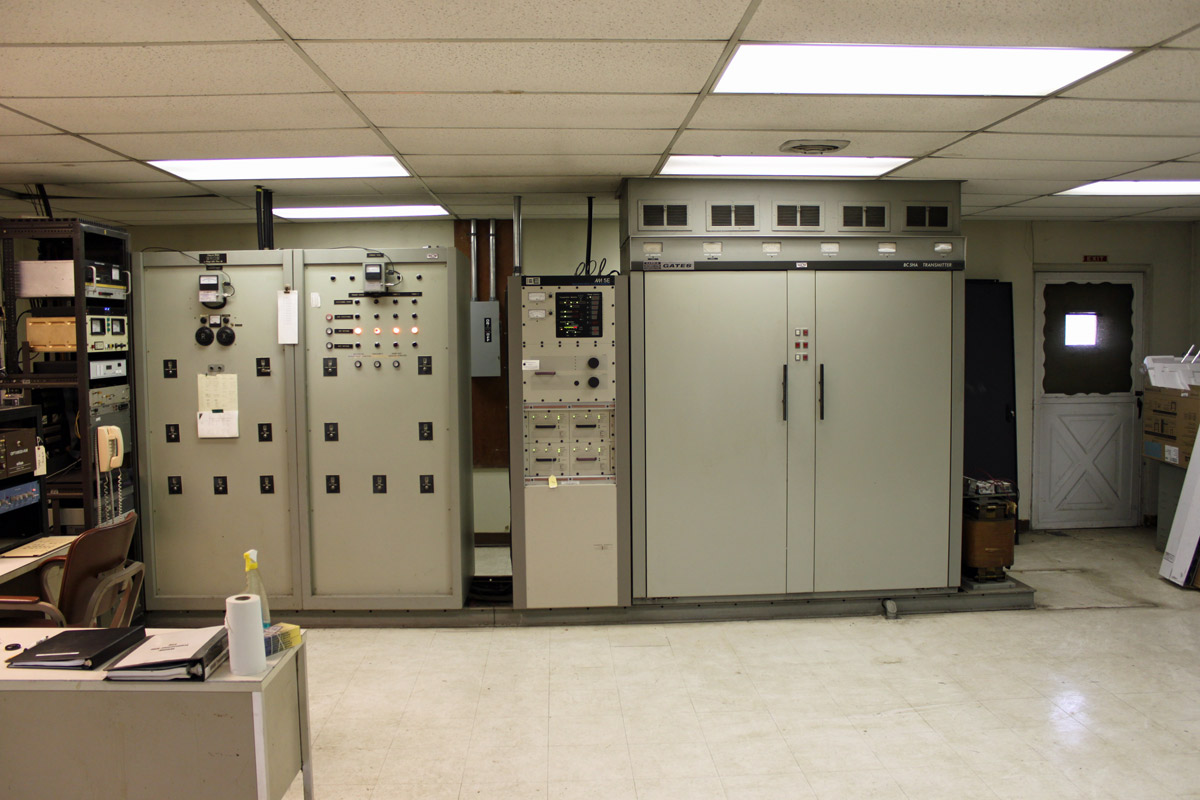
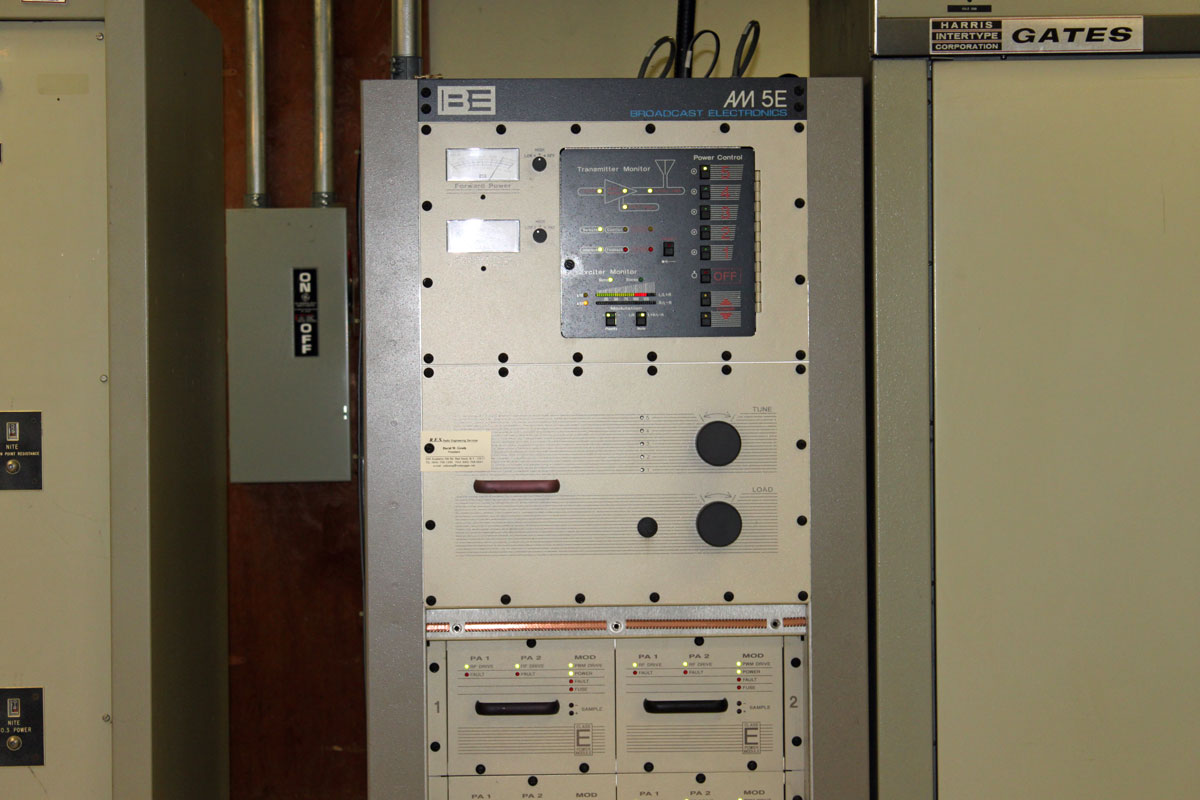
Broadcast Electronics AM5E, WROW, Albany, NY

WROW main transmitter

WROW transmitter room

WROW transmitter room; main and backup transmitters, phasor, equipment rack, etc.

RCA BTA1AR former backup transmitter

The former backup transmitter for WROW-AM. This was moved from the original transmitter site, located a few miles north of the current transmitter site in Glenmont, NY. The current transmitter site was constructed in 1974.

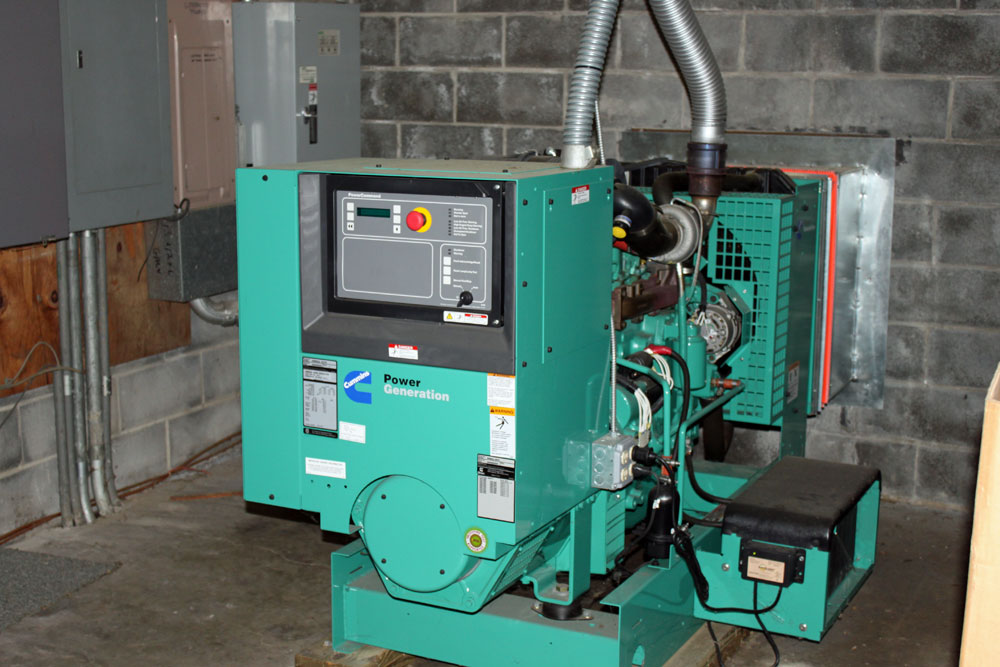
Onan diesel generator

Backup power

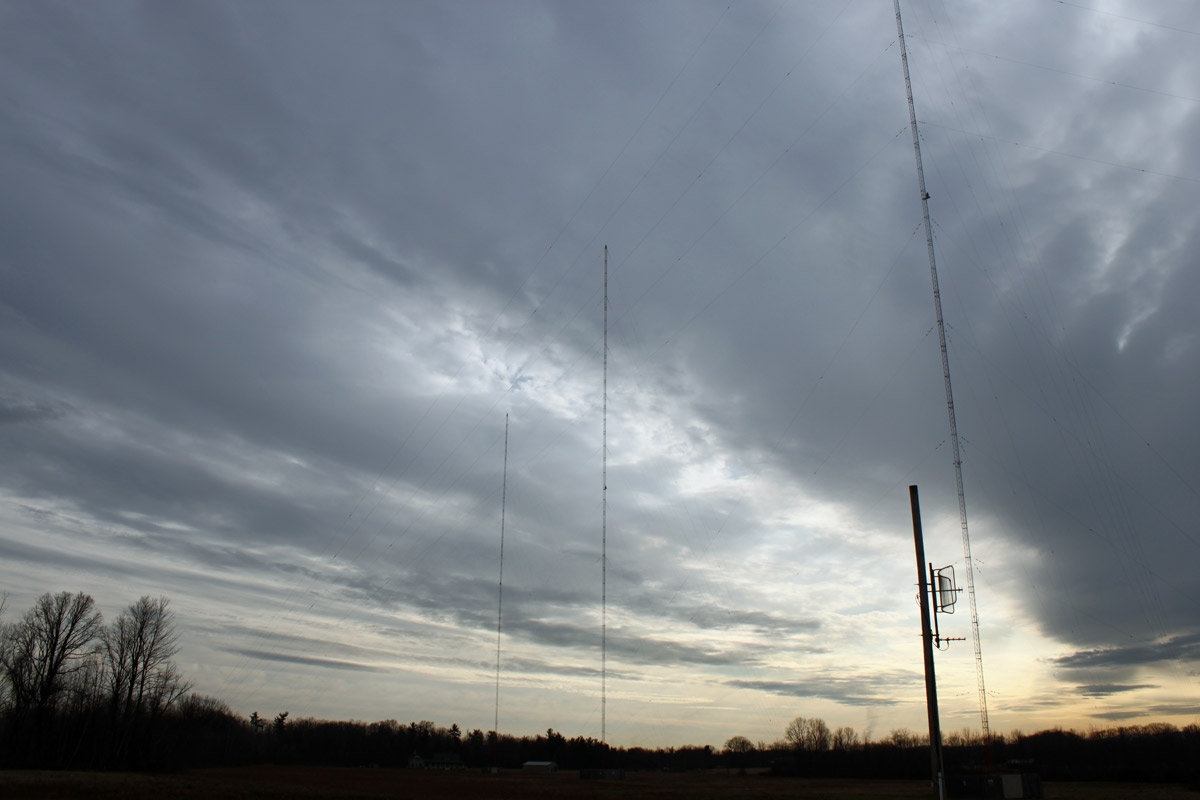
WROW antenna array, three tower DA-2

WROW antenna array. The station transmits with 5,000 watts daytime and 760 watts night time. The towers are slightly tall at 105 electrical degrees. It is hard to do tall towers at the low end of the dial because the towers get very tall. These are 149 meters (488 feet) tall.

It is kind of tragic, in a way

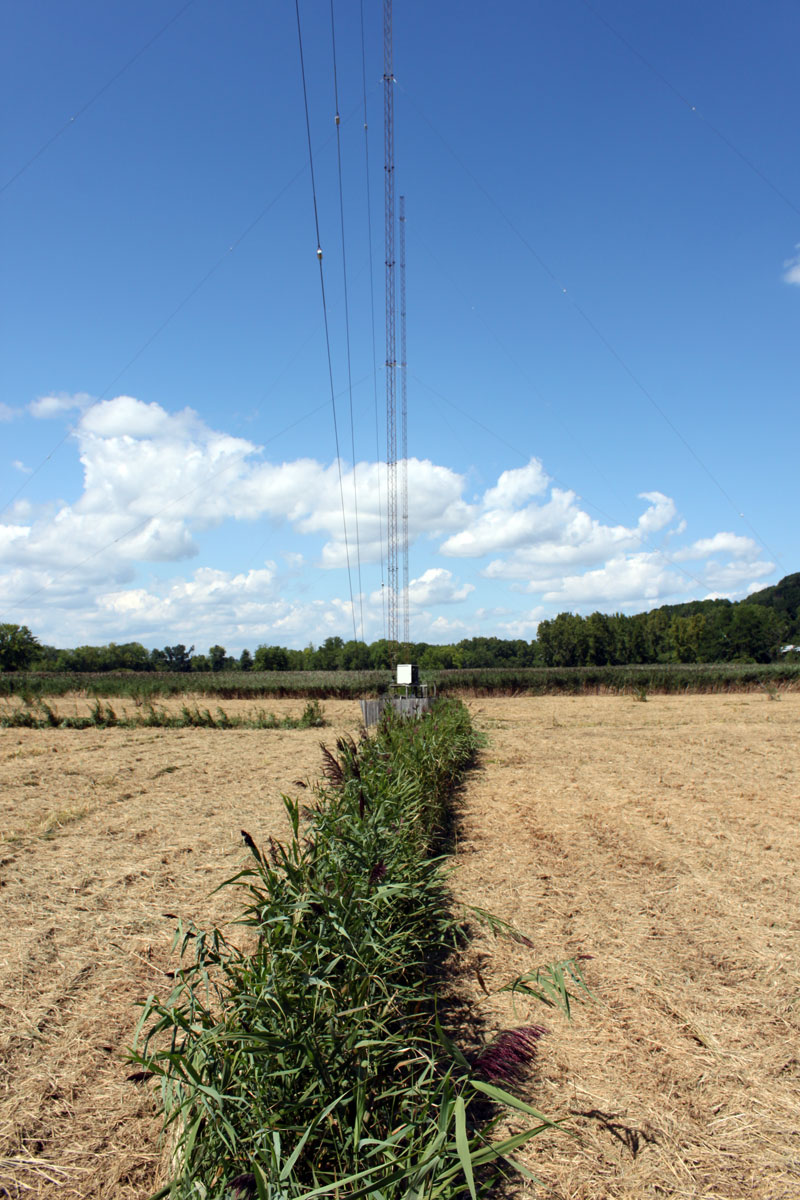
Working on another AM directional station (WGDJ) which was damaged by lightning recently. In this case, the antenna array controller ceased working and one of the towers in the daytime pattern was out tolerance. Before we stared working, I told the owner to have all the vegetation cut down around the towers. This is what we ended up with:

WGDJ catwalk, East Greenbush, NY

I can’t really fault them for this, but it does make work more difficult.  That strip of tall green grass; that is the catwalk. The grass itself is called Phragmites, which is tall, tough, reedy stuff that can scratch and cut person unaware. The array is in a low swampy area next to the Hudson River in East Greenbush, NY. Stepping off of the catwalk, one can sometimes find solid ground, or find ones feet six inches under water.

WGDJ tower one ATU cleanout
WGDJ tower one ATU clean out

This is Mike cleaning out the mice and bees nests out of the tower #1 ATU. Notice the can of bee spray in his back pocket.  This was after he was stung in the forehead.

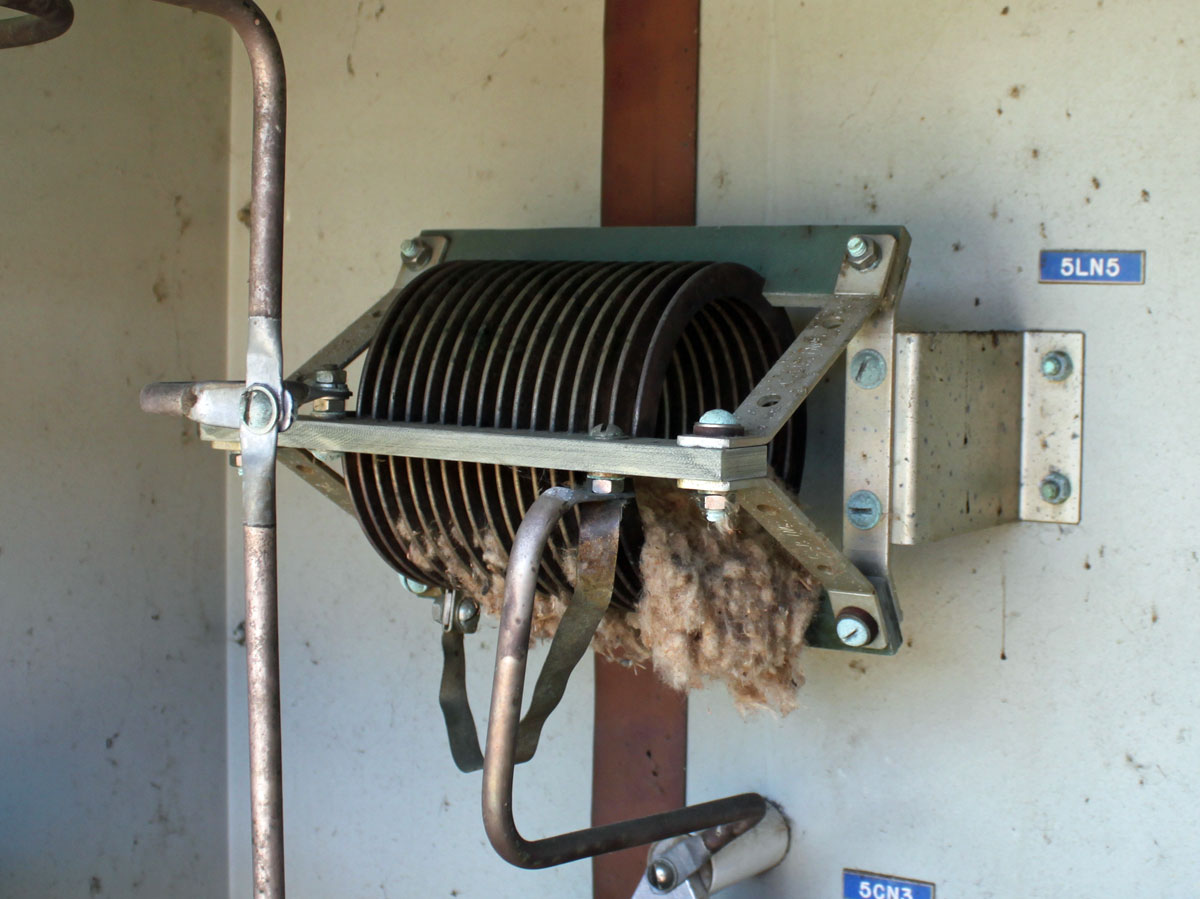
Mouse nest, WGDJ daytime ATU coil
Mouse nest, WGDJ tower #5 daytime ATU coil

This mouse nest, at the attendant dead body in it, was responsible for a -10 degree phase shift in the daytime pattern for that tower. I hate cleaning this stuff out, it is a dirty, nasty job but necessary nonetheless. While doing this work, I wore gloves and a dust mask. The entrance hole where the AC power and control cables come into the bottom of the ATU was plugged up with some steel wool.  There is still a bad capacitor in this ATU for the daytime array, that damage was likely caused by lightning.

At the end of the day, we repaired the antenna array/phasor controller; bad AC transformer and rectifier bridge and several bad logic steering diodes for tower 4 and 5, cleaned out all the vermin nests and isolated the remaining problem with the daytime antenna system.  Parts should be in next week to finalize repairs.

All in all, not a bad day’s worth of work.

WKNY, Kingston, NY

This is another one of those, ahem, AM success stories. WKNY is on 1490 KHz, 1,000 Watts day and night from a transmitter site that is located very close to its target audience of Kingston. It signed on on December 16, 1939, broadcasting 100 watts on 1500 kHz according to the Broadcasting Yearbook 1940 edition.

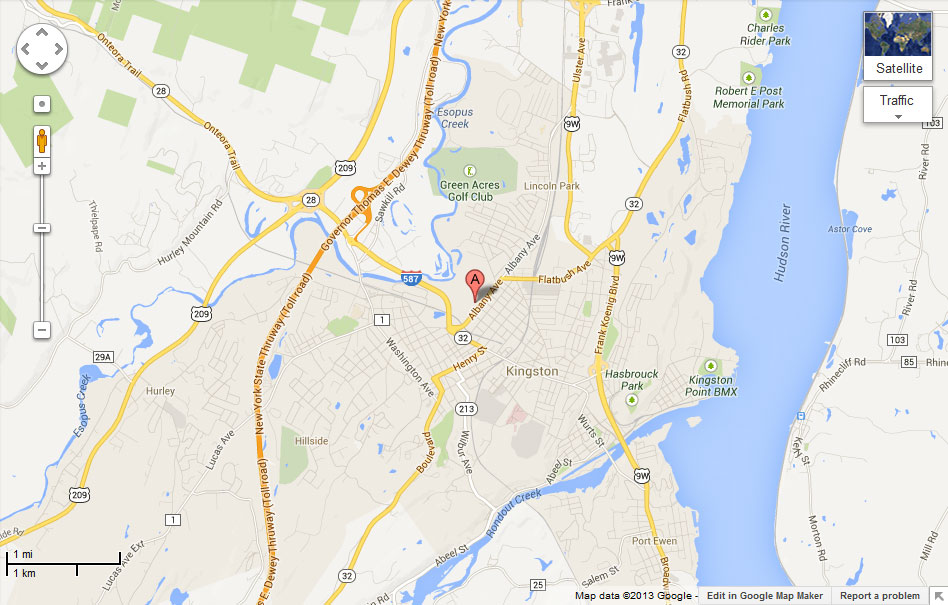
WKNY transmitter site location

The transmitter location is the key to this station’s good signal over Kingston. Even though it is a class C AM station when driving around the Kingston city limits there is no electrical interference or nighttime co-channel interference.  The reason for this is that most of the city limits are within 2.5 to 3 miles (4 to 4.8 km) from the tower.

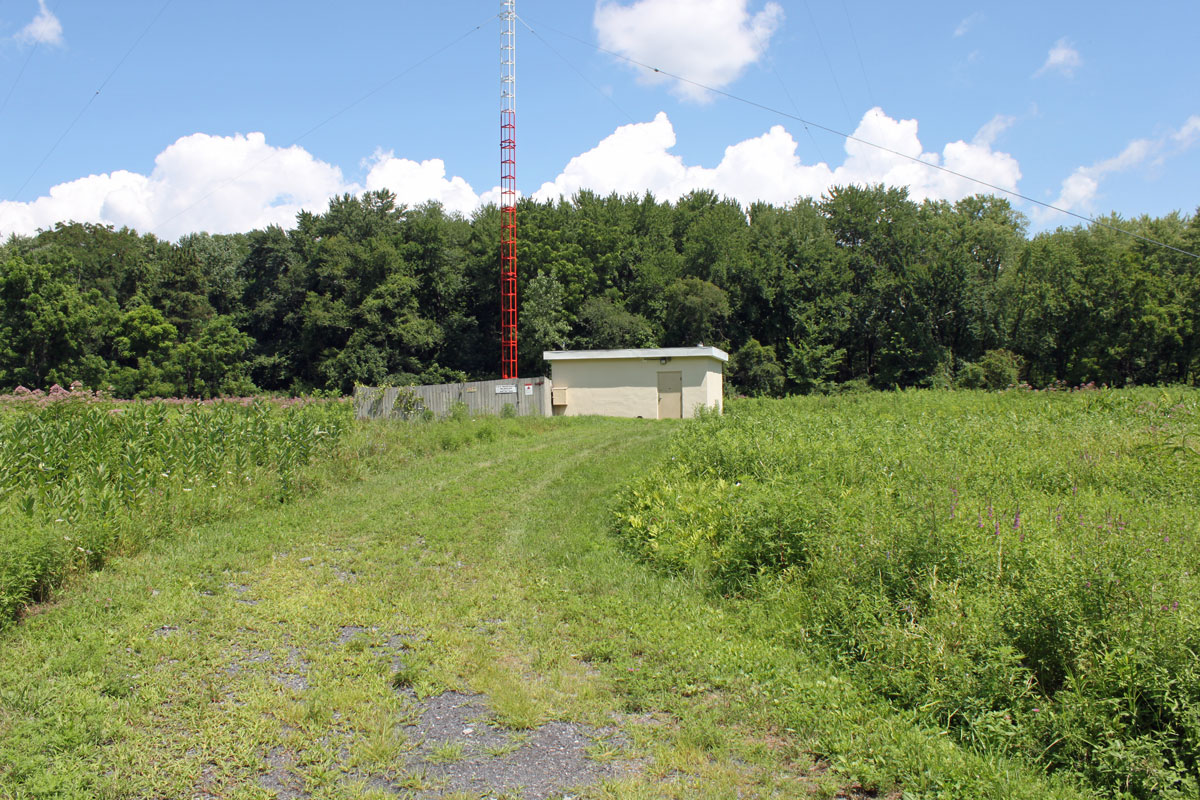
WKNY transmitter building and tower

This is the original transmitter building and tower.  Like many old AM transmitter sites, this one is located in a low, swampy area.  The tower is electrically tall for 1490 KHz, at 92 meters (305 feet)  it is 163 electrical degrees. Something else that may contribute to the station’s performance.

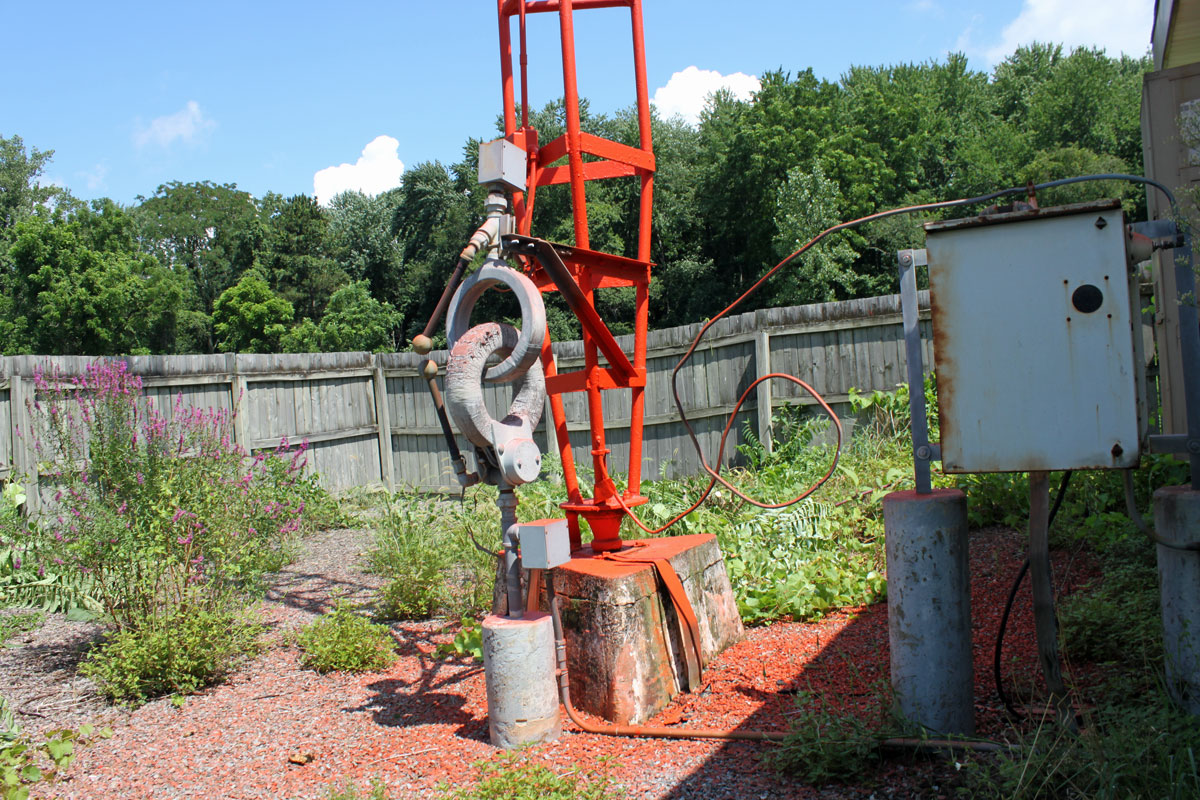
WKNY tower base
WKNY tower base
WKNY tower
WKNY tower

WKNY tower, a typical design of a uniform cross-section guyed tower from the late 1930s to late 1950s.

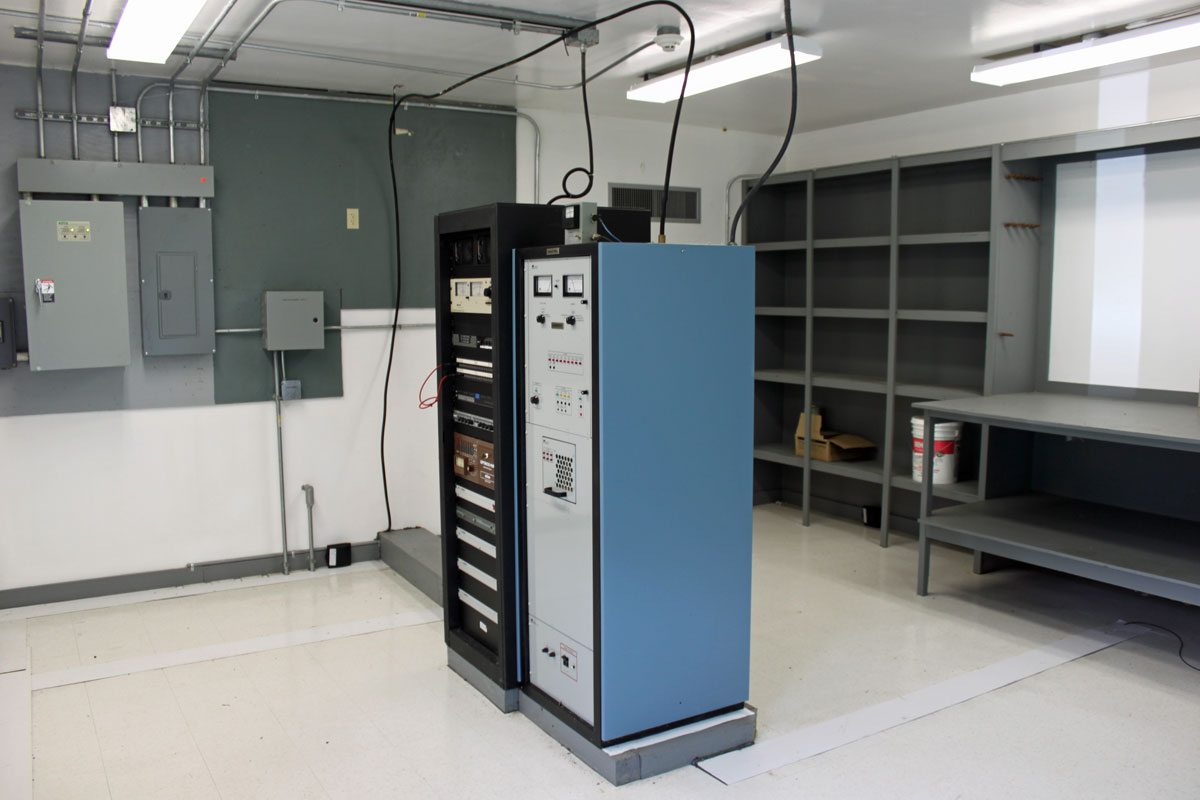
WKNY transmitter
WKNY transmitter

WKNY transmitter. Another Nautel ND-1 series transmitter. Nothing ever breaks or goes wrong.

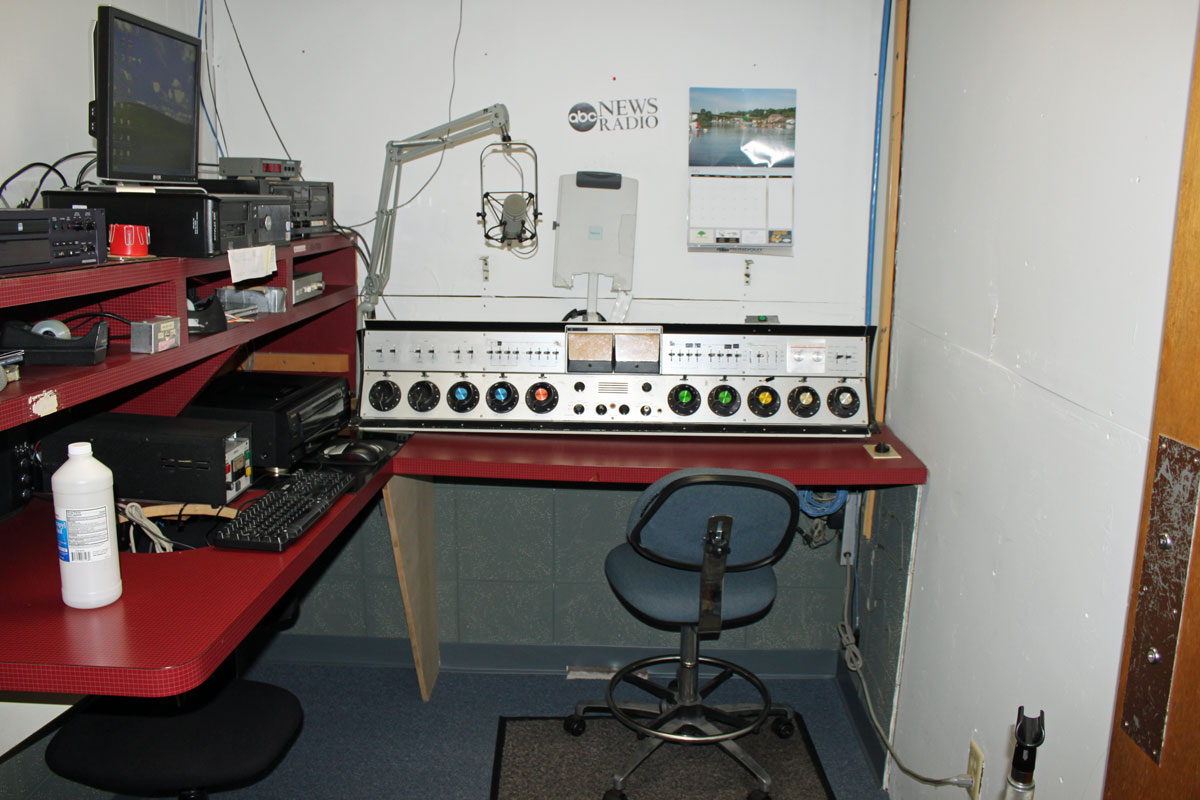
Air studio, WKNY Kingston, NY

The air studio has an AudioArts R-60 console. For an inexpensive audio console, these things sure seem to last for a long time. I think this one was put in in 1997.

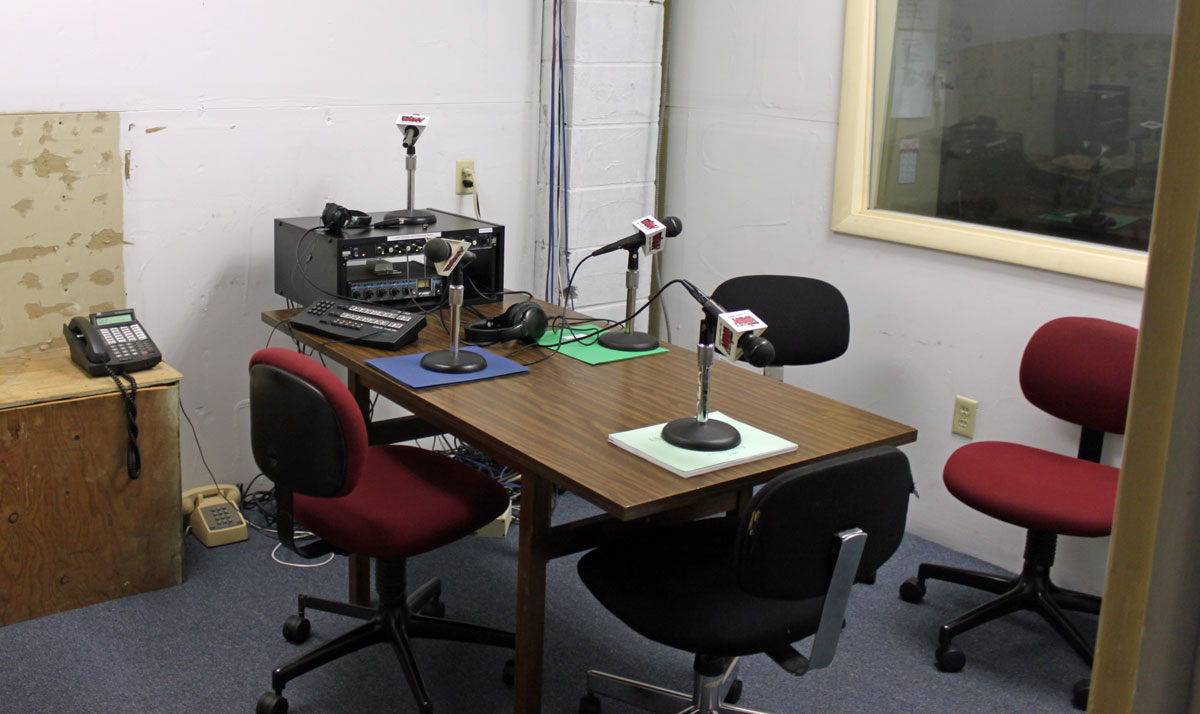
Talk Studio, WKNY KIngston, NY

A small talk studio is used to originate local programming of interest. This morning, I was listening to “Speak Out With Jody McTague,” a local interest program that was discussing the impacts being felt in the Kingston area due to the “Affordable Health Care Act.”

WKNY production studio

The production studio has a rather old Harris rotary pot console from the 1980’s.

Of course, all of this equipment makes radio transmission possible, but what makes radio itself is the local people working at the station and bringing relevant information to the area.  I know a lot of very smart people are working on the “solution” to the AM problem.  It really has to do with the programming.