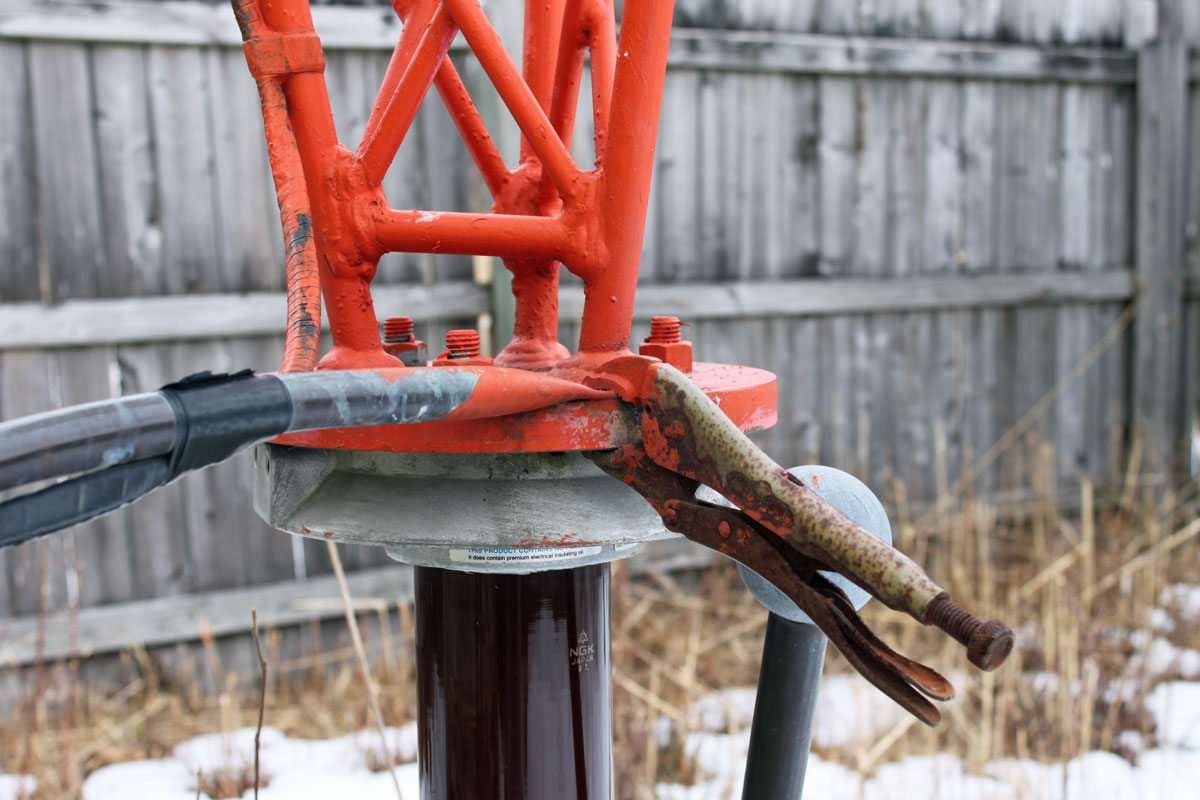
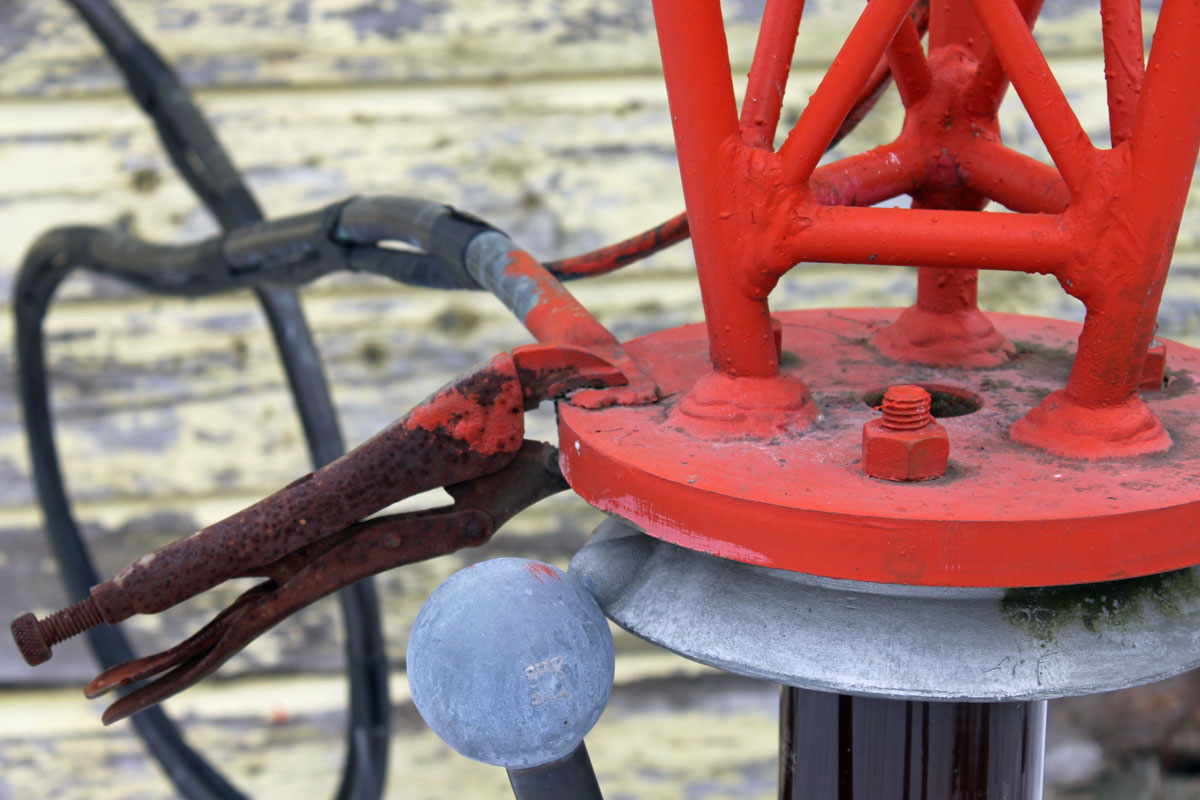
Oh yeah, that’s right, they were used to attach the RF feed to an AM tower. About ten years ago.
Vise grip tower clamp
From this view, it looks like whatever tower crew installed this tower could not manage to solder or braze the copper RF connection to the steel tower. The area was then painted, but it looks like there is some corrosion going on between metals.
Vise grips clamping RF feed to tower
Another view.
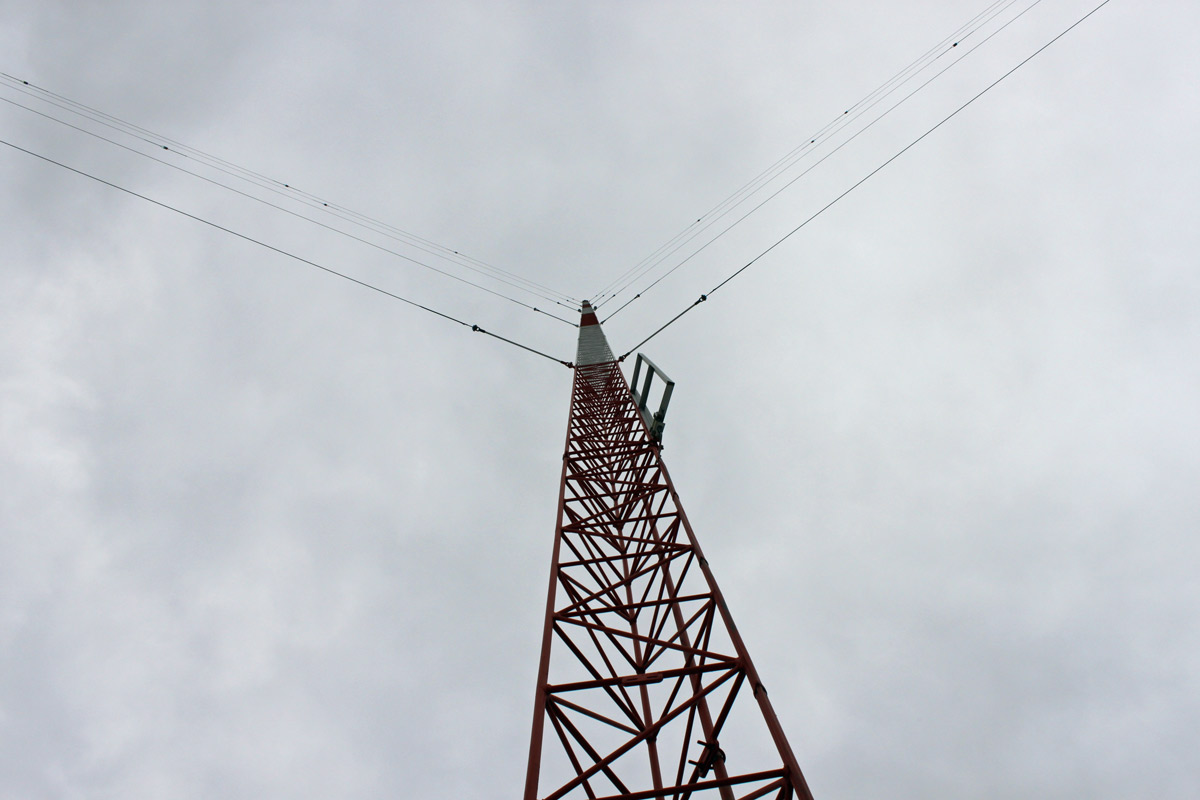
AM broadcast tower
This is a relatively new tower. Sadly, it is very likely that this station will be going off the air soon. If the station is still on the air come springtime, I will drag the brazing outfit across the field/swamp and fix this. If the station goes dark, then I won’t worry about it.
Reflecting the state of the economy in Detroit, WDTW went silent on January 1st. Less than two weeks later, the towers come down:
Thanks, Chris R for the video link.
The license has been donated by Clear Channel to MMTC (Minority Media and Telecommunications Council), but not the land or towers. It remains to be seen whether the station will return to the air, however, given the costs involved and the economic conditions in Detroit, that is unlikely.
The station signed on in 1946, moving to 1310 KHz with full-time operation in 1948. Back in the day, it was a flame-throwing top 40 station and is purported to be the source of the “Paul is dead” rumors that surrounded the Beatles in the late 60’s. Much more history at Keener13.com.
Take pictures of your favorite AM stations now because tomorrow, they and all their history may be gone.
After a bit of delay, we were able to return to the WICC transmitter site to install the Wireless LAN link. The installation was pretty straightforward. The studio unit was mounted on an existing STL tower on the top of the elevator room, the transmitter unit was mounted on an existing pipe on the roof of the transmitter building.
M5 Nanobridge mounted on transmitter building with RADOME
I included RADOMEs for a couple of reasons; first, there is a lot of critters around of the two-legged and winged kind. The upright two-legged critters may be attracted to the signal-strength lights at night. This unwanted attention could invite the juvenile delinquent’s bored teenagers to throw various objects found laying around on the ground at the antenna, damaging it. The winged type critter may be inclined to view the feed horn as a good nesting location. The other reason is this site gets a lot of rain, wind, ice, and snow, therefore the RADOMEs afford some protection against the weather.
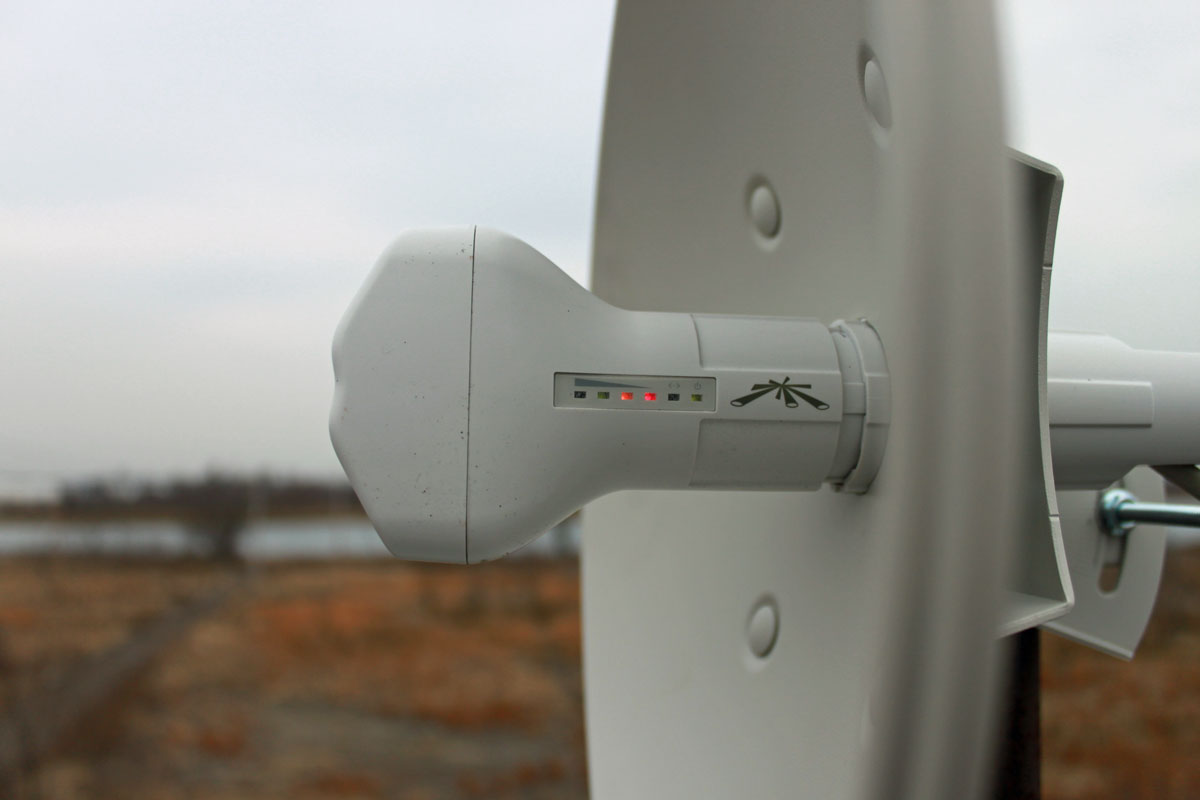
Aiming the antennas was pretty straightforward, but requires at least two people. Using landmarks, we aligned the dishes in the general direction of each other. Both ends of the system were turned on and we had a -89 dBm signal path, and somewhat surprisingly, the radios linked up and my laptop grabbed an IP address via DHCP. Using the signal strength meter on the side of the antenna, each dish was peaked in turn:
M5 Nanobridge Antenna signal strength meter
Then, somebody on either end went below and looked at the signal strength screen on the web interface while the other end peaked. In the end, we had about -65 dBm signal strength, which is somewhat less than the -58 dBm predicted. I think we can do better, so on the next clear day, I am going to peak the signal again.
The data rate initially reported was over 100 MBPS, however, once I started transferring files back and forth, that dropped to about 50 MBPS. If it is raining, that rate drops to about 35 MBPS, which is still far above what we need this link to do. As a test, I streamed a youtube video, downloaded a Windows update, loaded several web pages, and checked my email simultaneously. There were no issues with the data rate while those tasks were being preformed.
It is quite amazing to me that these little inexpensive radios can work so well. My boss thinks that they will be blown up by lightning during the first thunderstorm of the season. I don’t know. There are several of these units have been installed at mountaintop tower sites and have been working for several years without issue.
Next step, installing the IP cameras and warning signs on the fence, setting up the monitoring software, etc.
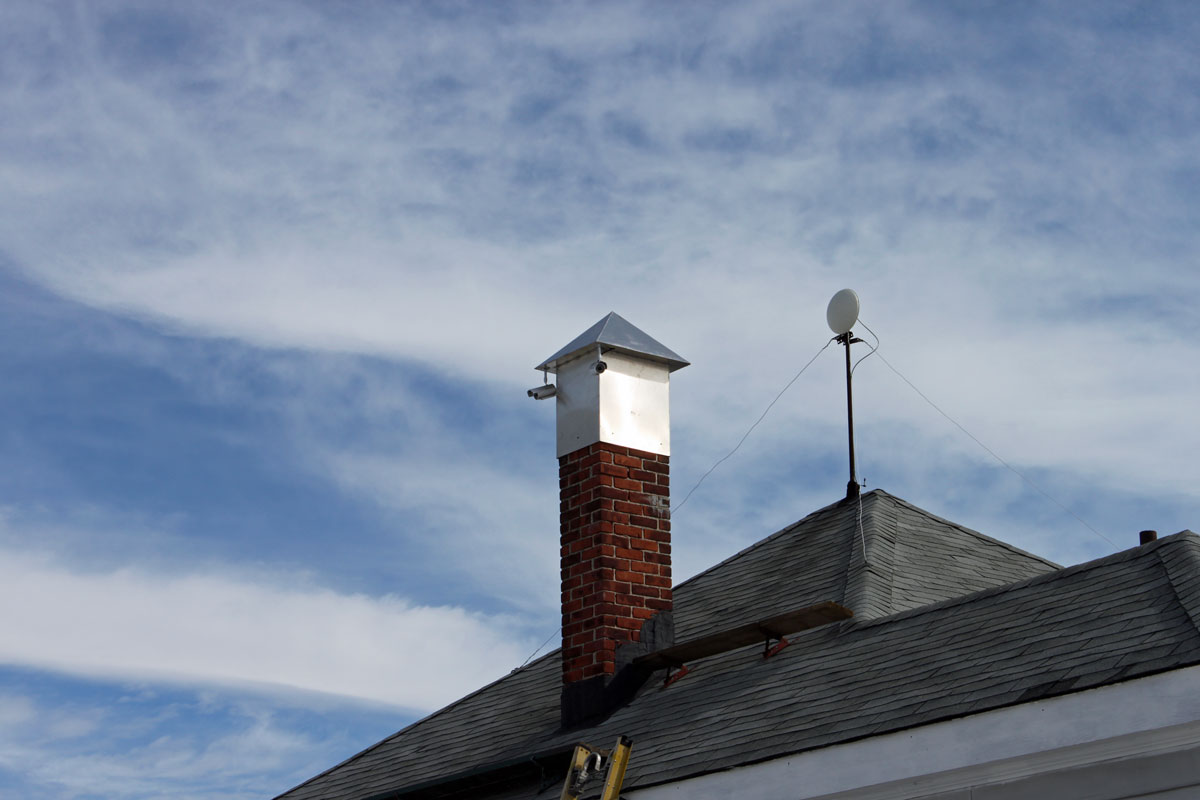
Transmitter site security cameras
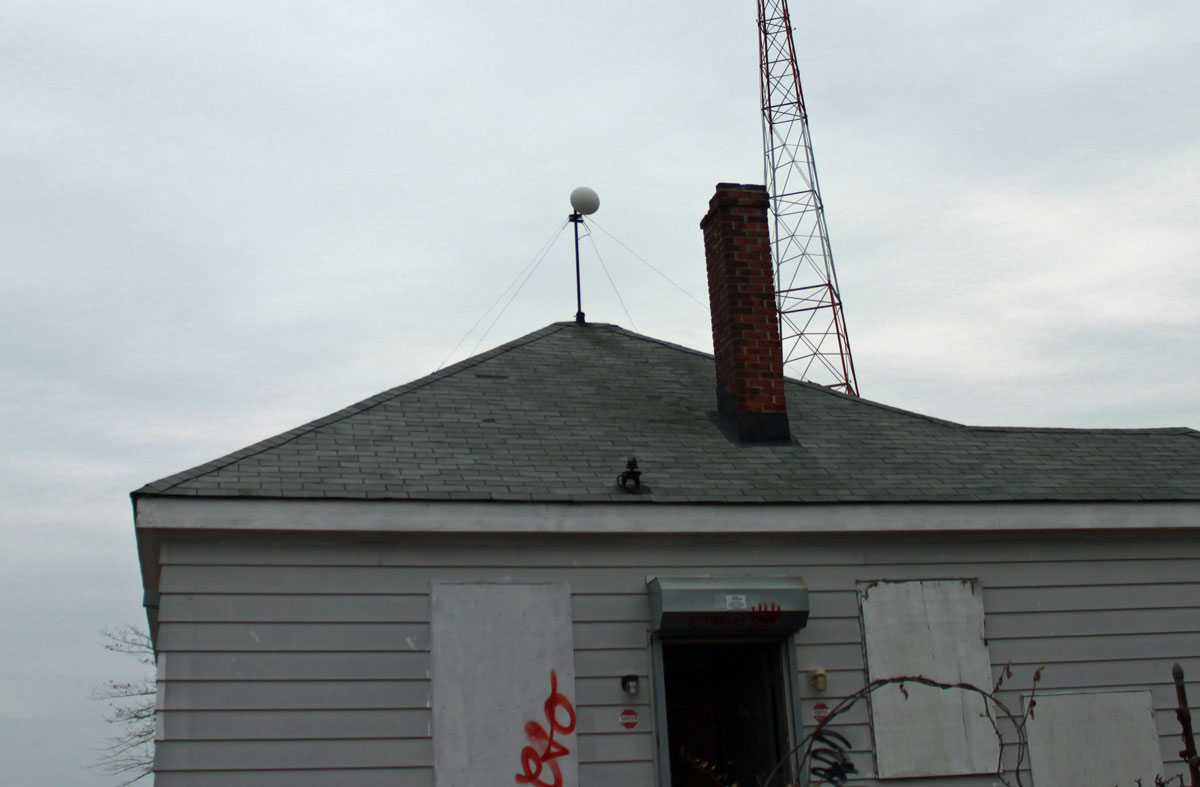
Cameras mounted on old chimney platform. This is the first set of cameras covering the south, north, and west approaches. A fourth camera will be mounted on the back of the building covering the east approach. Then, under the eves’ cameras will be mounted on all four corners of the building and the generator shed. If anything moves, it will be recorded.
Emergency! The (AM) Transmitter keeps popping off the air and we can’t figure out why! YOU MUST HELP US!!1!!!
Really?
Some problems are easy to spot, difficult to fix
Well, with the ATU mounted about 1/4 inch away from the 90-degree, series-excited tower, I wonder why. It seemed to be especially problematic during rain, snow, and ice storms. When I asked how long this had been going on, I was told “About two years, ever since we put up the new tower!”
You don’t say.
We finally took care of this by moving the ATU back inside the shed after moving the transmitter to a different building. The funny thing is, this was installed by a guy who had a BSEE. I guess he must have been out sick the day they covered this in class.