Cable Porn

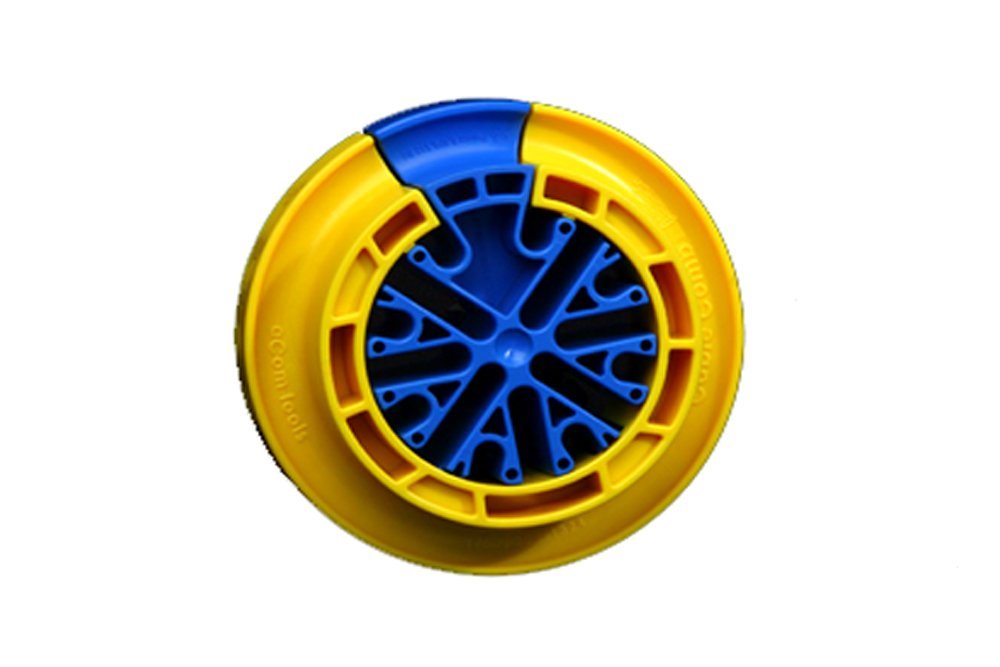
On occasion, the company I currently work for does installation work. Thus, I am always keeping my eyes open for new equipment and tools to make that job easier. The cable comb seems like it is just such a thing:

ACOM tools cable comb

Instructional video from youtube:

Then there is this:

Which is simply amazing. It is described as “1320 Category 6 cables, dressed and terminated.”

Incidentally, there is an entire subreddit: reddit.com/r/cableporn for all those cable geeks that like to look at neat cabling work.

The Isolated Ground

We get requests to install Isolated Ground outlets from time to time, especially with sensitive equipment. TELCO likes to have isolated grounds on their fiber MUX’s.  It can become an issue with branch circuits in split-phase or three-phase services that share the same ground and neutral conductor.  This can lead to a ground loop between neutral and ground, which will create all sorts of havoc in a broadcast facility.

20 amp, 120 volt Isolated Ground Outlet
20 amp, 120 volt, Isolated Ground Outlet

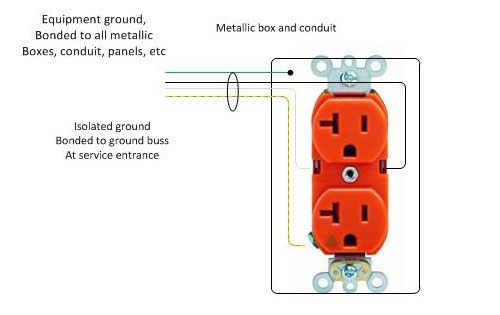
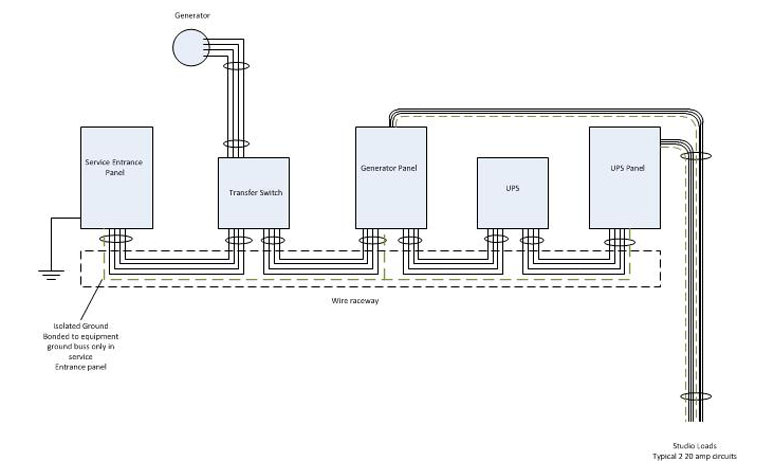
The National Electrical Code covers Isolated Grounds (IG) and sensitive equipment in several sections.  The first is section 250.146(D), which states that the installation of isolated ground receptacles is permitted.   The grounding conductor connected to such receptacles is permitted to pass through one or more panel boards, boxes, conduit bodies, etc without being bonded to them.  However, said panel boards, metallic boxes, conduit bodies, raceway, etc must also be grounded separately.  That means running two ground conductors, usually, the isolated ground conductor is green with a yellow stripe or spiral.

Studio electrical diagram isolated ground

The second is section 640.9(A), which refers to separately derived power systems.  This section deals specifically with balanced power; 60 volts AC to ground.  In such cases, a separate ground conductor is allowed as outlined in section 250.146(D) and in 647.6(B), which states that the grounding buss should be connected to the grounded conductor on the line side of the separately derived systems disconnecting means.

Other sections of the NEC that may apply to broadcast radio and television facilities:

  • Article 455, Phase converters (rotary phase converters)
  • Article 480, Storage batteries (UPS)
  • Article 520, Theaters, Audience Areas of Motion picture and Television studios, Performance areas, and similar locations
  • Article 640, Audio signal processing, Amplification and Reproduction Equipment (Audio wiring)
  • Article 645, Information Technology Equipment (computer equipment and network wiring)
  • Article 647, Sensitive Electronics Equipment (balanced power 60 volts to ground)
  • Article 702, Optional Standby systems (generators)
  • Article 770, Fiber optic cables
  • Article 810, Radio and Television Equipment (antennas, towers, and grounding)
  • Article 820, Cable TV (CATV)
  • Article 830, Network-powered broadband communications systems (power over ethernet)

If interested, I can do articles on these sections as well.

Analog Sauce

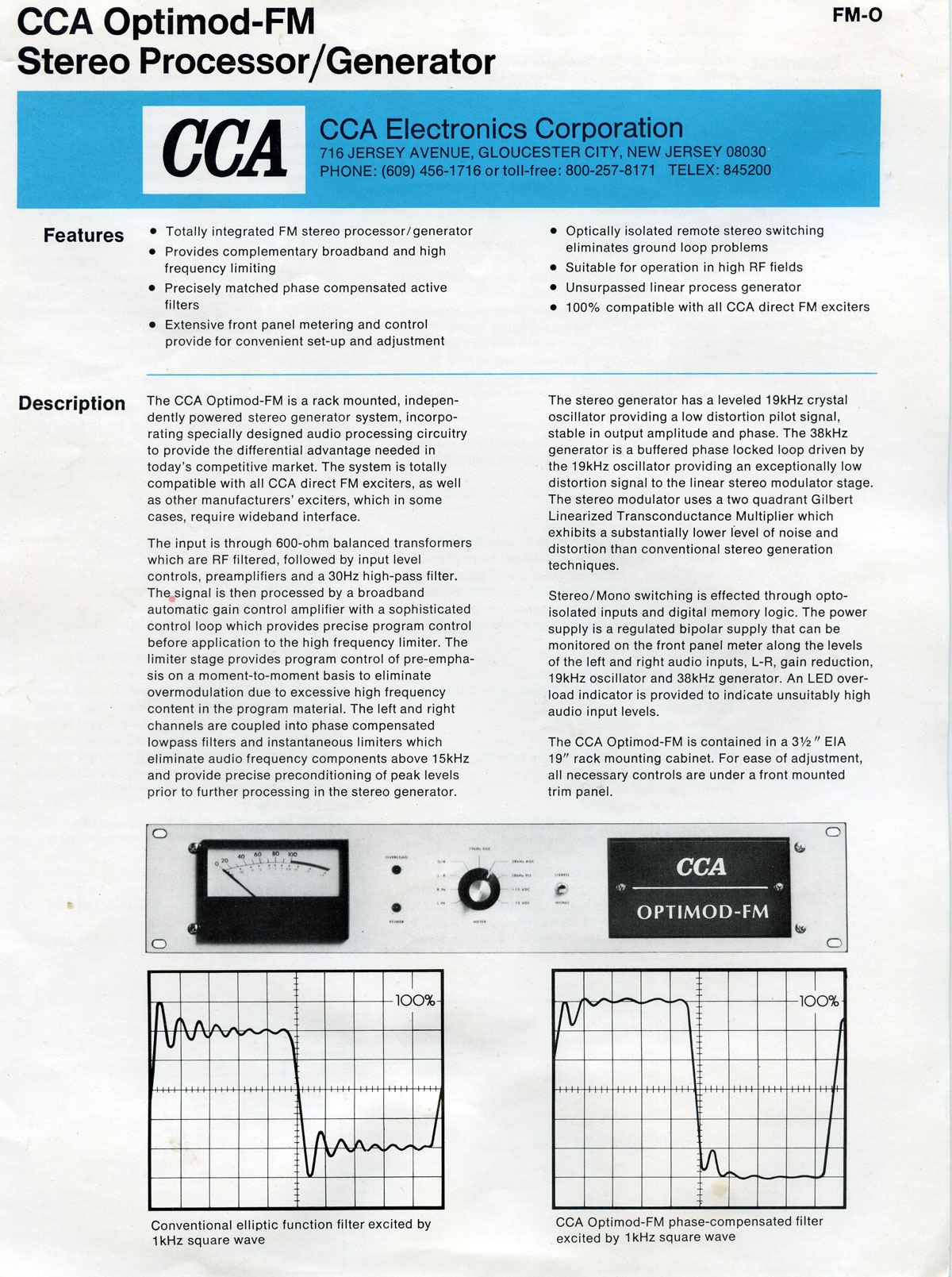
A little blast from the past. This was found in a transmitter manual at one of the sites we take care of:

CCA Optomod 8000
CCA Optomod 8000

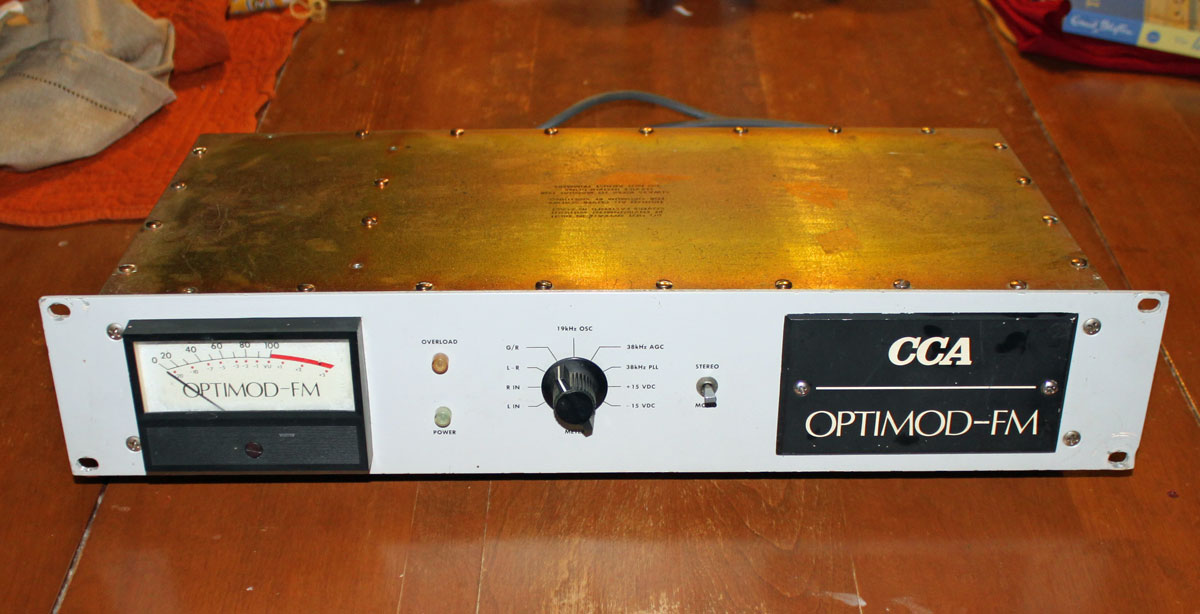
I thought I would scan it and make it available here.  As luck would have it, there is also a corresponding piece of equipment to go along with it.  I had never seen a “CCA Optomod” (.pdf) before I was working at one of the radio stations in Trenton, Florida.  This unit was rescued from under a pile of garbage out in the lawn shed.  It was full of mud wasp nests and mouse droppings.  Needless to say, it required a bit of TLC to return it to operation.  I replaced the electrolytics, cleaned it up, and ran some audio through it.  It is probably as good as the day it left the factory.  Bob Orban made some really good stuff in his day.

CCA Optomod 8000
CCA Optomod 8000

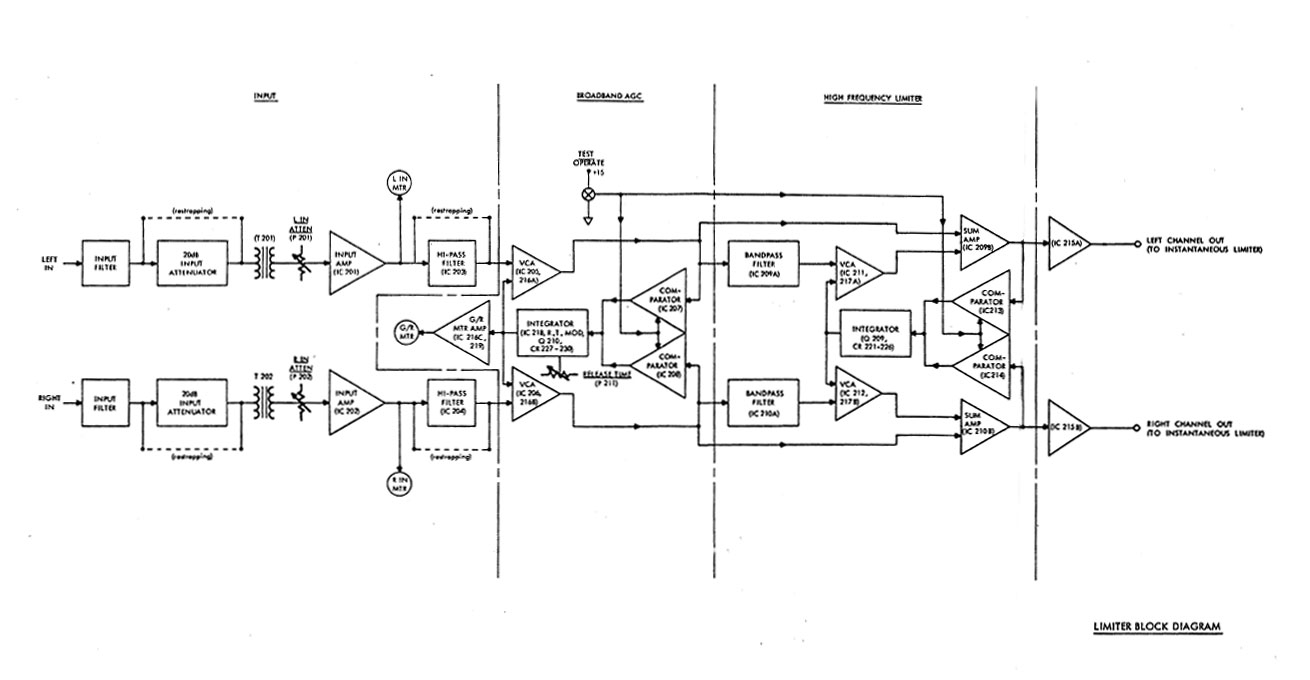
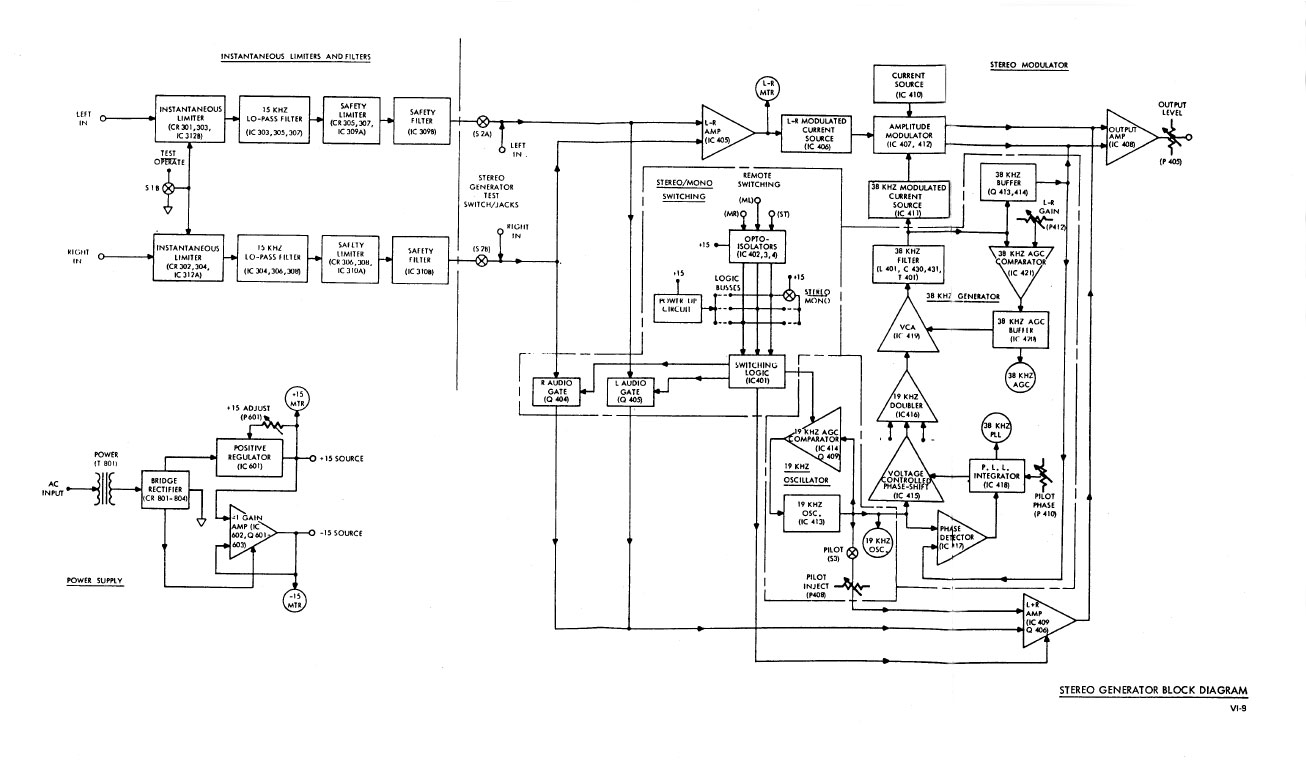
The original Optomod 8000 was an evolutionary design that made FM radio processing what it is today.  The idea of combining broadband limiter, AGC and stereo generator in one box was a radical departure from the norm.  The audio limiter functioned as a 15 KHz low pass filter and broadband AGC.

Orban Optomod 8000 audio limiter block diagram

The stereo generator used very modest amounts of composite clipping to reduce overshoot and transients. Many people disparage composite clippers. If done correctly, it is transparent to the listener and increases perceived loudness by stripping off modulation product that is non-productive.

Orban Optomod 8000 Stereo Generator block diagram

Some thirty five or so years later, there are still many of these units in service in various stations around the world.

Network Data Flow Analysis

PRTG network sun
PRTG network sun

As more and more broadcast facilities are moving toward IP data for all types of data transfer including digitized audio, video, telephony, documents, email, applications, and programs.  Managing an IP network is becoming more and more important.  In most broadcast facilities, Ethernet-based IP networks have been the normal operating infrastructure for email, printing, file sharing, common programs, file storage, and other office functions for many years.  Either directly or indirectly, most broadcast engineers have some degree of experience with networking.

With many more IP-based audio consoles, routing systems, STL’s and other equipment coming online, understanding IP networking is becoming a critical skill set.  Eventually, all distribution of content will transition to IP-based systems and the current network of terrestrial broadcast transmitters will be switched off.

The difference between an ordinary office network and an AoIP (Audio over IP) or VoIP network is transfer consistency.  In an office network, data transfer is generally bursty; somebody moves a file or requests an HTTP page, etc.  Data is transferred quickly from point A to point B, then the network goes back to its mostly quiescent state. In the AoIP environment, the data transfer is steady state and the data volume is high.  That is to say, once a session is started, it is expected to say active 24/7 for the foreseeable future. In this situation, any small error or design flaw, which may not be noticed on an office network can cause great problems on an AoIP network.  The absolute worst kind of problem is intermittent failure.

Monitoring and analyzing data flow on a network can be a critical part of troubleshooting and network system administration.  Data flow analysis can discover and pinpoint problems such as:

  • Design flaws, infrastructure bottlenecks and data choke points
  • Worms, viruses, and other malware
  • Abusive or unauthorized use
  • Quality of Service (QoS) issues

Cisco defines flow as the following:

A unidirectional stream of packets between a given source and destination—both defined by a network-layer IP address and transport-layer source and destination port numbers. Specifically, a flow is identified as the combination of the following seven key fields:

  • Source IP address
  • Destination IP address
  • Source port number
  • Destination port number
  • Layer 3 protocol type
  • ToS byte
  • Input logical interface

Packet sniffers such as Wire Shark can do this, but there are far better and easier ways to look at data flow.  Network monitoring tools such as Paessler PRTG can give great insight as to what is going on with a network.  PRTG uses SNMP (Simple Network Management Protocol) on a host machine to run the server core and at least one other host to be used as a sensor.  There are instructions on how to run it as a virtual machine on a windows server, which would be the proper way to implement the server, in my opinion.

For small to medium installations, the freeware version may be all that is needed.  For larger networks and major market installations, one of the lower-cost paid versions may be required.