This is a tower behind one of our FM transmitter sites. In the past, it has housed paging and two-way services. It has always been sort of a slum, in my opinion. Several times, malfunctioning or improperly installed 900 MHz paging radios from this site have caused interference with our 950 MHz STL receivers. In recent years, all those things have gone away, however, to be replaced by a Wireless Internet Service Provider (WISP). Even with this change, the site is mostly overgrown and uncared for.
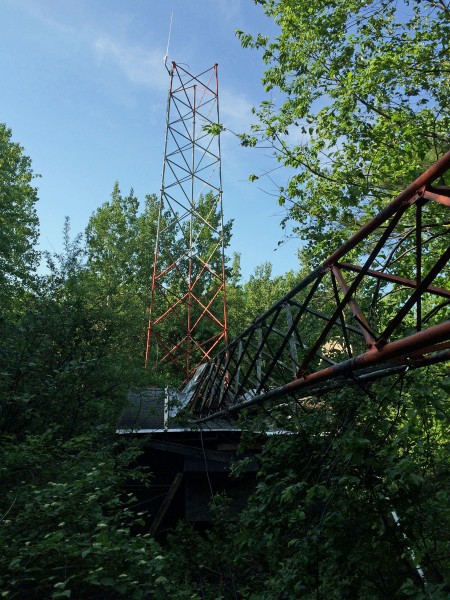
Yesterday, I noticed the tower was not as tall as it used to be, so I walked down the hill and saw this:
Self-supporting tower after losing top section
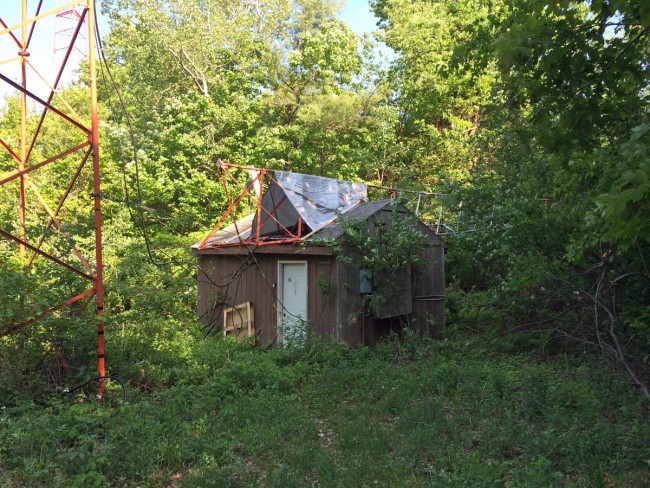
It appears this happened a few weeks ago. View from the other side:
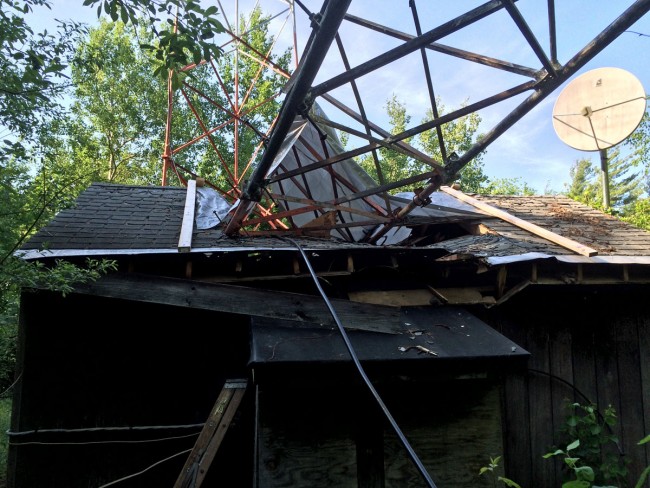
Self-supporting tower section resting on the roof of the building
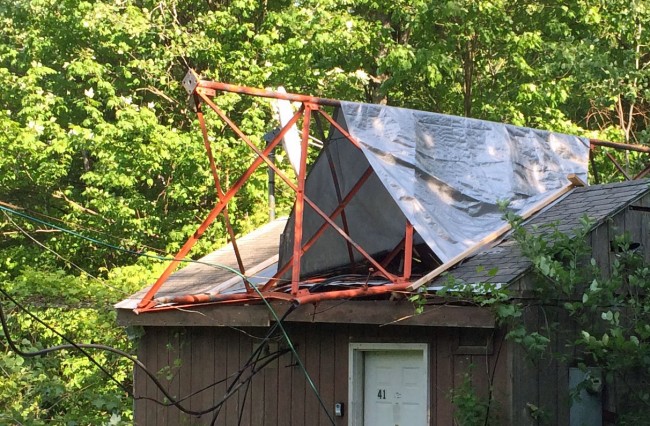
Close-up of the tower section that failed:
Failure point
Looks like the bolts that held one of the flanges together failed, the tower was pushed over by a strong NE wind causing the other two legs to fail. Truth be told, the tower had been in rough shape since the mid-’90s. I am surprised that it stayed up this long.
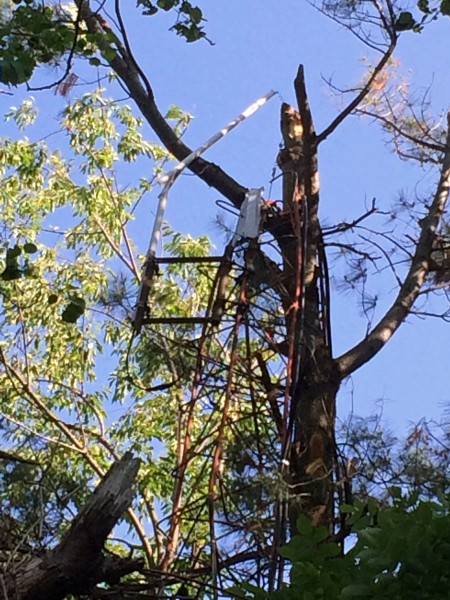
Carnage
WISP sector antennas. I don’t know if they owned the tower or were tenants. Either way, this is going to cost a few rubles to repair.
More carnage
Looks like the shelter took a little bit of damage too. To be honest with you, I hope that this is it for this site. It would be nice if they take down the stump, scrap the lot of it and move it somewhere else.
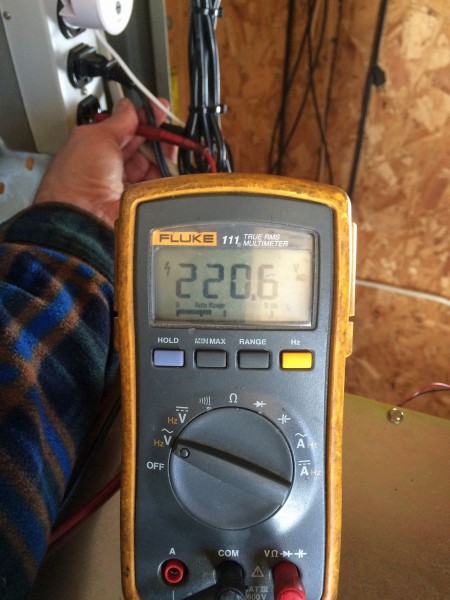
It seems the power company has some work to do. The other leg measures 28 volts to ground, which to me means the Neutral has been lost somewhere. Fortunately, the transmitter was running on 240, which looks normal on the voltmeter. Everything in the rack; the remote control, exciter, STL, etc have been damaged or destroyed.
Then, of course, there is this:
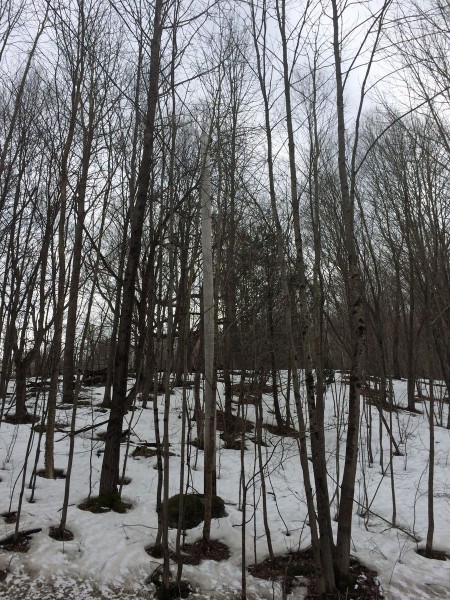
Utility line
That is the power and phone line in those trees, as it leaves the road and travels approximately 1,700 feet through the woods. It is a private line and the utility will not do any work until the trees are cleared away. In all fairness to the current owners, who have owned the station for not quite a year, this situation has been like this for a long time.
It does not look like much, however, that is about $5,500.00 worth of damage. What you don’t see is the mashed oil cooler and radiator. This happened on my way from one place to another during the early morning hours. I was traveling at about 55 MPH when a deer bolted from the woods and entered the roadway from the right. I did not have time to a break.
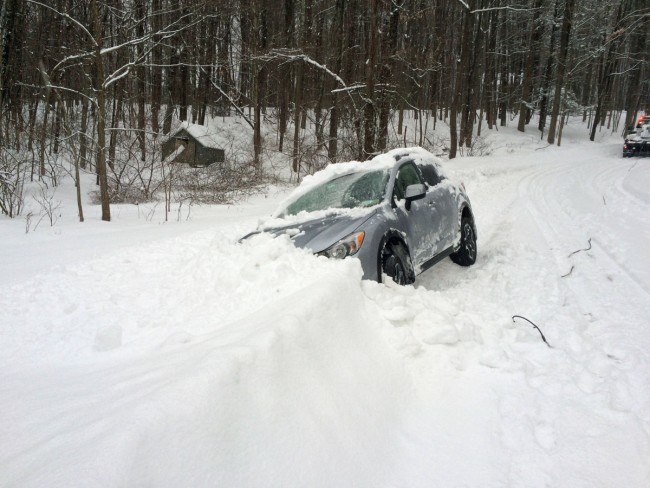
In a ditch
A momentary lapse of attention causes a loss of $80.00. I think I was adjusting the defroster as I was driving down the road when suddenly, I felt the car tilt over to an alarming degree. You can see the tow truck getting ready to pull it out. Fortunately, there was no damage to the vehicle.
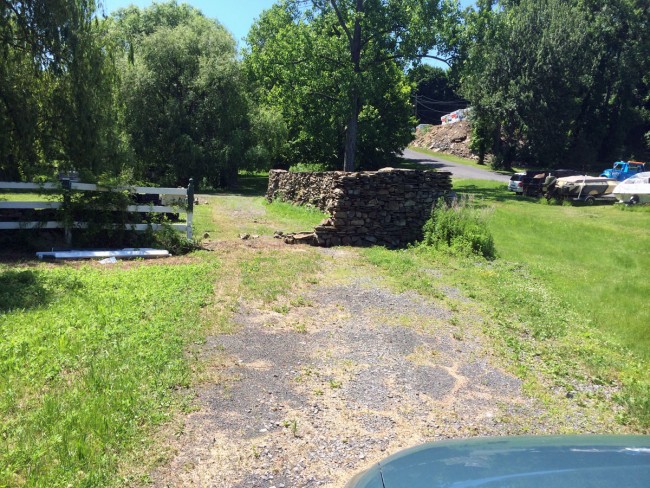
Troubles with the neighbor
This is on the access road to one of our transmitter sites. The station has a legal right of way through this property, however, the neighbor seems to object. I spoke with him and showed him a copy of our deed, he has since changed plans.
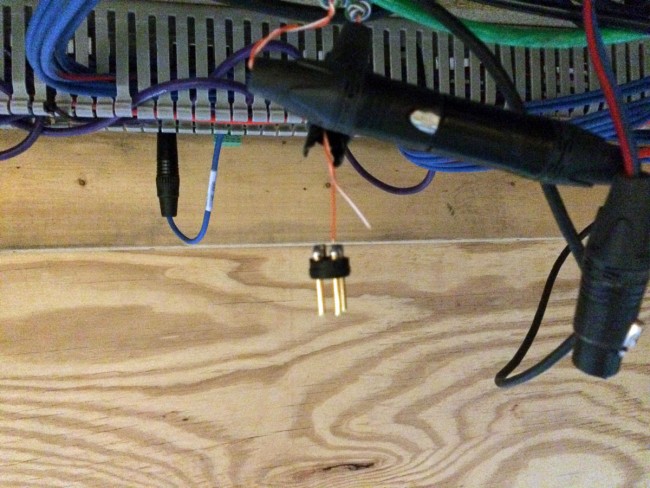
One side of a balanced audio connection disconnected
This is the downside of using category cable to make audio connections. The wires are not as rugged as say Belden 8451. This was causing problems because it is at an AM studio/transmitter site.
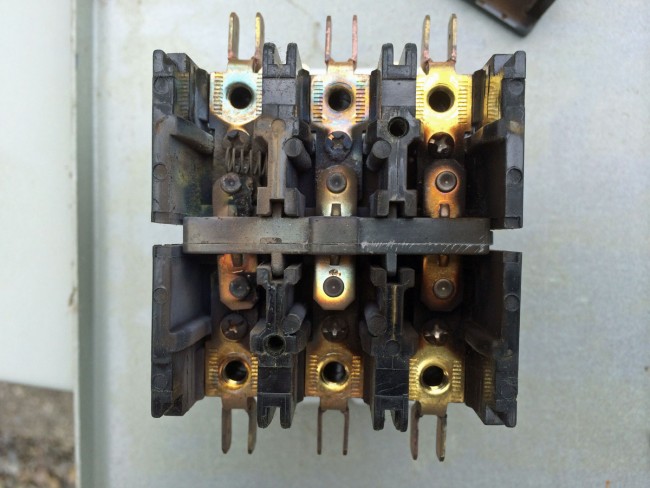
Burned 30 amp three-phase contactor
Three-phase, 30 amp, 240-volt contactor installed in a 480-volt system. Lasted a few years, anyway.
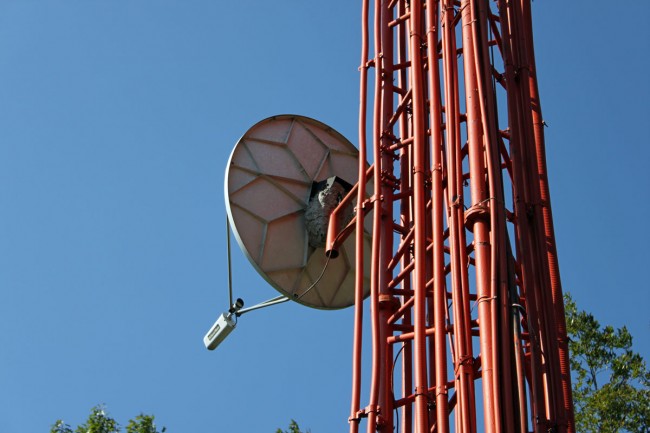
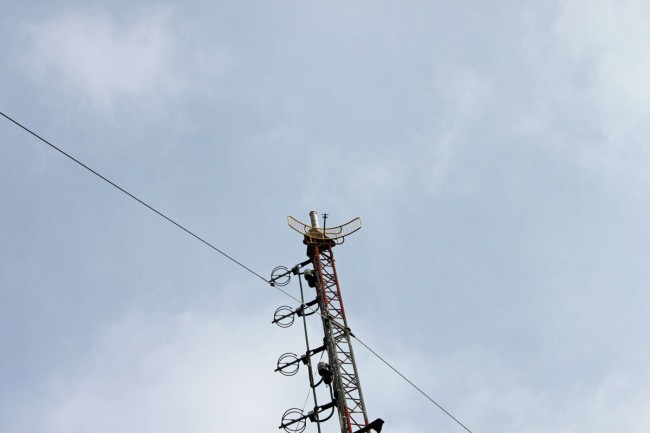
White face hornet’s nest
New tenants on one of our towers. This is a white-faced (or bald-faced) hornet’s nest. They are really paper wasps, but that difference aside, these beasts are nasty, aggressive, and have a painful sting. Normally, I am a live-and-let-live kind of person, but in this case, they gotta go.
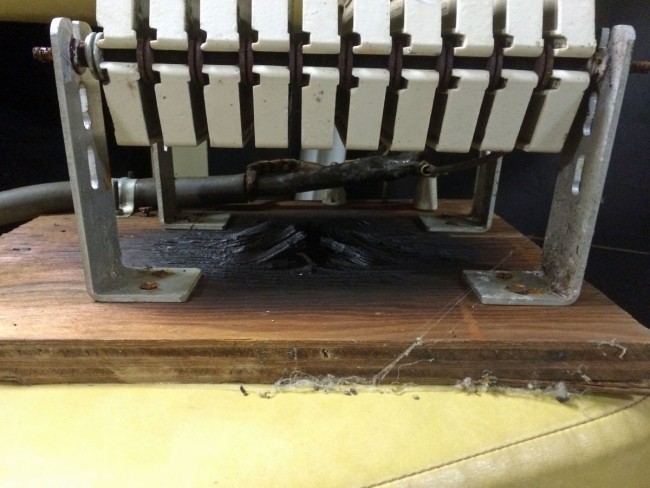
Dummy load attached to plywood
This is at one of our AM client’s site. Somebody, quite some time ago it seems, made this test load for a 1 KW AM transmitter. It is very nice, with carbon ceramic resistors, 50 ohms, and surprisingly little reactance. Then they attached it to this piece of plywood. As one can surmise, the load gets quite hot under full power and full modulation conditions. We remounted this in a cage-type enclosure and bolted it to the cinder block wall.
Scala PR-950U cross-polarized
The client at this station is complaining of intermittent STL dropouts and low signal strength at the receiving end. Found this Scala PR-950U antenna mounted for vertical polarization, but the antenna element is horizontally mounted. We’ll call it “vorizontal.”
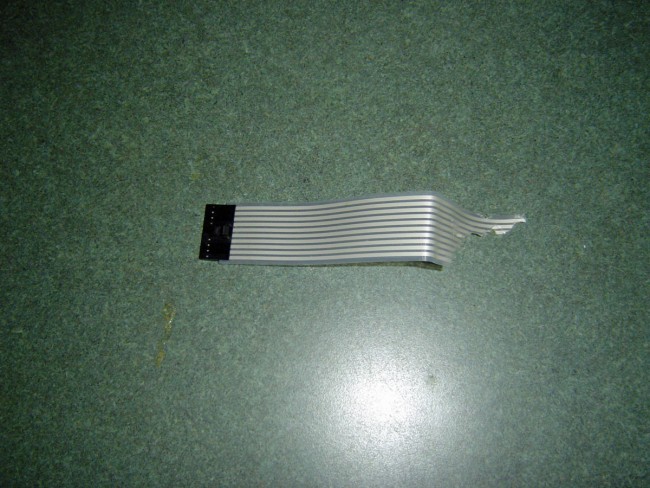
Ribbon cable from a Cummins 135 KW generator
This was discovered during routine maintenance and thankfully not during a power outage. Mice got into the control box of a newish Cummins 135 KW generator and chewed through what looked like a data buss cable. The generator would not run and the cable and control board needed to be replaced.
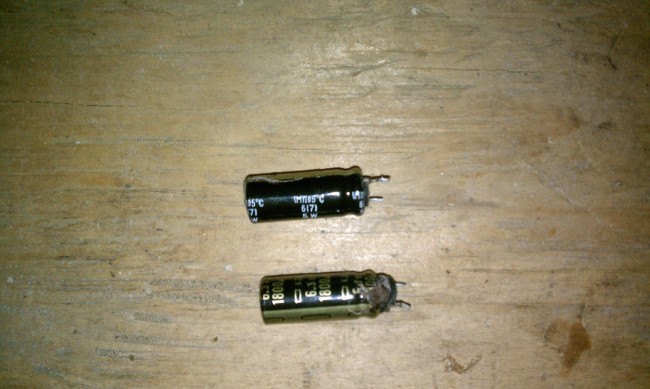
Bulging capacitors
There are more bulging capacitors removed from flat panel monitors.
Sometimes it is obvious and relatively easy, other times not so much. This summer we have had wave after wave of afternoon thunderstorms. It is almost like living in Florida; almost, but not quite. Anyway, with the storms occasionally comes some lightning damage. At most of the transmitter sites we service, every step has been taken to ensure good grounding and adequate surge suppression. This is especially true of sites that have been under our care for a few years. Even so, occasionally, something gets through. After all, those five-hundred-foot steel towers do attract lightning.
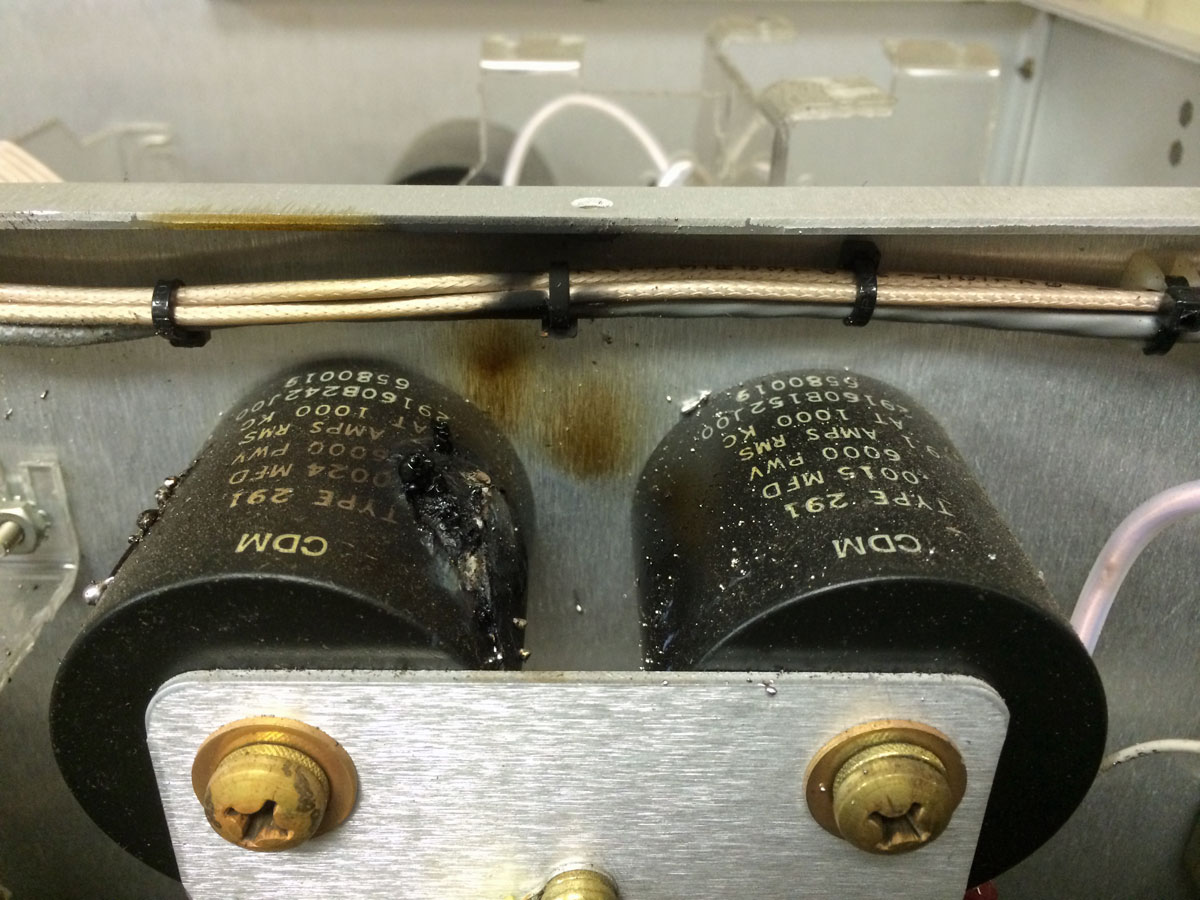
Broadcast Electronics AM5E output tuning section
This is the output section of the BE AM5E transmitter at WROW. The transmitter got pretty trashed; a bad PA module and power supply and this capacitor in the output section. This particular transmitter is 14 years old and this is the first major repair work we’ve had to do it.
The capacitor was fairly easy to change out. As a general precaution, both capacitors were changed. There was a spare PA module and power supply on the shelf, thus the transmitter was returned to full power relatively quickly.
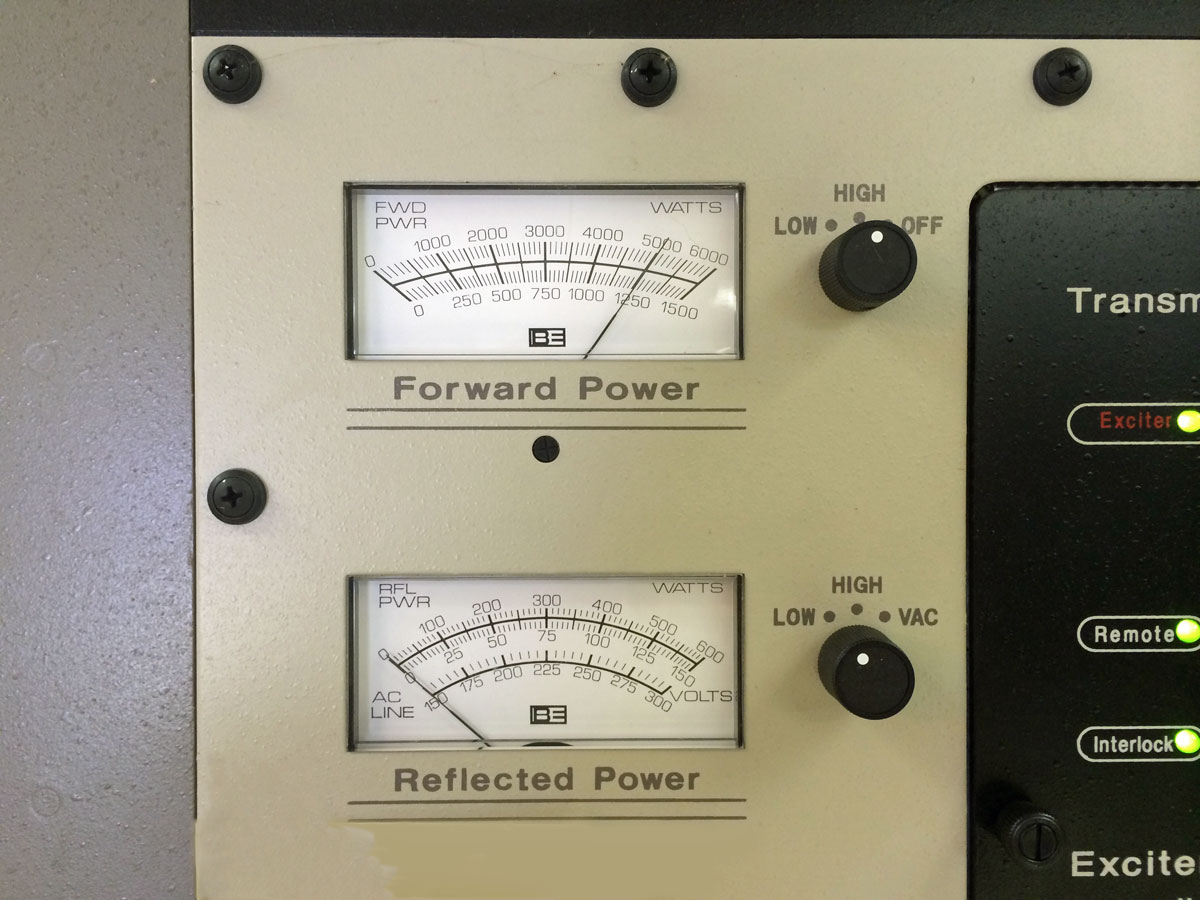
Broadcast Electronics AM5E output forward and reflected power meters
The rest of the antenna system and phasor were inspected for damage, a set of common point impedance measurements taken, which showed that no other damage was sustained.
Next, the 30 year old Harris SX2.5 A transmitter at WSBS. This failure was slightly more exotic; the transmitter started randomly turning itself off. The culprit, in that case, was this:
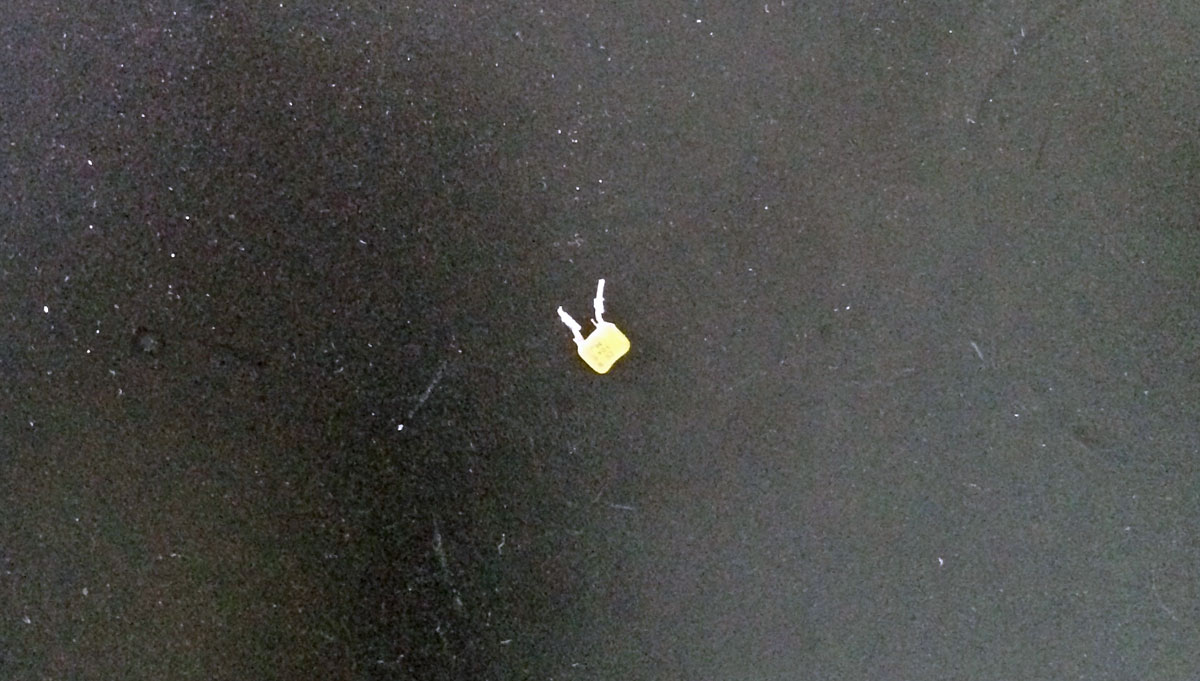
Harris SX2.5 remote control interface bypass capacitor
Literally, a two cent part. The transmitter remote control uses optoisolators. The inputs to these opto-isolators are RF bypassed to ground on the back of the “customer interface board.” After determining that the remote control was not malfunctioning, it was down to either a bad opto-isolator or something really silly like a bypass capacitor. This capacitor was on the ground side of the remote off terminal. It shows short on the capacitance meter and 4.1 K on the ohm meter, just enough to randomly turn the opto-isolator on and shut down the transmitter. Being a Harris transmitter, removing and replacing the “customer interface board” was no easy matter. Overall, it took about three hours to find and repair this problem.