Yesterday, I threw out a transmitter. I know there is probably some radio station out there that may have been able to use a 5 KW FM transmitter but believe me, not that one. There are limits to how much you can help out a fellow broadcaster. Donating an FM transmitter that never really worked right in the first place is counterproductive.
Anyway, to demonstrate that I am not a total heel, here is my favorite brand of transmitter, Nautel:
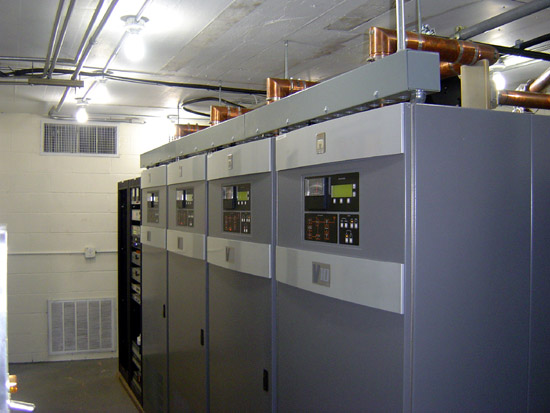
I like Nautel because they are rugged, reliable, and good-looking. Okay, good-looking is low on the list of transmitter attributes, however, you have to admit, it is good looking. It is also good sounding. The night we switched over from the long-in-the-tooth BE FM30A to the Nautel V-40 I noticed a marked improvement in the station’s sound. It was like somebody switched off the background noise generator.
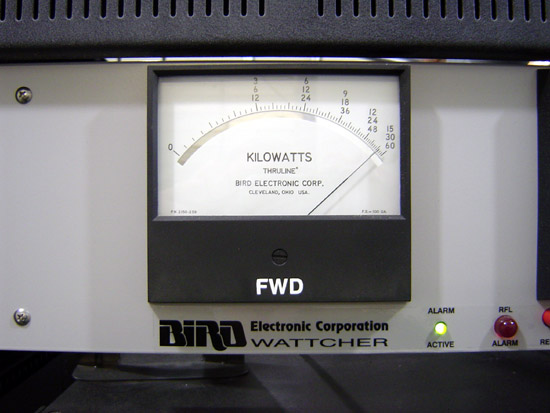
As the caption states, this is 4 V-10 transmitters combined with an ERI magic T combiner. It is set up so that if any one transmitter fails or reduces power, the magic T combiner automatically adjusts for minimum rejected power, then the SC-1 controller turns up the other three transmitters to maintain the station’s Transmitter Power Output (TPO).
TPO 28 KW
In this case the TPO is 28 KW, which is getting into the semi serious range for an FM station. Nautel has updated their transmitter line, which now consists of the NV series transmitter. The differences mainly have to do with the IPA module/PA module interchangeability (not interchangeable in the V series, fully interchangeable in the NV series) and the “Advanced User Interface.” I don’t know, fancy touch screens are optional on FM transmitters as far as I am concerned. It’s the underlying RF generating sections that I am most concerned about.
Nautel V-40 transmitter
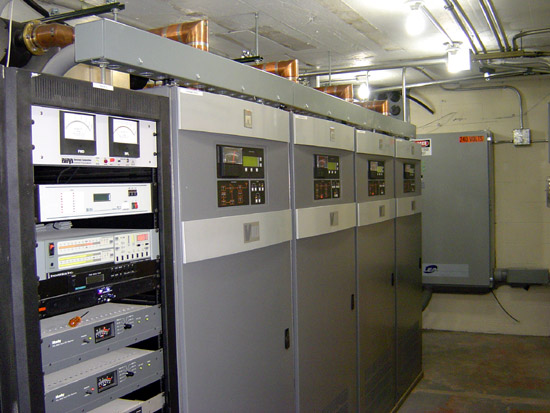
Another view. Just for the useless trivia that is in it, the “V” in these transmitter names stands for “Virtuoso.”
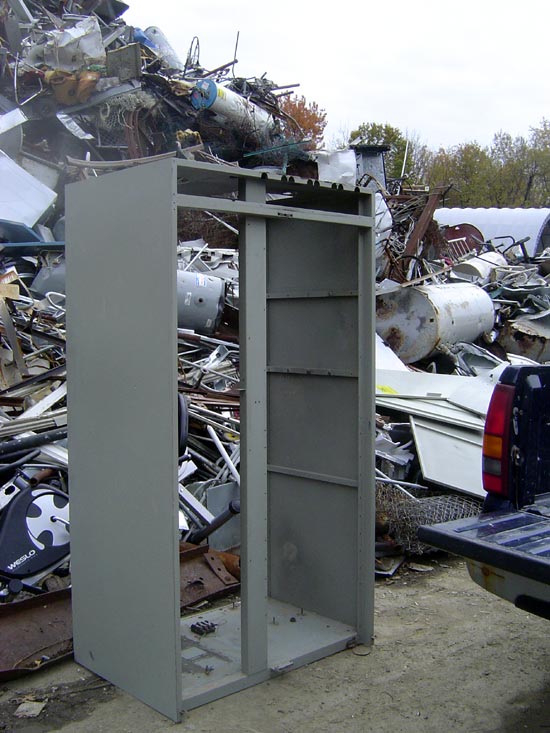
Takes its rightful place in the world today, the scrap heap:
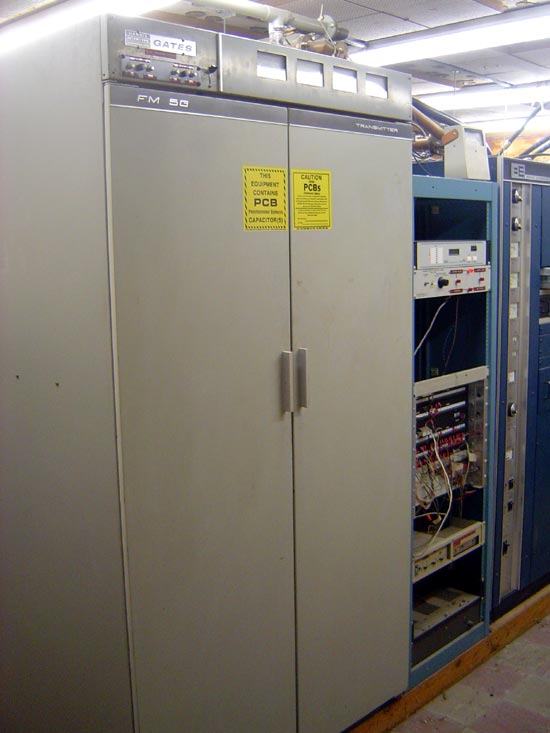
Gates FM5G carcass
As EDWARD I of ENGLAND once said, “A man does good business to rid himself of a turd.”
Of course, he was speaking about Scotsman John Balliol and not some old cranky FM transmitter, but I understand that feeling. The Gates and later Harris transmitters always seemed to be somewhat less than top-notch. The 5G was no exception to this rule. The final step for tuning the transmitter was to turn off the lights in the room and look down through the screen on top to make sure there were no little arcs in the PA tuning section. It also had a way of self-oscillating, which could make for some exciting tuning.
Gates FM-5G transmitter prior to disassembly
Goodbye, I will not miss you.
In one of my past jobs, I worked in a RCA town. I worked there long after the broadcast arm of that company went out of business, however, all of the broadcast transmitters, AM, FM, TV were made by RCA. I had an RCA FM-20ES1 which was 22 years old, built like a tank and just kept going along. I think that transmitter was finally destroyed in a fire, caused by it’s replacement transmitter.
Old Collins, Contenental, RCA and even Broadcast Electronics transmitters had some heft to them. Of course, not every RCA transmitter was well thought out, the amplifuze series of AM transmitters were a maintenance nightmare.
I have been reading with interest the whole debate about radio being dead or dying vs. radio being a vibrant thriving business.
Radio is not dead by any measure, however, it is declining for a number of obvious reasons. There are more competing entertainment and information options, that is true. Ipods, netcasters, and satellite radio have taken some of radio’s listeners away. However, the main culprit in radio’s decline is the investment bankers that are squeezing every drop of blood nickel out of the industry before moving on to their next victim investment opportunity.
The net result of this has made much, not all, of radio predictable and boring. No longer is radio the source for new music, news, information, and entertainment as it used to be. I don’t think that anyone will argue that point. The money men have fired most of the creative and talented individuals who used to bring in the listeners and replaced them with computers. They have also cut news staff, support staff, and anything else that lives and breaths except salespeople. More salespeople are always required.
HD RadioTM radio is a joke at best. Setting aside all of the technical problems with coverage and building penetration, the programming sucks too. The same purveyors of crap on the main analog channels are now branching out on the HD2 and HD3 channels. I can’t believe that the secondary channels will somehow be better than the main analog channels, or even marginally good enough to buy an HD Radio radio. Some groups are putting their AM programming on an FM HD2 channel, which is great if one cares to hear drug-addled corpulent talk show hosts wheezing into the microphone in full fidelity. At least on the AM analog broadcasts, everything above 4.5 KHz is cut off, wheezing included.
The good news is, there are still some radio stations that are programmed well. Radio sets are almost universal, every car has one, every house has at least one or two, and most offices, stores, etc. Radio reception is still free. Radio is still popular among many people. Radio owners could very easily become involved with their communities of license, make better programming decisions, hire staff, and add valuable informative local programs again. This decline would soon be forgotten.
The bad news is that is unlikely to happen. Less than a snowball’s chance in hell unless someone wakes up and smells the coffee.
So here you are, minding your own business on a not-so-frantic Wednesday afternoon when a guy shows up in the lobby and wants to see you. The receptionist says he has a badge and he is from the FCC.
Oh no! Panic! Mayhem! Chaos! Etc!
Actually, things are not as bad as they might seem, after all, this is not your father’s FCC.
Many stations use the state broadcaster associations’ Alternative Inspection Programs (AIP). This is where you pay a contractor from the broadcaster’s association to come out and do a mock inspection of your radio stations. After the station “passes” the “inspection” it is issued a “certificate” that “insures” it won’t be inspected by the FCC for three years.
Totally bogus, or as the French might say complete bull shit.
The stations I currently work for had those “certificates.” When the FCC inspector showed up, he laughed at them and inspected us anyway. We complained to the state broadcasters association and the head of the FCC enforcement bureau at the local field office, all to no avail. This happened four times. Each time the FCC inspectors found nothing and went on their way.
What did I learn from this? Why bother with the stupid AIPs when all that needs to be done is comply with the FCC’s rules. After all, the so-called “inspector” from the broadcaster’s association is merely going to use the same FCC checklist that is downloadable from the FCC website. Anyone can do that themselves.
I also learned that the FCC inspectors check a few things more closely than others. For example:
The public inspection file should be perfect. Since they inspect these stations all the time, they know what is usually missing; Issues and quarterly reports, Contour maps, and license renewal cards.
EAS logs and procedures. Make sure that every operator knows how to send an EAS test. Make sure that all the EAS logs have been checked and signed by the chief operator. Make sure that any discrepancies are noted.
Directional AM station operating parameters. Still a hot-button issue and one area that trips up a lot of people. All antenna parameters are within 3 percent of licensed values. All monitor points below the maximum allowed.
Equipment performance measurements. These are needed on all AM stations every year. They are carrier frequency harmonic measurements and NRSC-2 mask compliance measurements.
Tower fences and tower registration numbers. Big one and easy to spot and fix. All AM towers need to have a locked fence around the base insulator. Any tower over 200 feet tall needs to be registered and have a sign with the registration number posted. The sign needs to be accessible and legible.
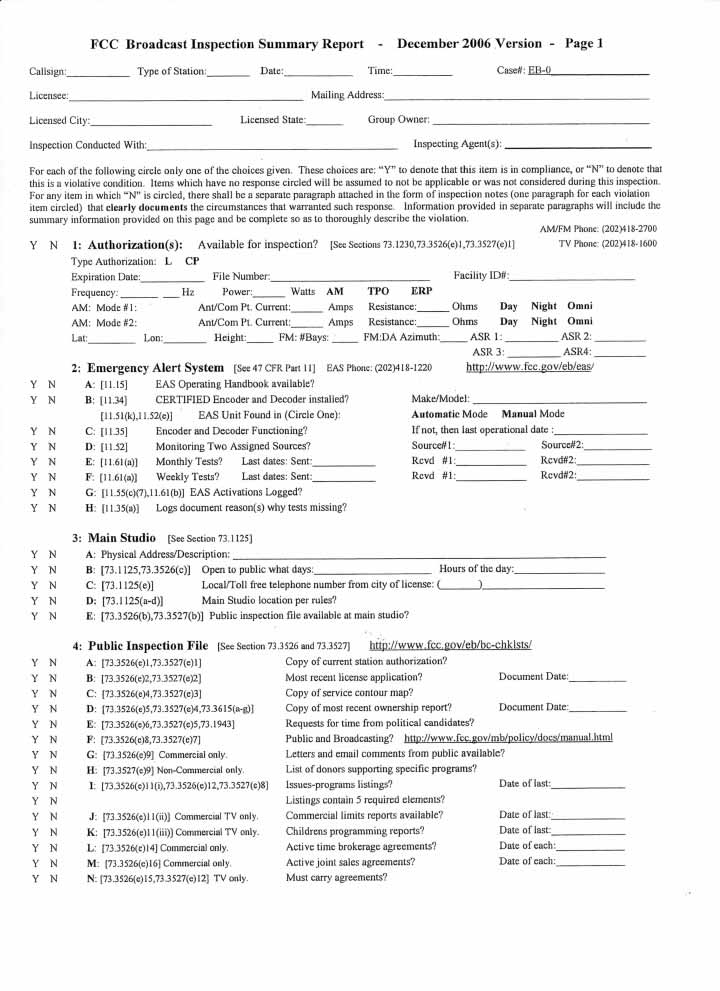
So prepare ahead of time for the inevitable visit. It is very easy to comply with the FCC rules using the FCC checklists. Both the AM station checklist and the FM station checklist can be downloaded and used to self-inspect any radio station.
Here is something else that I have found. Clean up the transmitter site. Sweep the floor, replace the burned-out lights, empty the garbage, keep a neat maintenance log, etc. These things go a long way to making a good first impression, which can make the inspection go a lot better.
Once, I and the FCC inspector pulled up in front of the transmitter building of an AM station. The grass in front was mowed, the bushes were all trimmed back, the field was mowed, the towers had new paint on them, The fences were in good shape, and the place just looked good. We were about to go inside when he asked “Does the inside of that place look as good as the outside?” Which it did and I said yes. Then he said he had seen enough, have a nice day.
So, when the FCC guy shows up, offer him a cup of coffee and relax, things are going to be alright.
Update: This is the actual checklist that an FCC inspector will use if he is inspecting a broadcast station.