|
|
By Paul Thurst, on March 12th, 2010
Since the FCC approved a ten fold increase in the radiated power of the digital carrier, a progress report on the digital radio rollout is in order. The FCC report and order (MM Docket No. 99-325) gives us some background:
An original goal of the developers of the hybrid FM IBOC DAB system was replication of FM analog coverage without adversely affecting either the host analog signal or adjacent channel analog FM operations. iBiquity and several independent parties conducted extensive field and laboratory tests. Based on the National Radio Systems Committee (“NRSC”) evaluation of those test results, iBiquity requested and the NRSC approved an FM Digital ERP of one percent of FM Analog ERP (20 decibels below carrier (-20 dBc)).
And (after paying gobs of license fees and installation costs):
Many FM stations promptly commenced hybrid FM IBOC operations. Despite the rigorous testing, it soon became apparent that hybrid FM IBOC digital coverage often did not replicate analog coverage, especially in mobile and indoor environments.
Therefore (Fox, here are the keys to the hen house, knock your self out):
Based on the results of the experimental operations with increased FM Digital ERP and other studies, on June 10, 2008, a group consisting of 18 radio group owners that operate over 1,200 commercial and noncommercial educational (“NCE”) FM stations and the four largest broadcast transmission equipment manufacturers, identifying themselves as “Joint Parties,” requested (the “Joint Parties Request”) that the Commission generally increase maximum permissible FM Digital ERP10 from one percent of a station’s authorized analog ERP (-20 dBc) (1% FM IBOC Power”) to a maximum of ten percent of a station’s authorized analog ERP (-10 dBc) (“10% FM IBOC Power”).
Based on (We find these hens are delicious!):
NPR concluded that at 1% FM IBOC Power, the mobile, indoor and portable digital coverage achieved by most FM stations would not replicate analog coverage, but that at 10% FM IBOC Power most FM stations could achieve digital mobile, portable and indoor coverage levels which either met or exceeded comparable analog coverage levels.
And (in spite of numerous concerns by the public and other broadcasters) Viola:
73.404 Interim Hybrid IBOC DAB Operation.
(a) The licensee of an AM or FM station, or the permittee of a new AM or FM station which has commenced program test operation pursuant to § 73.1620, may commence interim hybrid IBOC DAB operation with digital facilities which conform to the technical specifications specified for hybrid DAB operation in the First Report and Order in MM Docket No. 99-325, as revised in the Media Bureau’s subsequent Order in MM Docket No. 99-325. FM stations are permitted to operate with hybrid digital effective radiated power equal to one percent (-20 decibels below carrier (dBc)) of authorized analog effective radiated power and may operate with up to ten percent (-10 dBc) of authorized analog effective radiated power in accordance with the procedures set forth in the Media Bureau’s Order in MM Docket No 99-325. An AM or FM station may transmit IBOC signals during all hours for which the station is licensed to broadcast.
Notice how they stuck AM nighttime operation in there too. Now I get to hear IBOC signals over riding adjacent channel stations that used to come in clearly via skywave. One tends to wonder if this interference is not deliberate. Crush the small operators with interference, make their stations worthless, drive them out of business…
To help things along, iBiquity has offered to reduce their licensing fees to $5,000.00 (oops, its more like $10,500 – 12,500). These rules were put into effect on January 29, 2010. According to the FCC data base, there are 1524 FM stations and 292 AM stations transmitting IBOC. That breaks down to 15% of the FM stations and 6% of the AM stations. I will post an update if there is a sudden rush to install IBOC. Still a pretty low penetration for a 10-20 year old technology. It is likely these low numbers are the reason why both broadcast bands are still mostly listenable, at least from a technical perspective.
As the noise floor rises and the competing stations sink further and further into the mud, the audience will turn to non-static filled technologies to listen to their music and other programs.
By Paul Thurst, on March 11th, 2010
By Paul Thurst, on March 10th, 2010
I was speaking with a friend of mine recently about some interference issues he was having at an FM transmitter site. There were several cellular and PCS tenants at this site and something from the FM transmitter was interfering with the GPS receivers. This one very small glitch was causing multiple carriers to go off line, basically shutting down the entire wireless infrastructure at this particular site.
GPS signals are used for syncing carrier frequencies and modulation timing for CDMA and TDMA that all cellular, PSC and 3G, 4G (or whatever G) wireless systems use to seamlessly hand off users from one site to another. Without it, the entire system will shut down.
What would happen to communications in this country if all GPS were interrupted? When I was in the military, we spoke often about high altitude nuclear detonations and the possible effects it would have on our communications circuits. In fact, we drilled for such things. Often. What, if anything, are wireless carriers doing to keep their sites on line if, heaven forbid, somebody does something to disrupt GPS? If terrestrial radio and television broadcasting is going to be replaced by 3G and 4G wireless networks, how redundant are they? I know, for example, many cell sites do not have long term backup power. They have battery banks, which in a power outage, may last 6-10 hours, but after that, the site is down.
Further, how about vulnerabilities getting the data to and from these sites? Most cell sites rely on some type of TELCO circuit, usually a T-1 (DS-1) or multiple T-1′s to interface with the wired network. This includes voice, text and data services. If those circuits are down, then anything connected to them will be off line.
What about redundant transmitters, antennas, receivers, etc. How much of the current wireless infrastructure is backed up with spares? It causes me worry to think that someday traditional broadcasters will be going out of business due to poor financial planning, leaving us all to subscription based data services that may or may not be there in an emergency. At least with many radio and TV stations, there are generators, backup transmitters, microwave systems and so forth. Most good broadcasters have emergency plans for restoration of service during a disaster. EAS may not be the greatest thing ever, but right now, it is the only emergency communications plan we have. Radio is still the best and most robust way to communicate vital information during emergencies. Cell sites go off line along with whatever G wireless service, cable TV systems go off line due to power outages or damaged distribution networks, land line phones can be taken out due to power interruptions at the company office or damaged networks.
Why do I care? Why should you care? Because, as I have eluded in previous posts, with the demise of local newspapers, the demise of local radio, the erosion of local TV news coverage and the general trivialization of our political apparatus on the local and national level, we are loosing our voice. We will loose our democracy. Right now, the US is on the verge of becoming an oligarchy or a corporatocracy.
What road are we traveling down when unrestricted free access to information is gone? The internet is a great resource, but it is not free. What will happen to the price of internet access when competing information and entertainment technologies such as radio, TV, and newspapers disappear? Look to our transportation sector for an example. Gone are the vast majority of passenger rail roads that criss crossed the country for nearly 100 years. In many places, public transportation is laughable. How do you get to work? How do you get to the store? How much will $5.00 per gallon gas effect your life? More importantly, what can you do about it when the cost of fuel gets expensive? Nothing. Most people are stuck in there suburban homes with not even a convenience store within walking distance.
What will happen when terrestrial radio goes away? I shutter to think.
By Paul Thurst, on March 2nd, 2010
It is clear to me that radio is changing, in some ways it is changing for the better, in many ways it is changing for the worse. In spite of many bad business decisions made by over priced MBAs, large consolidated radio groups seem to be hanging on, if only by their finger nails. It is very likely that the investment banks, who have the most to loose, are not interested in seeing their loans written off in a bankruptcy proceeding. As we all know, the consolidators that paid multiples of 15 to 16 times cash flow for stations, way over extended themselves. There is no hope that values will ever return to those levels, so the banks are now in the radio business.
Sure, the banks are not the owners of record, and the FCC never would consent to transfer all those licenses to so many investment banks. However, they are calling the shots, making “suggestions” on how best to run things. Offering perhaps a 1/4 percent reduction in an interest rate if the expenses can be reduced below a certain level. Unfortunately, for the communities like Ellenville, NY, their local radio station means nothing to the banker living in Manhattan. It is a number, and more than likely, a negative number on a spreadsheet. It means nothing to the group owner in San Antonio, other than some miscellaneous real estate assets. Same can be said for all the radio stations in the Hudson Valley if not the entire country.
Why is this important? I mean, who really cares? The apparent answer is no one seems to care. Local news, or what used to be local news such as town board meetings, high school sports scores, police blotter, and all of the many other small town things do not get the hearing they used to. Town boards; well if no one shows up for the meeting to pass the new zoning laws, so be it. School boards; sure, raise the taxes, most home owners will just pay the new higher amount and not say anything. It is for the children, after all. Seems that the local constabulary is spending more time at the Dunkin Donuts than out walking around checking doors? Thats the way it goes. With the demise of local newspapers, detailed in a previous post, who is keeping an eye on things? Who lets the community know when something doesn’t pass the smell test?
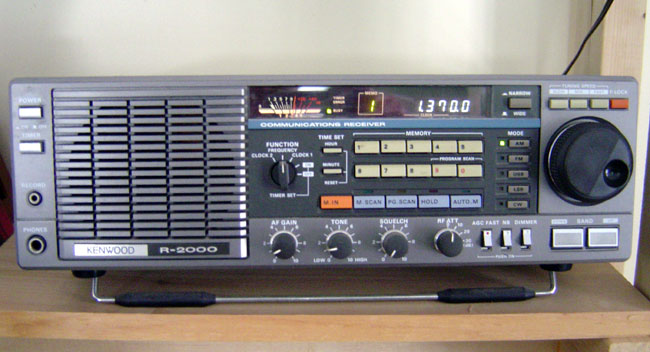
 Receiver tuned to local AM station playing good sounding music
A small AM radio station can be made profitable, just not at the margins expected by the big boys. There is a niche for perhaps 1 KW or 5 KW non-directional station with it’s own real estate that is not in too bad shape can be turned into a community radio station. Those type stations are fairly low maintenance, most have some type of PSRA and PSSA to keep them on at least during drive times if they are daytimers. Others have minimal amounts of night time power. Almost all of them cover their city of license, even with small night time powers.
I have been looking into good quality AM radio receivers and there are a few out there which are not too expensive. Most GM car radios and older Chrysler radios have good AM radios. A group formed to promote AM radio, ensure that auto makers install radios that are at least as good as their older versions, work with manufactures to make better small table top receivers and such would go a long way to improving the unjustly bad reputation that AM broadcasting has received. Further, working with the ARRL (amateur radio) to reduce and keep noise levels from things like BPL and other noise making technologies that do not comply with current FCC regulations would also help. It is true that our environment has become electrically noisier, one might not be able to listen to the 50 KW clear channel station 500 miles away, but the local station should come in well enough to enjoy, especially if the programming is good.
FM radio is becoming over crowed with translators, adjacent channel HD radio interference, LPFMs and whatever else can be shoe horned into the band. The quality of FM is set to decline precipitiously in the next few years. It seems that with the right combination of good local programming, good receivers and radio station owners/operators that are not looking to get listed on the NASDAQ, small AM stations could survive, if not thrive on the business that the big stations turn away.
There are a number, a small number, of stations already doing this. As long as there is free local news and free quality programming, people will listen, no matter what band it is being broadcast on. Free trumps paid any time, any day.
|
Axiom
Congress shall make no law respecting an establishment of religion, or prohibiting the free exercise thereof; or abridging the freedom of speech, or of the press; or the right of the people peaceably to assemble, and to petition the Government for a redress of grievances.
~1st amendment to the United States Constitution
Any society that would give up a little liberty to gain a little security will deserve neither and lose both.
~Benjamin Franklin
...radio was discovered, and not invented, and that these frequencies and principles were always in existence long before man was aware of them. Therefore, no one owns them. They are there as free as sunlight, which is a higher frequency form of the same energy.
~Alan Weiner
Everyone has the right to freedom of opinion and expression; this right includes the freedom to hold opinions without interference and to seek, receive and impart information and ideas through any media and regardless of frontiers
~Universal Declaration Of Human Rights, Article 19
|
Heard in the clear