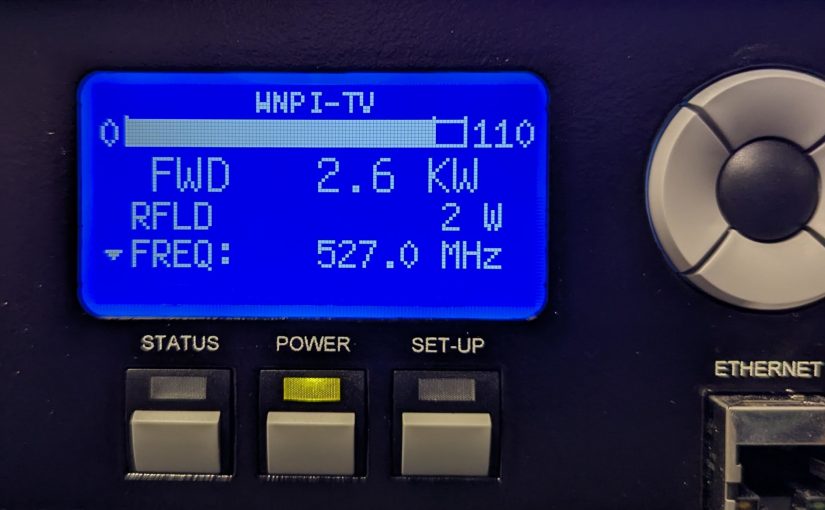
WNPI-DT gets a new GatesAir transmitter

The public TV viewers in the St. Lawrence Valley get an updated transmission system. I recently finished installing this GatesAir ULXTE-6 transmitter in South Colton, NY. That is way up on the very northern fringes of the Adirondack Mountains. It replaces the Thales CCT-U-TDU2 8KW UHF TV transmitter, which was installed around 2004, early on during the analog/digital TV conversion.
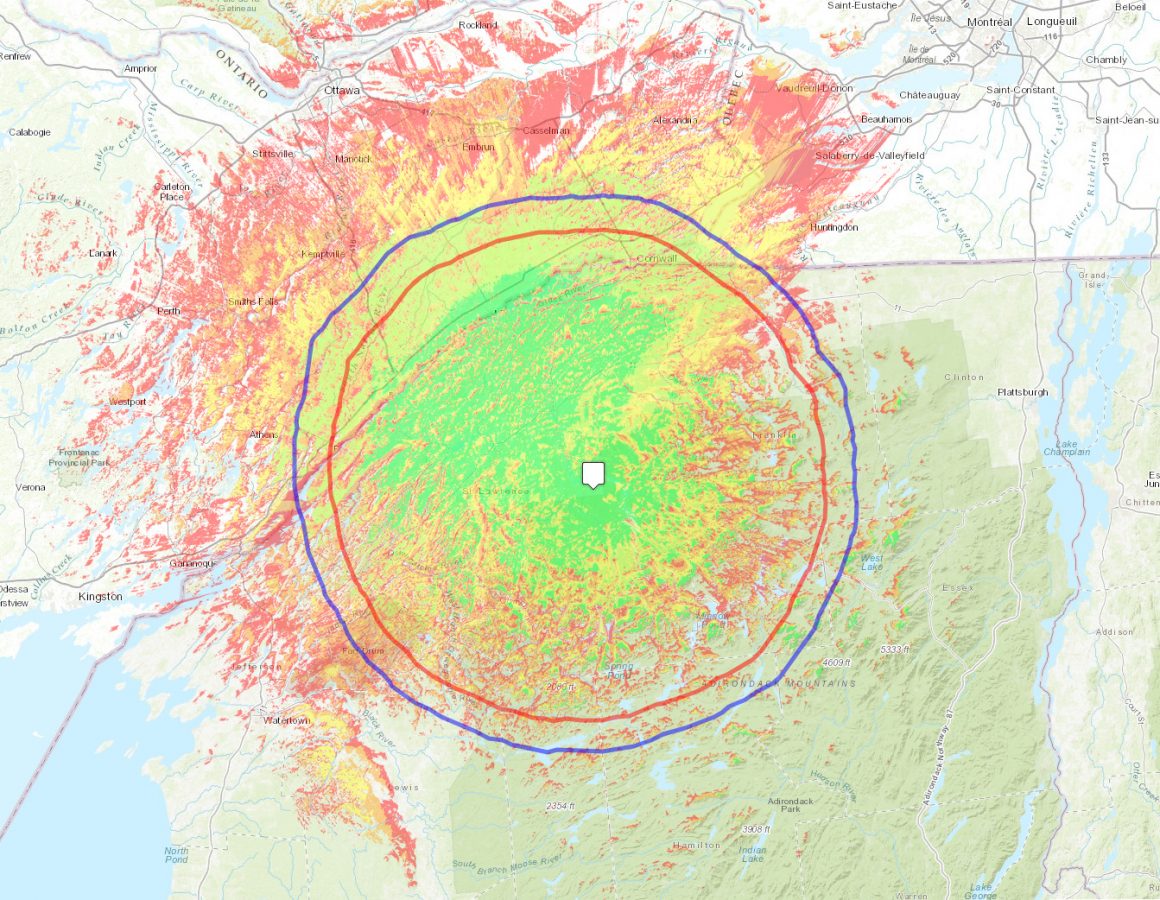
WNPI-DT coverage map

South Colton, NY is home of Sunday Rock. According the the historical marker:

This glacial bolder (erratic), twice preserved by local citizens, marks the gateway to the “Great South Woods.” In frontier days it was said that there was no law or Sunday beyond this point. May all who pass this way continue to enjoy the beauty of the mountains.
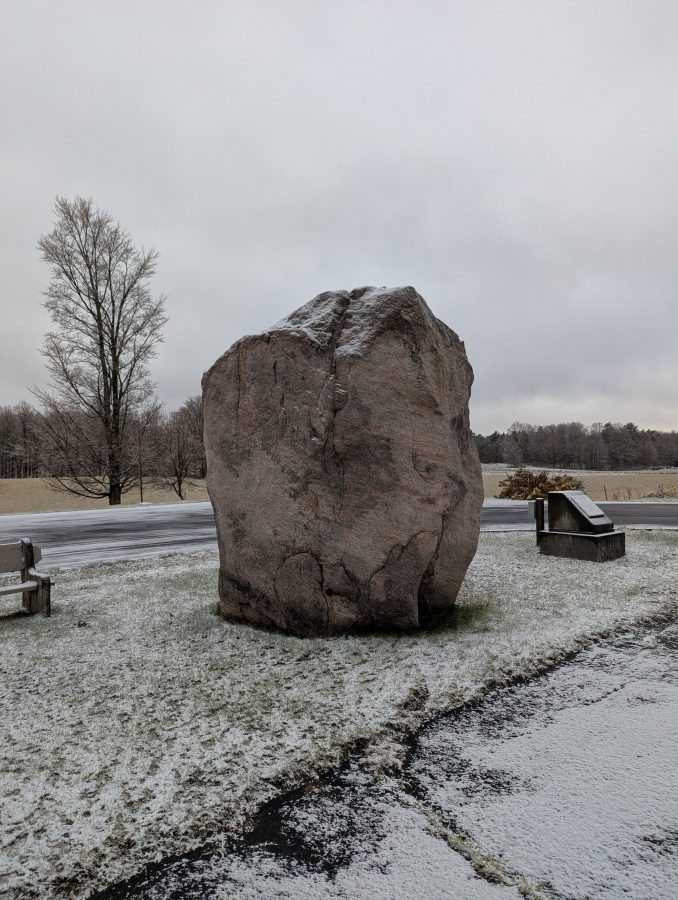
Sunday Rock, South Colton, NY

This in the northern end of the lake effect snow belt, where the average yearly snowfall tops 6 to 10 feet. Sometimes there is continuous snowfall starting in November and ending when Lake Ontario finally freezes in late January or February.

Back to the business at hand; the new transmitter placed:
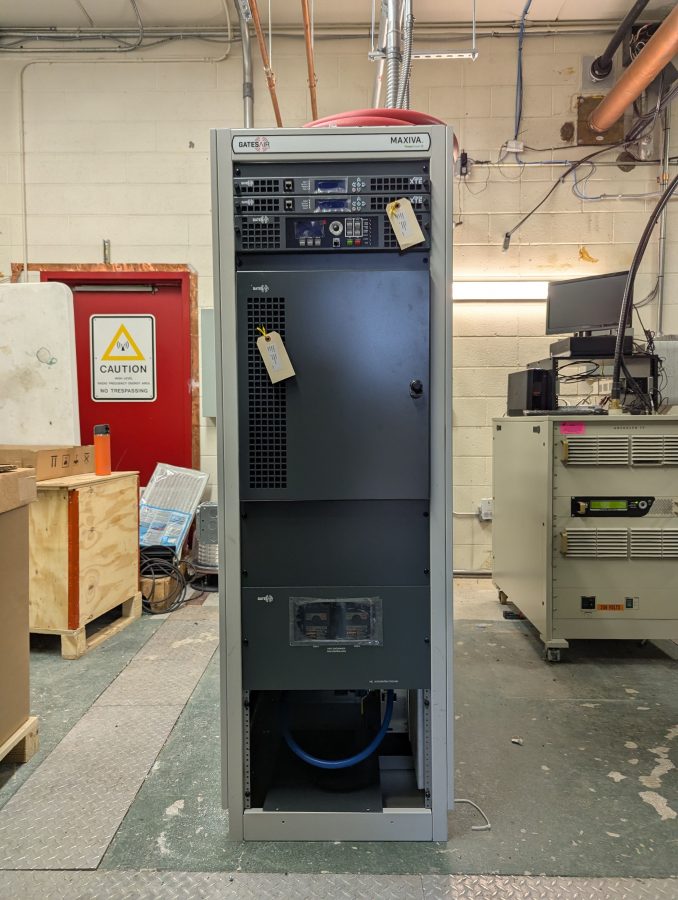
ULXTE-6 transmitter

The 25 KW heat exchanger was placed where the old analog heat exchanger was:
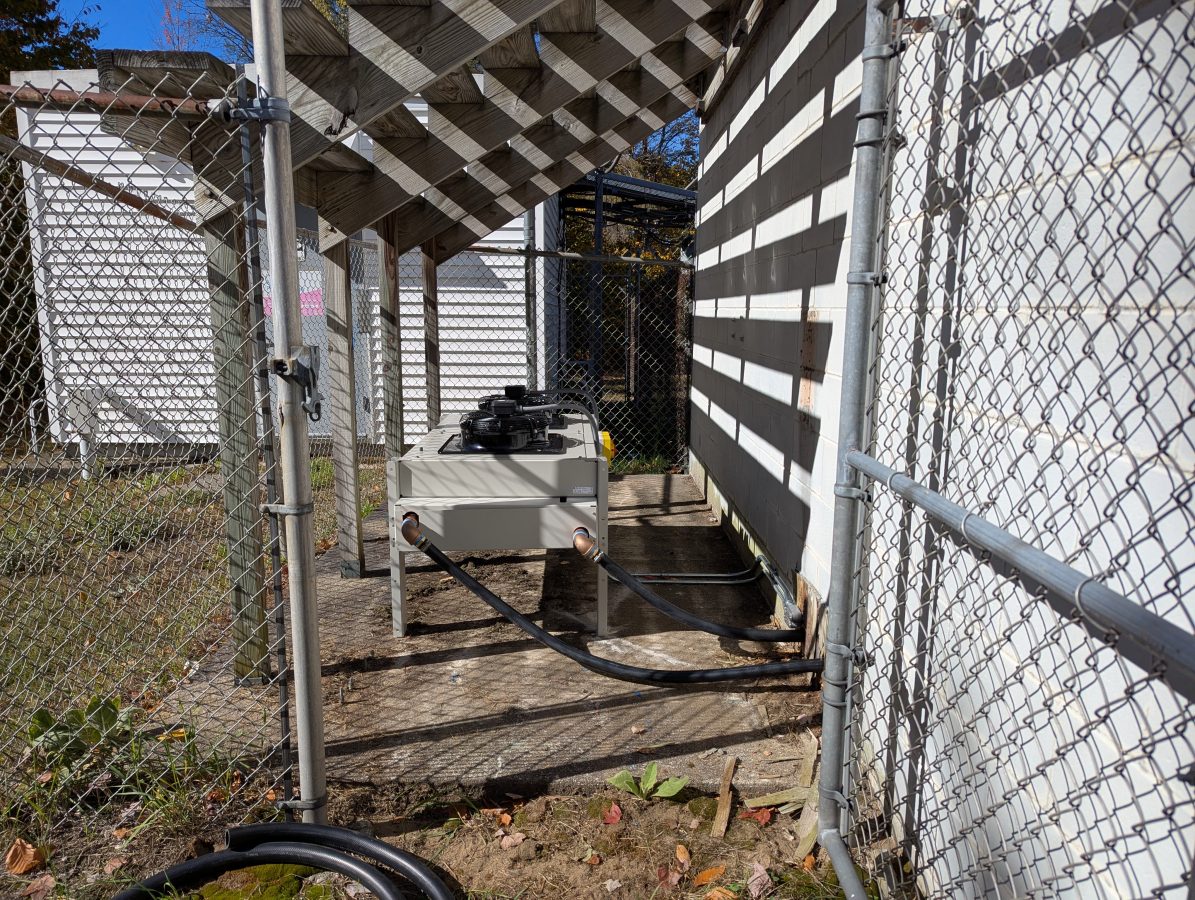
25 KW heat exchanger

This system uses 1 1/4 inch flexible tubing, which is easier to work with than the 1 1/2 inch steel reenforced tubing.
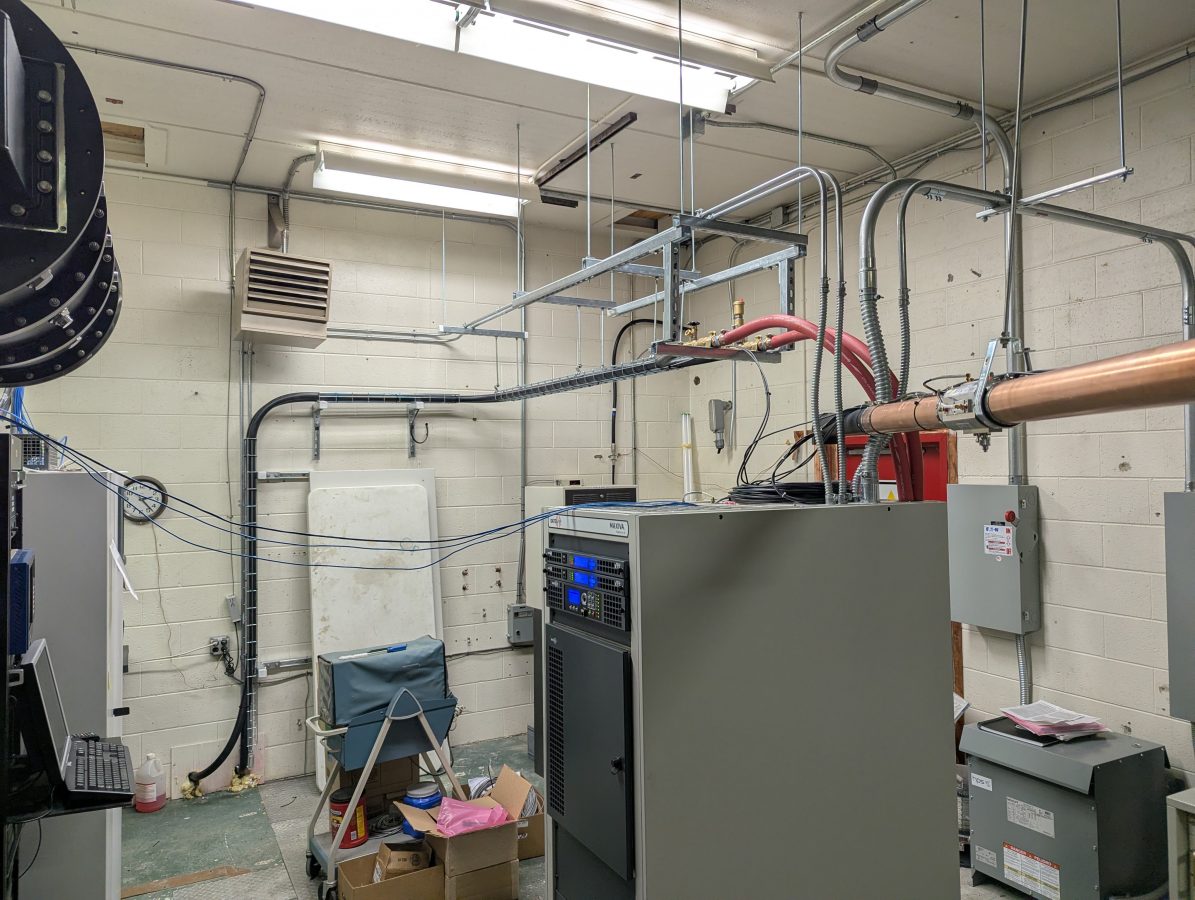
ULXTE-6 HTF tubing run

Measuring the Comtech mask filter with the network analyzer:
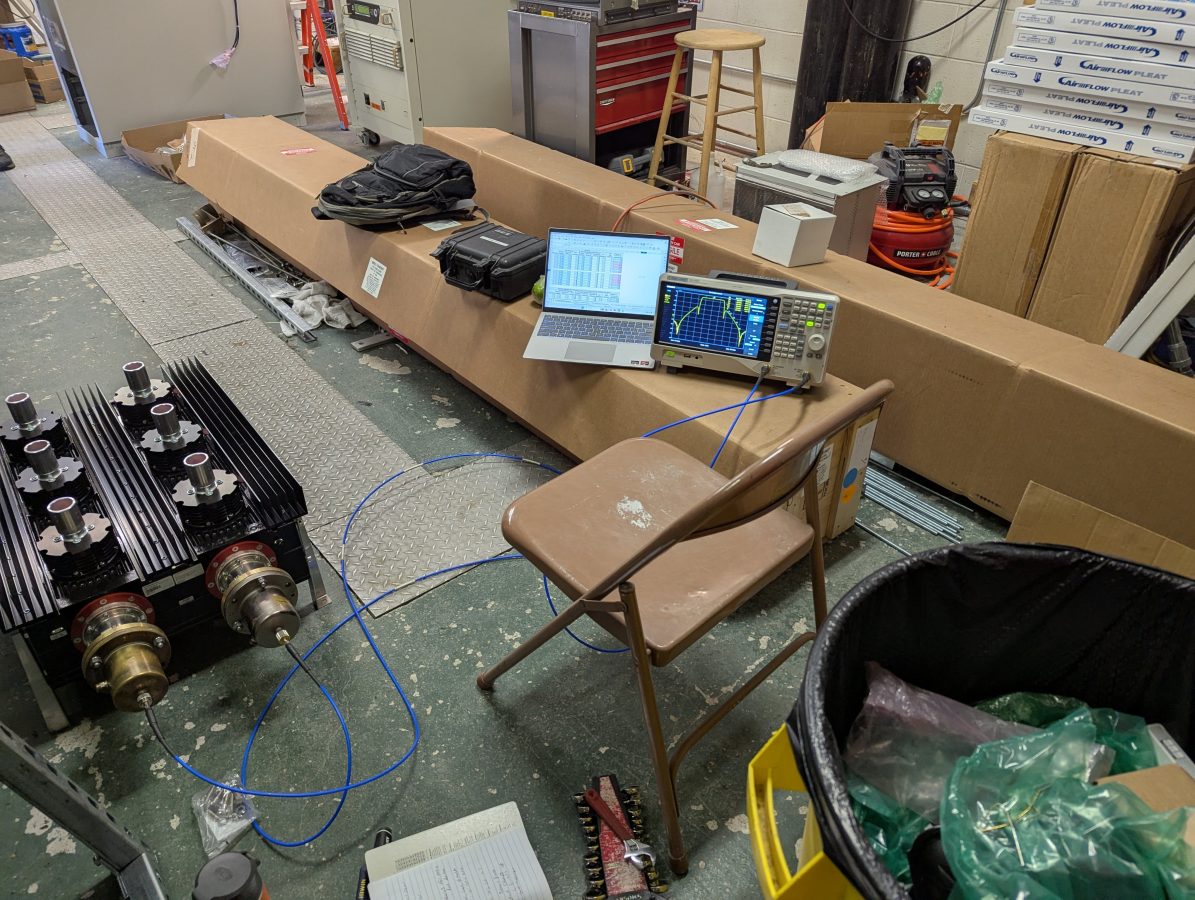
S21 mask filter response
Old Dielectric dual mask filter for Thales transmitter

New mask filter mounted on the old dielectric mask filter stand:
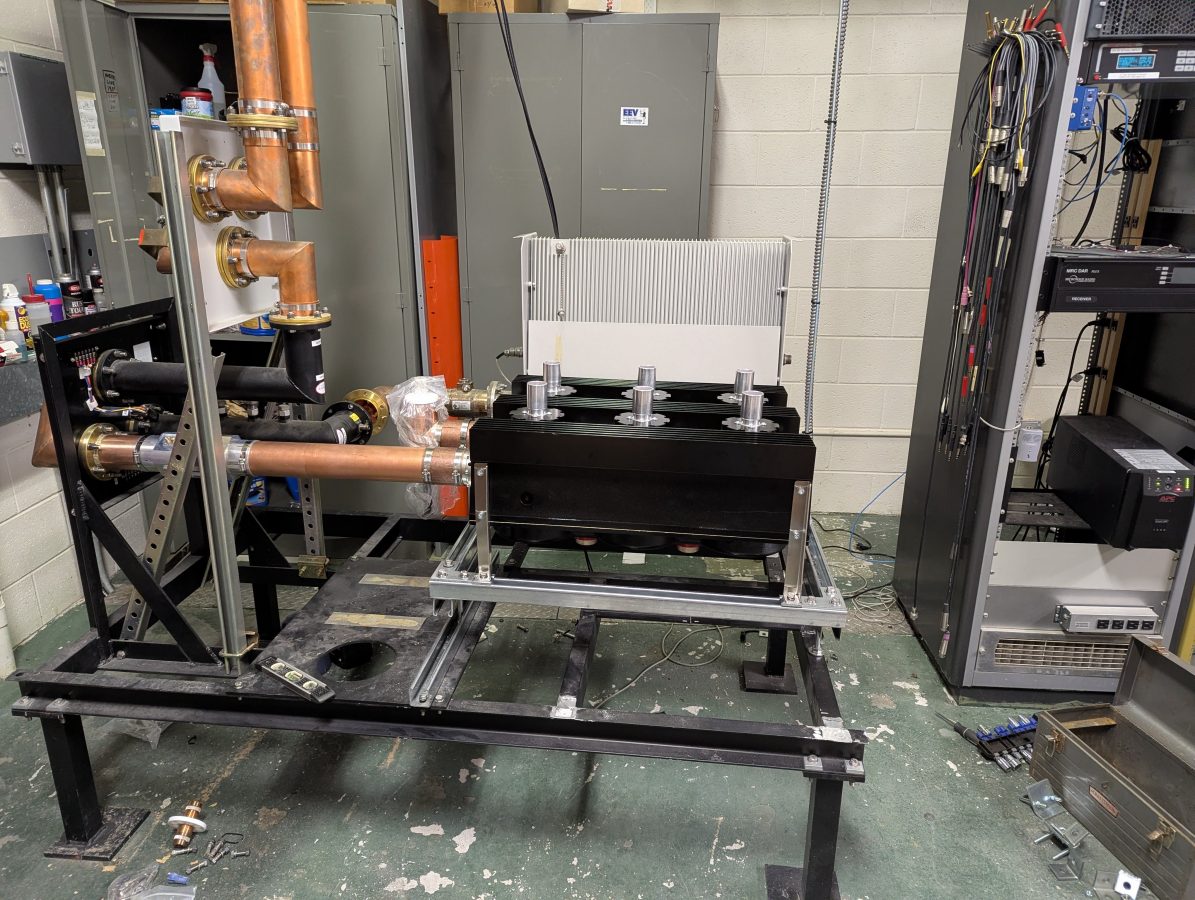
New Comtech mask filter

This arrangement allows for the reuse of the two coax patch panels, on for antenna/dummy load, the other for main antenna/backup antenna.
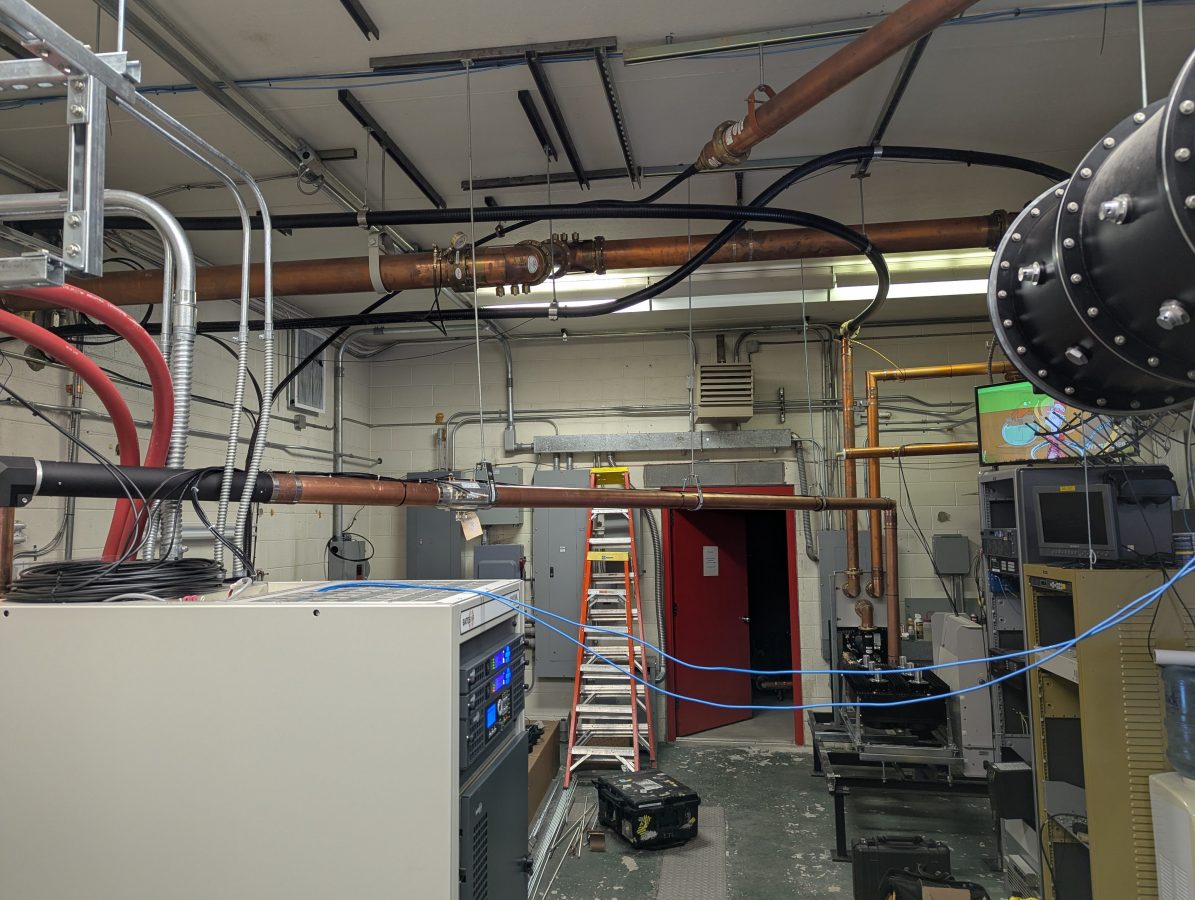
3 inch rigid line between the transmitter and filter

Post mask filter RF signal analysis using a Rohde Schwarz ETL:
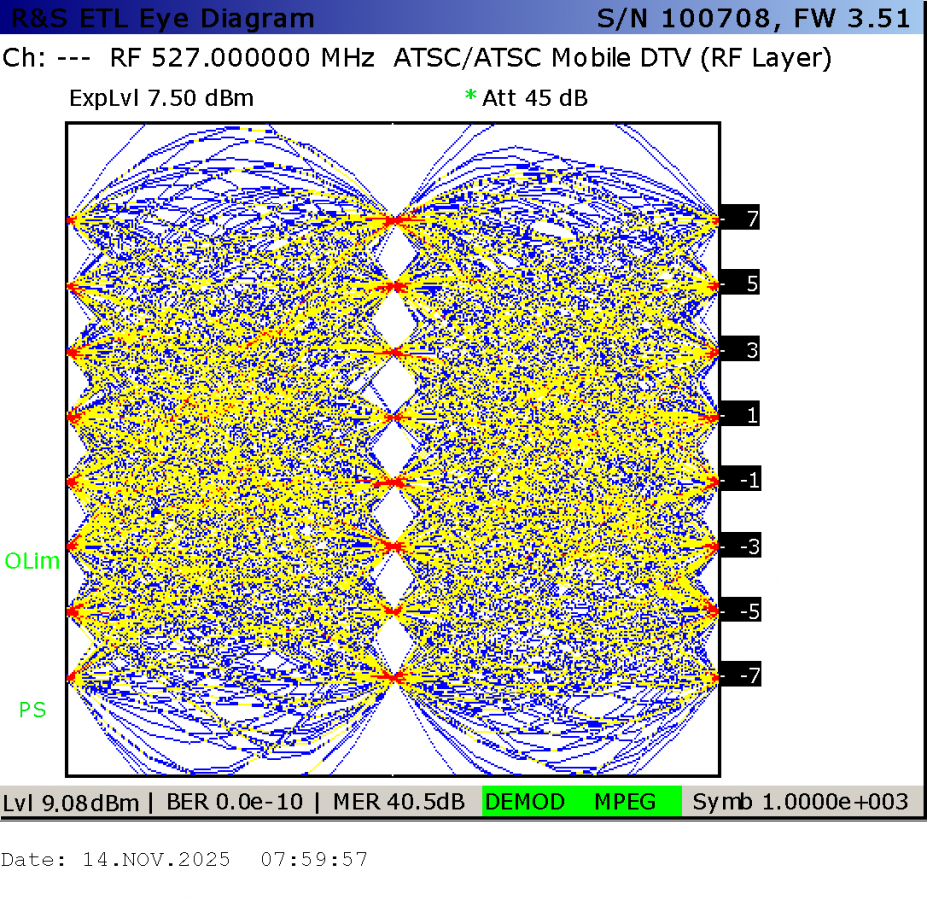
The GatesAir equipment always has good performance parameters.
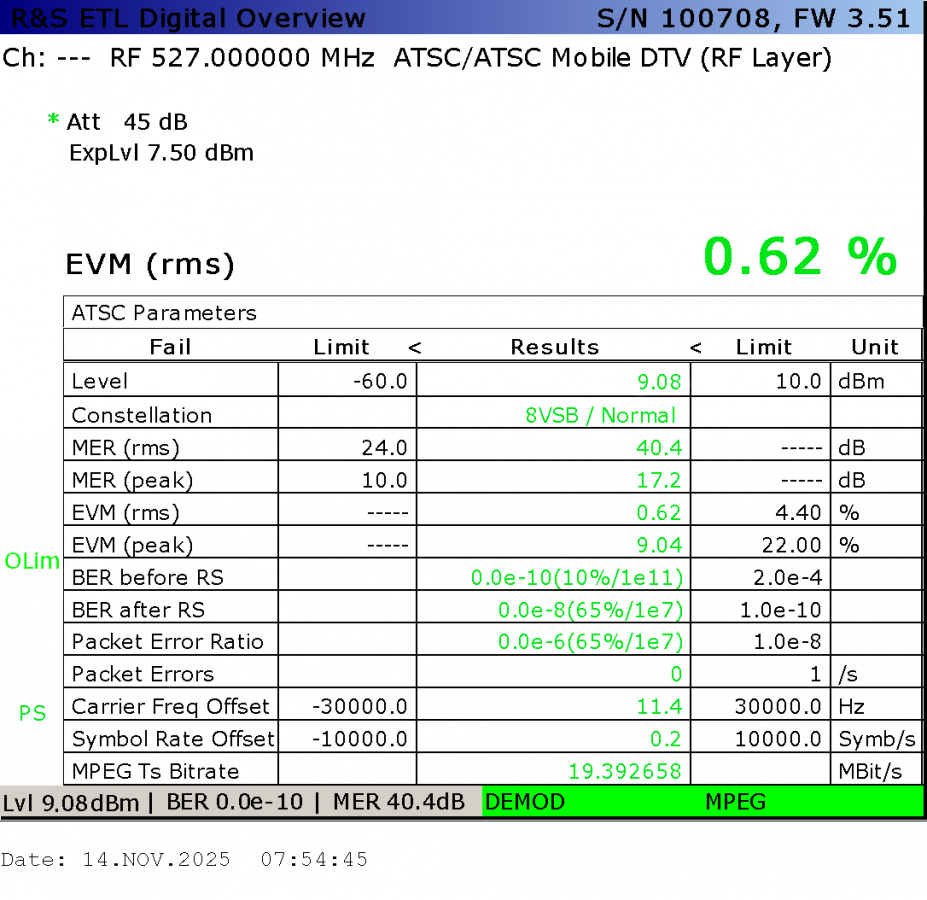
The carrier frequency is measured using the pilot. In this case, both exciters have the GPS reference connected and working. I think the ETL OCXO might be 11 Hz low.

Anyway, this was a fun project.
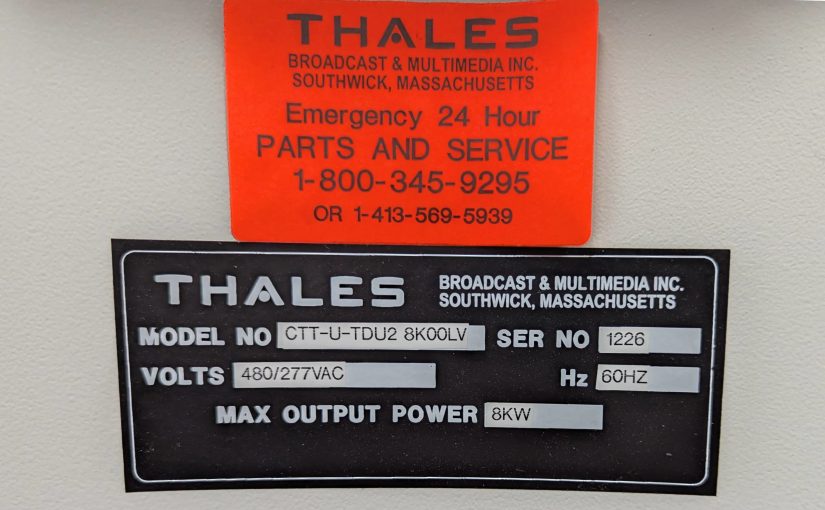
One of These Days

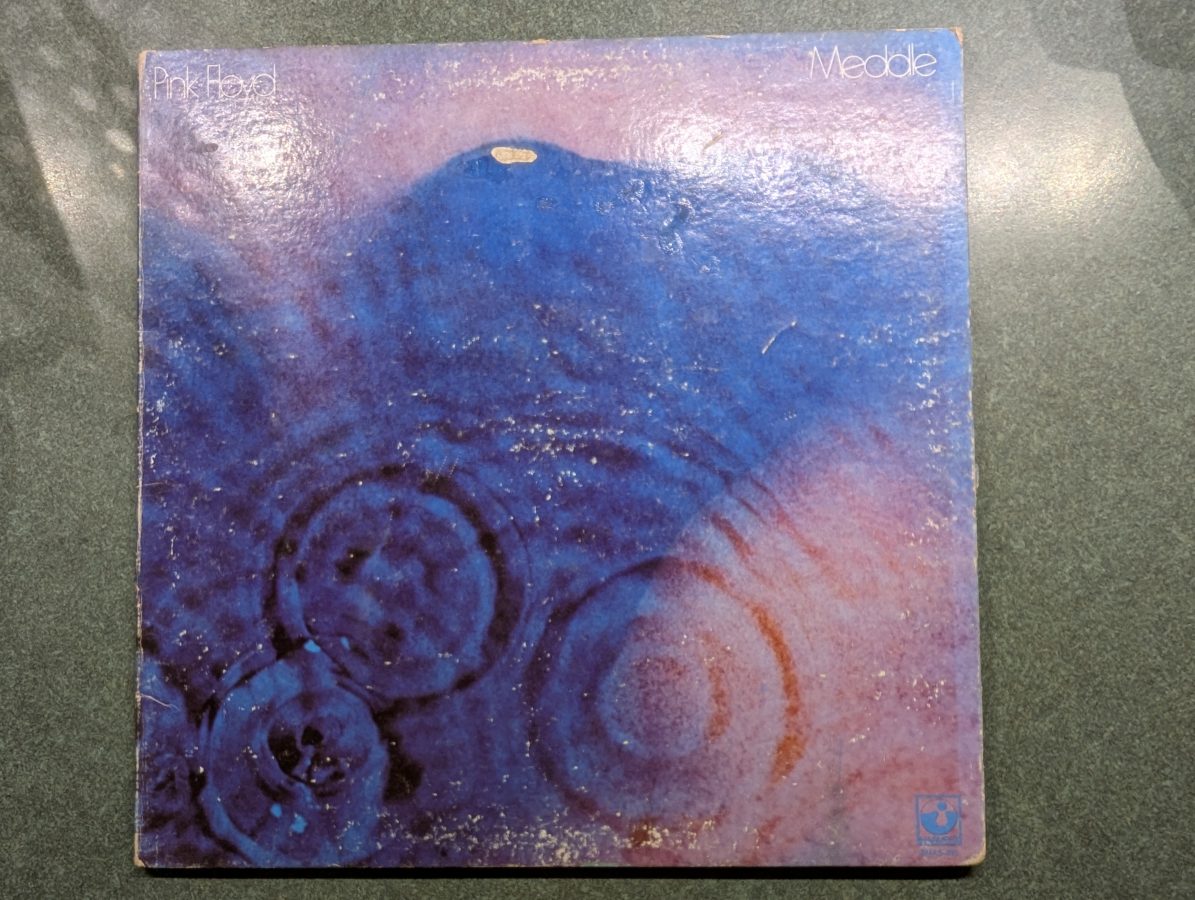
The name of a song on Pink Floyd’s album, Meddle, released in 1971. The only lyrics in the song are drummer Nick Mason, who says “One of these days I am going to cut you into little pieces.” This was recorded at double speed with Mason speaking in falsetto, then played back at normal speed. Anyway, a good song from one of my favorite Pink Floyd albums.

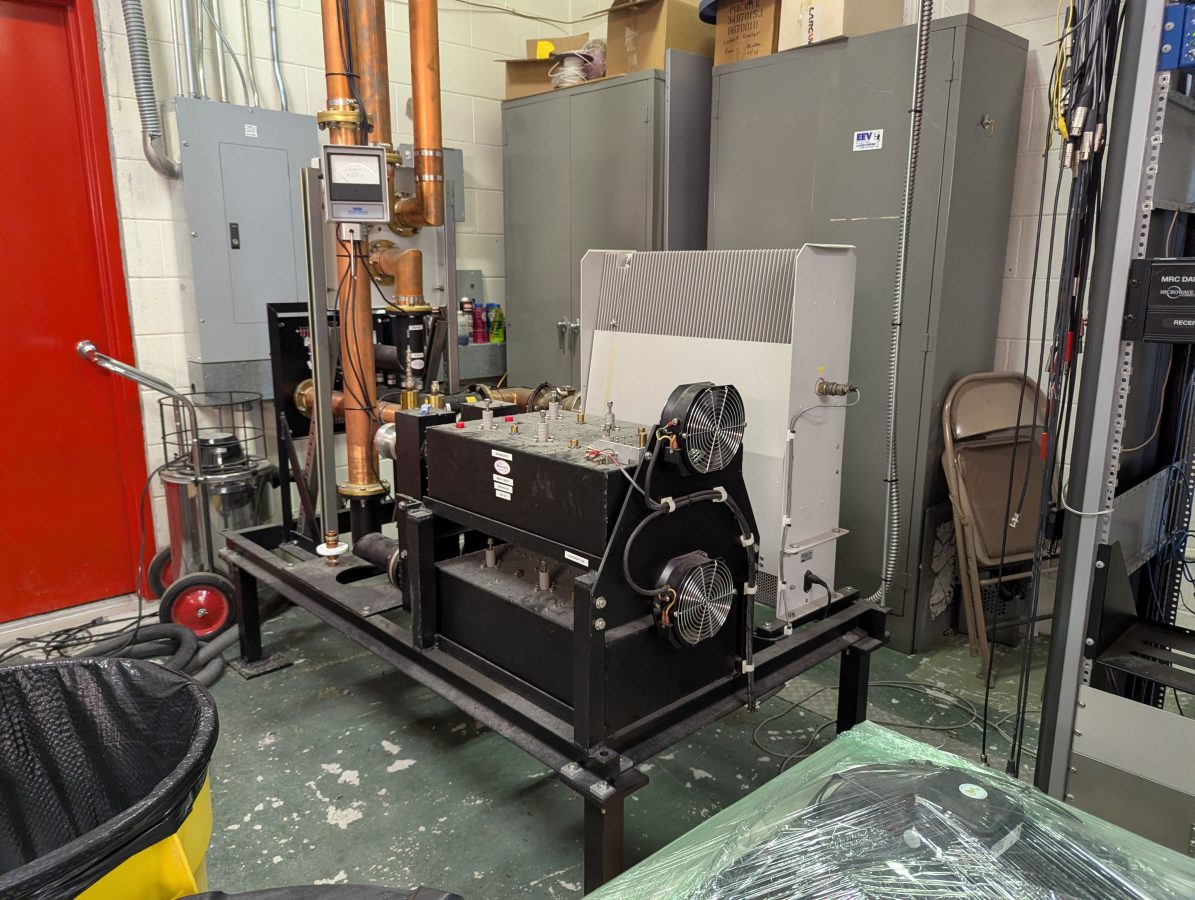
And so it was for this Thales UHF TV transmitter. Installed in 2005 or so during the early transition to digital TV for PBS affiliate WNPI-DT.

Decommissioning a liquid cooled transmitter requires a few extra steps. First and foremost, as much as possible the antifreeze needs to be captured and collected for proper disposal. In this case, approximately 110 gallons (417 liters) of Dowtherm heat transfer fluid was drained into barrels.

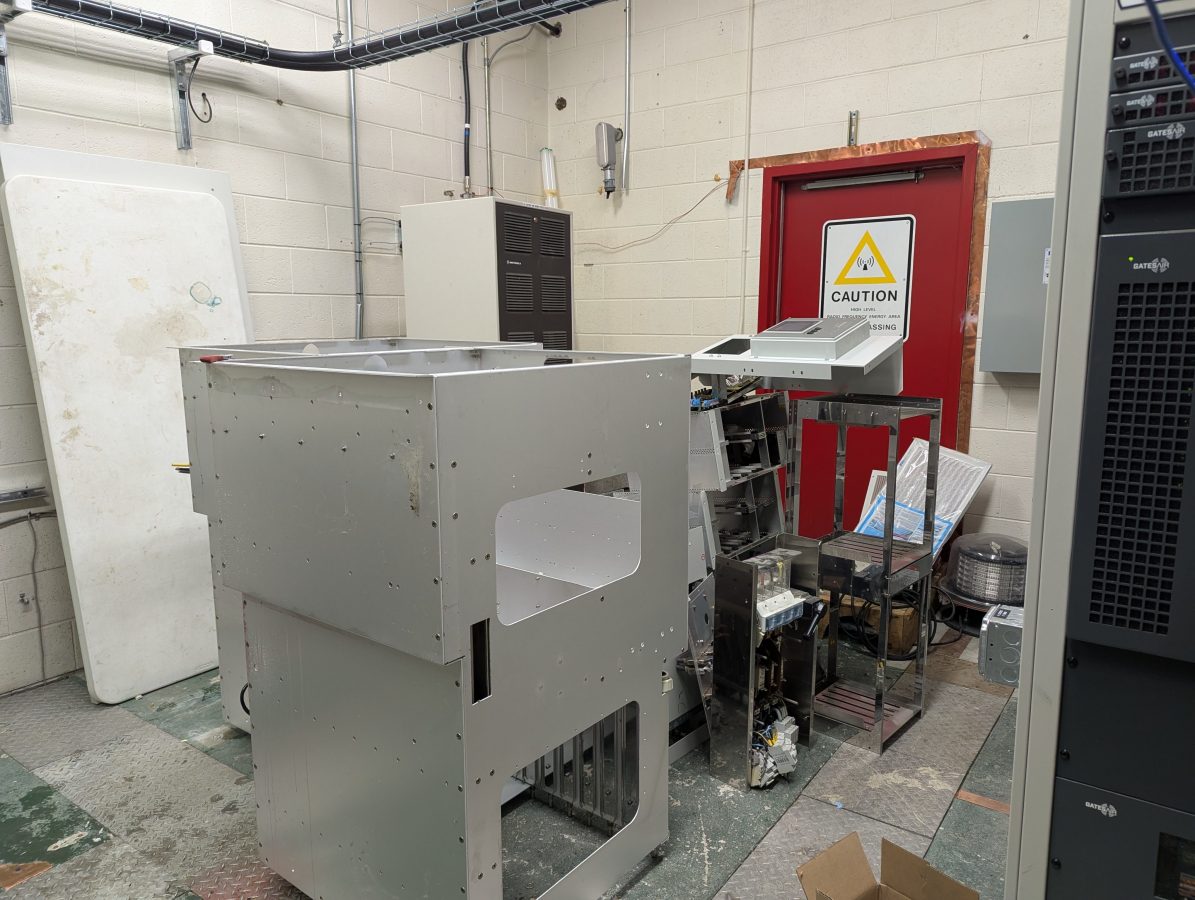
Next, all of the RF modules and power supplies were removed from the transmitter. Both needed to be drained of HTF.


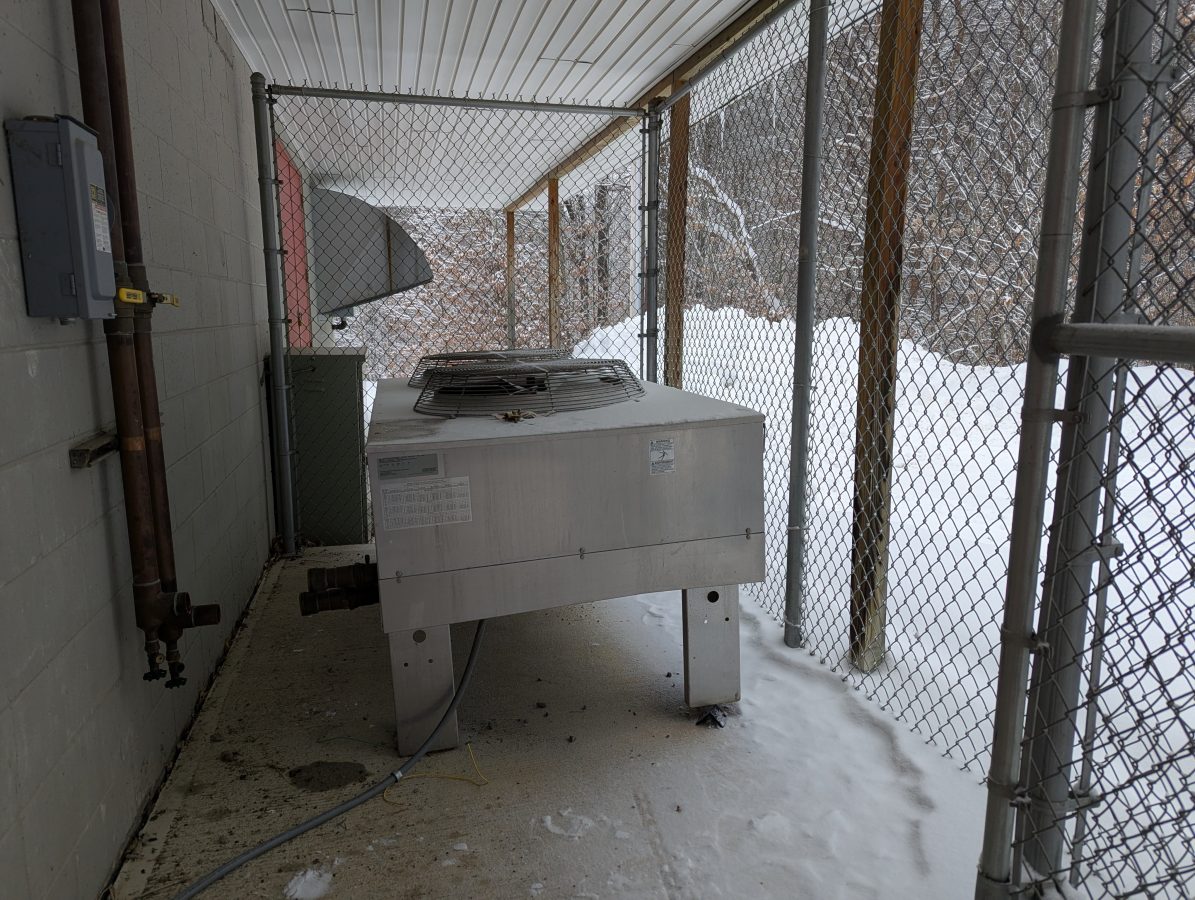
The outdoor heat exchanger presented a new problem:

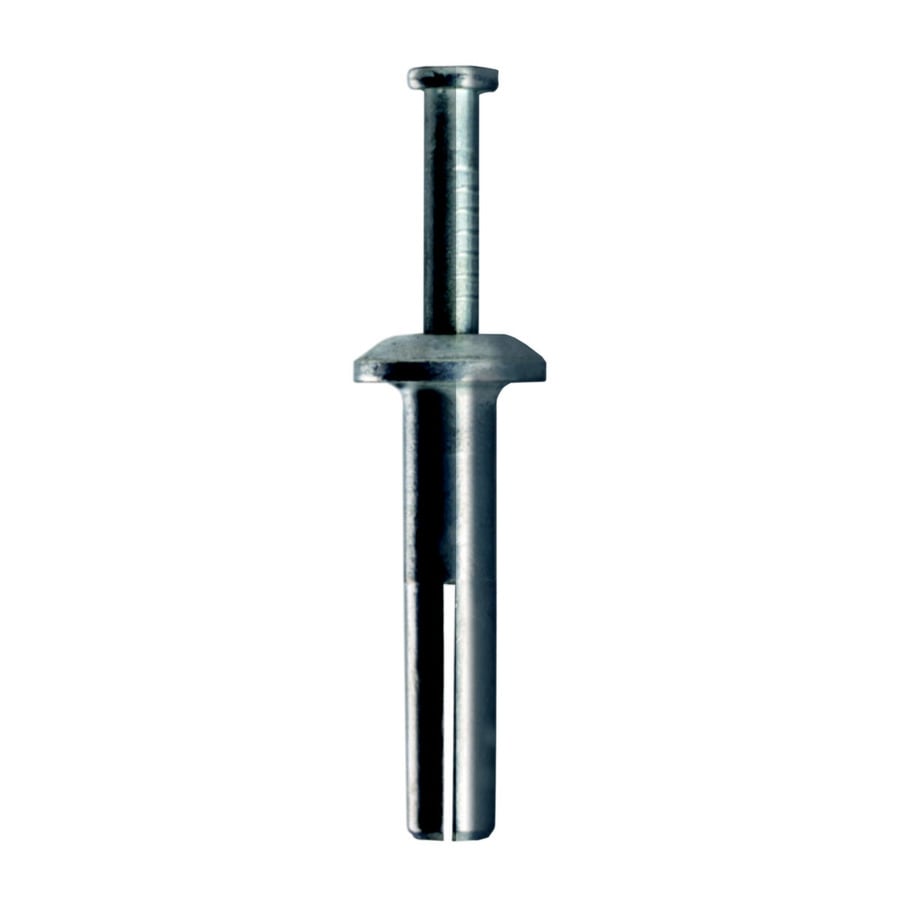
It was attached to the concrete pad with hammer fixed anchors which needed to be ground off with a hand grinder.


It was a little bit chilly on a 10 F (-12 C) day, laying on the concrete pad, in the snow, under the heat exchanger with a hand grinder grinding the top of of eight little round bolts. After that was done, I managed to pry the legs loose and tip it slightly to get the rest of the HTF out into a bucket. I think the HE had about 15 gallons (57 liters) of HTF.

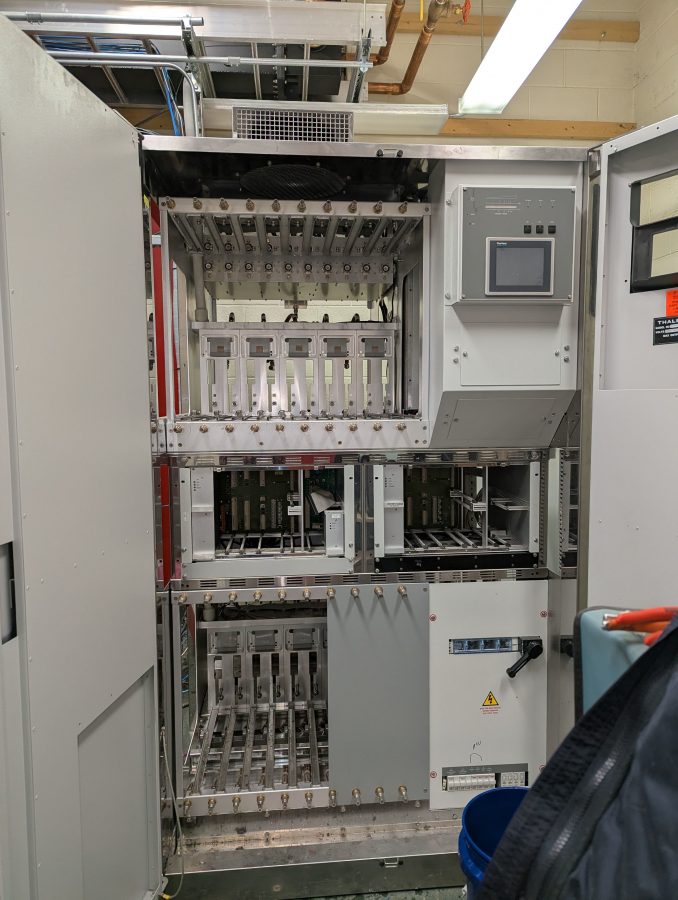
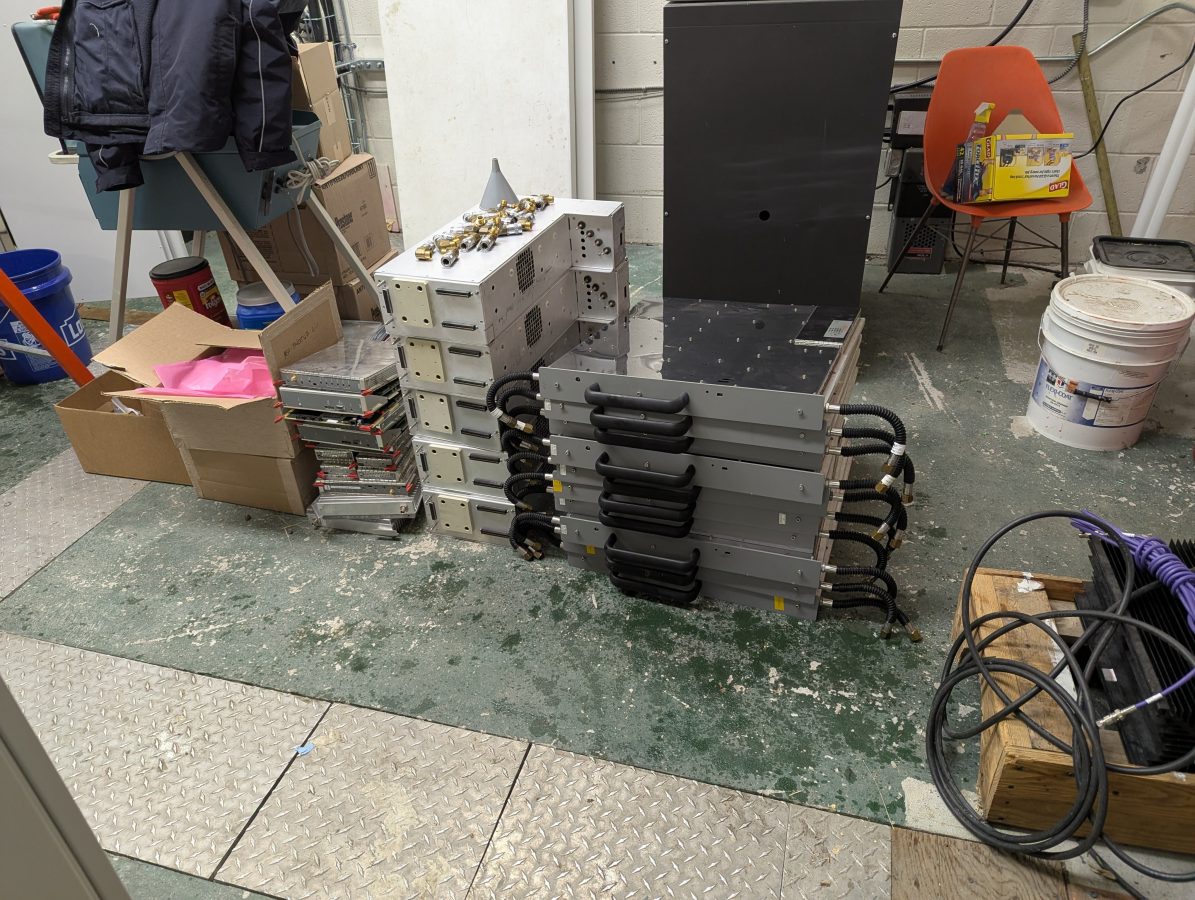
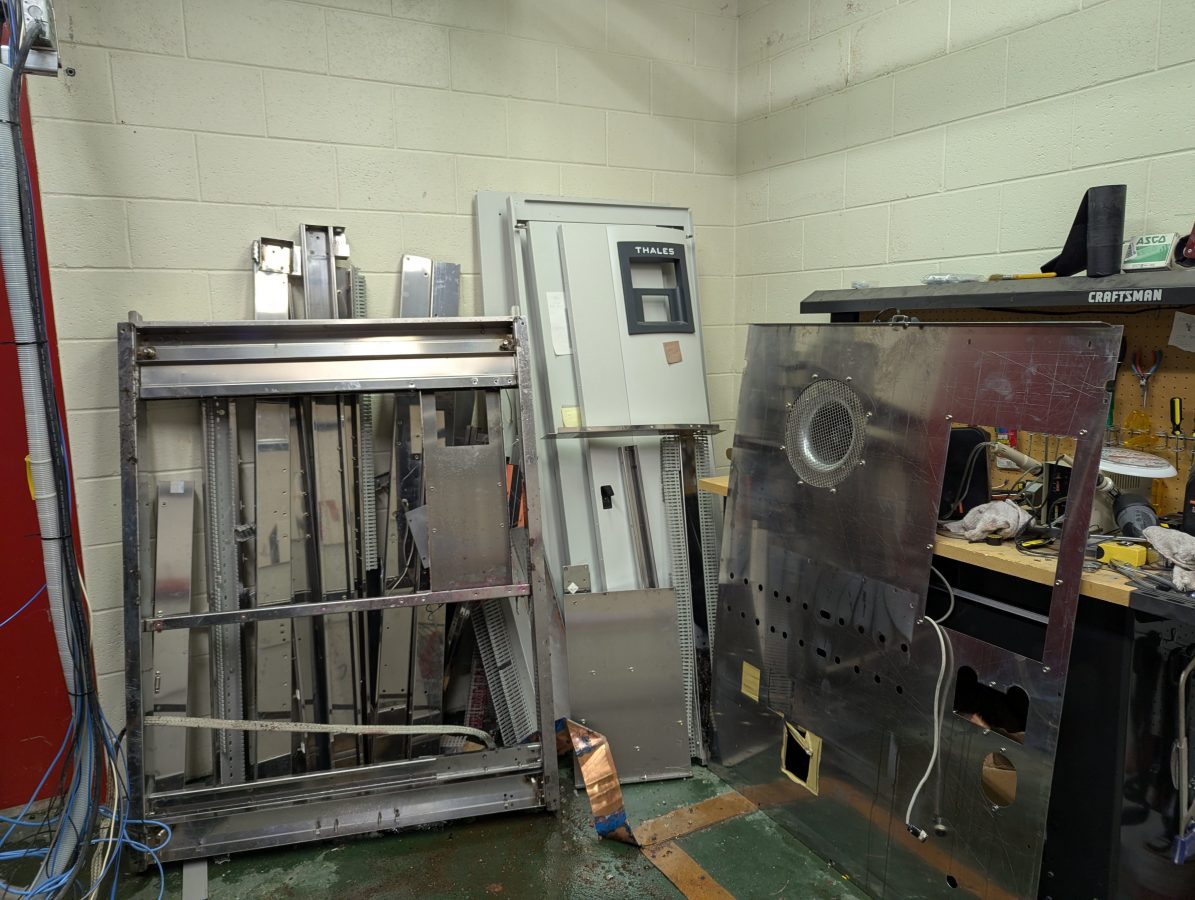
Next, all of the smaller sub assemblies were removed; the upper and lower RF module and power supply frames, the two control module frames, the rails that held the control modules, the AC power input and distribution frame and the controller frame and all the circuit boards. The RF module and power supply frames had HTF tubes and pipes that needed to be drained. The circuit boards are disposed of as E-waste.

The wiring harness was removed.


Finally, the stainless steel main cabinet frame was cut into manageable pieces with the battery powered sawzall (reciprocating saw) so that it could be carried out of the building.

All in all, it was a fun project.

All About the 7/16 DIN connector

These connectors appear on the backs of various FM and lower-power TV transmitters. I thought it would be interesting to explore them a little bit.

First, according to Wikipedia, DIN is an abbreviation for Deutsches Institut für Normung. If you enjoy a lager or two then squint at that name you might see The German Institute for Standardization. 7 is the size of the inner conductor contact in mm and 16 is the size of the inside diameter in mm of the outer conductor. The thread is 29 x 1.5 mm.

From what I can find, the connector was originally developed for the German Military, which needed a rugged, efficient connector that was easy to install properly.

This style of connector is very popular with cellular antenna manufacturers due to its relatively high power handling capability and excellent passive intermodulation performance.

According to Amphenol, their 7/16 DIN connectors have the power handling capability of 3000 watts/1 GHz @ 25C (77F). That is a fairly low temperature. They give the working voltage as 500 V RMS continuous, which is 5000 watts at 50 ohms impedance. That, of course, assumes a 1:1 match, which is never the case. The connector is probably safe to ~2 KW in normal operating conditions for VHF and UHF TV operation.

Amphenol 7/16 plug for LMR-400 and Belden 9913

Also, keep in mind that RG-8, RG-213, RG-214, LMR-400, and Belden 9913 look similar but they use different connectors because the inner conductor of the latter two is larger than RG-8, RG-213, or RG-214. This happened on a project recently. It came time to crimp the pin on the center conductor and, oh no! The pin was too small!

A properly installed connector will be outdoor water-resistant in most weather conditions.

Another LPTV install

We recently put an LPTV on the air in Brookfield, Connecticut. WXGN-LD signed on on Friday, September 6th.

This is UHF station with a 15 KW ERP (the limit for LPTV). This station has an elliptically polarized antenna with 4.5 KW in the vertical polarization.

The transmitter is made by a Spanish company called TRedess

TRedess 4th series 4 amplifier UHF transmitter capable of 3 KW on ATSC 1.0
GUI is easy to navigate and understand
Dielectric six-pole full-service mask filter

This has been installed in a former Sprint cell building. The wire ladders are left over from them. Still, it makes a convenient place for the mask filter, which is up and out of the way.

Standard work table and two chairs
Making spectrum mask measurements

I also swept the antenna and filter.

This station is associated with these folks: XGN Network LLC