I received this link in the comments of a previous post and found it interesting. The BBC will be closing down 648 KHz, Ordfordness England at the end of March, no doubt due to budget cuts. The site has been in use since 1972. Prior to this, the site was formerly an OTH array, COBRA MIST, which was then adopted for MW broadcasting. The video is 17 minutes long, but, if you are interested in radio history, technical aspects of AM broadcasting, and the like, it is interesting.
These are 600 KW transmitters. As Andy Matheson, transmitter engineer, explains, with a wry smile “I find them (transmitters) very satisfying, I enjoy either day work or shift work, just really working with transmitters has always been very satisfying…” I couldn’t have said it better myself.
We have received somewhere between 5-6 inches of rain in the last four days. That, coupled with the deep snowpack and the still-frozen ground has led to some flooding. The WLNA antenna array is located along the Peekskill Hollow Creek in northern Westchester County, NY. Back in 1980, it might have seemed like a good idea to locate an AM station in a tidal swamp along the Hudson River. I am sure the land was not that expensive and from an engineering standpoint, having a continually wet, partially brackish ground system may have seemed like a slam dunk.
Unfortunately, the idea never really panned out in the application. First of all, the neighbors had other ideas, fighting the radio station owners all the way to the NY State Supreme Court. Secondly, technically, it never lived up to expectations. The original non-directional antenna on 1430 was a 1/2 wave tower which by all accounts, worked very well. It did not, however, allow for nighttime service, which is why the new sight and array were sought. By the time the system was built, AM was already in steep decline and I doubt the owners ever recouped their investment.
Fast forward to today. All five base insulators are under water and the transmitter is off the air. These are pictures from last Wednesday after the first flood waters receded from the Monday/Tuesday storm. I imagine it looks worse this morning, although I don’t own a boat and won’t be wading out there to look.
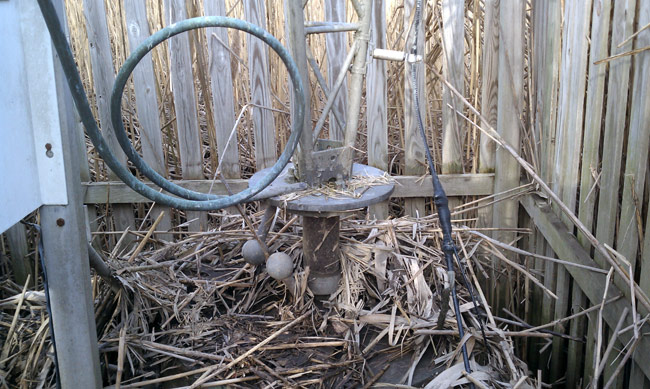
Base insulator, tower 2 WLNA array, Peekskill, NY
This is tower two of the daytime antenna array. Clearly, it spent some time underwater. We cleaned off all the debris from all the tower bases. A far worse prospect is the ATU’s:
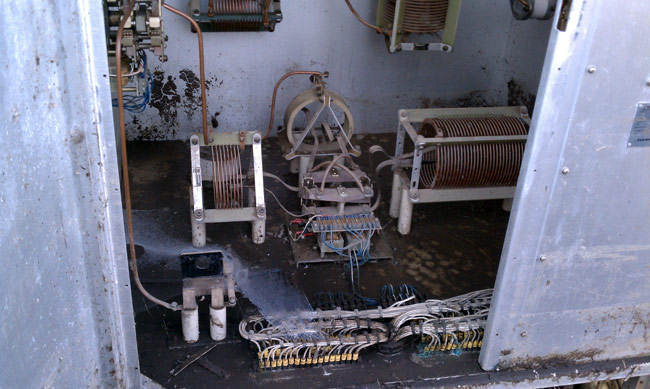
WLNA tower 1 ATU, Peekskill, NY
This is the Antenna Tuning Unit for tower 1, which is the reference tower for both the day and night arrays. The E.F. Johnson contactor in the bottom of the cabinet was fully submerged for an undetermined amount of time. The bottom of the unit is covered in fine silt. The high water mark is visible on the right side of the aluminum cabinet.
The contactor is going to need to be replaced, or at least rebuilt. The ATU cabinet will need to be washed out. There are two other ATUs that suffered the same fate.
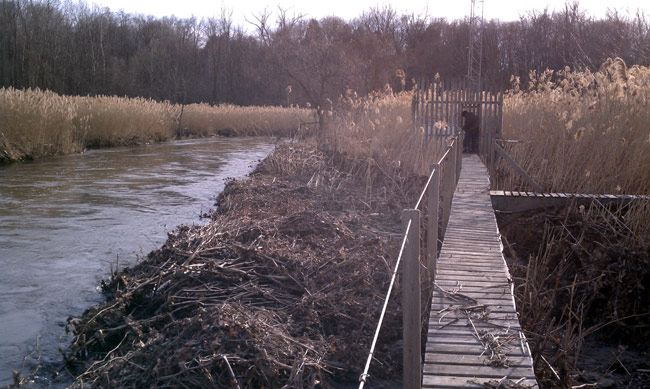
WLNA antenna array, towers 3 and 5
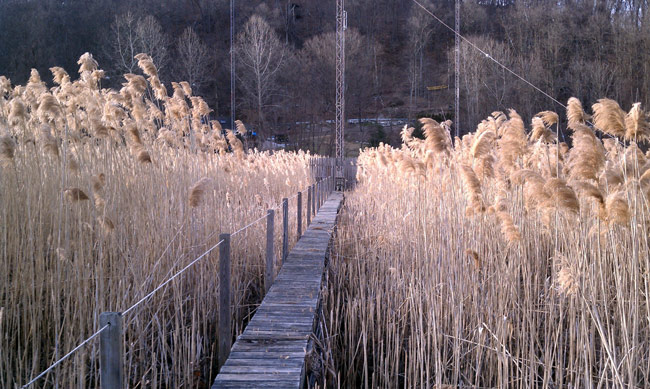
This is the end of the catwalk next to the Peekskill Hollow Creek looking west towards the Hudson River. The water level reached the bottom of the catwalks and had receded about 4 feet when this picture was taken.
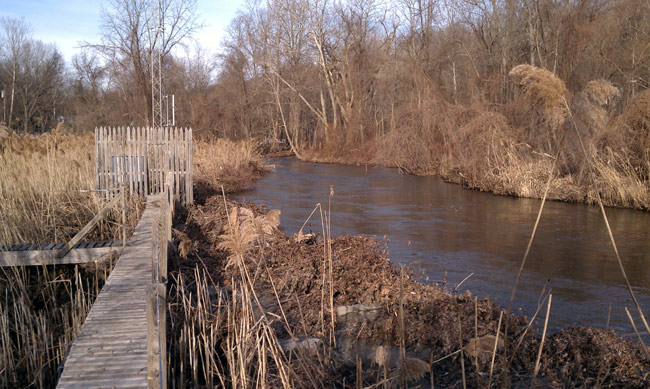
WLNA antenna array, tower 5, Peekskill, NY
Lookup east, upstream at tower 5.
WLNA antenna array looking north, Peekskill, NY
This is the antenna array looking north, with my back facing the creek. Tower one is the center tower, tower two is on the right and tower four is on the left. The daytime array consists of towers 1, 2, and 3 bearing 300 degrees. The night time array consists of towers 1, 4, and 5 bearing 335 degrees, so the array makes a big X in the swamp. More from the FCC database.
It is going to take a lot of work to clean out all these ATUs and repair the damage. Clean water is at least 1000 feet away. My question is; why bother? Once upon a time, this station was viable, well thought of in the community, etc. Now, I doubt anyone knows it is off the air. The current ownership over the last thirteen years did, what I’d like to call, a controlled flight into the ground. Axing staff, cutting maintenance, and generally neglecting the station. Why not take it dark for a while and figure out what to do with it? Likely somebody would buy it, even if for the land it sits on. Anyway, the grind continues…
WISN 1130 AM has been on the air since 1922, although not always with those call letters. In an interesting twist, the license was granted to the local newspaper, the Wisconsin News, and the Milwaukee School of Engineering. Initially, both entities were programming the station, however, by about 1925, the newspaper was responsible for programming and the engineering school was responsible for technical operations.
In 1941, the station increased power from 1,000 watts to 5,000 watts and added nighttime service. This is a series of pictures from that time period.
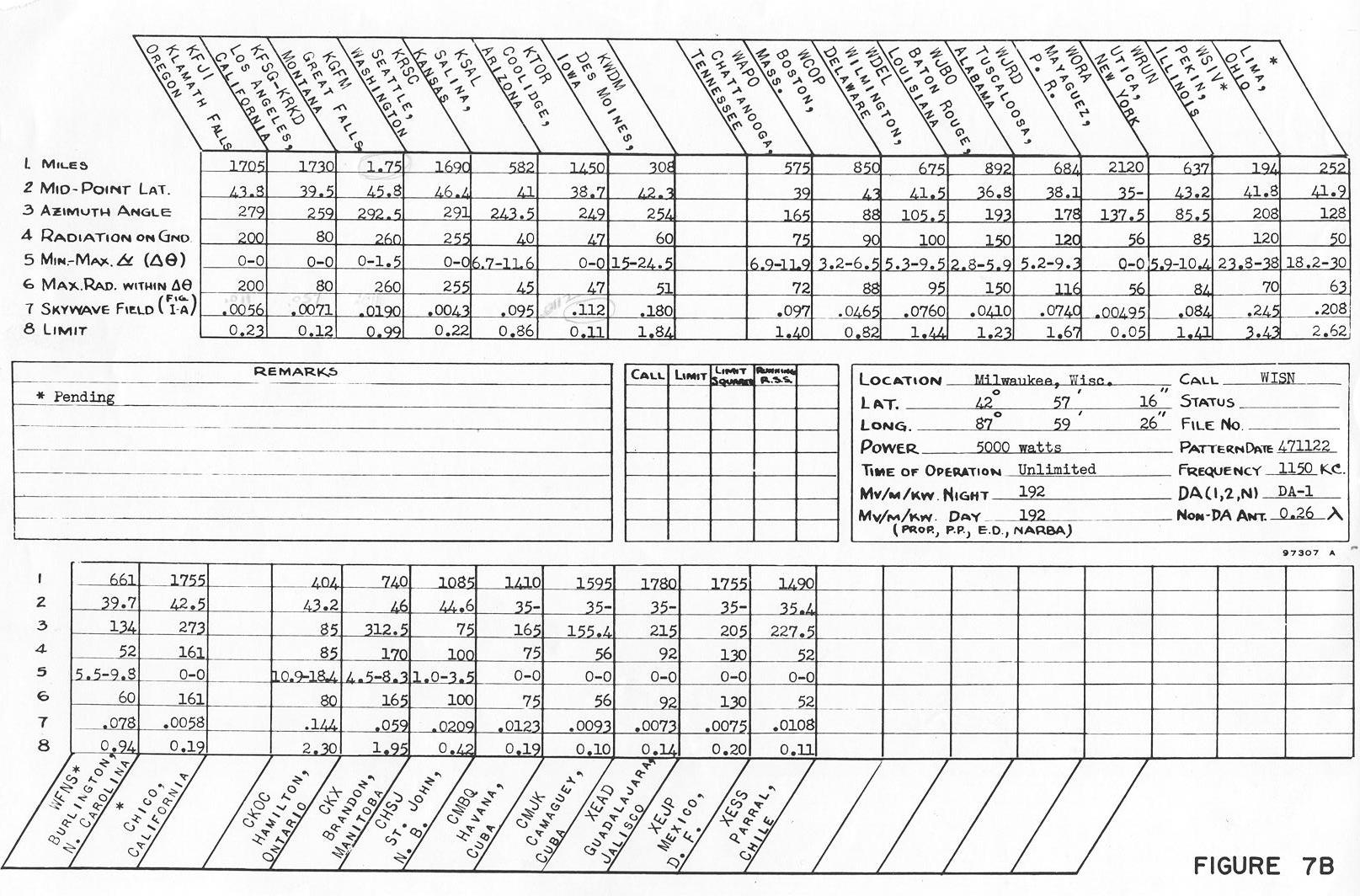
WISN night time allocation study
Back in 1941, nighttime interference was taken seriously. The nighttime allocation study (on 1150 KHz, WISN’s former frequency) includes co-channel stations in the US, Canada, Cuba, and Mexico.
WISN night time allocation ma
The array consisted of four Blaw-Knox self-supporting towers in a rectangle. Notice the lack of fencing, warning signs, and the like around the towers.
WISN antenna array
From the front of the transmitter building
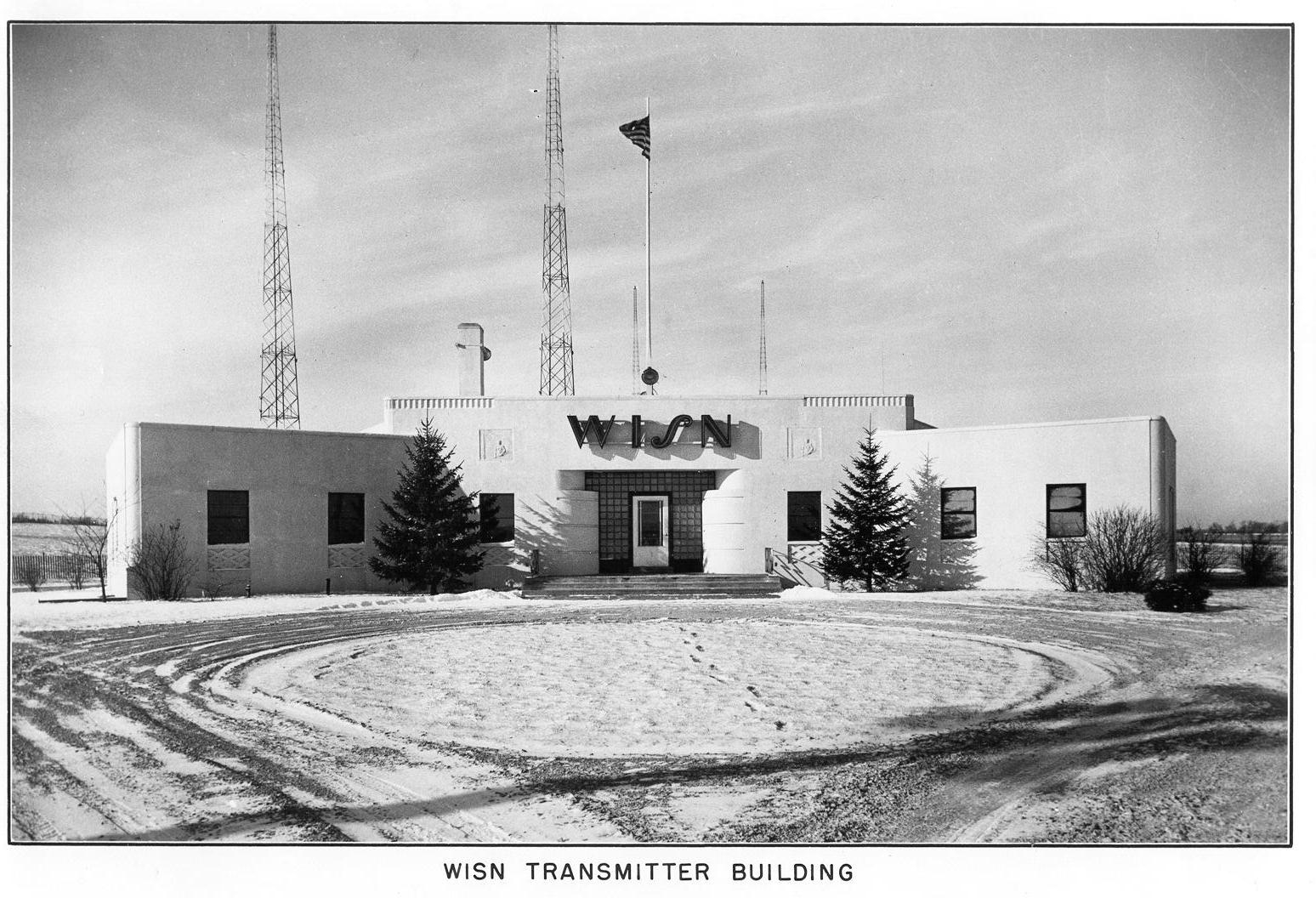
WISN transmitter site, 1941
The site looks well designed, no doubt manned during operation, which at the time would likely be 6 am to midnight except under special circumstances. Most of these old transmitter sites had full kitchens, bathrooms, and occasionally a bunk room. The transmitter operators where required to have 1st telephone licenses from the FCC. There is only one manned transmitter site in the US that I know about; Mount Mansfield, VT. There, WCAX, WPTZ, WETK, and VPR have their transmitters.
WISN RCA BT-5E transmitter, 1941
The WISN RCA BT5E transmitter looks huge for that power level. Back in the day when AM was king, these units were designed to stay on the air, no matter what. I don’t know too much about this model transmitter, but if it is like other RCA/GE models from the same era, it has redundant everything.
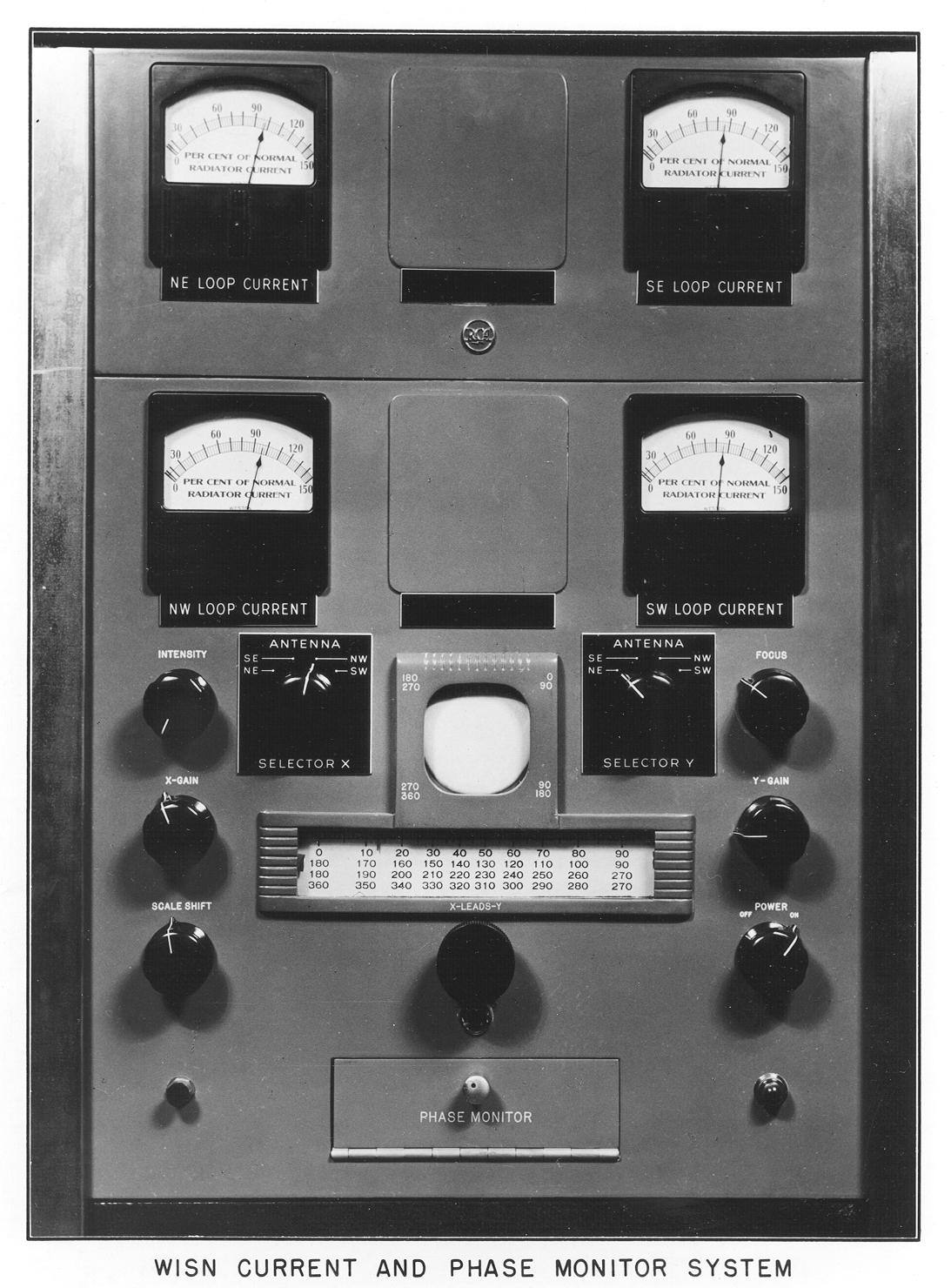
RCA AM antenna monitor
Old school antenna monitor. I have never seen one of these in operation, however, as I understand it, the scope was used to compare the phase relationship of each tower against the reference tower.
These pictures are of the WISN 1150 array was it was in 1941. Since then, the station has changed frequencies to 1130 KHz and increased power to 50,000 watts daytime/10,000 watts night time. The daytime array consists of six towers and the night time array has nine towers, all of which are 90 degrees.
Special thanks to John A. for sending these pictures along.
Cause the STL receiver to unlock. A quick peak at the thermometer this morning showed -12° F outside. Meanwhile, out on the island, the WICC TFT STL receiver decided that it was just too cold to continue and gave up the ghost. Weak sister. This created quite a bit of hiss on the WICC signal until about 11 AM, when the program director finally called me to tell me of the situation.
Via remote control, we switched over to the backup analog 8 KHz 15 KHz TELCO line, which sounds fine, given the talk radio program material.
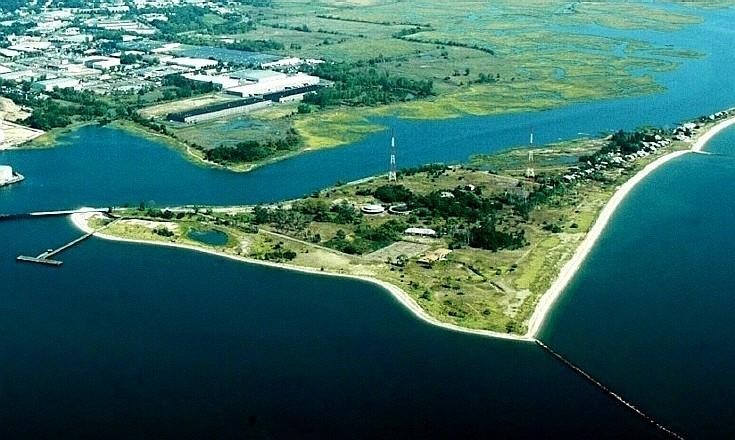
Unfortunately, vehicle access to the transmitter site is now gone. I have the option of taking the Bridgeport harbor master boat over to the dock and walking .9 miles, or driving to the Long Beach parking lot and walking 1.3 miles in order to repair it. This will likely be tomorrow, as the weather is supposed to be better, 36°F and light snow. Well, it is what I get paid to do.
Pleasure Beach, Bridgeport, CT
Regarding the analog 8 KHz TELCO line, that is an anomaly. These analog circuits where used to wire the country together, once delivering all of the network programming to affiliate stations before the widespread use of satellites. They require unloaded dry pairs and normally have an equalizer on the Z (far) end. Nowadays everything is digital, try and find a tech to repair one of these circuits when it goes down. Fortunately, this is a short distance circuit.