
Radios for Ukraine

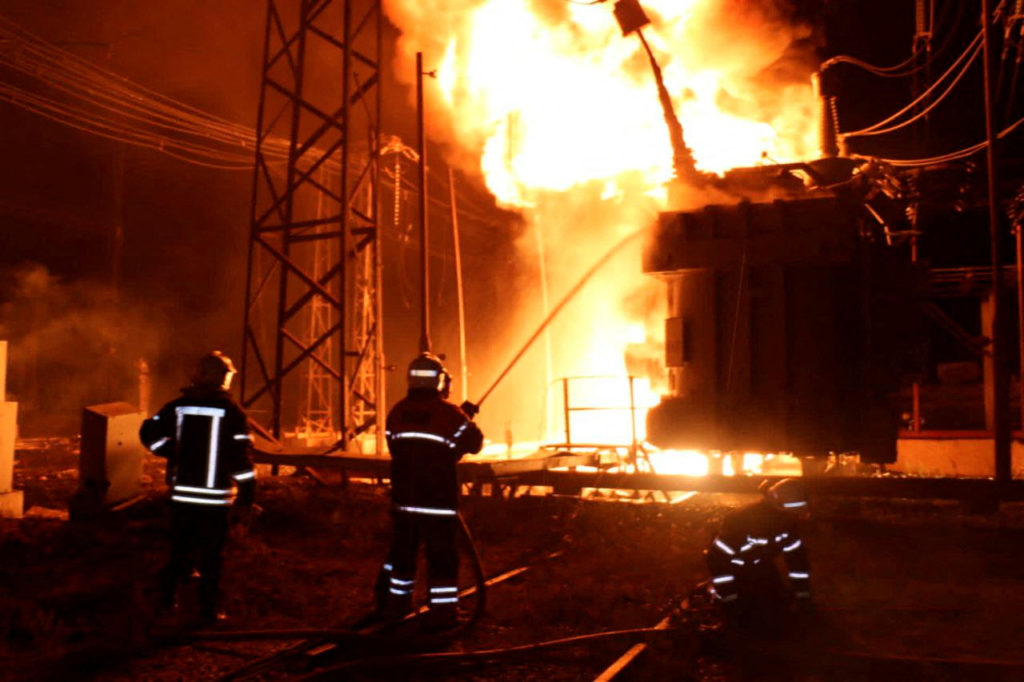
Firefighters work at a site of a thermal power plant damaged by a Russian missile strike, amid Russia’s attack on Ukraine, in Kharkiv, Ukraine September 11, 2022. Press service of the State Emergency Service of Ukraine/Handout via REUTERS ATTENTION EDITORS – THIS IMAGE HAS BEEN SUPPLIED BY A THIRD PARTY.

After having a nice Thanksgiving meal with my family, I was sitting around thinking about all the events in Ukraine. The situation over there is getting more desperate with each passing day. The wholesale destruction of the power grid is unfathomable to those of us sitting in our warm houses with full stomachs. It seems like these attacks will continue throughout the winter, which is charming.

With that in mind, I asked around with some people I know; would battery-powered radios help out? I was thinking about after any natural disaster here, most often battery radio is still the go-to source for information during a massive power outage. Where to get food and clean water, locations of warming centers, where to get medical treatment or just news in general. This is especially true if mobile data and internet service is affected. All of those things are currently happening in some areas of Ukraine. The short answer is; definitely YES! In fact, what was said was that for small villages and settlements, the need for small radios like this is urgent. Power restoration often happens first in large cities and settlements, while less settled areas can go for many days or perhaps weeks without power.

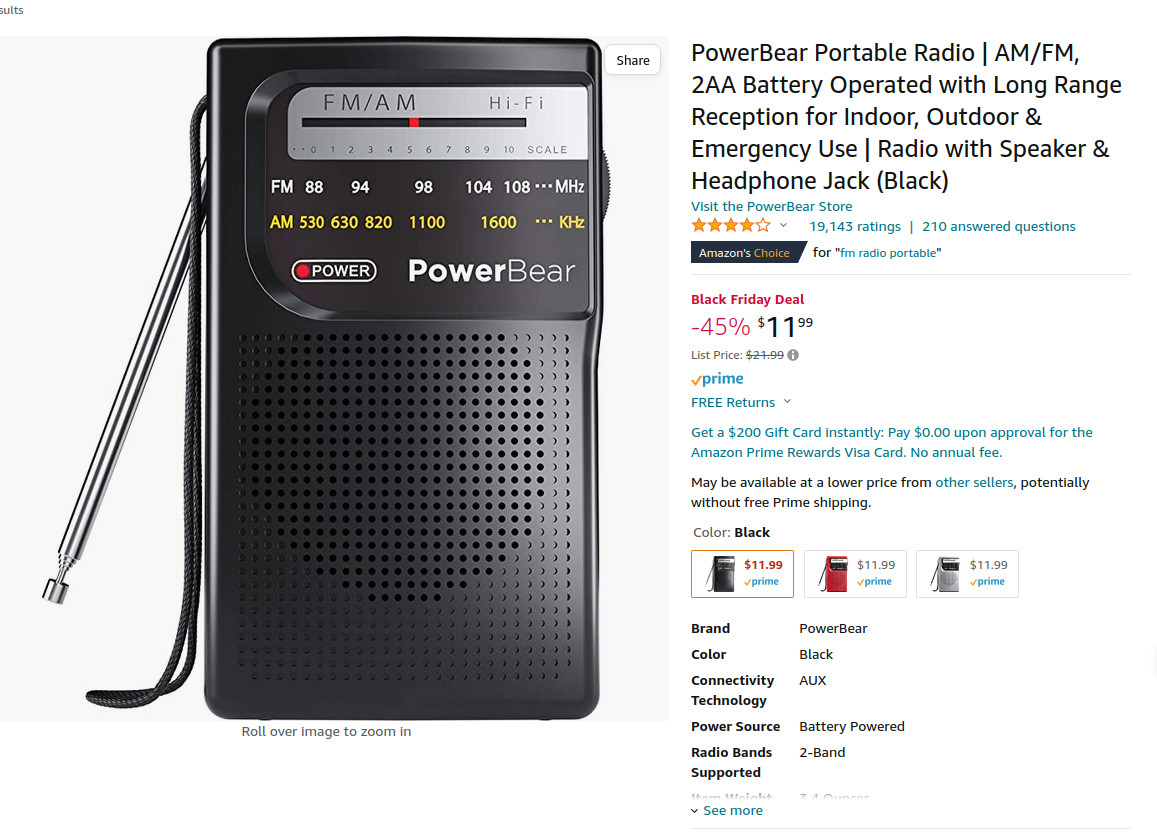
A little more research shows that the AM and FM bands in Ukraine are similar to ours with two exceptions; AM channels are spaced at 9 kHz and FM frequencies end in both odd and even numbers e.g. 96.0 MHz. Thus, radios need to be constant-tuning analog types. Other good features; small size and long battery life. Amazon has several models of radios in the 9-12 dollar range that run on two AA batteries. Something like this:

Portable radio

Along with a four or six-pack of AA batteries.

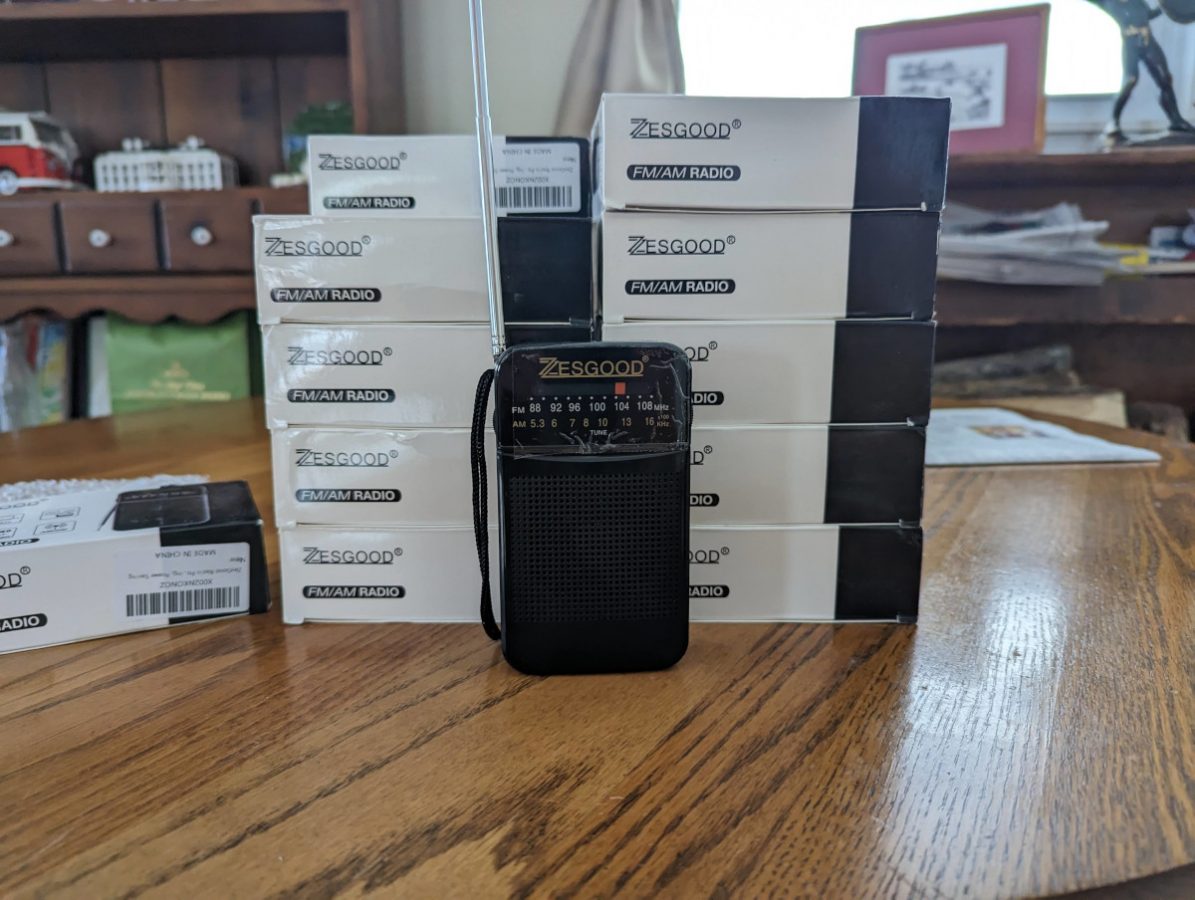
The next question is; how to get those radios from here to there? Knowing several people from that part of the world, I understand that care must be taken to ensure that the radios are not stolen in transit. I believe we have that sorted out. I have sent the first batch of 30 radios with batteries over. I should have confirmation of arrival in the next week or so. In the meantime, I have set up a GoFundMe campaign to send more portable radios over:

GoFundMe: Radios for Ukraine

If you would like to participate, any donation would be welcome. All funds (less the Go Fund Me fees) will be used to send portable radios and batteries to people in Ukraine.

UPDATE: So far, we have received about $730.00 from the GoFundMe campaign. All of the donations are highly appreciated! I have sent another shipment of radios off and there is another one on order.

Inexpensive, portable radios

As time and funds allow, I plan on sending about 80 radios by early January.

Disinformation and Shortwave radio

I came across an interesting article on the Engineering and Technology website:

How to defeat disinformation with short-wave radio

The takeaway is this:

“When you’re in an environment where infrastructure has been damaged, where transmission towers have been destroyed or where the power supply to the transmission equipment isn’t reliable and robust, such as some parts of Ukraine, then you end up with a fallback to older equipment, such as battery-powered radios,”

Griffiths, Sarah. “How to Defeat Disinformation with Short-Wave Radio.” RSS, The Institute of Engineering and Technology, 9 Nov. 2022, https://eandt.theiet.org/content/articles/2022/11/how-to-defeat-disinformation-with-short-wave-radio/.

That applies not only to war zones but also to natural disasters or other situations where widespread disruptions occur in communications or power distribution networks.

The article focuses mainly on the BBC’s efforts to get information to Ukrainians who may be listening on shortwave radios in occupation zones. That is an effective use of shortwave radio, to be sure. One problem with this idea; if there are no regularly used shortwave frequencies in the affected areas, who will have access to a shortwave radio? There may be a few receivers around in any given community, but the vast majority of people will not have access to them. The idea that a broadcast service can be neglected for years if not decades, then be quickly dusted off and put into use is simply not realistic. This applies to AM and FM radio as well.

New transmitter building for an old station

UPDATE:

What the site looks like now with the old building removed:

Putting the finishing touches on another transmitter site rebuild, this time in central NY. This station for many years used this rambling white residential-looking structure for both the studio and transmitter site:

Former studio and transmitter site for WDLA, Walton, NY

Unfortunately, over the years, the building has deteriorated beyond economical repair. A few years ago, the studio facility was moved to a new location in town. Now the transmitters are being moved to this repurposed cellular building:

Former NEXTEL building, now WDLA AM/FM transmitter site

This was purchased used from a local crane company, which had dozens of them on their lot after NEXTEL was absorbed by Sprint. During the permitting process with the town, they referred to it as a “Circular Use.”

They are actually nice buildings, coming prewired with a 200 amp single phase service, two working Bard HVAC units, ready-made coax entry ports, etc. My only complaint (so far), is the light switch timer. I like the idea, the lights get switched off automatically and are not left on for months at a time when nobody is at the site. However, the timer only goes up to 2 hours. Thus, when we were doing the installation work, periodically there would be an audible click, then everything would go dark. Not terrible.

Equipment racks and transmitters
Transmitters and equipment racks

There are also two other FM stations that have an STL transmitter here.

Rack placement and grounding work
STL equipment for two additional stations

All in all, an enjoyable project.

Material safety at Transmitter Sites

Recently, while working at a transmitter site built in the early 1940’s I noticed some fluorescent lights were out. Upon closer examination, I noticed that the bi-pin holder on one side of the bulb was damaged. This led to the removal of the fixture for repair, discovering these devices:

General Electric PCB Fluorescent lamp ballast

As this was made in Schenectady, NY, it is almost certainly original to the building. According to the EPA website, each one of these ballasts contains a capacitor with 3-4 ounces of PCB. There were 16 total fixtures, each with one ballast. The ballasts were removed and the fluorescent lamps were replaced with T8 120 Volt LED units. Any defective bi-pin lamp holders were replaced at the same time.

The danger posed by PCBs is minimal unless they leak or there is a fire. Partially burned PCB results in the production of dioxins, which are really bad. The old GE ballasts were properly disposed of.

The PCB capacitors and transformers were removed from the site many years ago. Other things that might have PCBs; are caulking and window glazing compounds.

That made me think; what else is around here? Several things came to mind.

Fluorescent bulbs waiting for disposal

The fluorescent bulbs themselves contain a small amount of mercury. This is not a problem unless the bulb breaks. If the bulb does break, the EPA recommends leaving the room for 15-20 minutes. Then carefully clean up the broken glass and place it in a plastic bag. Smaller particles can be cleaned up with the sticky side of masking tape or duct tape. Do not use a regular vacuum to clean up the broken glass, this will spray mercury around the room.

The fluorescent bulbs should be disposed of as hazardous waste.

Hot water pipes with lagging (insulation)

Asbestos lagging on the hot water/heating pipes. As long as the lagging is intact, there is no problem. All of the pipe lagging in this building is intact and in good shape. With asbestos, the problems start when things are disturbed. Any type of work on those pipes will require a mitigation plan. Something to keep in mind if there are any building modifications being planned.

If old-style pipe lagging like this is falling off or has been partially removed, it is best to have an asbestos survey done. Newer style lagging will be either closed cell foam, open cell foam, or fiberglass insulation with a cardboard cover.

Other things that can have asbestos are floor tiles and siding.

Halon fire supression system

The halon fire suppression system can be hazardous if one is in the building when it discharges. Of course, fire itself is also a hazard. It is something to be aware of if the alarm goes off.

Peeling paint

Since this building was constructed way before 1978, lead paint is likely on the walls. Not a huge problem unless it is chipping off and you accidentally eat the lead paint chips or inhale pulverized lead paint dust. To clean these up, use a vacuum cleaner with a HEPA filter. Alternatively, wear a HEPA filter and use a dustpan and brush. Do not use a regular vacuum cleaner.

If building modification work is being done in areas that may contain lead paint, a properly certified lead paint mitigation contractor should be hired to remove the hazardous material.

None of these situations pose a direct safety threat, however, one should be aware of these potential issues in their work environment.