Harris exits the broadcast industry

When they sold their Broadcast Equipment supply division to SCMS a few years ago, the handwriting was on the wall. Even so, it is a little surprising that they would exit broadcasting altogether.

The decision to divest in no way reflects the quality of the work Broadcast Communications performed in support of our customers and our company.  Harris simply determined that Broadcast Communications could provide higher value and operate more effectively under a different ownership model.

They are spinning the broadcast division off to a new owner rather than completely shutting down the operation.  In an e-mail received from Harris Morris, President of, Broadcast Communications Division, clients and customers will still receive support for existing products:

In the interim, Broadcast Communications will continue to be a part of Harris Corporation and operate business as usual. Our valued relationships, both longstanding and new, remain our top priority. The global Broadcast Communications team will continue to work diligently to ensure our commitment to our customers and partners remains steadfast, our execution to fulfill commitments is flawless, and our progress against strategic objectives remains focused.

Well, there you have it.  This affects such things as Harris transmitters (AM, FM, TV, HF) and support, Harris consoles and studio furniture (previously Pacific Recorders and Engineering or Pacific Research and Engineering, AKA PR&E), and Intraplex STL systems, among others.

What does all this say about the future of terrestrial broadcasting?

We live in interesting times.

Back when transmitters used to look like something

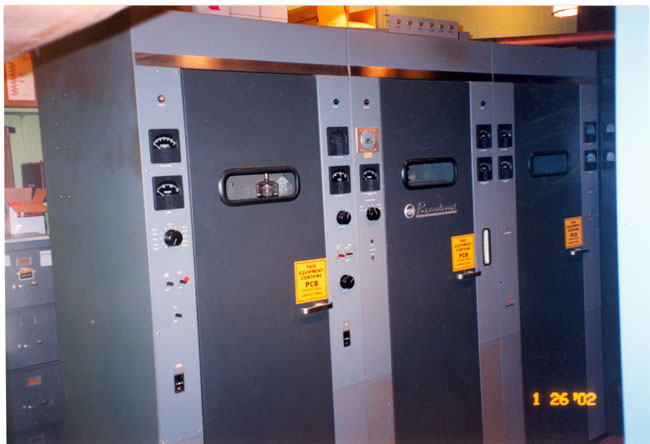
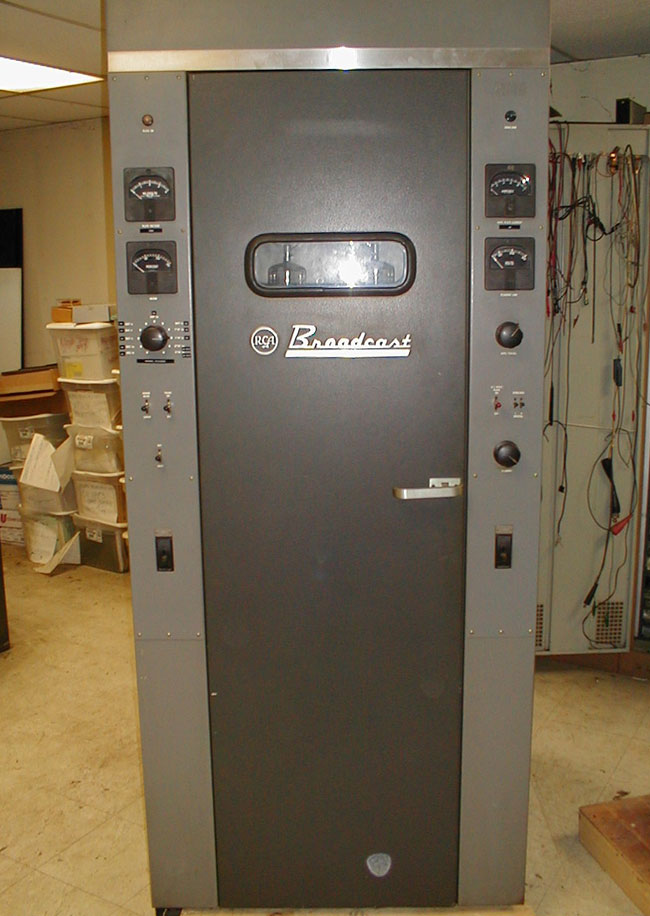
Other than a humming box, that is.  RCA broadcast, prior to the period in the seventies just before they went out of business, made some good-looking transmitters:

RCA BTA-10U AM transmitter

The Art Deco design was favored for a number of years, especially with the AM units:

RCA BTA-1AR transmitter, circa 1960

Some of these RCA transmitters are still in service as backups.

GE made the BT-25A, which was a 50 KW transmitter in Syracuse, NY for a few years. These units were very similar to the RCA BTA-50 transmitters.

GE BT-25-A
GE BT-25-A looking from the control cabinet

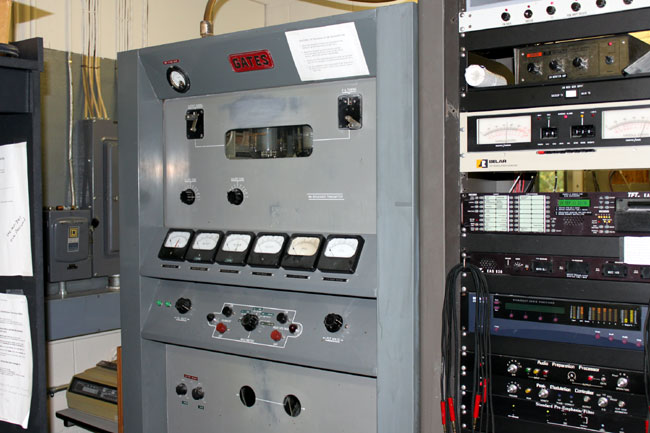
Gates of Parker Gates, pre-Harris, also made some classic transmitters:

Gates BC1J transmitter
Gates BC1J AM transmitter

I remember the BC5P had a similar look, with more transmitter cabinets.

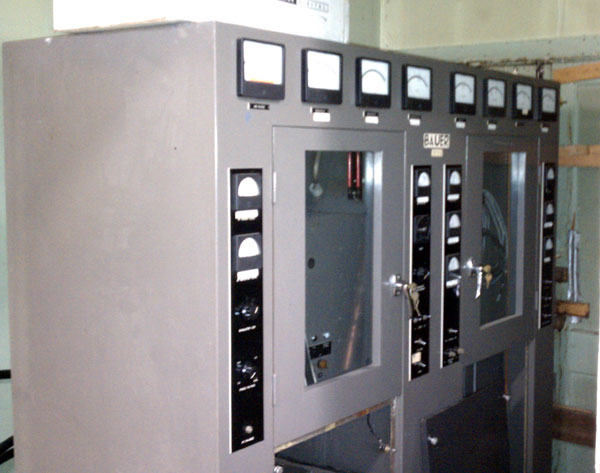
Bauer FB5000J AM transmitter

Fritz Bauer made a very solid AM transmitter.  Good looking, too.  We need more pictures of old transmitters and other hardware.

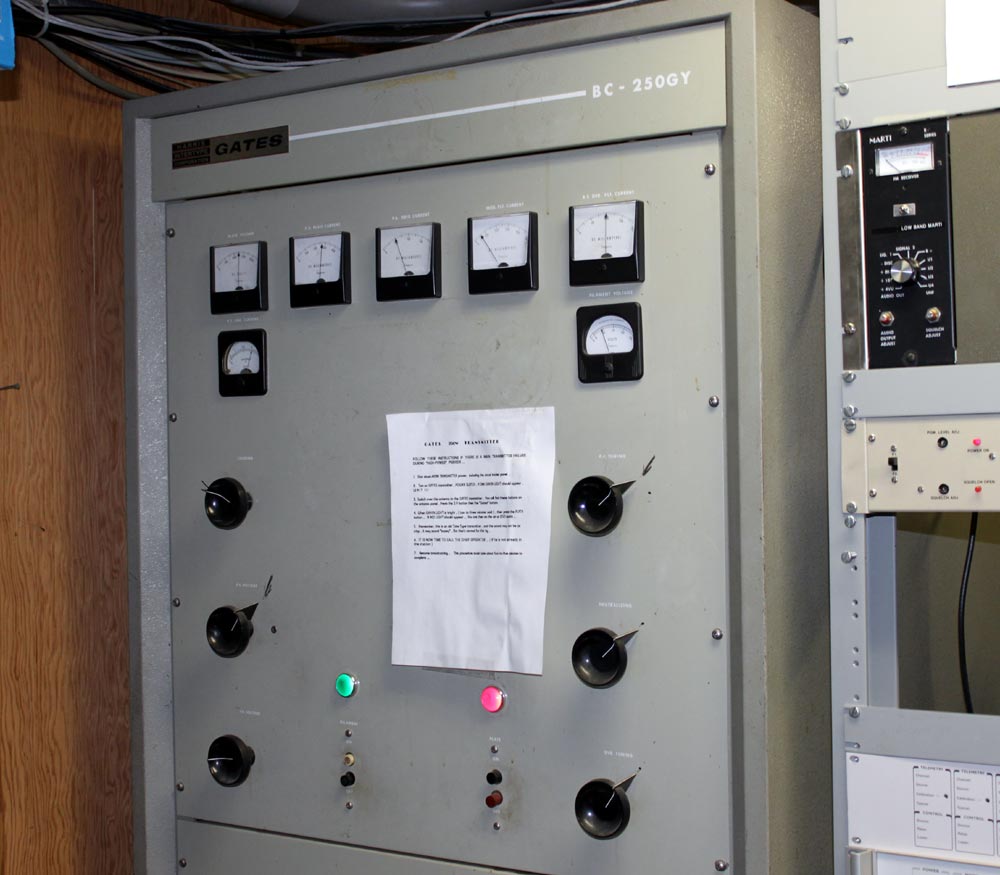
The Gates BC250GY transmitter

This transmitter is in service at WSBS, Great Barrington, MA as a standby. It was new in January 1975.

Gates BC250GY transmitter, WSBS Great Barrington, MA

This was running into the dummy load for testing, which we try to do periodically.

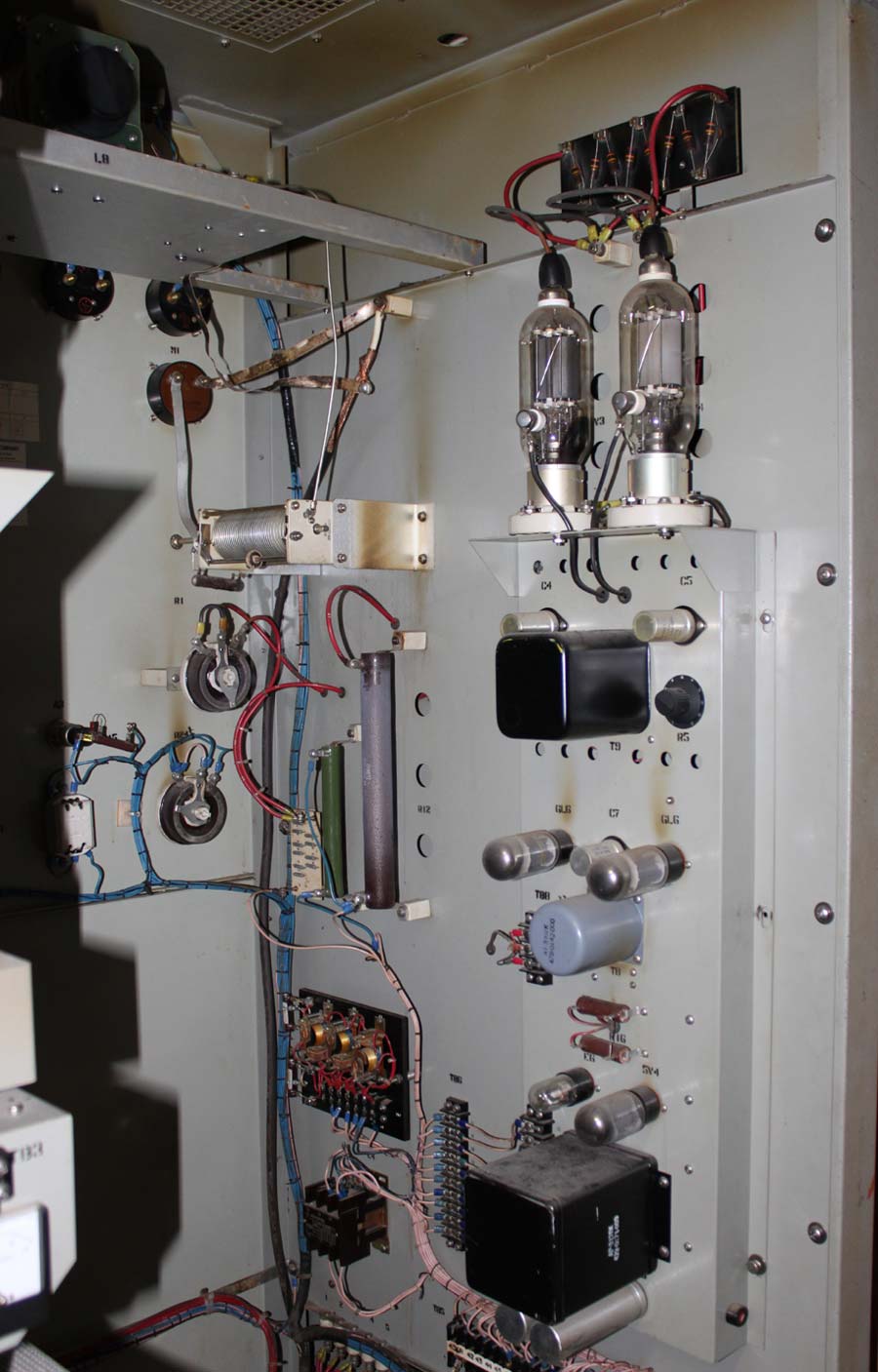
Gates BC250GY AM transmitter audio section

The audio section is a pair of 8008’s 810s running in parallel. This goes through a modulation transformer to the RF section.

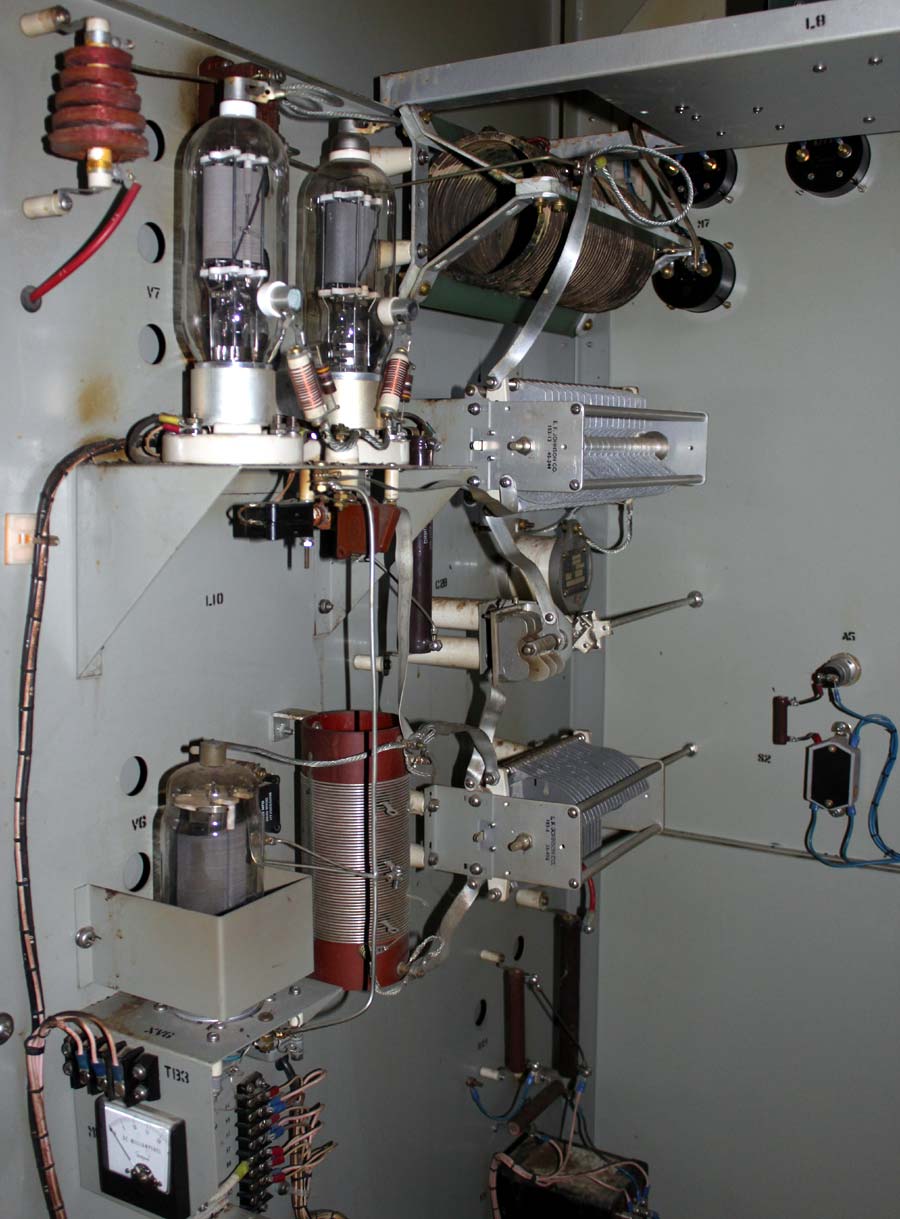
Gates BC250GY RF section

The RF section consists of another pair of 8008’s 810’s running parallel. The plate voltage for these tubes is 1,250 VDC which is fairly tame, all things considered. The transmitter is dirt simple 250-watt carrier power, 125% positive peak capable.  It is not the most efficient unit under the sun but it can still be repaired with off-the-shelf parts.

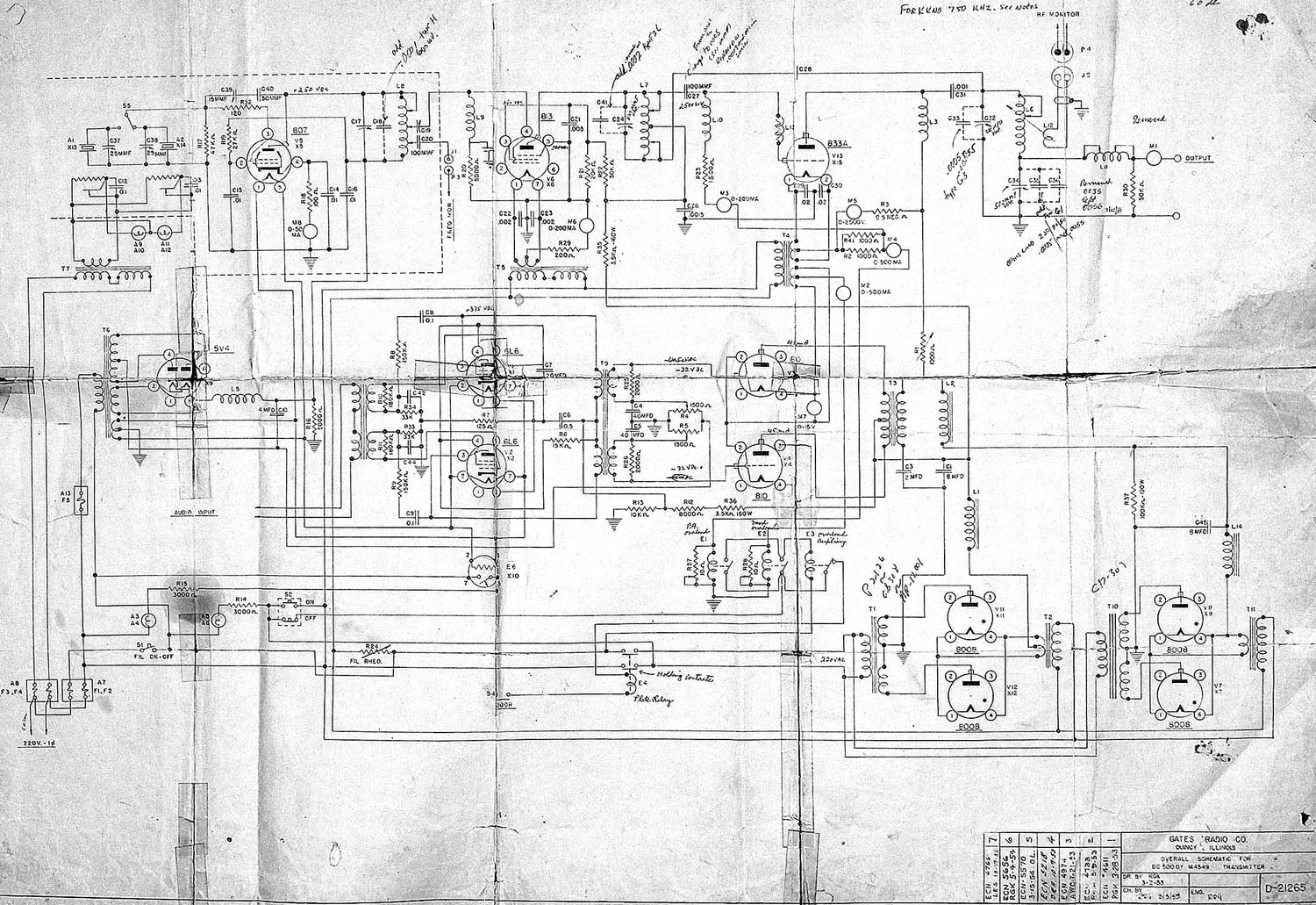
Gates BC250GY Schematic

This is a somewhat faded schematic.  The schematic shows a single 833A as the final, however, this particular transmitter has a pair of 810’s for the final, as shown in the above picture.  Ham radio operators love these things as they are easy to convert to 160 or 80 meters for AM phone use. The bigger brother to this unit is the Gates BC1G, which is also a pretty simple unit using 833A tubes in parallel with 3,500 VDC plate voltage.

The Harris MW1A

They say the first thirty years are the hardest, perhaps it is true. This Harris MW1A transmitter turns 31 this year:

Harris MW1A AM transmitter, WINE, Brookfield, CT

Truth be told, these are not bad units.  They have some quirks, however, the overall circuitry is simple, the design is simple enough and parts for repair are readily available.  They require regular infusions of RF transistors, but those are easy to change and are inexpensive to buy off the shelf from places like Mouser or Allied.

It is on the air as the main transmitter for WINE-AM in Brookfield, CT.   This is Harris’s first solid-state AM transmitter design, based on the work of Himmler Swanson.  This is not a PDM transmitter, rather, each module has RF transistors and audio transistors.  The output of all twelve modules is combined for a carrier output of 1,000 watts with +125% modulation.   Harris calls this PSM (Progressive Series Modulation), which is sort of high-level modulation.

This is also the only transmitter that I know of where blown fuses can cause damage to the RF devices.

The RF output transistors and audio transistors are still available from Harris.  Non-OEM parts for this include the 2N5038G for the RF transistors and the MJ15011 for the audio transistor.  Inside the front of the transmitter is a row of incandescent light bulbs that glow increasingly as the various transistors go bad.  At 1,000 watts carrier power, the ratio of PA volts to PA amps is 52.5/22.5 respectively.  If that ratio is off by any measure, there is a problem.

Original sales brochure for the MW1 (no A):

Harris MW1 sale brochure

Entire brochure is available here.

Harris MW1 interior view

The other thing with this transmitter is it is very sensitive to any kind of VSWR.  Any change in the output impedance will quickly make itself apparent.  My Harrisburg MW1A had two ATU settings, one for winter and one for summer.  It was a slightly tall tower on 1230 KHz, thus any change in the ground system (e.g. snow cover) would upset the tower base impedance.

The other thing that goes bad is the large Rotron fan at the bottom of the cabinet.  They go bad about every 10-15 years or so.

The owner has spent some money on this particular unit, rebuilding and replacing several modules with new transistors, etc.  Will it last another thirty years?  Depends on if the RF and audio devices remain in production.