
Commercial Radio Networks changing Satellites

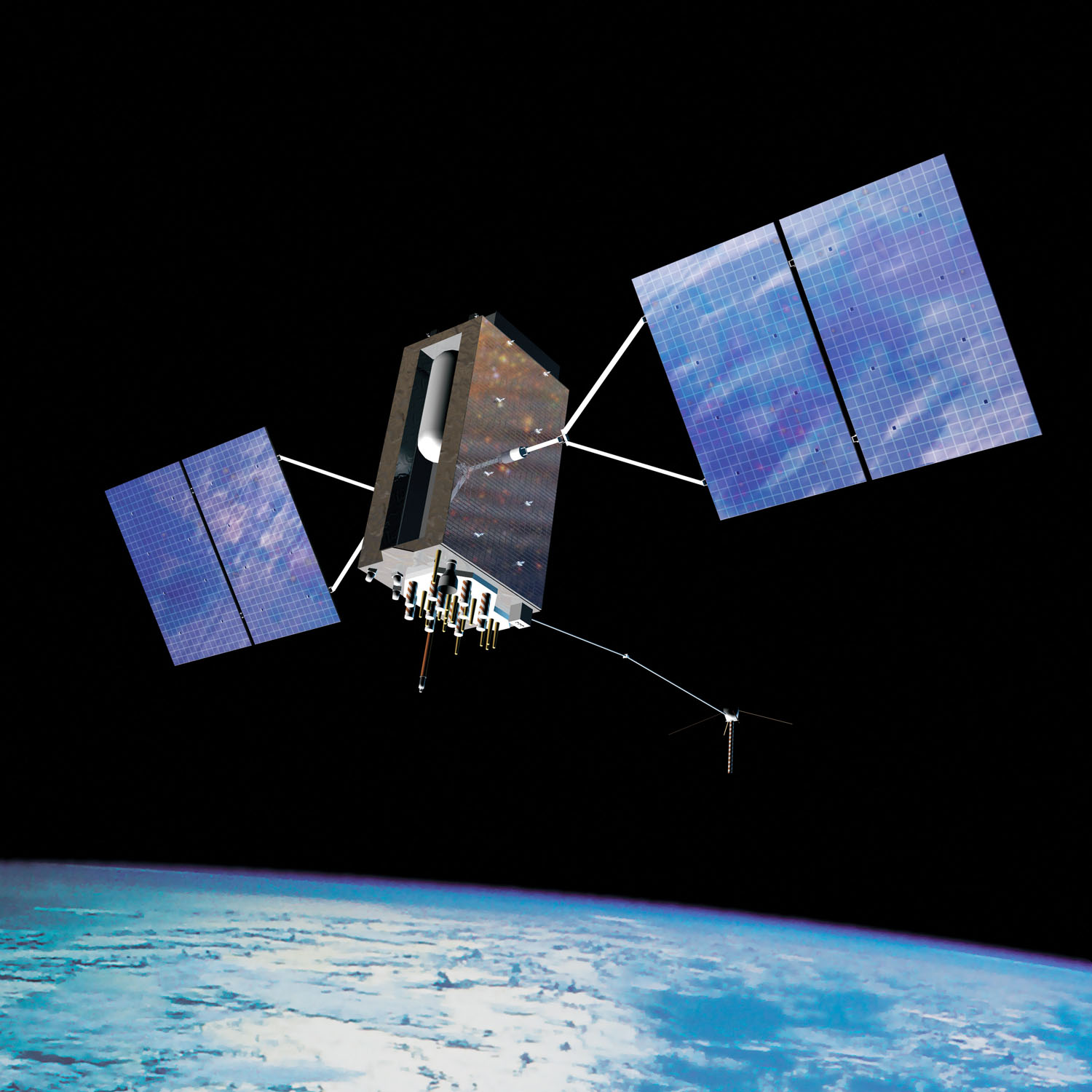
Lockheed Martin A2100 series satellite

Westwood One, Premiere, Skyview Networks, et al. will be changing their satellite from AMC-8 at 139° W to AMC-18/SES-11 at 105° W longitude.  More from AMC8transition.com. There are several considerations for this move:

  • Dish design and two-degree compliance
  • Obstacle clearance
  • Transponder frequencies
  • Timing

Two degree compliance is going to be an issue for many stations.  Those old 2.4 and 2.8 meter mesh dishes are going to have issues with 105º West because that is a very crowed part of the sky.  From New York, it looks something like this:

Satellite Longitude Inclination Azimuth Elevation Distance
TELSTAR 12 (ORION 2) 109.21° W 0.491° 227.46° 31.09° 38596.91 km
MSAT M1 107.72° W 7.430° 231.14° 38.16° 38011.55 km
ANIK G1 107.33° W 0.013° 225.25° 31.96° 38518.62 km
ANIK F1 107.31° W 0.020° 225.22° 31.95° 38513.76 km
ANIK F1R 107.28° W 0.052° 225.22° 32.02° 38510.37 km
ECHOSTAR 17 107.11° W 0.019° 225.01° 32.08° 38503.29 km
AMC-15 105.07° W 0.025° 222.76° 33.28° 38400.67 km
AMC-18 104.96° W 0.027° 222.64° 33.34° 38400.16 km
GOES 14 104.66° W 0.198° 222.21° 33.38° 38394.57 km
AMSC 1 103.44° W 9.810° 228.37° 43.31° 37616.42 km
SES-3 103.01° W 0.041° 220.41° 34.42° 38307.12 km
SPACEWAY 1 102.90° W 0.032° 220.25° 34.43° 38299.87 km
DIRECTV 10 102.82° W 0.017° 220.17° 34.51° 38292.86 km
DIRECTV 12 102.78° W 0.035° 220.12° 34.50° 38292.93 km
DIRECTV 15 102.71° W 0.009° 220.05° 34.56° 38290.50 km
SKYTERRA 1 101.30° W 3.488° 219.07° 36.33° 38131.32 km
DIRECTV 4S 101.19° W 0.011° 218.24° 35.35° 38228.26 km
DIRECTV 9S 101.15° W 0.014° 218.18° 35.36° 38228.57 km
SES-1 101.00° W 0.016° 218.02° 35.45° 38217.56 km
DIRECTV 8 100.87° W 0.036° 217.88° 35.54° 38211.02 km

Generally speaking, dishes need to be 3.7 meters (12.14 feet) or larger to meet the two-degree compliance specification.  For many, this means replacing the current dish.  This is especially true for those old 10-foot aluminum mesh dishes that were very popular in the 90s because of the TVRO satellite craze.

If the existing dish is acceptable, then the next issue may be obstacle clearance.  Generally speaking, the 105-degree west slot (south of Denver) will be easier to see that the 139-degree west slot (south of Honolulu) for much of the United States.  Still, there may be trees, buildings, hills, etc in the way.  Site surveys can be made using online tools (dishpointer.com) or smartphone apps (dishalign (iOS) or dishaligner (Android)).  I have found that I need to stand in front of the dish to get the best idea of any obstacles.  While you are there, spray all the dish-holding hardware with penetrating oil like WD-40, Rostoff, or something similar.  Most of these dishes have not moved since they were installed, many years or decades ago.

Transponder frequencies will not be the same, so when the dish is aligned to the new satellite, those frequencies will need to be changed.  The network satellite provider will furnish this information when it becomes available.  This generally requires navigating around various menu trees in the satellite receiver.  Most are fairly intuitive, but it never hurts to be prepared.

The window of opportunity is from February 1, 2017 (first day of AMC-18) until June 30, 2017 (last day of AMC-8).  Of course, in the northern parts of the country, it may not be possible to install a new dish in the middle of winter.  It may also be very difficult to align an existing dish depending on how bad the winter is.  Therefore, the planning process should begin now.   A quick site evaluation should include the following:

Network Satellite Receive Location Evaluation

Satellite:

Satellite Location:

Dish is 2°compliant? (Y/N)

Distance to receiver location:

Dish Latitude:

Dish Longitude:

Dish Azimuth (T):

Dish Azimuth (M)

Dish Height AGL:

Dish Elevation:

Observed Obstacles:

(permanent or removable? Owned or not owned?)

Comments:

A .pdf version is available here. Based on that information, a decision can be made on whether or not to keep the old dish or install a new one.  We service about 25 studio locations and I am already aware of three in need of dish replacement and two that have obstructive trees which will need to be cut.  This work cannot start too soon.

Radio? Not interested

With the pending LPFM filing window in October, I decided that perhaps I could spread the information to some local groups that might want to put a community radio station on the air where I live.  Back over a decade ago, there were a couple of local commercial AM and FM stations in the area, but they moved out of town to a larger city some 24 miles to the east.  If local legend is to be believed, the AM station was very popular, with its studios and offices over the local pharmacy.  That station is now running 24/7 comedy, which given the area, is ironic almost beyond words.  As it stands now, this is one of those rural areas that, on paper, looks well served by several different radio stations.  Truth is, there are radio signals receivable here, but there is no local radio.  The last time anyone from those previously local stations had a meaningful thought about the respective Cities of License was months if not years ago.

With all this in mind, I first approached a local community non-profit group.  They seemed mildly interested but expressed doubt about finding a studio location.  Their basic take was, we can help, but we want others involved.  Seemed to be a lukewarm, but understandable and not totally unwarranted response.

I then approached the local school board.  The idea was to get the high school involved with the station broadcasting sports events and teaching kids how to do play-by-play and perhaps other types of radio shows.  They fainted interest at first, then decided that they didn’t have the staff to deal with a broadcast program and there were other excuses like “liability issues.”

I then approached the local governments (two different towns) who were almost openly hostile to the idea.  While they didn’t say as much to my face, they rather implied that it would be a waste of time and that the town(s) were not interested.

I have approached other local groups, which don’t seem to be interested at all.

Has radio lost its mojo with the local population?  Are we who still remain in the radio business simply fooling ourselves into thinking that somehow this is important?  I don’t know.

The hazards of rural LPFM; are large areas, few people, and generalized indifference.

More news talk migrates to the FM band

Once a bastion of the AM dial, News and or News/Talk format radio stations seem to be springing up on the FM band more and more often.  The original premise for creating talk radio on the AM band was the lower bandwidth and reduced (or perception of reduced) fidelity when compared to the FM band lent itself to non-music programming.  The reality is that receiver manufacturers never carried through on the NRSC-2 technical improvements, and AM receivers reproduced thin, low-quality audio.  I digress, the story goes, the FM band was great for music and the AM band did well with information and talk.

Of course, there were always a few exceptions to those general rules, but for the most part, that pattern held true until about 2009 or 10.  That is when AM station’s programming began to be simulcast again (everything old is new again) on FM stations and HD-2 subchannels.   It would be interesting to examine why this is so and what it means to the radio business as a whole.

The general trend in the music industry has also been down.  This is important because record labels and the radio business used to go hand in hand.  Record labels had the job of separating the wheat from the chaff.  Those groups or artists that had the talent would be given recording contracts and airplay.  With exposure, they would become more known, sell more recordings, record more songs, etc until they peaked and began to decline.  Radio stations prospered under this arrangement because they took on none of the risks while getting huge vast quantities of program material to playback, and charging advertising fees for spaces within that programming.

So far so good.

Then, two things happened:

  1. The communications act of 1996
  2. The Internet

The communications act of 1996 forever changed the way the radio business was run in this country.  No longer were there several thousand individual stations, the most influential of which resided in markets #1 and #2.  Instead, there were conglomerations of stations run out of Atlanta, Fort Worth, and a dozen or so other medium-sized cities.  No longer were stations competing head to head and trying to be the best and serve their respective audiences; rather, station A was positioned against station B to erode some of its audience so that station C could get better national buys from big ad agencies.  No longer would possible controversial artists like the Indigo Girls get airplay on some groups.  Songs were sanitized against possible FCC indecency sanctions, morning shows became bland and safe, and radio on the whole became a lot less edgy as big corporate attorneys put the clamps on anything that would invite unwanted exposure.

The last great musical genre was the Grunge/Seattle Sound of the early 1990s.  Those bands somehow mixed heavy metal, obscure mumbled lyrics, flannel shirts, and ripped jeans into something that the dissatisfied Gen Xers could understand and appreciate.  By 1996, this had morphed into “Modern Rock,” and carried on for several years after that, to fade out in the early 00’s.  Since that time, there have been no great musical innovations, at least on the creative side, other than the ubiquitous Apple computer and Pro Sound Tools software.

The internet greatly changed the way recording labels did business, mainly by eating into their bottom line.  This had the effect of circling the wagons and throwing up a protective barrier against almost all innovations.  The net result was fewer and fewer talented artists being able to record, which pushed those people into smaller, sometimes home-based recording studios.  While those studios can put out good or sometimes even excellent material, often the recordings lack the professional touches that a highly trained recording engineer can add.  Add to this the mass input of the internet and no longer are bands or artists pre-screened.  Some may point to that as a good development with more variety available for the average person.  Perhaps, but the average person does not have time to go through and find good music to download from the iTunes store.  Thus, a break developed in the method of getting good, talented artists needed exposure.  Youtube has become one of the places to find new music, but it is still a chore to wade through all the selections.

Thus, when FM HD-2 channels came into being, there was little new programming to be put into play.  HD radio was left to broadcast existing material with reduced coverage and quality than that of analog FM.  That trend continues today where now analog FM channels are being used to broadcast the news/talk programming that used to reign on AM.

What will happen next?  If Tim Westergren has any say, the internet (namely Pandora) will take over and terrestrial radio will cease to exist.  Current trends point solidly in that direction, although I think Tim is a little ahead of himself in his prediction.

News/Talk on the FM dial point not to an attempt to shift the wheezing, white, (C)onservative/(R)epublican programming to a younger demographic, who will, if I am any judge of history, remain unimpressed.  No, rather, they are running out of other source material, simulcasting syndicated talk radio is cheap, lean, and a good way to make money without having to pay actual salaries.

Comparison: Over the air listening on FM vs. streaming audio on Android phone

I have had my HTC Android phone for just about a year now, which is enough time to learn the device’s strengths and weaknesses.  I have done a fair amount of listening to the audio, watching youtube videos, and playing .mp3’s to give me some idea of the technical quality and operational issues.  Like anything else, these are general observations.  Some radio station’s streams sound better than others due to the effort those stations put into audio quality.

The listening test was done with a set of Sony earbuds, which sound far better than the small speaker built into the phone.  For ease in streaming audio, I used the TuneIn Radio application for Android by TuneIn Inc.  For this test, I only listened to FM broadcast stations, both streaming and over the air.

The over-the-air tuner is the stock factory radio in my 1997 Jeep Cherokee.  I would rate the radio average in every way.  The actual tests were done driving around on interstate highways and other major roadways.  There were a few instances where I had to give up on the Android phone due to traffic and driving considerations.

My Android phone has an FM tuner installed in it, however, it is really useless.  I get only local stations, and then their audio is all hissy and for the most part unlistenable.  The HTC FM tuner uses the headphone wire for an antenna, which may be a part of the problem.

Here is a chart of my observations:

Category evaluatedAnalog FM radioStreaming via Android
Overall Station SelectionOnly those stations that can be receivedAny station that is listed in TuneIn Radio App*
Almost unlimited, worldwide*Can press the preset or scan buttons on the radio without taking eyes off the road*Only those receivable signals limit it to a few well-programmed stations, the rest being garbage
Available formatsOnly those stations that can be receivedAny station that is listed in TuneIn Radio App*
Ease of useVaries depending on location, and can be quite annoying, especially in mobile environment.  App also occasionally locks up and needs to be restartedRequires squinting at a small screen and pressing several little boxes to get to the desired station
Annoying commercial avoidanceSee above on preset and scan buttons*Very difficult to change stations quickly
Quality of soundGood to excellent, depending on the station’s signal strength*Fair to good, depending on the bit rate and network congestion, some stations sound very good and some can sound very bad
Drop outsOccasional picket fencing with distant stations, otherwise, non-existent*Requires data plan with smartphone, some plans cap data amounts, can be fairly expensive
ExpenseFree, radio came with the vehicle, no paid data service needed*Requires data plan with smartphone, some plans cap data amounts can be fairly expensive
Overall enjoymentGoodGood

*Wins category.

I am having a difficult time assigning the overall enjoyment as well as an overall winner.  On the one hand, it was very cool, driving down I-84 in Danbury, CT listening to Howlin’ Wolf on New Orleans’ non-commercial Jazz station, WWOZ.  On the other hand, it was a right pain in the ass to get to that point, in rush hour traffic.  By the way, WWOZ’s web stream is excellent, audio-wise.

From safety and ease of use, the FM radio in the Jeep wins hands down, I just don’t know how many more times I can listen to the same Led Zeppelin song on i95 (that used to be I-95, frankly I thought Steve Jobs copyrighted the lower case i).

The dropouts were also a concern, mostly taking place in the section of I-84 going through Putnam County, NY.  I don’t know if my cell carrier needs to beef up its data coverage in that area, or if there were just a great many users on the network checking their e-mail, etc.

If they could sort out the ease of operation problem and get rid of the dropouts, streaming audio over HTC Android would win hands down.