EAS/CAP continued

Lots of ink has been spilled about the new CAP (Common Alert Protocol) implementation and what it all means.  Since the FCC started the six-month CAP clock ticking on September 30th of last year, they have extended the deadline by six months to September 30, 2011.

The idea of upgrading EAS is a good one.  When EAS replaced EBS in 1997 it was supposed to do away with the over-the-air relay system also known as the daisy chain.  This was left over from the 1960s CONELRAD system implemented by Kennedy.  That replacement never occurred and stations today are still monitoring other broadcasting stations for their EAS alerts.  The daisy chain was and still is the source of all EBS and EAS failures.

CAP is supposed to eliminate that weak link by allowing the EAS unit to access government IPAWS message servers directly, allowing FEMA to automatically send out alert messages to designated areas.  This has some libertarians in an uproar, as they see government intrusion and taking over privately owned radio stations to broadcast emergency information as a form of tyranny.   In as much as the definition of “emergency message” has not been codified by FEMA in any of their information, they may have a point.  In the past, the general definition of emergency communications was those that were pertaining to imminent threats to the safety of life and property.  According to Executive Order 13407, Public Alert and Warning System, the purpose is to:

…have an effective, reliable, integrated, flexible, and comprehensive system to alert and warn the American people in situations of war, terrorist attack, natural disaster, or other hazards to public safety and well-being…

Which is certainly much broader in scope.  How does one define a hazard to “well-being?”

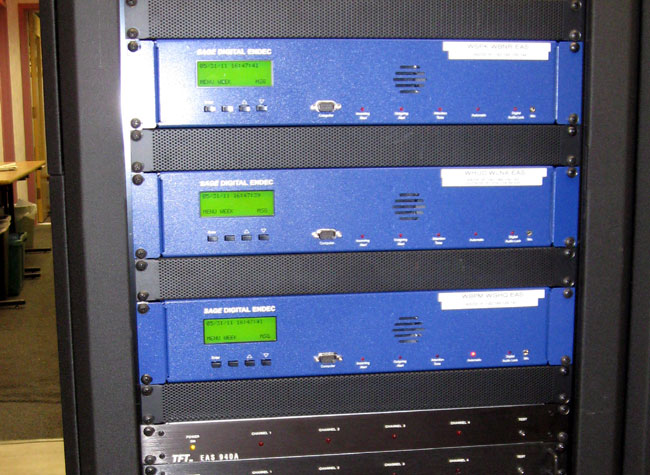
SAGE alerting systems have completely revamped their ENDEC to include CAP 1.2.  It uses the internet to connect to IPAWS servers and receive CAP messages.  As the SAGE ENDEC owners manual notes, participation in local and state-level alerts is at the discretion of the station management, as regulated by the current version of FCC Part 11.  National-level participation is mandatory:

Participation at the national level is mandatory for most broadcasters.  You may petition the FCC to become a “Non Participating National” station, but you must still receive and broadcast the EAN code, and then leave the air.  These requirements are always evolving, refer to the FCC rules, in particular CFR 47 Part 11 for details.

Oftentimes, it is the local emergencies that are the greatest and most immediate threats to human life; the tornado, the tsunami, etc.  Those are the most pressing threats, not the national-level alerts, which were implemented in the 1960s to warn of a major attack from a foreign country, something not very likely these days.

SAGE ENDEC
SAGE ENDEC

Further, the internet has proved to be less than reliable when trouble occurs.  During the terrorist attacks on 9/11/2001, dial tone, cellphone, and internet service for much of lower Manhattan were disrupted because the TELCO facilities were in the buildings that were destroyed.  Most internet services rely on wired or fiber optic services provided by TELCO or cable companies, which can be affected by power outages, damaged infrastructure, and so on, which would likely occur in a major emergency.

It does not seem to be the most robust method for the distribution of emergency messages.

Nice work, if you can get it

I have been to many, many transmitter sites.  They range from mountaintop sites in NY and VT to flat fields with tall towers in Florida to coastal or wetlands AM sites.   One site in Massachusetts was located in a state park near Westover AFB.  It was formerly the microwave relay site for the Northeast Command and Control bunker, now reused as an FM site for WRNX, Amherst.   Access to that site required walking about a mile and a half on a hiking trail, often carrying things like a shop vac, garbage bags, or other stuff.  Walking in the woods carrying a shop vac will get you some funny looks by fellow hikers.

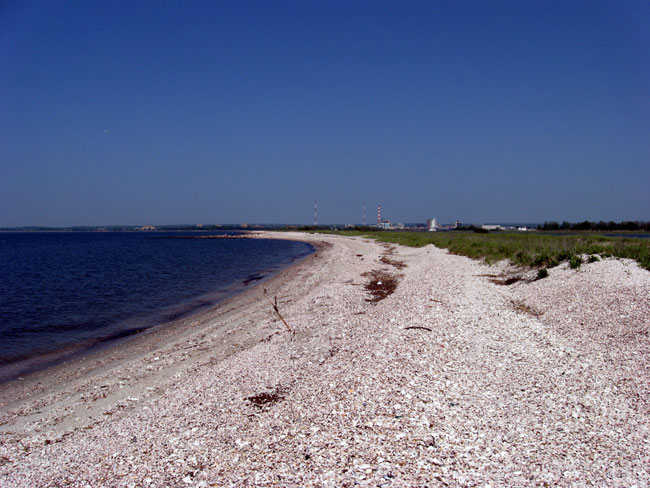
Yesterday was my Bridgeport, CT day and I took the time to head out to the WICC transmitter site.  There are two ways to get there, one can call the Bridgeport harbor master or harbor police and catch a ride via boat, which is fun.  Or one can walk down the beach from the long beach parking lot.  If it is not an emergency or nighttime access, I like to walk down the beach.  It is about one mile either way.  I normally bring my backpack with some basic tools, water, and a sandwich.

WICC towers in the distance

I have been working with another engineer who complains about this.

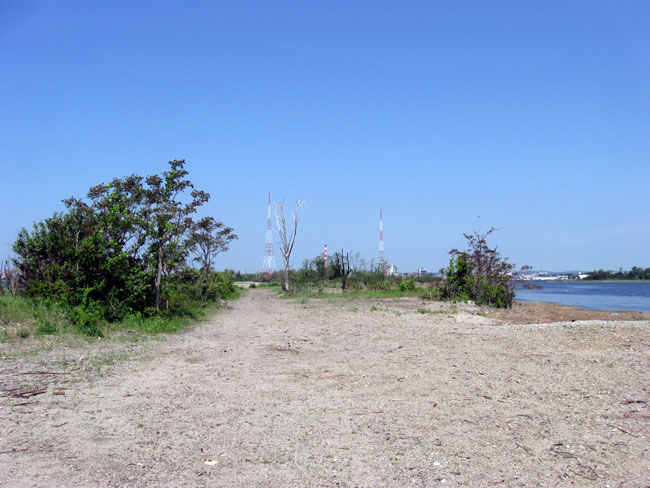
Pleasure beach former cottage area

Now that the cottages are gone, it is a very pleasant walk.

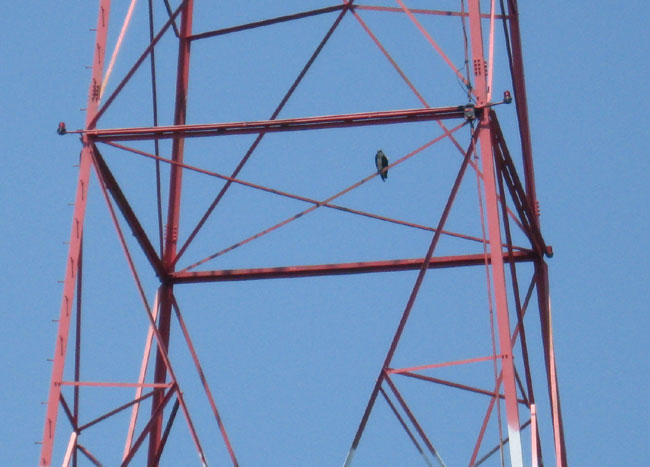
Osprey on WICC north tower

This Osprey apparently didn’t get the memo:  Radio towers are the arch-enemy of birds, actually sitting on one and using it as a good place to scout for lunch is akin to sleeping with the enemy.

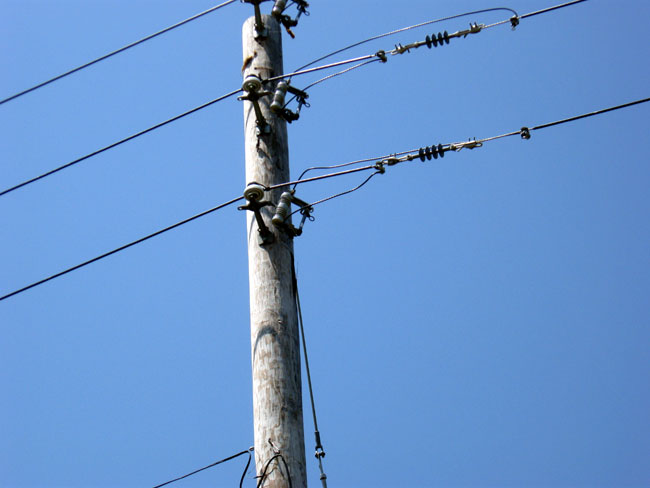
United Illuminating pole mounted circuit breakers
United Illuminating pole-mounted circuit breaker

Circuit breakers on new three-phase power circuit installed by United Illuminating last fall.

I wouldn’t want to hike down this strand of beach at night or in a thunderstorm, but on a nice day, it is a pleasant stroll.  There are far worse transmitter site access problems.  It is a pain if any equipment needs to be taken in or out, that requires some special equipment.

Contract engineering, vehicles and the price of gas

One of the major differences between working as an employee and working for myself is the use of my car.  When I worked out of a central office, going to work meant driving there, then using the company truck to drive to the outlaying studio or transmitter site locations.  Now that I work for myself, I drive either my personal vehicle or the truck that belongs to my company.

Our radio clients are in several states in the northeast and covering all that territory on a weekly or monthly basis requires a lot of driving.  For example, it is 100 miles exactly, one way from my house to Bridgeport, CT.   Depending on what is going on, I can take the 1997 Jeep Cherokee, which has over 210,000 miles on it and gets about 21 miles per gallon, or the 2004 Chevy Silverado 1500 pickup truck, which has 68,000 miles on it and gets about 16 miles to the gallon.  With gas being about $4.00 per gallon, it’s choice of shooting myself in the leg or shooting myself in the foot.

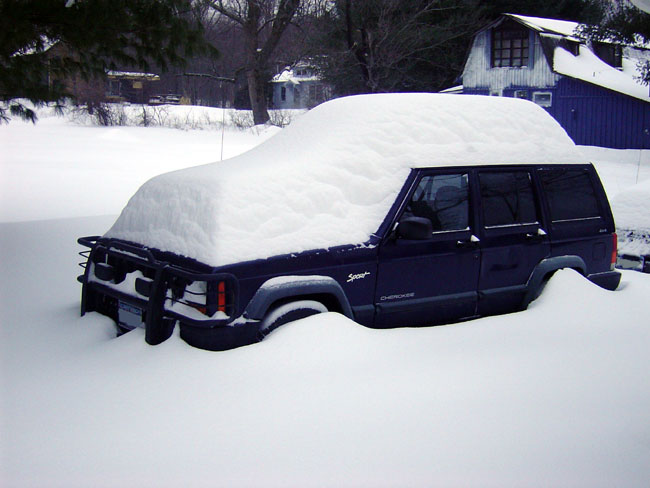
1997 Jeep Cherokee in early April snowstorm
1997 Jeep Cherokee in an early April snowstorm

The Jeep I paid cash for in 1999 and I have kept it in good working order.  It is, by far, the best snow vehicle I have ever owned.  I don’t know exactly why that is, it has simple four-wheel drive (really two-wheel drive because of the full slip differentials).  I imagine the heavy cast iron inline-six engine over the front wheels has something to do with it.  This is an important distinction, as many off-air emergencies happen in the worst weather.  It is simple and rugged and wearing out.  I keep saying to myself, the first major problem, e.g. transmission or engine, I am having it towed to the junkyard.

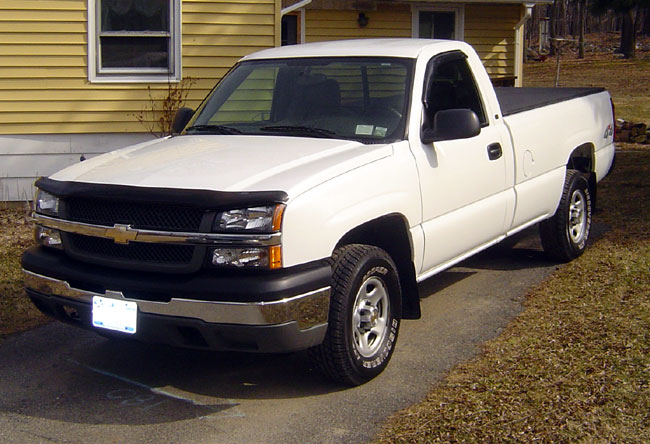
Work Truck, Chevy Silverado 1500

The Chevy truck is owned by my company, I purchased it three years ago when I started the solar installation company.  It has the 5.8 L V-8 engine with the tow package and the “pre-snowplow package.”   It has real four-wheel drive with limited slip differentials front and back.  It handles like a tank.  I use this when I need to haul tools, materials, parts,  junk or whatever.  I have portable parts bins and tools that I can move from one vehicle to another, as needed.

The problem with these vehicles is the expense of operating them.  I generally try not to take gas payments from the company I work for, as I am not an employee of that company, I’d rather take the mileage write-off.  Still, there are times, especially at the end of the month, when I am filling up the pickup truck and watching the gas pump turn over the $100.00 mark, that I have to cringe.

Toyota Yaris 5 door hatchback, courtesy of wikimedia commons
Toyota Yaris 5 door hatchback, courtesy of Wikimedia Commons

Perhaps the next personal vehicle will be something more fuel efficient, like a Toyota Yaris hatchback.  They look pretty reliable and get good gas mileage.  If I need to take the big truck, I still have it.  I have just three concerns:

  1. I am fairly tall; will I look like a weenie getting in and out of this thing?
  2. I drive a lot of interstate miles; if I get into an accident will I get squashed like a bug?
  3. Will all my stuff fit in the back of this thing?

That being said, it would be awfully nice to get 36 miles per gallon…

I will listen to the shortwave broadcast, but not the web stream

Here’s a secret to all those broadcasters that think streaming online is the answer to all the world’s problems: It isn’t all that.  I used to like listening to Radio Netherlands (Radio Nederland) on the shortwave.  They have some excellent programs like The State We’re In.  One problem, the only way to get it these days here in the US is via Webstream.

The same for many other world broadcasters like the BBC, CBC, HCJB, et. al.  Most of these former big shortwave broadcasters have greatly reduced their operating hours or left the airwaves all together.

Issoudun HF antenna, courtesy wikimedia

Streaming content on the world wide web is not broadcasting, nor can the quality and reliability be compared.  Web streaming is far less reliable and offers lower quality than does HF broadcasting.  The former broadcasters who have abandoned the airwaves to the likes of Radio China International will say otherwise, but that is their spin on the situation.  Of course, using and maintaining high-powered broadcast transmitters is expensive, especially for governments that are faced with tough financial decisions.

First and foremost, streaming requires that I use my computer as a radio while I am trying to do other things on it.  I bit of background on my computer; I have an 8-year-old Dell Inspiron 5150 that I purchased when I was working on my degree.  When I got it, I asked our IT department guys what was the best course for buying a new computer.  Their answer was to get the best, fastest processor available because everything else can be replaced/upgraded.  I did just that, with a 3.06 GHz intel mobile P4.  I have replaced the hard drive with a 200 GB unit and upgraded the RAM to 2.2 GB.  The keys have most of the letters worn off, it has very distinctive wear marks on the case where I place my hands, etc.  It has lived up to my expectations for serviceability and then some.

Even so, it does have its limitations.  Listening to streaming audio of watching streaming video is not one of its strong points, especially when engaged in other tasks.  Often, when listening to streaming, there are dropouts and other interruptions and the audio just doesn’t sound great coming from the computer speakers.  Even external speakers leave something to be desired, quality-wise.  Something about the digitized sliced and diced bit reduced stream that I find annoying and worse yet, fatiguing.

We live out in the sticks.  Our local phone company, in spite of being the largest dial tone provider in the nation, has some reliability issues when it comes to their DSL service.  Several times, the DSL goes out for no apparent reason, returning several hours or days later without comment from TELCO.  If you call in an outage, they always act like they never heard of the problem.

Listening to my shortwave receivers offers better reliability and quality than streamed audio.  I know I am not alone in this regard as several others have made the same comments.  Listening to shortwave is listening to real radio, listening to tinny-thin audio over a computer or smartphone is crap.

There is an ever-dwindling selection of English shortwave broadcasters listenable in North America.  Nature, as is said, abhors a vacuum.  Therefore, income the religious broadcasters, false prophets, anti-government crackpots, hucksters, other governments with money like China and Russia, pirates, and others to fill the void.  That is all well and good I suppose, but I do miss that day that I could get BBC news at the top of the hour on 15400 KHz.