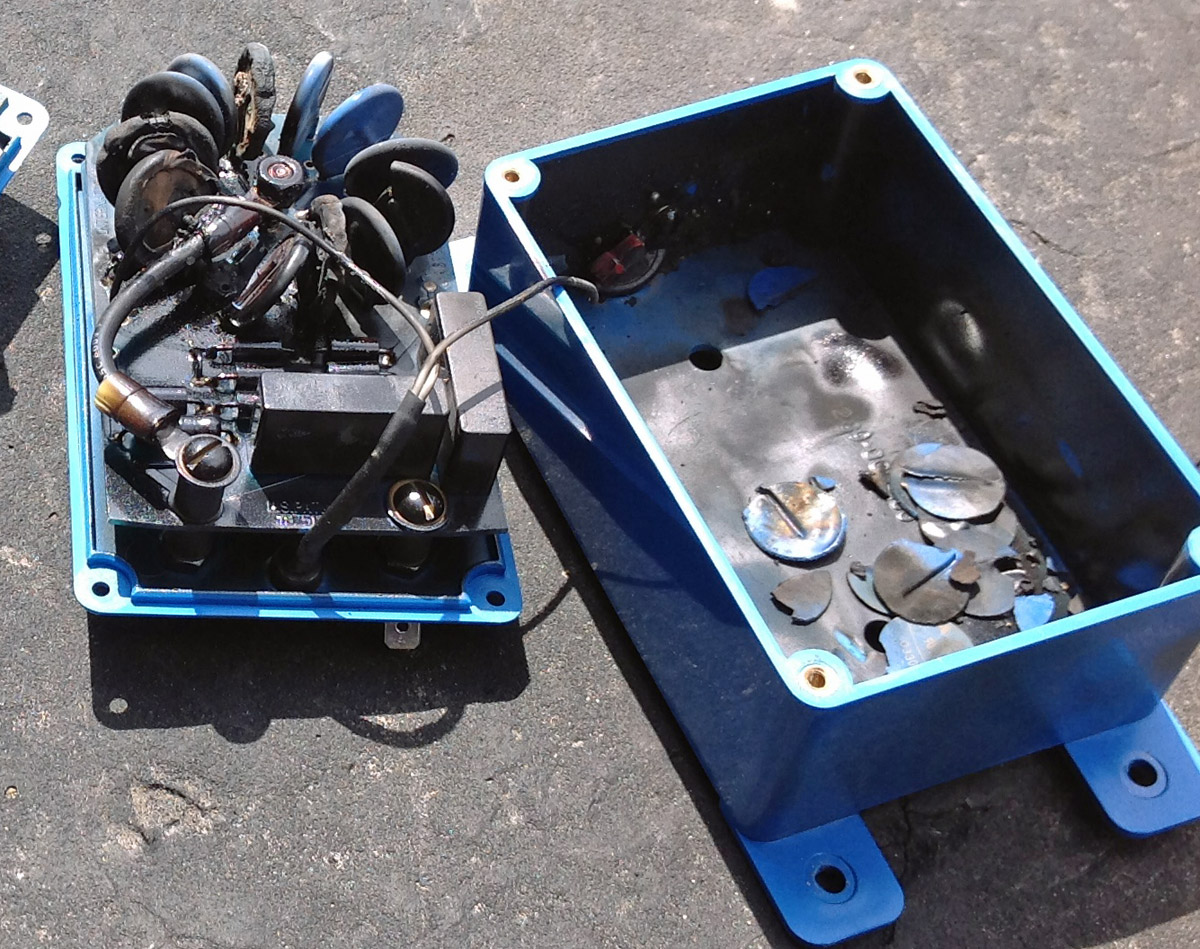
Blown up surge suppressor module

This is a picture of a surge module taken from an LEA series type surge suppressor:

LEA MOV module destruction
LEA 600 volt MOV module

Looks like it took a pretty significant power hit, enough to explode several MOVs.  This site is at the end of a long transmission line that stretches across an entire county.  Over the years, the station has made many complaints to the utility company about the quality of their power and the frequency of interruptions encountered at this transmitter site.  Occasionally, something will happen.  Often times it is the figurative shoulder shrug.

That is why we installed the surge suppressor.

Proper drive levels for a Harris SX series transmitters

I was working on a Harris SX5 the other day and snapped a picture of the scope while measuring RF drive levels.  There are still quite a few of these units out in the field, judging from my search engine results.  I thought it would be helpful to post something about it.  The RF power amp boards for the Harris Gates solid-state AM series transmitters are the same design, I believe.

In order to fully drive the RF MOSFETs in this particular series of transmitters (Harris SX1, 2.5, and 5 including A models) at least 26.5 volts peak to peak is required.  Less than that and the device will turn full-on and internally short.  To measure RF drive, the transmitter must be in local with control voltage on, with the rear door interlock defeated (this can be safely done if the transmitter is wired with separate AC feeds for control and RF power supply). Make sure the RF power supply is defeated and will not turn on.  Measure across the input of each of the toroids that feed the gates of the RF devices.

Harris SX series transmitter drive level test
Harris SX series transmitter drive level test, 27.45 volts, 1,110,000 Hz

It should measure between 26.5 and 29.5 volts. This one measures 27.45 volts peak to peak. Each input toroid on every PA board should be measured as the toroids themselves have strange failure modes and may pass resistance and continuity tests, yet still not provide proper drive voltage to the attached devices. This has to do with core permeability.  Each toroid feeds two RF MOSFETs, replace part is IRF-350.

As always when dealing with an SX transmitter, good luck.

We are off the air!

A phone conversation that occurred one Saturday morning:

DJ: (answers hotline) Hello?

Myself:  This is Paul from Radio Engineering Services, you called the answering service and said you are off the air.

DJ: Yes!  The red bat light is flashing and everything!

Myself: Okay, did you try to put the backup transmitter on?

DJ: No.  I didn’t want to mess anything up.

Myself:  You are off the air; I don’t know how things can be more messed up than that

DJ: (laughing) Okay, you’re right.

Myself: Do you have the directions for the backup transmitter?

DJ: Yes, they are right here

Myself: Okay, go ahead and do that, I will call the local engineer and see if I can get him out to the transmitter site, then I will call you back.

DJ: Okay, thanks.

The good news is the backup transmitter came on and they were back on the air.  It is also nice to know that the station has a live DJ on Saturday morning at 7:00 am, many do not.  The main transmitter power outage was likely due to a utility company transient, the area had suffered an ice storm the day before and they were out restoring power that morning.

At least this was a real emergency, I used to get calls at home that the headphone jack on the console was loose.  I took the home phone number down after that.

As requested: The old WSBS studio building

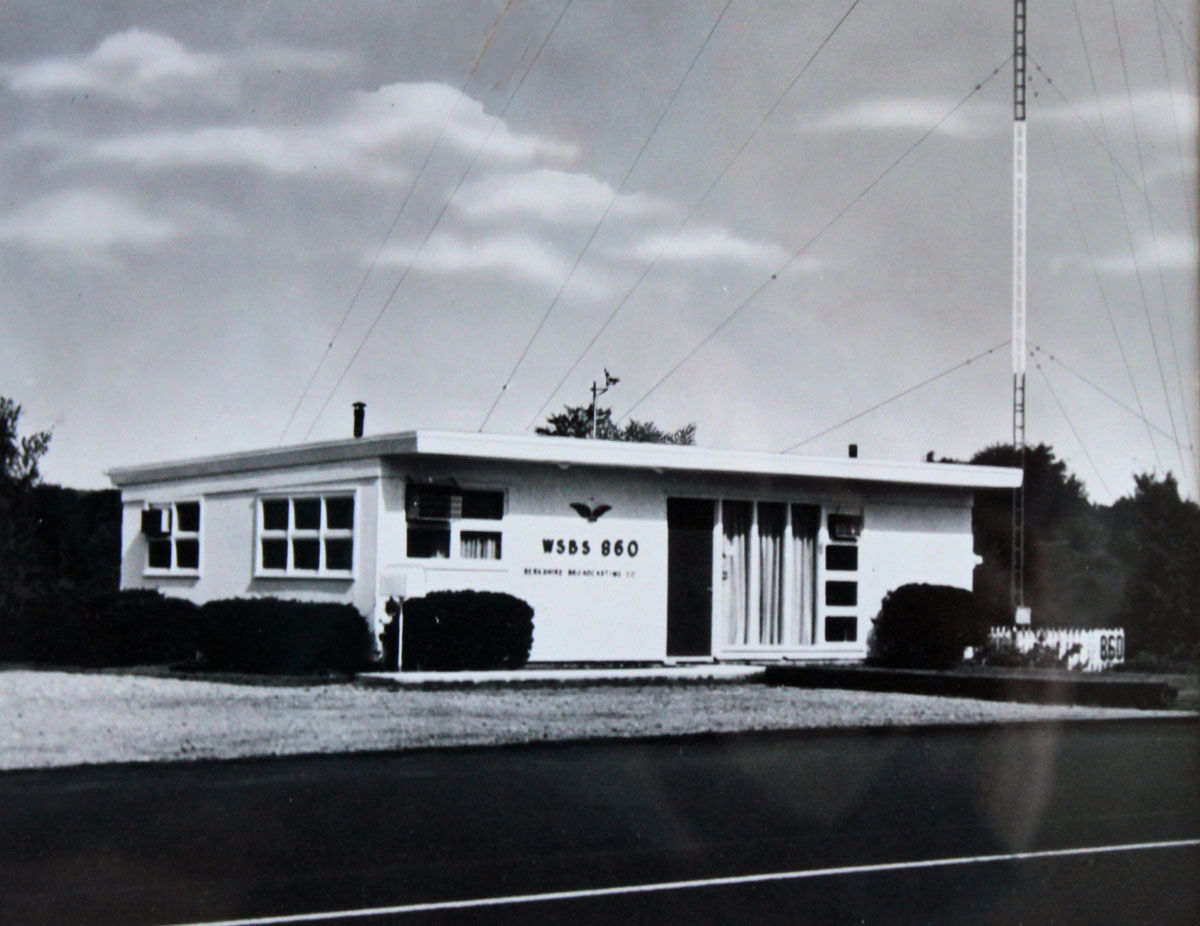
Alan asked if I should ever find a picture of the old WSBS studio building to publish it.  Here it is:

WSBS old studio building

I found this above the coffee machine in the lobby, nicely matted and framed.  I didn’t want to ruin the framing job, so I took a picture of the picture under glass and cropped it, so thus the quality could be better.

I believe this is the original tower from 1959.  The current tower stands on a taller concrete pedestal and is further away from the road.  I think the roadway was widened and raised at some point, thus the new building sits higher in relation to the tower base.  In any case, it little bit of radio history.