Sometimes it is the little things that catch the eye. When I was installing a Nautel transmitter recently, I was admiring the circuit boards used for the transmitter controller. I have seen a few circuit boards that are functional, but leave a little to be desired in the form department. Does it really matter? Perhaps not, but often times those tiny, almost insignificant details come back to bite you. Little things like having the voltage regulator pins correctly placed or putting a toggle switch on the correct side of the board. I have seen both mistakes from another, well known transmitter manufacturer.
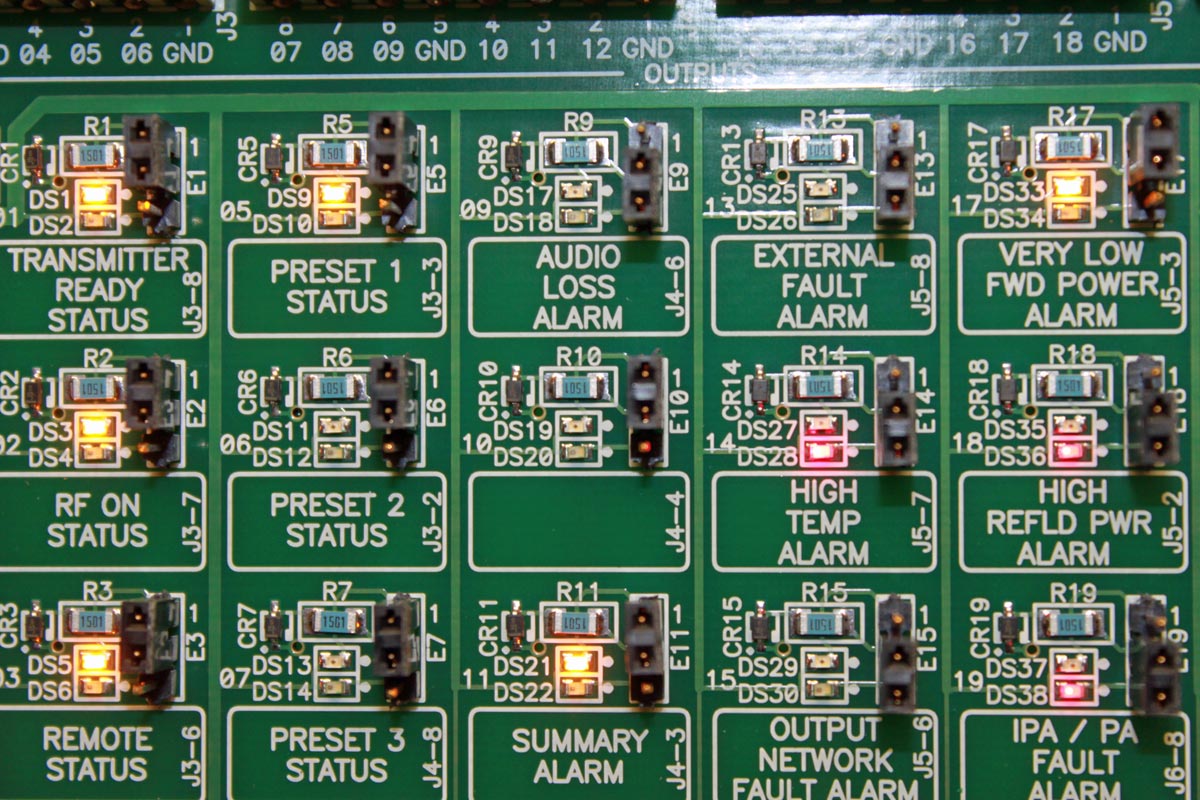
Nautel NV controller board
Anyway, these are a few photographs of some well designed, well laid out circuit boards.
Controller board, NV transmitter
This is the main controller board.
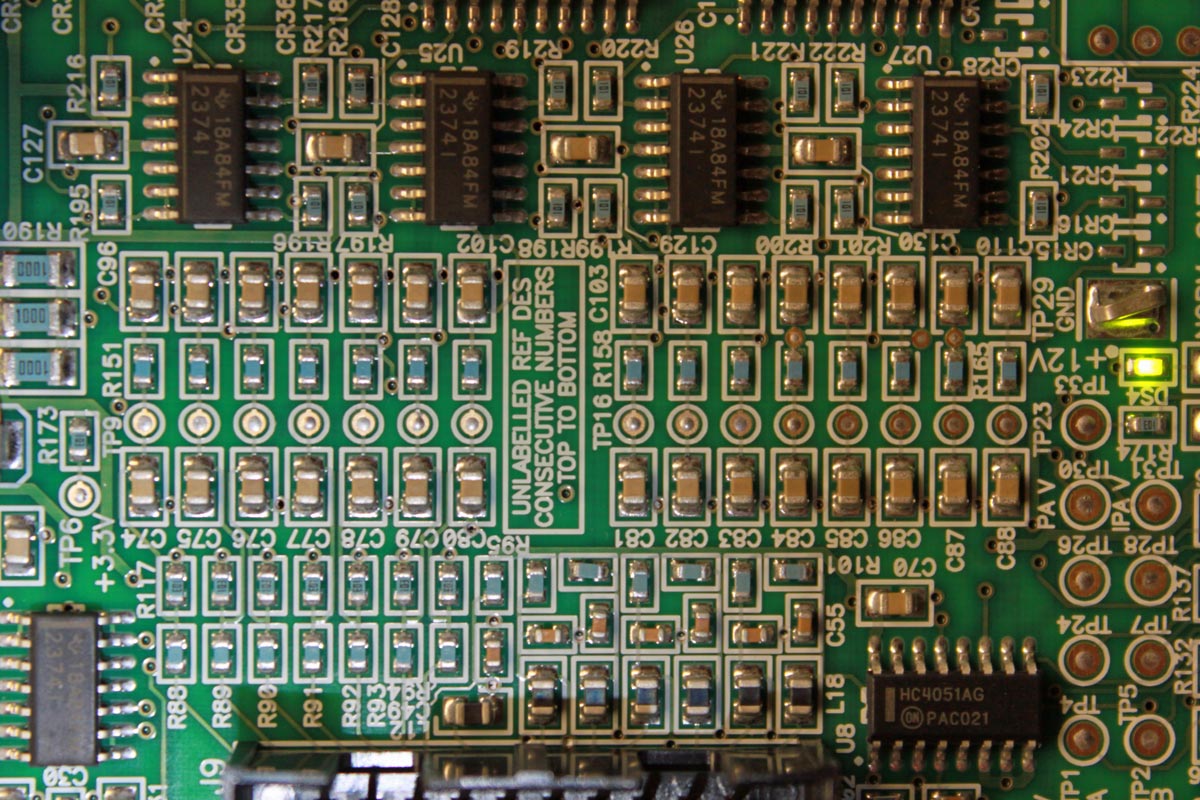
NV controller board surface mount components
Surface mount components.
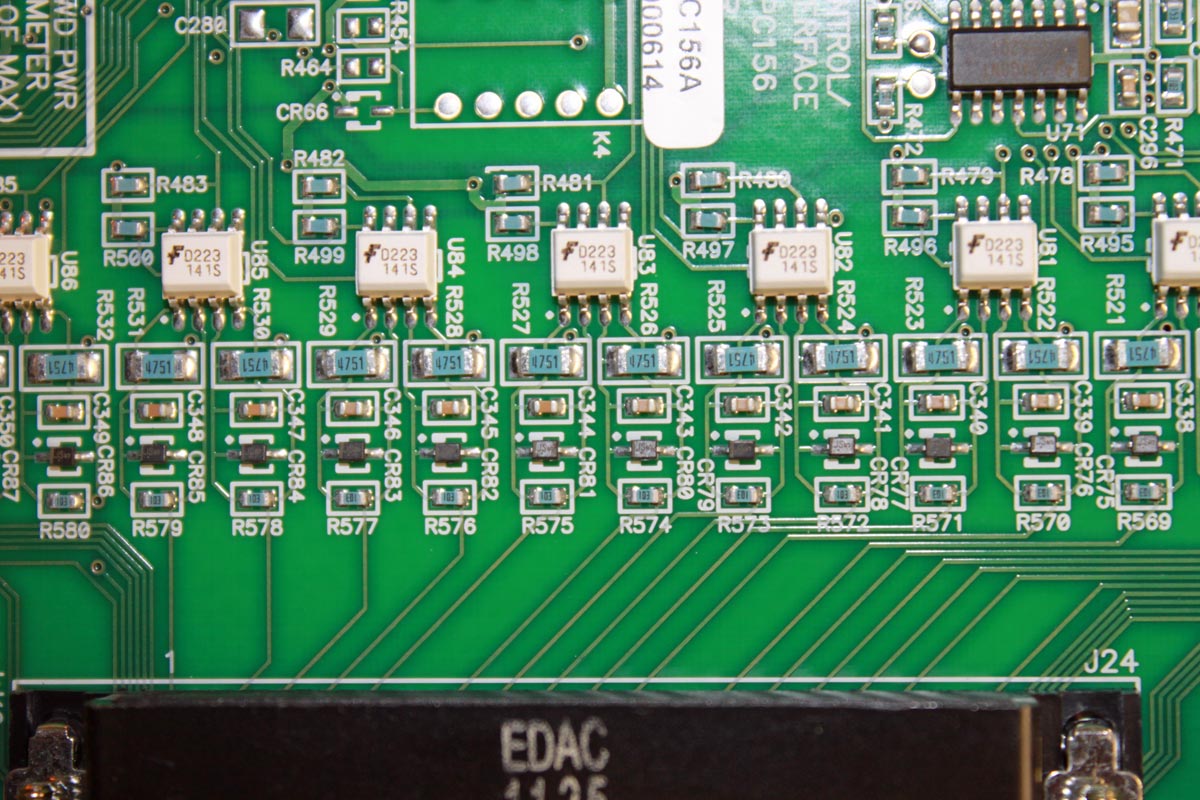
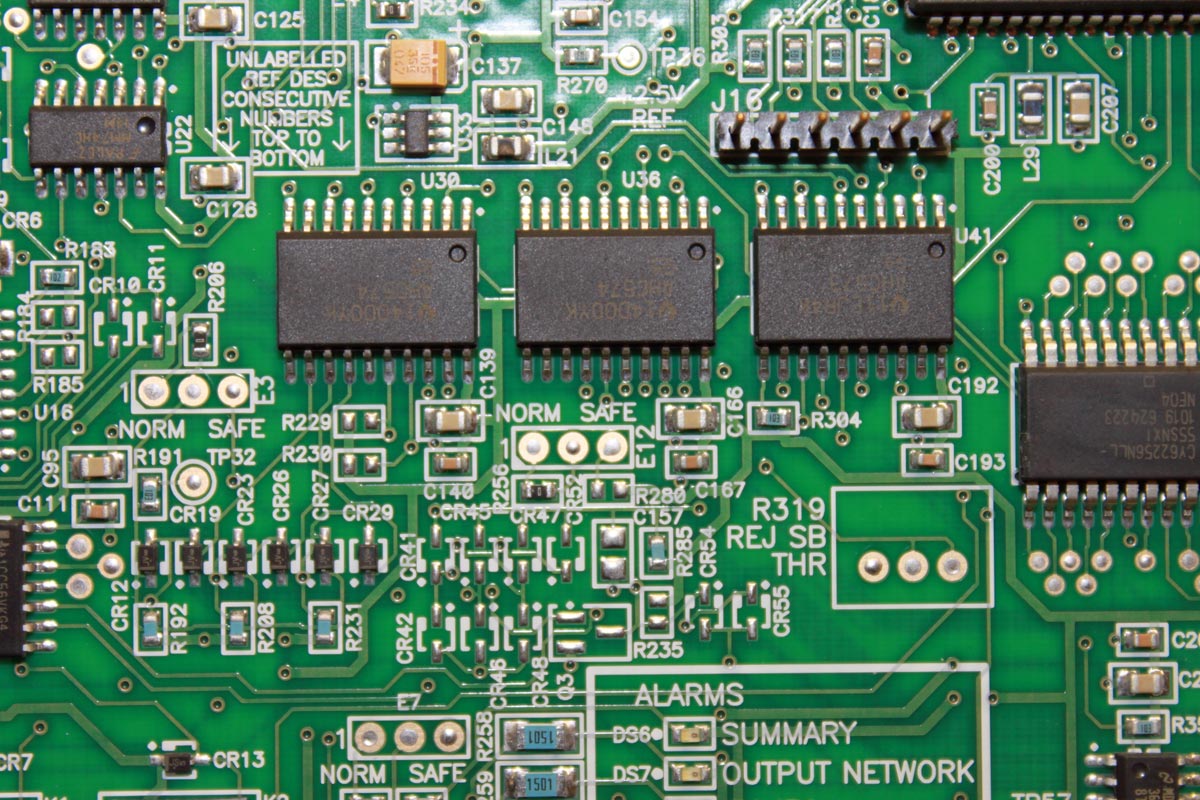
NV controller board
Logic chips.
Nautel XR harmonic filter, part back part is the circuit board
Part of the harmonic trap for the XR series transmitters.
It really is the little things that make big differences. A circuit board under a cover that few people will ever see may seem like a very small and insignificant detail, but I notice and admire these things…
I found this video called Empire of Noise about broadcast radio jamming. It seems to be about ten years old and is a post-cold War documentary about the jamming of radio signals by the USSR, Warsaw Pact counties, and China. It is an interesting look into the extent and expense that governments will go to suppress counter thoughts and ideas.
The video is quite long, and there are stretches of jamming noise that can be annoying, but perhaps that is the point. It is worth the time if interested in history and radio broadcasting. You know what they say about history; those that do not understand history are destined to repeat it.
A few of the highlights:
The former Soviet Union had the most extensive jamming network of anyone on Earth. There were groundwave jamming centers in eighty-one Soviet cities which consisted of approximately 10-15 transmitters each in the 5 KW covering the medium and shortwave frequencies.
Each groundwave jamming station consisted of a transmitter site and a receiver/control site. The receiver site possessed lists of frequencies to monitor, when objectionable material was heard, the jamming transmitters were turned on.
There was a skywave jamming network consisting of 13 jamming stations with 10 or more 100-200 KW transmitters in each. There were some transmitters in the 1,000 KW power range. These were located in Krasnodar, Lvov, Nikolaev, Yerevan, Alma-Ata, Grigoriopol, Sovieck, Novosibrisk, Tashkent, Khanbarovsk, Servdlosk and Moscow (some of these names may have changed). These operated in a similar fashion to the groundwave jammers.
After the sign-off of government stations, Soviet jammers sent a blanketing signal on the IF frequency (most likely 455 KHz) of receivers to effectively block them from receiving any station while USSR government stations were off the air.
Baltic states had 11 jamming stations with approximately 140 transmitters
Ukraine had approximately 300 Jamming transmitters.
Warsaw Pact countries had extensive medium-frequency jamming networks.
It is estimated it takes about 20 times the transmitted power to jam any one signal.
The entire jamming network was hugely expensive to equip and operate, costing several tens of millions of dollars per year.
It is interesting that the US position in all of this was:
Everyone has the right to seek, receive and impart information through any media and regardless of frontiers. Jamming of radio broadcasts is condemned as the denial of the right of persons to be fully informed concerning news, opinions and ideas.
Sounds perfectly reasonable. The free exchange of ideas and information over the internet is something that should be guarded carefully and should not be restricted or censored.
My apologies. As of late, there have been several service disruptions on this site. In speaking with my web host, they have identified the following issues:
On Thursday 4/11 and 4/18 between 6-10 am local time (1000-1400 UTC) the server that hosts engineeringradio.us was subjected to a DDoS (distributed denial of service) attack, where approximately 200,000 login attempts were made per hour from 90,000 different IP addresses. This was part of a greater attack on WordPress websites.
On Wednesday 4/24 there was another DoS attack of a more limited and focused scale around 3-4 pm time frame
On Tuesday 4/30 beginning at 5 am, (0900 UTC) there was a server issue that returned an error 404 message to anyone trying to access the website. The .htaccess file was somehow corrupted, which later caused an error 500 message. This outage lasted until approximately 2 pm (1800 UTC) when the .htaccess file was reloaded.
I have taken several steps to secure the web server and website against intrusions and other attacks. A distributed DoS attack is very hard to track and combat, the best course is to beef up security policies and weather the attacks when they come. I have contemplated moving this website to my own server, but that is more work than I have time for right now. Perhaps at some future point, if reliability continues to be an issue, I will do that.