Once upon a time, usually during a license renewal period, a radio station listener might hear the following on the air:
On May 15, 2001, Radio Station KZZZ (FM) was granted a license by the Federal Communication Commission to serve the public interest as a public trustee until December 1, 2005. Our license will expire December 1, 2005. We must file for license renewal with the FCC by August 1, 2005. When filed, a copy of this application will be available for public inspection during our regular business hours. It contains information concerning this station’s performance during the last four years. Individuals who wish to advise the FCC of facts relating to our renewal application and to whether this station has operated in the public interest should file comments and petitions with the FCC by November 1, 2005. Further information concerning the FCC’s broadcast license renewal process is a available at the KZZZ offices, located at 555 Main Street in Smallville, or may be obtained from the Federal Communications Commission, Washington, D.C. 20554.
So what does “Granted to serve the public interest mean?” Perhaps having a news department, or sponsoring a debate in the local mayor’s race, perhaps a Sunday morning church service. Maybe some High School football or even broadcasting emergency information such as tornado warnings or a flood warning.
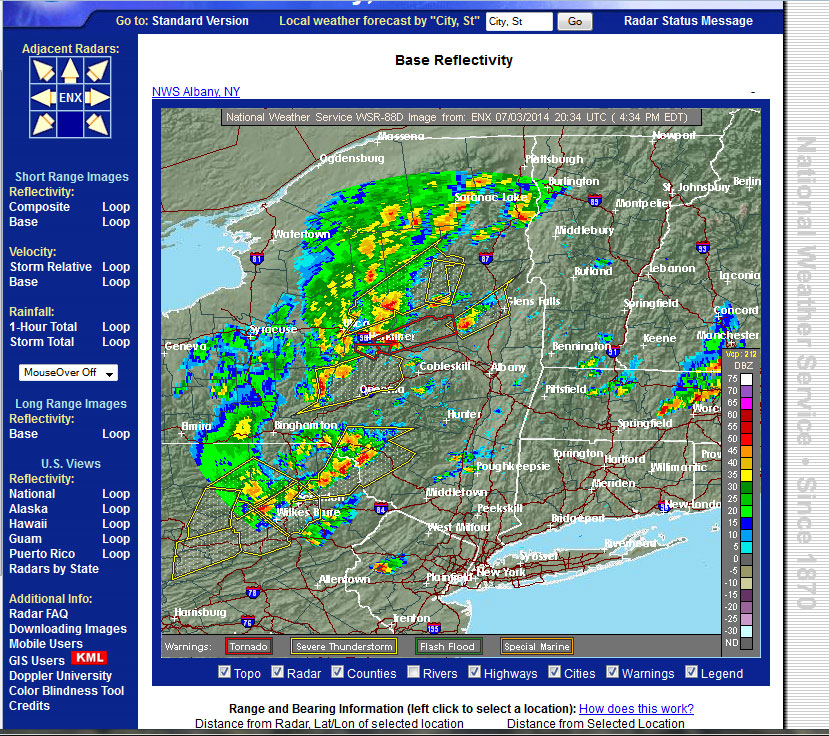
How about broadcasting a flood warning to your listeners that are taking part in a station promotion? How about if said station promotion happens to be taking place in a flood plain, and warnings issued several hours before the promotion is scheduled? No? You can’t make this stuff up, no one would believe you:
A Clear Channel station in Grand Rapids, MI threw its annual B93 Concert Bash on June 20 in nearby Ionia by the Grand Rapids River, apparently oblivious to flash flood warnings issued by the National Weather Service.
No, nothing bad can come of this right? right? Of course the inevitable happend. The river overflowed its banks, causing concertgoers to flee for their lives and flooding the parking area submerging their cars. Naturally, Clear Channel will pay those who had their cars towed out of the mud right. Nope, you listeners are on your own, tough shit.
Then there is the now infamous Minot train derailing. For those not familiar, a train carrying anhydrous ammonia derailed and spilled its contents. When local officials attempted to activate EAS, they couldn’t. They then attempted to call the LP-1 station on the phone to get the information out, but nobody was home. Clear Channel placed the blame squarely on the local law enforcement agencies stating that they had not installed their EAS equipment properly and had changed frequencies on their radio link without notifying the radio station. Perhaps, but it seems there is more than enough blame to share. Were station employees proactive with the local government officials? I can’t say, but they should have been. EAS is a team effort.
Not to pile onto Clear Channel too much, Cumulus seems to encourage their listeners to head outdoors, and enjoy the good weather. During a tornado warning. Nice.
By this, It would appear that the public is interested in fleeing for their lives, having their cars flooded, all the while wondering what is going on.
No matter how hard people try, nothing can replace radio’s role in alerting the public. Mass e-mail systems, Blackberries, and other internet-based systems will fail when the power goes out and kills the supporting ethernet infrastructure. Cellphones, PCS devices, and I-phones become unreliable during emergencies because the TELCO system that supports them gets clogged with traffic. Many cellphone towers do not have backup generators. During the events of 9/11/2001, I experienced firsthand the difficulties of trying to use the wired telephone network due to congestion. Since the HDTV rollout, cable companies have become the backbone for the distribution of TV signals. Coaxial-based cable systems rely on booster amplifiers every mile or two to keep the signal strengths usable. Those amplifiers need power from the utility grid. Not to mention, most TVs cannot run on batteries and lack portability.
Almost everyone owns a battery-powered portable radio. When the shit hits the fan, they will turn it on. What will they hear?
So where is the official outrage? Why have not the big radio CEOs, public trustees each, been dragged before Congress to explain themselves?