May 2013
M T W T F S S
« Apr    
 12345
6789101112
13141516171819
20212223242526
2728293031  

Archives

Categories

Australian Made Broadcast Equipment

Somebody working to preserve a record of past work:

Some of these have familiar looking cabinets and tube arrangements. They all look like classics to me and it is good that they are being saved. I noticed at the end of the video there is a Harris MW10A. As for the RCA Ampliphase transmitters; I maintained a BTA5J in Harrisburg PA on 580 KHz. It was reliable enough, but I could never keep it sounding good for more than a couple of days.

In any case, a worthwhile effort.  More information at: AWA Transmitters.

Maritime Radio Historical Society Night of Nights XIII

Every year on July 12, the Maritime Radio Historical Society (MRHS) commemorates the end of commercial Morse code use in the US. I have a soft spot for Maritime Radio, as that is where I began my radio career.  For nearly one hundred years, ship board radio operators, “sparks” communicated with land based stations using Morse keys and relatively simple low powered transmitters.  The skills gained by a good CW operator could only be attained by time spent sitting watch.

In order to remember those who did that service, several former coastal radio stations fire up transmitters once a year on July 12th.   This year’s frequencies are:

KPH KFS KSM WLO KLB Ship transmit
426 426 488
500 500 500 500
4247 4343 4184
6477.5 6274 6276
8642 8438.3 8658 8582.5 8368
12808.5 12695.5 12993 12992 12552
17016.8 17026 16968.5 16736
22477 22280.5

Festivities begin at 8pm eastern time.  In addition to those frequencies, K6KPH will be on the air on 3550, 7050 14050 and 21050 KHz.

KPH, KFS and KSM are all operated from Point Reyes National Park, transmitters are on Bolinas. This is a video of the transmitter gallery in Bolinas:

Other video of Bolinas Facility:

Former KPH receiver site, Point Reyes National Park:

This is a former coastal station site in Cape Cod, which was torn down:

Lots more information at the Maritime Radio Historical Society site.

Hums no more

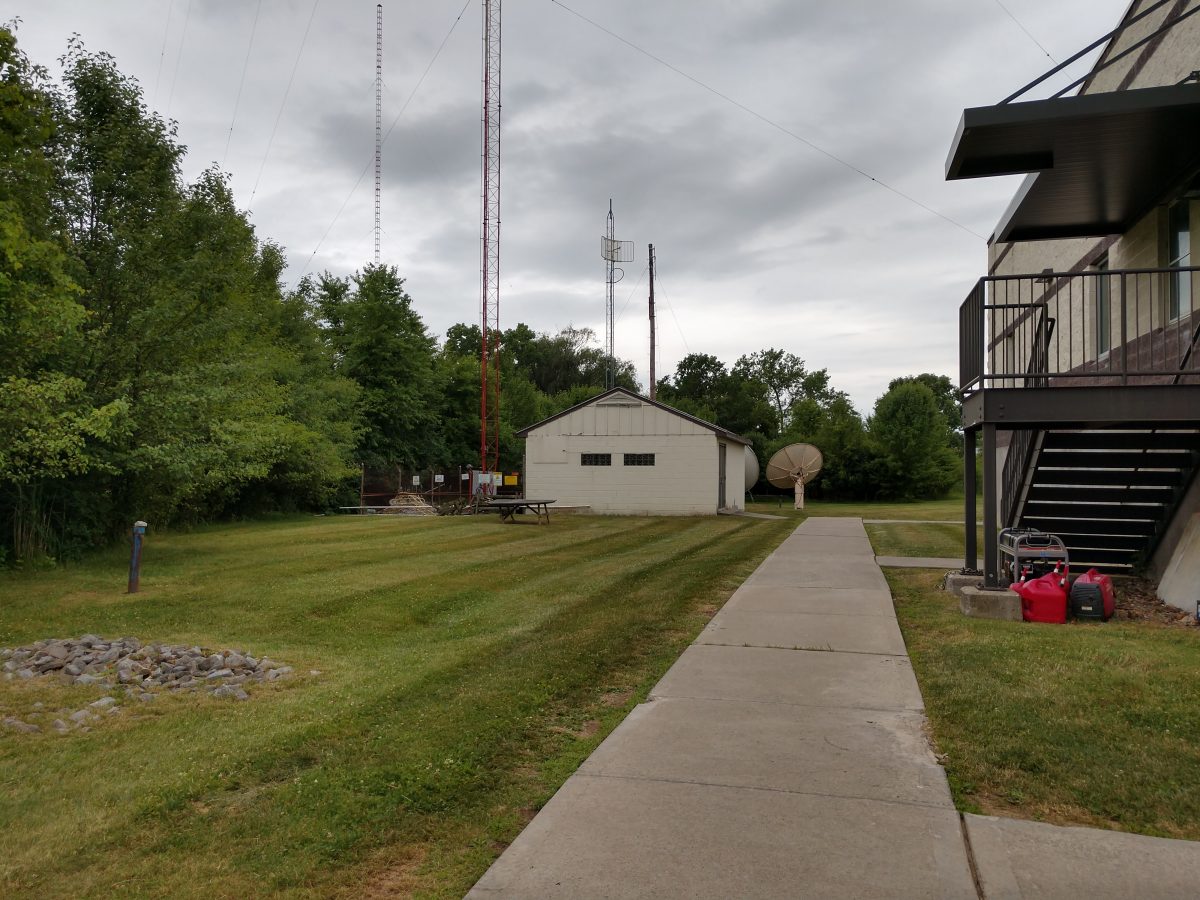
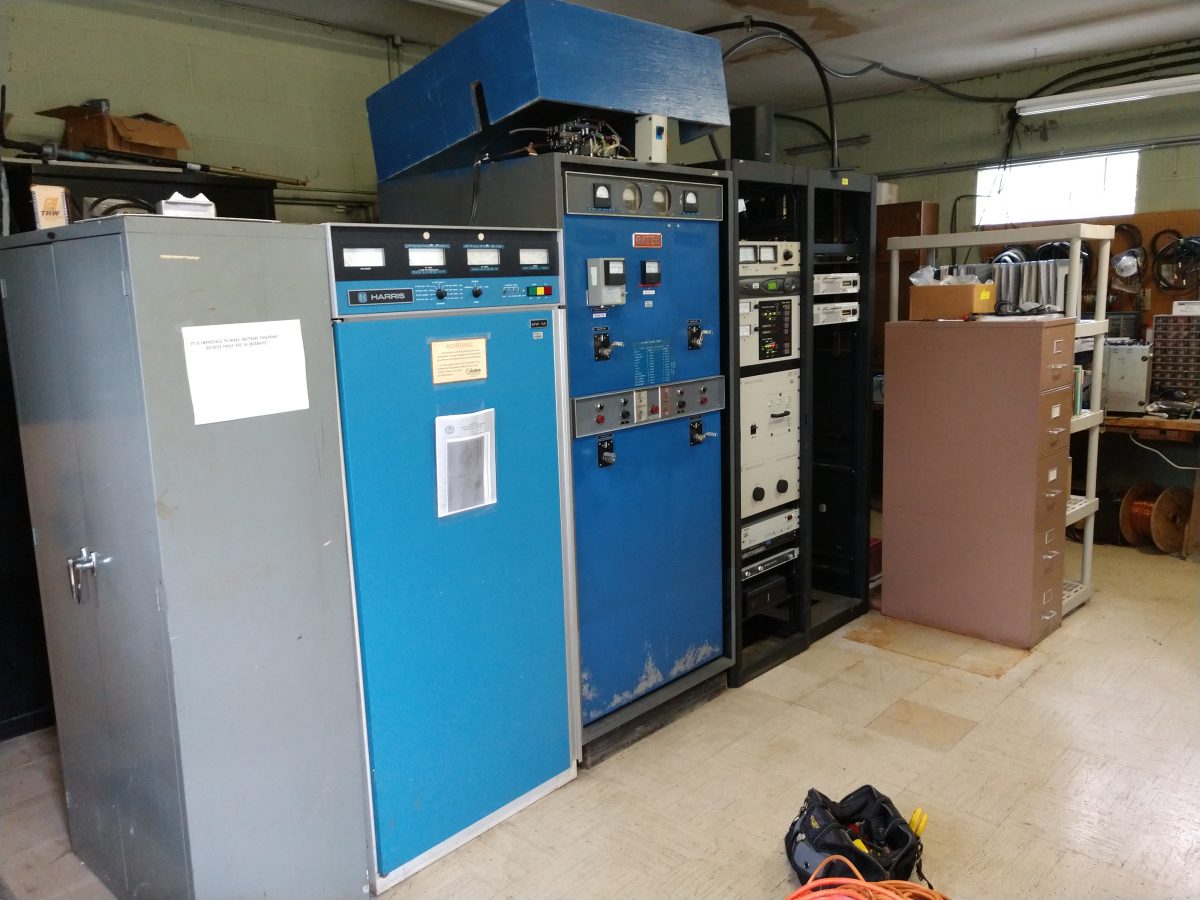
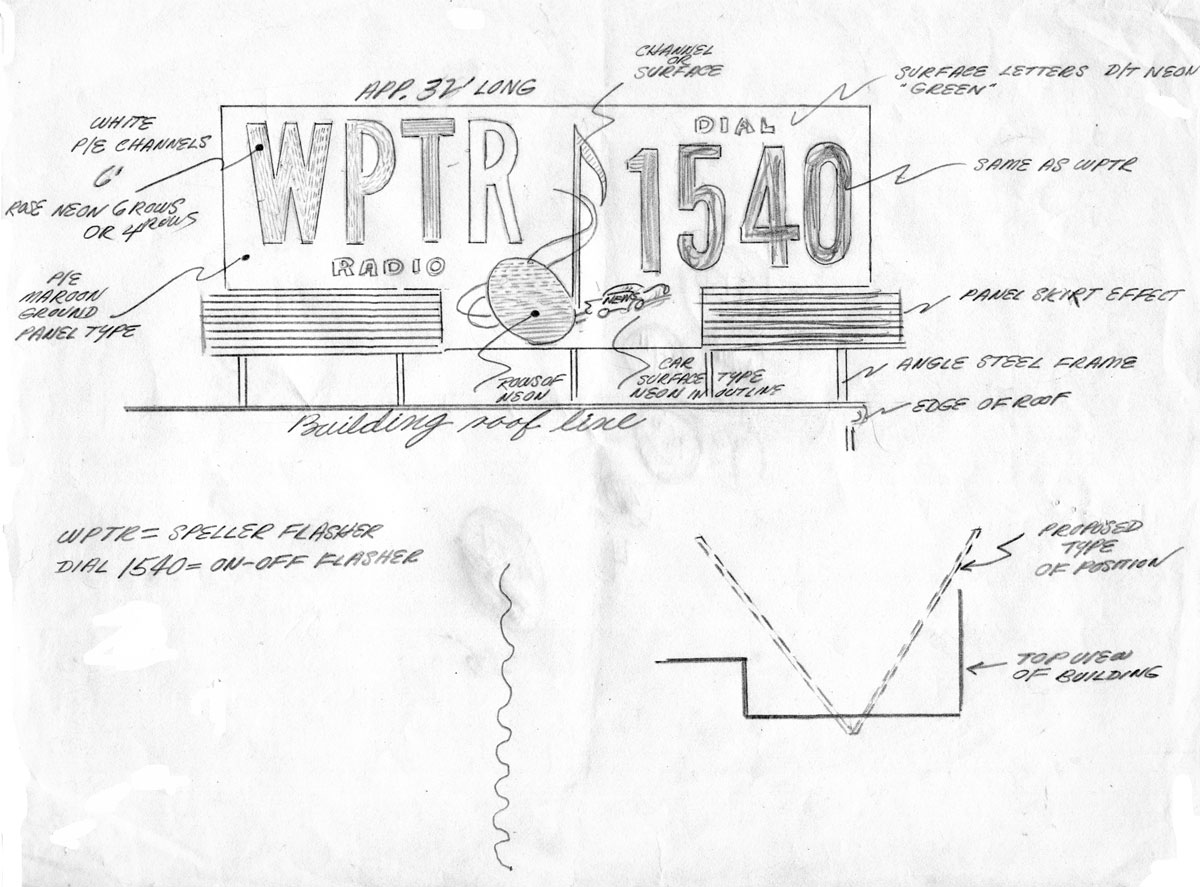
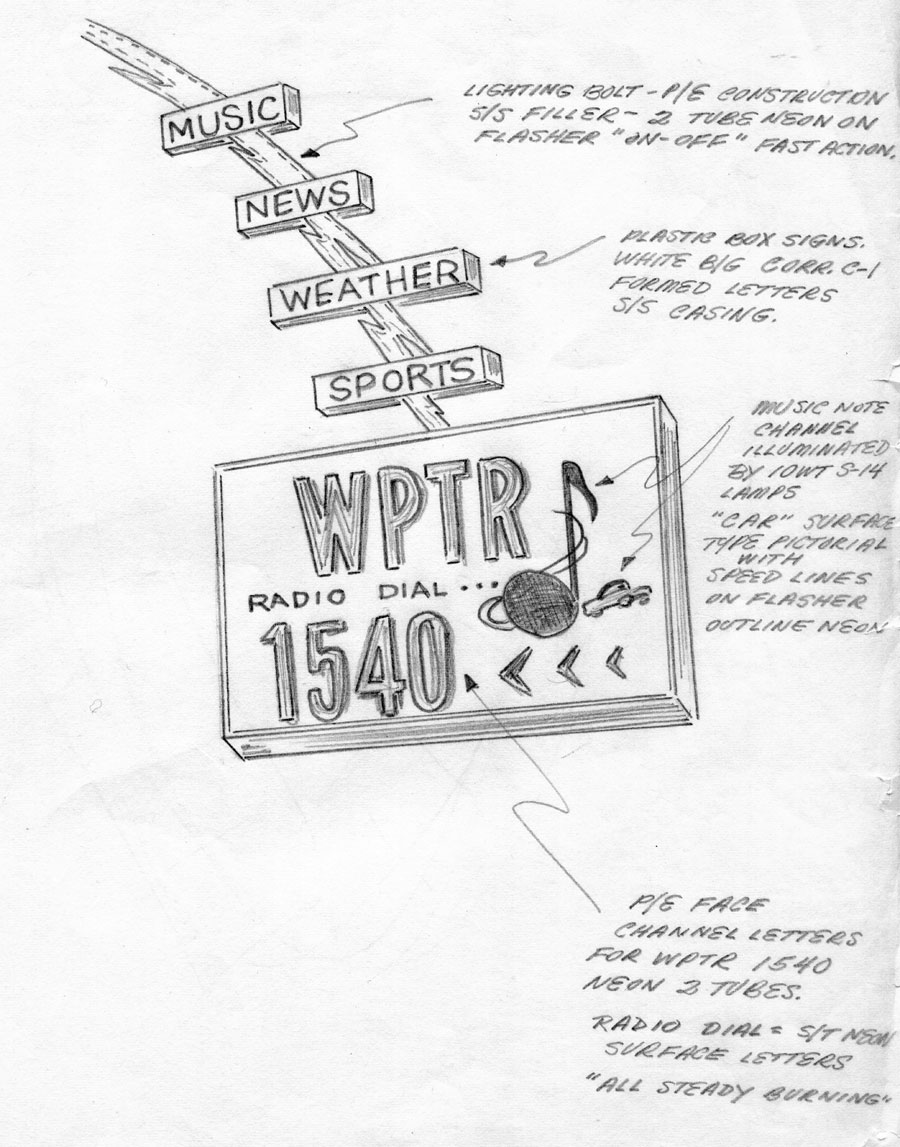
My first job as Chief Engineer was at WPTR and WFLY in 1991. I was young and it was a learning experience. The WPTR transmitter was a Harris MW50A, which reliably went off the air every six months. The transmission lines going out to the towers had fallen off of their wooden support posts, trees were growing up in the antenna field, sample lines were going bad. In short, it was a mess.  Even so, the station was well known and well liked in the community. One could still see echos of greatness that once was.

When Crawford Broadcasting purchased the station in 1996, they put much money and effort into renovating the facility.  Replacing the Harris transmitter with a solid state Nautel, replacing the phasor and transmission lines, cutting the trees from the field, painting the towers, renovating the old transmitter building into a new studio facility and finally removing the old Butler building that formerly housed the “Gold Studios.”

Then the depression of 2008-20?? hit.  Once again, the place has fallen on hard times.  WDCD-AM has been silent since last April.  The cost of running the 50 KW AM transmitter being too much to bear in the current economy.  Formatically, the station drifted around for several years.  According to the the STA to go silent:

WDCD WILL SUSPEND OPERATIONS FOR A PERIOD DURING WHICH IT WILL DEVELOP AND PREPARE TO DEPLOY A NEW PROGRAM FORMAT AND REPOSITION ITS VOICE AND IDENTITY IN THE COMMUNITY.

They may need to do something slightly non-religious to survive.

While we were waiting for the utility company to turn the electric back on after yesterday’s fire, I took a short walk around the WDCD-AM site and took some pictures.  Transmitter disconnect thrown,  fuses are pulled,  it is kind of sad to see the Nautel XL-60 dark:

Nautel XL-60 AM transmitter.  WDCD Albany, NY

Nautel XL-60 AM transmitter. WDCD Albany, NY

I apologize greatly for the blurry picture, it was taken with my cellphone camera, my good camera being back at home on my desk.  Radio stations, when they are on the air, seem like they are alive.  Machinery hums, fans move air, meters move, and there is a sense of purpose.  Silent radio stations give me a sense of foreboding, like something is terribly wrong.

WDCD three tower array, Albany, NY

WDCD three tower array, Albany, NY

View of the towers without Butler Building.  The towers are 340 feet tall, which is 206 electrical degrees on 1540 KHz.  The site was constructed like this to suppress skywave signals toward ZNS, Nassau, Bahamas.  ZNS is the only clear channel station allotted to the Bahamas by NARBA.  The other station WDCD is protecting is KXEL, Waterloo, IA.  During the 90′s, I received many QSL requests from Norway/Finland and even a few from South Africa.  I know that the station had a large following in most of New England.

WDCD tower base, tower three

WDCD tower base, tower one (furthest from building)

Tower one tower base.  This IDECO tower had to have the top 60 feet replaced after it was hit by an airplane in 1953.  The tower base also had to be replaced in the late 1980′s as it was crumbling and falling apart.  To do this, Northeast Towers used railroad jacks and jacked the entire tower up off of the base insulator.  They re-formed and poured a new base, carefully letting the tower back down on a new base insulator about a week later.

WDCD towers looking back toward the transmitter building

WDCD towers looking back toward the transmitter building

Antenna field looking back at the transmitter building.  If you work at radio transmitter sites, I encourage you to take pictures of all these things, as someday, they will all be gone.

WDCD bomb shelter

WDCD bomb shelter

The “bomb shelter” and 220 KW backup generator,  constructed by FEMA in 1968 as part of the BSEPP.  This used to have an emergency studio and enough diesel fuel for fourteen days operation.  Now, the bomb shelter has a kitchen and bathrooms.  The underground storage tank no longer meets EPA standards and has been pumped out.

WDCD Onan generator

WDCD Onan generator

The Onan generator is conservatively rated at 220 KW, surge rating 275 KW.  These things were way over constructed, so it is likely it would easily run 225 KW all day.  It has an in line six cylinder engine with a massive fly wheel.  When the engine is stopped, it takes about twenty seconds for the generator to stop turning.

Three phase service

Three phase service

National Grid, 3 pot, 480 volt, 3 phase service, original to the 1947 building.

I wonder if it will return.

Shut up! shut up! I am working Cape Race

So sent wireless operator John “Jack”  Phillips on the night of April 14th, 1912, and likely sealed the fate of some 1,514 passengers and crew of the RMS Titanic, radio call sign MGY.  That message was sent in response to the radio operator on the SS Californian/MWL, who was attempting to report icebergs nearby.

RMS Titanic side view

RMS Titanic side view

Of course, it would be a gross error to blame the sinking of the Titanic on the radio operator, he was but one small link in a long chain of events that unwound that fateful night one hundred years ago.  Beginning with the ship’s design and ending with the Captain of the Titanic, Edward Smith, many seemingly unconnected decisions lead up to the ultimate disaster that befell the Titanic.

After about four days at sea, during the late morning/early afternoon of April the 14th, the Titanic began receiving wireless messages indicating “growlers, bergs and ice fields” were in the area.  The Captain decided to alter the ship’s course to the south, out of the supposed ice fields.

In spite of numerous reports of nearby ice, the Captain did not order the ship to reduce speed.  It continued on at 22 knots (41 kp/h)  up until the time it struck the berg.  Lookouts were posted in the crows nest, near the bow, to spot icebergs.  This was considered normal operating procedure at the time, but is the most significant factor in the collision.  A number of nearby ships had spotted ice and had greatly reduced speed or stopped for the night.  Further exacerbating the situation, the lookouts on the Titanic did not have binoculars, which was due to a mix up before they sailed from England.

Some of the ice reports received later in the day and evening did not make it to the bridge.  Wireless operator Jack Phillips was either repairing a malfunctioning spark gap transmitter or was sending messages from passengers to Cape Race Radio/MCE, Newfoundland.  At the time, the (wireless) radio operators were not a part of ship’s company, but rather were employed by the Marconi Company for the purpose of sending messages for profit.  Any notion of safety or distress communication was an afterthought.

The SS Californian, closest ship to the Titanic at the time it sunk, was attempting to broadcast another ice warning to all ships in the area at about 10:30 pm.  The message was broken off by Phillips with a terse: “SHUT UP! SHUT UP! I AM WORKING CAPE RACE”  At about 11:30 pm, Cyril Evans, the Californian radio operator closed station and went to bed. Ten minutes later, the Titanic struck the iceberg.

5 KW synchronous rotary spark gap transmitter

5 KW synchronous rotary spark gap transmitter

The Titanic used a 5 KW synchronous rotary spark gap transmitter, which was state of the art at the time.  The power is measured at the input of the DC motor.  Considering the efficiencies of the motor and generator, the ability of the spark gap to generate RF and the efficiency of the tuning circuits and antenna, the actual power radiated by the transmitting antenna would have been significantly less, on the order of a couple of hundred watts.   The above schematic is not exactly the same as the unit installed on the Titanic, as the meters and additional controls for motor speed and generator voltage have been omitted.   Additionally, some sources report the transmitter as a 1.5 KW non-synchronous unit.  The difference between the two would be very apparent in the sound of the received signal; a synchronous transmitter had a tonal quality to it versus a non-synchronous or simple spark gap, which sounded like hissing.  Wireless operators from shore stations and other ships who worked the Titanic reported that they were using a synchronous unit.

The transmitter used two frequencies; 600 meters, or 500 KHz and 300 meters, or 1,000 KHz.  Because of these frequencies, maximum range during daylight hours was about 200-400 miles (322-644 km).  Night time, the ranges were considerably more, 1,000-2,000 miles (1600-3200 km), which is typical for medium frequencies, including the AM or standard broadcast band in use today.  Thus the effort by the Titanic radio operators to clear the backlog of message traffic out during darkness, when Cape Race was about 374 miles (602 km) away.

Another part of the problem was with the transmitting and receiving apparatus itself.  The transmitters were crude and generated broad harsh signals.  The receivers were also very broad, and nearby transmitting stations could easily wipe out all frequencies on early receivers.  That is what likely prompted Phillips’ outburst, something termed today as blanketing interference.  Vacuum tubes (aka valves) had yet to accepted for wide spread use as amplifiers and most receivers were simple tuned circuits connected to a detector of some type.  As such, receivers were far less sensitive and selective than they are today.

Interestingly, the Titanic had both types of receiver on board.  The main receiver was a tuned circuit with a Marconi Magnetic detector (aka “Maggie”) and a valve receiver as a backup.  The valve or vacuum tube was likely a simple diode detector connected to a tuned circuit.

After the collision, Jack Phillips stayed at his post sending out distress messages and communicating with other ships en route to assist.  Long after the Captain told the radio operators they were dismissed, Phillips persisted until power was lost and the radio room began flooding.  He perished shortly after in the 28° F (-2°C) water, however, assistant operator, Harold Bride, survived.

There is also some bit of discussion about the rudder commands given after the iceberg was sighted.  Most accounts say First officer, William Murdoch, gave the command “Hard over starboard” which would be the equivalent of right full rudder, effectively turning the ship to the left.

As rudders work, the amount of water flowing over the rudder determines its effectiveness or loading (resistance to water flow).  With the center screw turning at full speed, the rudder would have quickly loaded and pushed the rear of the ship away from center line by re-vectoring the water coming from the propellers.  There is no way to know if this would have changed the outcome as not enough is known about the maneuverability of the Titanic.  Her sea trials consisted of about seven hours of sailing time before passengers were embarked.

The next commands issued were “full astern,”  on the engine room telegraph.  Because of the design of the ship, it took about thirty seconds to engage the rudder and backing engines.  The ship continued straight ahead at 22 knots (11 meters per second), traveling 372 yards (340 meters) before beginning to turn.  The center screw had no reverse, so it was simply stopped.  Once the engines were reversed, the rudder lost much of its effectiveness due to turbulent flow and stalling.  The ship could not maneuver around the iceberg, striking it in a glancing blow springing the hull plating in five forward compartments on the starboard side.

As it was the Titanic’s maiden voyage, the first officer did not have much deck time and was likely less familiar with the maneuvering characteristics of the ship versus other ships he had conned.  On most other ships of the time, including the SS Californian, which had just completed the identical maneuver, that combination of rudder and engine room telegraph commands would have been appropriate to stop and swing the ship around the berg.

The SS Californian was within sight of the Titanic as it sunk, observing several “rockets” (as many as eight) being fired. When informed of the rockets, the Captain of the Californian asked their color, but did not move to investigate or waken the wireless operator.  According to some of Californian bridge crew, the Titanic looked strange in the water, like something was wrong.  The Californian attempted to signal the Titanic with blinking light, which was not acknowledged.  Inexplicably, the Californian never attempted to investigate further until 5:30am the next morning when wireless operator Evans was back on duty and reported the sinking to the bridge.

Therefore, the entire chain of events that led up to the disaster include:

  1. Too few life boats for passengers and crew
  2. Not enough training in deployment of life boats
  3. Very short sea trail period for the ship’s crew before passengers were embarked
  4. Over confidence in the water tight door system in keeping the ship afloat
  5. Binoculars for lookouts not procured in time for sailing
  6. Ship’s rate of speed too fast for conditions, with numerous reports of ice in the area
  7. Ship’s radio operator dismissing ice report from nearest ship (almost within view at the time) so he could continue to send paid message traffic
  8. Combination of helm and engine room telegraph commands did not produce optimum maneuvering
  9. Failure of nearest ship to recognize distress flares (or rockets) as such and render assistance

Change any one of those nine things and the outcome might be entirely different.  Something to ponder.

The result of this disaster was the formal codification shipboard safety requirements known as SOLAS or Safety Of Life At Sea.  Those standards include the transmission of distress signals, distress communications, numbers of life boats, radio watches, fire suppression systems, and training for passengers and crew.  Currently the distress communication system is known as the Global Maritime Distress Safety System or GMDSS.

WNAW North Adams

Originally signed on as WMNB in 1947, it is a Class C AM station on 1230 KHz, one of thousands in the country. Initially, it had a power of 250 watts, upgrading at various times to its current power of 1,000 watts.

WNAW-WUPE-FM, North Adams, Ma circa 2012

WNAW-WUPE-FM, North Adams, Ma circa 2012

What is different about this station is the studio building. It is located in it’s original place on Curran Highway on the south side of North Adams. The studio is a late Art deco design, complete with small glass atrium in the lobby.  Like many older radio stations, this installation was built on a raised floor.  The walls and doors are all well constructed for maximum sound attenuation.  The doors are large, heavy and solid wood.

WNAW news room, formerly the performance studio

WNAW news room, formerly the performance studio

Inside, the original studios are laid out with a control room, a broadcast studio and a live performance room.  At one time, the live performance room had a grand piano.  Several times per week, live music shows were broadcast on the station.  There was a large news room, a big corner office for the General Manager and sales managers.

WNAW studio monitor speakers

WNAW studio monitor speakers

WNAW studio, looking into the control room.  Back in the day, the announcer, who’s only concern was announcing, worked in a separate studio from the engineer on duty, who worked console in the control room.  The audio level limiting consisted of turning down the level on the console if the announcer started speaking loudly.  They often communicated with each other with hand signs through the windows.

WNAW lobby

WNAW lobby

At the time that WMNB was signed on, the Adams/North Adams Massachusetts area was in the heart of the north east manufacturing belt.  Sprauge had a capacitor plant in Adams, GE was making plastics in Pittsfield, There where many textile mills still in operation and so on.  The population was predominantly working middle class.

WNAW control room console

WNAW control room console

Obviously, the console has been changed since those days.  The current console is a Audio Arts R-60.  This serves as the control room for WNAW and WUPE-FM.  The programming for WUPE-FM comes from Pittsfield on a T-1 line.  From here, it is relayed to the transmitter site on a 950 MHz STL.   WNAW transmitter is located about 2/10 of a mile south of the studio building on Curran Highway.  It consists of a skirted self supporting tower with a Gates 1 solid state transmitter.

WNAW-WUPE-FM equipment racks

WNAW-WUPE-FM equipment racks

Equipment racks containing the T-1 equipment, modulation monitors and STLs.  Note the very old Moseley TRC-15 remote controls.  We have been unwiring these at the transmitter sites and disconnecting the TELCO lines.  The transmitter sites now have Sine Systems dial up remote controls.

In 1961, WMNB-FM (now WUPE-FM) signed on the air from a tower north east of down town, off of Mohawk Trail (MA route 2).  It broadcast on 100.1 MHz with an ERP of 1,000 watts using a Gates FM1B transmitter.

WNAW continues on today as a community based radio station and is well liked and supported.

Why be a Broadcast Engineer?

That question was posed to me this afternoon by a coworker.  It is, indeed, a good question.  Certainly, broadcast engineering is more of a vocation than a career, especially where it concerns radio stations.  Why would anyone work for low wages, long hours, little or no recognition, 24/7 on call, and or unappreciative management.

Further, in this risk adverse, zero defect, micromanaged environment, what is the upside to being a radio, RF or broadcast engineer?

I suppose one would have to have some appreciation for history.  One of the reasons I cover radio history here or certain historical events is that  without knowing the roots of radio, one would be hard pressed to find today’s version of radio broadcasting even remotely interesting.  Understanding the before there was an internet, web streaming, Spotify, Youtube, Sirius/XM, television, cellular telephones, 3G, 4G, and so on, radio was mass media.  Radio was people driven, people oriented, not an automation computer programmed from afar.  People tuned in for the music but also the personality and the personal connection.

Growing up in the late sixties and seventies, radio was my link to the outside world.  As a young boy living in rural upstate New York, my mostly agricultural surroundings seemed a bit provincial.  Through radio, I was able to listen to the clear channel stations from New York City, Chicago, Detroit, Nashville, Charlotte, Pittsburgh, Washington DC, Cincinnati, etc.  The street that I grew up on did not get cable TV until 1980, prior to that, the roof top antenna received exactly two channels, when it wasn’t blown over by a storm.  The black and white TV was often broken, sometimes for over a year.  It was of not great consequence however, when nightly under my pillow, the battery powered transistor radio was employed until midnight or later.

When I got older, shortwave radio kits were built and listened to.

Through that medium, I learned about life outside of my small town.

Author, sitting in front of Atwater-Kent Model 20 regenerative receiver

Author, sitting in front of Atwater-Kent Model 20 regenerative receiver

The upside is being a part of something that can still be great, although those stations are getting harder and harder to find.  Still, there is a certain pride to a job well done, a clean transmitter room, a well tuned machine working into a properly tuned antenna.  Does anyone even appreciate that anymore?  I do.  Lou Dickey, John Dickey, Bob Pittman, Leslie Moonves, and other CEO’s may not care that transmitter site is clean and well kept.  They may, in fact question it as a waste of salary.   I appreciate it. Fellow engineers will appreciate it, too.

Starting a transmitter, especially a high powered tube transmitter, is a joy all it’s own.  Nothing against Nautel, they make fine transmitters, however, when pressing the on button, the outcome is almost assured: The transmitter will turn on.  Not so with certain tube type transmitters.  Pressing the plate on button for one of those can have many different outcomes.  There is certain thrill when it all works right, the first time.  There is a certain pride driving away from a transmitter site, listening to the radio and knowing; I caused that to happen.

Higashi no kaze ame

Or “East wind rain,” which was the Japanese code words transmitted to their embassies indicated hostilities with the United States was imminent. While the Navy intercepted the first message to the embassies, outlining the various code words and instructions on what to do when or if they were used, they never actually intercepted the code word messages themselves.

This is not all that unusual, as the Japanese were using several different diplomatic, army and naval codes at the outbreak of the war.  Many different stations and frequencies were in use, and it is quite possible that the message was sent and never intercepted.  According to the NSA, many, but not all of the Japanese Codes had been cracked and were being read regularly.  The diplomatic code, known as Purple and well as a similar code, J-19 and a lesser version, JNA-20 were being intercepted and forwarded to Washington for decoding.  Only JN-25 was being intercepted and decoded at Pearl Harbor prior to December 7th.

In 1979 the NSA declassified over 2,000 intercepts.  They declassified more in 1994.  Those decrypts paint an interesting picture of the lead up and aftermath of Pearl Harbor.  A good book is “And I was There,” by Edwin Layton.  It was completed in the late 1980′s before the 1994 document dump.  Layton was indeed at Pearl Harbor on the morning of December 7th.  Layton does not come out and directly say that Washington knew of the attack, but rather that they should have known, warned Pearl Harbor but didn’t.

By the first week of December, the Japanese tipped their hand several times.

  • A bomb plot message was transmitted to the Naval Atache in Pearl on September 24th.  This message was sent in J-19 and requested information on shipping and locations within Pearl Harbor based on a grid.  No other locations around the Pacific required such detailed analysis by the Japanese Navy.  This was intercepted in Pearl but sent to Washington for decoding.  No information from this message was shared with the military commanders on Hawaii.
  • Several spies (Russian, British, Korean) and diplomats (Germany, Peru, Mexico) warned the US that the Japanese intended to attack Hawaii before the end of the year
  • The Japanese striking force did not maintain radio silence during it’s transit from Japan to Hawaii, they sent of 663 messages, many of which were duly intercepted by Hawaii and the Navy intercept stations in the Philippines and Guam.  The National Archives contains about 100 of those messages, however, the direction finding information attached to each message has been removed or remains classified.  In addition to this, most of the JN-25 messages sent between December 1-7 remain classified.
  • All PYB (long range flying boats) patrols from the Aleutains were discontinued in early December.  Their patrol area covered at least part of the northern route from Japan to Hawaii.
  • On the Evening of December 6th, Roosevelt was shown the first of 13 parts of a Japanese Diplomatic message which was a declaration of war on the US.  The US code breakers and translators finished the decrypt and had it in the hand of the President hours before the first bombs were dropped on Pearl Harbor, even before the Japanese envoys had read it.

It is also well known the Roosevelt wanted Japan to attack the US as justification for the entry of the US into WWII.  In early 1941, Roosevelt sent a gun boat up from the Philippines nosing around the Chinese coast to see if it could stir up any trouble.  The Japanese failed to take the bait on that and several other occasions.

December 7th, 1941

December 7th, 1941

There is still quite a bit of controversy as to who knew what and when.  Whether information was deliberately withheld, or not transmitted due to some concern of compromised intelligence or some bumbling bureaucracy is hard to tell.  Certainly, the powers that be in Washington knew more than they let on.  The military commanders on Hawaii took the fall and several thousand lost their lives that morning.  Many more would die in the coming months and the Japanese tide rolled over the western Pacific basin.

By the end of World War II, over 74 million people had died, most of them civilians.  History, do not repeat thyself.

At a crossroad

This is a situation that is and will be playing out over and over throughout the country as the decay advances. W*** signed on the air in March 1963. I believe this is the original tower:

W??? tower

W*** tower

As you can clearly see from this picture, this tower has several problems. Aside from the loose guy wires, the rust and general structural decay, it is bent in several places.  Currently, the forces are in equilibrium, but for how long, no one knows.  It is certainly not safe to climb.  At 144 feet, it is no longer required to be marked or lit, thus, over the years, the paint peeled, the weep holes filed up, the guy wires rusted and loosened, which leaves us with the situation today.

At the transmitter building, there are other issues with the basement flooding, mold, etc.  Truth be told, this station makes no money on it’s own.  It would cost several tens of thousands of dollars to fix all these issues, and for what; a high end of the broadcast band class D AM station which has not shown up in the ratings for fifteen years.  Once upon a time, it was a surviving, perhaps not thriving, local radio station. Those times have long since past.

The question is; what to do with it.  Sign it off and surrender the license?  Fix all the problems and continue to broadcast?  Donate it?  If so, who would take it?  Or, more likely, wait until the tower collapses and deal with it then.

I’d imagine that there are many others just like it dotting the country.  On the whole, the AM broadcasters that are viable would be better off if this dead wood was cut away and discarded.

Less than one month until the Coordinated National EAS test

November 9, 2011 at 2pm EST, FEMA will be testing EAS with it’s first ever national level test.  To promote that event, they have released a twenty eight page “tool kit,” (near the bottom of the page) designed to help everyone get through the test.  It should be interesting.  According to FEMA:

The nationwide EAS Test is not a pass or fail measure, nor will it specifically test Common Alerting Protocol (CAP) compliant equipment (although CAP compliant equipment should pass the Emergency Action Notification [EAN] live-code in the same manner as legacy EAS equipment).

They will release a Emergency Action Notification (EAN) to all the Primary Entry Point (PEP) stations, which should then flow down stream through all the radio, television, cable systems, and direct broadcast satellite systems.  The test should last about two minutes and will conclude with a standard EOM.

I doubt very much it will sound like this:

That is WHEN, Syracuse, NY singing EBS test.  A bit of originality there. WHEN played this for their weekly EBS test for the better part of the 70′s.  Naturally, the FCC found out about it and told them to stop.  Shame, really, it is kind of catchy.

If you have some spare time, download the tool kit and study up for the test.

The Nautel AMPFET 1

The Nautel AMPFET series transmitters date from the early 80′s through early 90′s.  They were Nautel’s first attempt at MF Broadcast transmitters and were quite successful.  This particular transmitter was installed in early 1990 at WBEC in Pittsfield, MA:

Nautel AMPFET 1 AM broadcast transmitter

Nautel AMPFET 1 AM broadcast transmitter

I believe Nautel got started making MW transmitters for Marine Radio stations, Aeronautical and Marine radio beacons, and similar equipment. Their early equipment is very rugged and designed for rough/continuous service.  The early solid state broadcast transmitters like the AMPFET were not hot plugable but who cares, they almost never break.  The design is simple, efficient and it sounds good on the air.

Early transmitters were housed in racks that were much shorter.  In later versions, the racks became larger to standardize the transmitter size with comparable units of the day.  Inside this cabinet, there is a lot of empty space.

The design is modular, RF modules and power supplies can be removed from the transmitter for repair, unlike the Harris AM transmitter products of the same or later periods.

There later AM transmitter versions built on the AMPFET experience.

Donate


Axiom


Congress shall make no law respecting an establishment of religion, or prohibiting the free exercise thereof; or abridging the freedom of speech, or of the press; or the right of the people peaceably to assemble, and to petition the Government for a redress of grievances.
~1st amendment to the United States Constitution

Any society that would give up a little liberty to gain a little security will deserve neither and lose both.
~Benjamin Franklin

The individual has always had to struggle to keep from being overwhelmed by the tribe. To be your own man is hard business. If you try it, you will be lonely often, and sometimes frightened. But no price is too high to pay for the privilege of owning yourself.
~Rudyard Kipling

Everyone has the right to freedom of opinion and expression; this right includes the freedom to hold opinions without interference and to seek, receive and impart information and ideas through any media and regardless of frontiers
~Universal Declaration Of Human Rights, Article 19

...radio was discovered, and not invented, and that these frequencies and principles were always in existence long before man was aware of them. Therefore, no one owns them. They are there as free as sunlight, which is a higher frequency form of the same energy.
~Alan Weiner

Free counters!