
Aside from it hasn’t worked… Over the last several, the FCC has released no fewer than five proceedings regarding EAS. To date, few, if any meaningful changes have taken effect. The stated purpose of the Emergency Alert System (EAS) is to:
- provide the communications capability to the President to address the American public during a national emergency.
- may be used by state and local authorities to deliver important emergency information, such as AMBER alerts and weather information targeted to specific areas.
Seems pretty straightforward. Local weather emergencies would seem to be the most likely reason for EAS activation, followed by things like Amber Alerts, chemical spills, evacuations, etc. To meet those ends, the FCC mandates that radio (traditional and IBOC), television, cable, wireless cable, direct satellite TV, and satellite radio participate in some way or another. So far, it seems like a fair idea. Then comes the implementation, which is flawed. To start with, EAS still relies on a daisy chain relay system designed during the 1960s for CONELRAD. The over-the-air monitor assignments of other broadcast stations are the only mandatory information sources in the system. Other, more relative local sources such as the national weather service, local government, and so forth are optional. Next, the most used and most useful part of the EAS, local and state-level alerts are completely optional. Very little or no information is provided to local government agencies on how to access EAS in the event of an emergency. Then the issue becomes one of unmanned stations. The initial EAS message goes out over the airwaves, which takes about 2 minutes at most, then it’s back to the music. No amplifying information, check back for more information when it becomes available, etc. Nothing. It has occurred in several cases where a radio show is voice tracked, complete with a weather forecast, which is the opposite of real-time weather warnings. If one happens to miss the initial EAS broadcast because they were listening to another station or whatever, well, too bad. Finally, the National Weather Service itself over-activates. One line of summertime thunderstorms passing through the area can trigger 10 or even 20 EAS alerts. Over-activating, with the same digital tones (rrrrrrannk, rrrrrrank, rrrrrank) followed by the EBS tone than some computer-generated voice just gets annoying. To summarize:
- The national EAS has never been tested, who knows if it will work
- The EAS relies on unreliable over-the-air daisy chain relays for its mandatory monitor assignments
- Local and State level EAS (including weather-related alerts, something that could be really useful) is optional
- When connected to the NOAA weather radio system, the NWS overuses the EAS activations
Here is an idea: For at least ten years now, the idea of a CAP has been batted around. It seems like a good idea, let’s do that. Get rid of EAS, send emergency information to everyone’s cellphones or whatever, and stop fining broadcasters for missing a monthly test. The weak link in the EAS is the broadcaster’s themselves. History has shown (over and over again) that the current crop of radio station owners cannot be bothered to meet even the simplest of their public obligations. The FCC has shown it is only interested in collecting big fines for missed EAS tests, not actually making the system work. The system is broken. As terrestrial radio (and TV) goes terminal, the public will still need to receive emergency information, the CAP idea can fill this requirement. It is time to pull the plug on EAS once and for all.













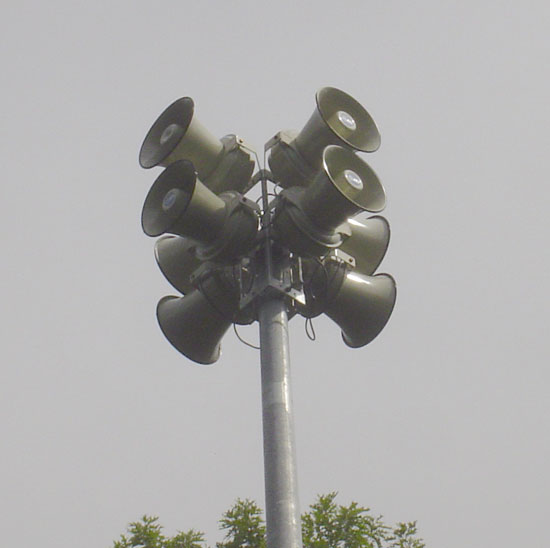
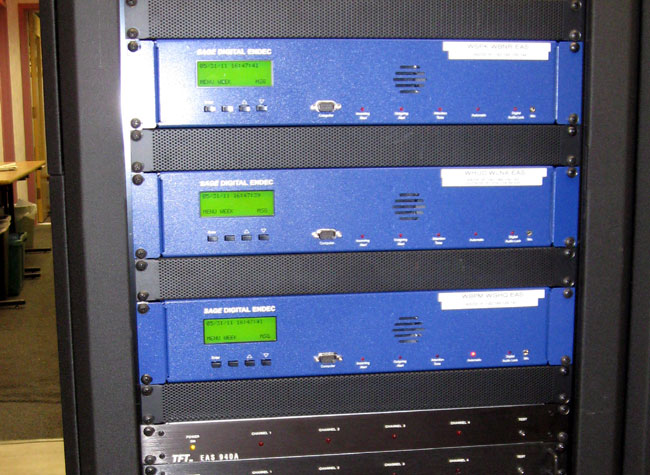
I tend to agree with the moderator. Back in the day (1960), I remember CONELRAD and the test that was done of the system locally. Leased telephone lines went from Wisconsin State Patrol District headquarters to each participant. In Milwaukee, WTMJ (620), WFOX (860), WOKY (920) had transmitters capable of 640 kHz.. WISN (1150), WEMP (1250), WMIL (1290), and WRIT (1340) were assigned to 1240 kHz. The test went well and lasted for about 1.5 hours. Signal strengths varied as well as audio quality each time a new station keyed up, but the system seemed to work. FM as well as TV was exempt, and were supposed to go off the air with instructions where to tune an AM radio for further information. Of course, AM was king then. Today with all the media fragmentation going on, it might be better to re-think what seemed to work back in the day without the transmitter switching. Maybe two dominant high-power stations on both FM & AM bands could be chosen rather than require everyone to participate. It would be easy to run a propagation study as to who the selected stations would be, and would relieve the small licensees from regulation. Also, today there appears to be a lot of extraneous stupid messages going out on EAS. A child abduction alert went out lasting about 5 minutes, and I believe this to be insane. What’s next, the pollen count? Governments are out of control these days with wanton spending and power grabbing. The network of AM TIS (Travelers Information Stations) has grown wildly around here wasting a lot of energy with puny signals and some of the worst audio I have ever heard and they happen to be exempt from EAS as I understand. I say, turn them off, as I cannot believe anyone is getting any worthwhile information. And all of the expensive nationwide overhead electric signs funded from Bubba, are rarely effective because they aren’t updated fast enough to cause any less traffic congestion. Another huge waste of U.S. taxpayer dollars. In 2008, I put a low power FM on one of my towers and they had to purchase three of these cheap (crummy) Dayton receivers for a dominant AM, a secondary AM, and a 162 MHz. NOAA station in the area. Having everybody go off the air in a real emergency except the chosen (or volunteer) dominant stations to me makes more sense, and CAP would be easier to administrate with fewer stations along with the monetary (and regulatory) relief to the small stations.
One of the major problems with EAS is that in recent years it is available to state and local governments, and is often abused. The “emergency broadcast system” which is what it used to say, was for specific purposes:
A. To inform and communicate with the public about major disasters and attacks on the United States using a system that is able to inform the public on a national scale instantly. It WAS used on 911 for that purpose, though most knew about the attacks first via common media.
B. To alert the public about approaching storms, tornado and weather related events. These alerts were ALWAYS operated by the National Weather Service, and were used cautiously prior to the mid 1990s. In order to use the EBS, there had to be a sighted funnel cloud or touch down, or very extreme winds and or lightning. They did not use the EAS because of wind chill or a thunderstorm watch. That system was used for hurricanes and earthquakes as well and if a dam or levy was going to flood or break. But the system was never abused.
In recent years, the EAS was being used maliciously or as I say “abused”. I routinely hear the EAS being used for situations where there is a custody dispute and a child is taken by one of the parents. A child in custody with one of the parents is not a kidnapping, unless it is reasonable to believe that the child is going to be injured or killed. Most of the time, these are EX disputes and the child goes with one or the other parent. This is NOT AN EMERGENCY THAT AFFECTS THE PUBLIC.
My FCC Complaint against a law enforcement agency:
I actually have a drafted letter I was intending to send to the FCC EB about an Amber alert in the State of Wisconsin, that was issued state wide over a teenage girl that left her parents home voluntarily (against her parents will) with a young pizza delivery guy.
In this case, Lake Geneva essentially pulled a fire alarm on the State of Wisconsin that caused public harm and “created a statewide diversion of law enforcement” and made grossly false statements to the public, stating that the girl was in danger. This was a case of a 14-16 year old girl that looked like Britney Spears that ran off voluntarily (she wasn’t attacked or abducted) with an ~18-20 year old pizza delivery guy.
The Lake Geneva police department (specific needs to be confirmed from my original letter) issued an amber alert, and made all sorts of false and misleading statements that the girl was in danger and was going to be harmed, which was complete speculation, and obstructed the public and other law enforcement agencies in the state. The law enforcement agency completely made up statements, accusing the male of a sex crime, even though there was absolutely no evidence to support a sex crime, whatsoever. From my recollection, the girl and guy were found at a hotel at a Christian based religious conference. She was unharmed.
It was my suggestion to the EB that the (Lake Geneva Police Department) be fined in violating the communications act for making a false emergency or distress call, and that they be responsible for fines for EACH INDIVIDUAL BROADCAST STATION that properly aired the EAS during that time. It appears that the EAS, which is a critical function of National Security, was obviously being used for propaganda, or to push a social or moral agenda. The (Lake Geneva Police Department) further violated the first amendment rights of the broadcasters by taking control of their transmissions for non-emergency purposes. They further obstructed other law enforcement agencies in Wisconsin and Illinois, and the costs associated with this diversion may have cost the taxpayers of these states multiple millions of dollars, keeping state patrol officers on duty for overtime, etc.
The EAS system is for use when it is reasonable to believe that people may die or be seriously injured, not because you are angry that a teenager might…have sex. That is not a life threatening emergency. There ARE cases where children have been kidnapped by strangers or disappear, and that is the purpose of an Amber alert. This was not the case in Lake Geneva.
I equate the actions of that law enforcement agency to an adult making a bomb threat against the president or a government agency.
So, the problem is number 2 of the above list:
2. may be used by state and local authorities to deliver important emergency information, such as AMBER alerts and weather information targeted to specific areas.
Weather information should only be storms that are dangerous to the general public. You would not issue an EAS alert because of a severe thunderstorm, unless it could produce tornados or winds capable of doing significant damage in the targeted area. You could be hit by lighning, but lightning would not be something to run an EAS for, it is reasonable for the public to know to avoid lighting as it is a common occurrence in a given area. Now, lets say that it was in Northern Minnesota in an area that never gets lightning storms, then you might want to inform the public.
Ehem. Neil, please don’t feel the necessity to comment on every blog post. Some of these topics are five years old. I leave the comments open because it is kind of a pain to go back and close them individually as some old topics are still relevant. As you have tripped the spam alarm a couple of times, you are for now, put into the moderation queue.
Ok, apologies, that amber alert was from around 2010 and I noticed much less of this stuff now. I will end my conversation with my last comment on the Wheatstone IP based STL, which looks good on paper, but was not well thought out. DA AD DA AD DA AD DA AD…DA…..does anyone actually plan stuff out anymore?
I began blogging here after applying and then declining to apply for a broadcast engineer position at a radio “cluster”. One station had a 5 DB level drop on the right channel, and it had been that way for a week. It sounded like someone had put an unbalanced 1/4 inch jack in a patch bay or the jack wasn’t pushed in all the way. Often, nobody notices because almost none of these stations listen to themselves on the air, because of their digital studio to transmitter links, which produce a delay.
When I built my first control room for a commercial broadcast station in 1993, I was 13 years old, and we were still using cart tapes and CDs, computers were still not in the budget. Nowdays, I appreciate computers when they are used and implemented properly. But the sound quality of radio has just gotten really bad compared to what it was in the 80’s. Sure, there were some low budget stations, but things like this Wheatstone 5.8 gig “glorified WIFI” is where I see the death of radio itself.
When I started in radio, we could do live broadcasts. Try to do that with all of these inferior digital pieces. What we had back then worked and it worked well, it sounded good and it sold advertising. How do you control the transmitter without a phone line?? You use modified touch tones and relays! Come on, engineering 101!